Which Chow Chows Lived in the Coolidge White House
Calvin Coolidge’s White House was home to many animals, but two of its Chow Chows are remembered by name: Blackberry and Tiny Tim. Their story is easy to muddle with the larger collection of presidential pets, so this guide separates what is known about the dogs from the stories and assumptions that can grow around them.
The Chow Chows in the Coolidge White House
Blackberry and Tiny Tim
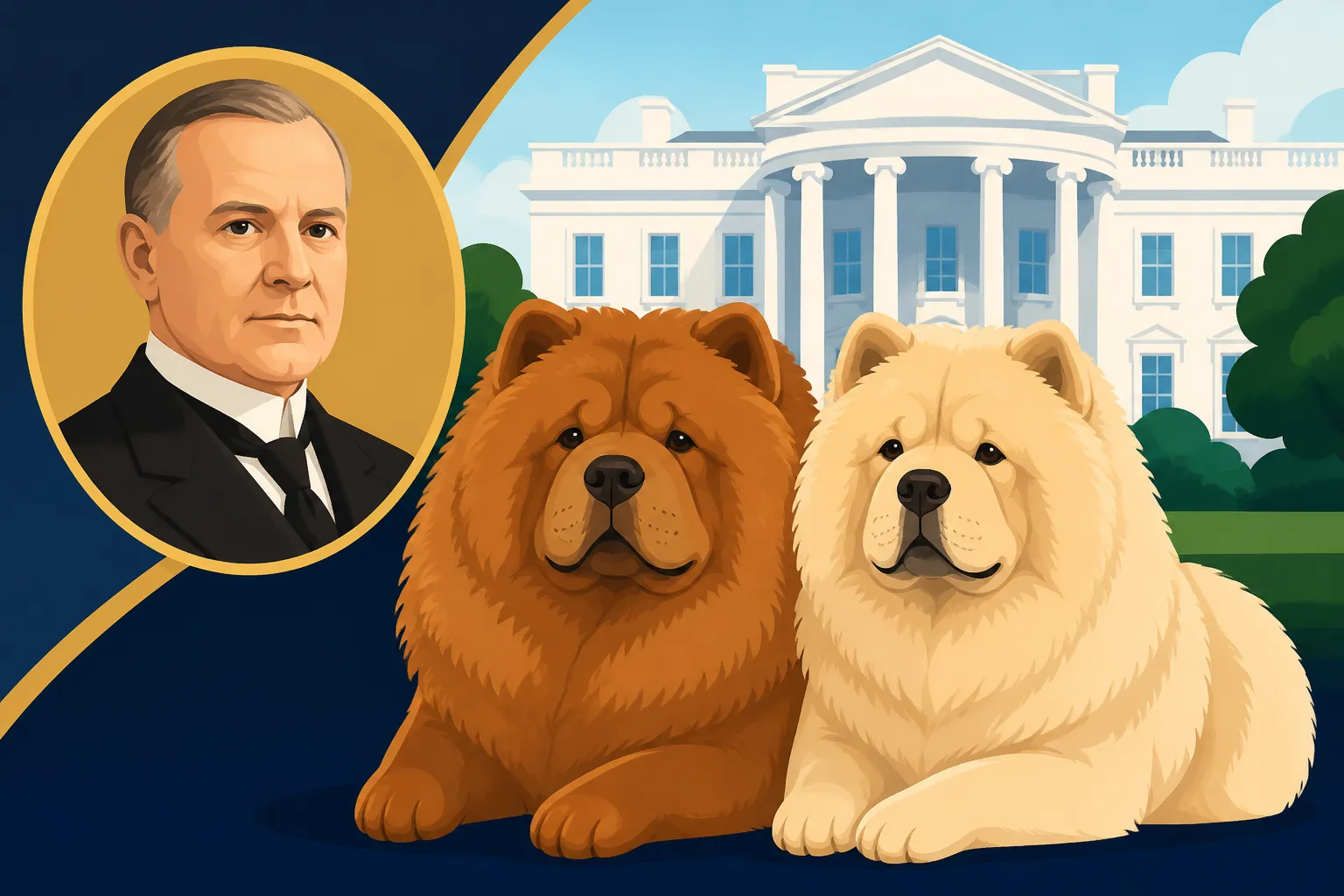
The two Chow Chows associated with President Calvin Coolidge and his family were named Blackberry and Tiny Tim. They lived at the White House during Coolidge’s presidency, when the presidential household was known for keeping an unusually varied group of animals.
Their names are the clearest answer to the question of which Chow Chows lived there. If you encounter a reference to a single Coolidge Chow Chow, it may simply be mentioning one dog rather than giving the complete pair. The names can also be harder to remember than those of more famous presidential pets, partly because the Coolidges had so many animals.
It is worth keeping the distinction simple: Blackberry and Tiny Tim were the Chow Chows. They were among the family’s dogs, not the only animals at the White House. For a related look at the names specifically, see What Coolidge Named His Chow Chows.
The short answer and useful context
| Question | Answer |
|---|---|
| Which Chow Chows lived in the Coolidge White House? | Blackberry and Tiny Tim |
| Who was president? | Calvin Coolidge |
| Were they the only White House pets? | No. The Coolidge household kept a wide range of animals |
| Why are the dogs remembered? | They were part of the family’s well-known presidential menagerie |
The Coolidges’ pets became a subject of public interest because they were so numerous and varied. Dogs shared the household’s public attention with animals that were much less typical of a family home. That crowded cast can make it easy for readers to mix up names, species, or which pet belonged to which president.
The Chow Chows are also interesting as a small piece of the breed’s American history. The breed had already attracted attention in the United States before the Coolidges brought their dogs to the White House. If you’re tracing that broader story, When the First Chow Chow Reached America offers useful background, while How the Chow Chow Reached England follows an earlier part of the breed’s path into the West.
Why the Coolidge pets attracted so much attention
A White House menagerie
The Coolidges’ household included much more than dogs. Accounts of the family’s pets describe a collection that included familiar domestic animals as well as more unusual ones, such as a raccoon and exotic or wild animals. The variety made the White House feel, in the public imagination, less like a formal residence and more like a lively household full of animals.
That context helps explain why Blackberry and Tiny Tim are sometimes mentioned only briefly. They were part of a larger story about the Coolidges’ pets, and a short account may focus on a more unusual animal instead. A raccoon or an animal with an especially striking story might grab a reader’s attention, while the Chow Chows appear in a list of dogs.
This doesn’t make the Chow Chows unimportant. It simply means their place in the story is often as part of the family’s broader collection rather than as the single headline attraction. When reading about presidential pets, it helps to look for whether a source is naming all animals, highlighting one particular pet, or telling a story about the household as a whole.
Public fascination with presidential pets
Presidential pets have long offered a glimpse of life away from speeches, ceremonies, and official duties. A dog at the White House can make a public figure seem more relatable, and stories about pets often travel well because they’re easy to picture and retell. The Coolidges’ unusually varied household gave people even more to talk about.
For a Chow Chow, the setting was especially distinctive. The breed’s thick coat, compact outline, small ears, and distinctive expression make it visually memorable. That appearance can lead people to wonder what the dogs were like in daily life, but a name or photograph alone cannot tell us their complete temperament, routines, or relationship with every member of the household.
It’s safest to separate documented details from modern interpretation. We can identify the dogs as Blackberry and Tiny Tim and place them among the Coolidge family’s pets. We should be more cautious about assigning them specific habits, personalities, or day-to-day roles unless a reliable account provides those details.
What their White House story says about the Chow Chow
A breed with a much older history
Blackberry and Tiny Tim were part of a twentieth-century American household, but the Chow Chow’s history reaches much further back. The breed is associated with China and has a long record of changing roles and meanings across time. To explore that background, start with Where the Chow Chow Comes From and How Old the Chow Chow Breed Is.
The breed’s historical identity is not just a matter of appearance. Chow Chows have been associated with different kinds of work and companionship, and the details can vary depending on the period and account being discussed. It’s easy to reduce a breed’s history to a single dramatic claim, but a more careful picture leaves room for regional differences and incomplete records.
The Coolidge dogs offer a small, recognizable chapter in that much longer story: two Chow Chows lived in a prominent American home and became part of public interest in the president’s animals. They did not define the breed, but they helped make Chow Chows visible to people who might not otherwise have known much about them.
Appearance, expectations, and real dogs
A famous breed can become an image before it becomes an individual animal. People may see the Chow Chow’s mane-like coat or serious-looking face and assume they know what the dog must be like. Yet appearance doesn’t tell the whole story of an individual dog, and historic fame doesn’t reveal how a particular pet behaved at home.
The breed’s characteristic expression is often a source of curiosity. For more on the features behind it, see What Gives a Chow Chow Its Scowl. The Chow Chow’s distinctive look is one reason the breed is so recognizable in photographs, but it shouldn’t be treated as proof that every dog shares the same personality.
Similarly, stories about Blackberry and Tiny Tim should not be used as a shortcut for understanding all Chow Chows. A dog’s temperament is shaped by the individual animal, its experiences, health, and handling. Historical examples can make a breed feel more familiar, but they can’t replace thoughtful observation of the dog in front of you.
How to understand the historical record
Names are firmer than extra details
When asking which Chow Chows lived in the Coolidge White House, the names Blackberry and Tiny Tim are the key facts to retain. Details beyond those names may be presented inconsistently in brief retellings. Color descriptions, exact circumstances around how a dog joined the household, or claims about a dog’s favorite person are not necessary to answer the basic question—and should be treated carefully if a source does not explain where the information came from.
This is a common issue with stories about historic pets. A short caption may be copied into another account, then repeated without the context that would help readers judge its reliability. A confident-sounding detail can feel settled simply because it appears in several places, even when those accounts may all be repeating the same original claim.
A practical way to read these stories is to distinguish between the core identification and the extra narrative. The core identification is that the Coolidge family’s Chow Chows were Blackberry and Tiny Tim. Additional anecdotes can be enjoyable, but they are best considered separately rather than treated as equally certain.
Avoid mixing up presidents and pets
Because many presidents kept dogs, it is easy to attach a pet’s name to the wrong family or blend details from different administrations. The Coolidge household is particularly easy to confuse because its collection included so many kinds of animals. If a list gives several pet names without stating their species or owner, pause before assuming every animal belonged to the same person or served the same role.
It can help to check a pet’s name against the president and the broader household, not just against a familiar breed list. The Chow Chows in this story belong to Calvin Coolidge’s White House years. Other accounts may mention other presidents’ dogs, but those should not be folded into the Coolidge pair.
For further context on the breed’s presence in the United States, Which Chow Chow Was Registered First adds another historical thread. And if you’re interested in the breed’s older working associations, What a Chow Chow Hunted in China explores a separate part of its history rather than the Coolidge family’s household story.
Blackberry and Tiny Tim are the two names to remember. Their story is a small but appealing part of the Coolidge White House’s larger menagerie—and a reminder that even a well-known breed’s history is made up of individual dogs, not just general descriptions.
Disclaimer
This article is for general informational purposes only and does not constitute professional advice. Laws, prices and regulations vary by location and change over time. Consult a qualified professional for guidance on your specific situation.