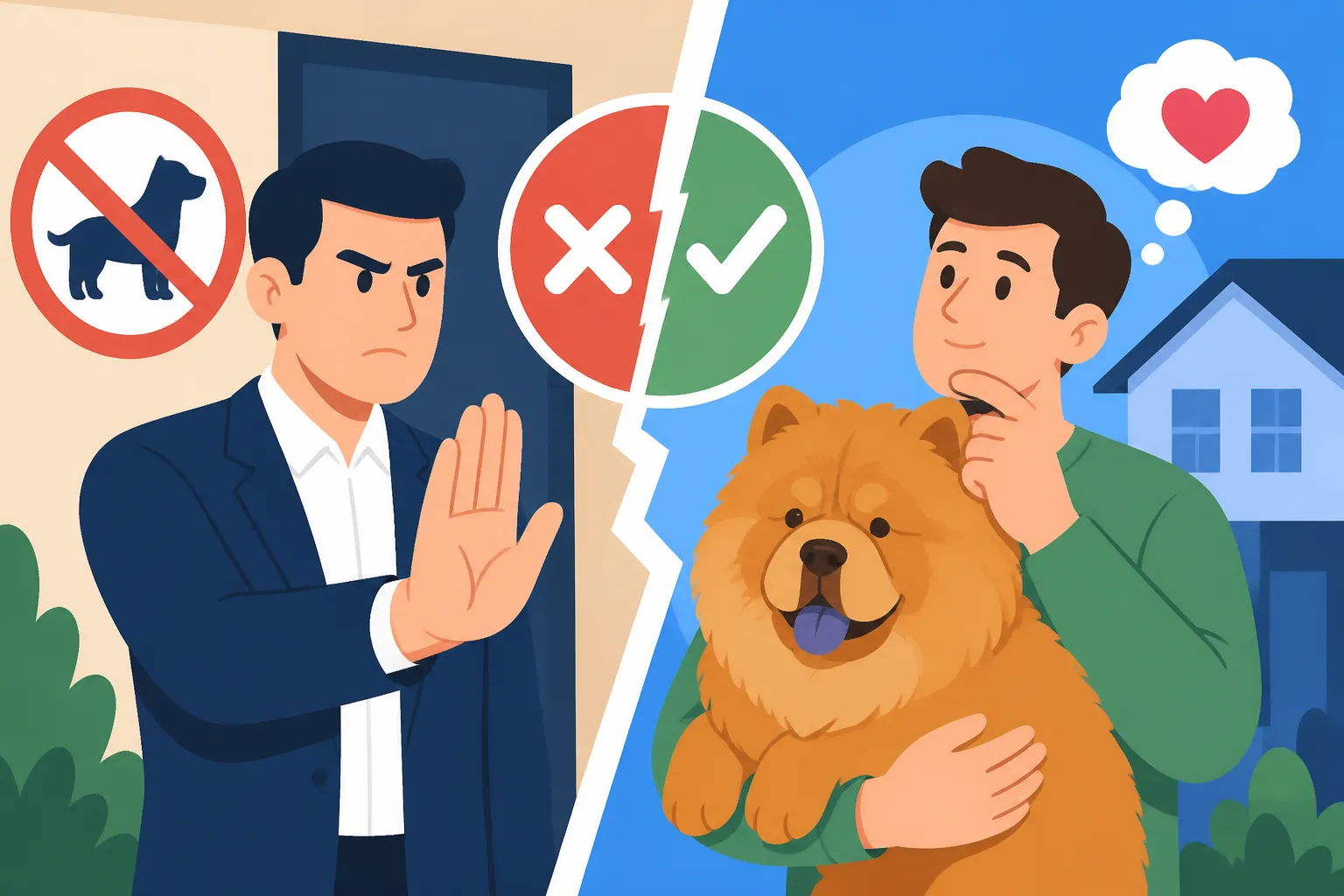
Whether a Landlord Can Refuse a Chow Chow
It's a tough market out there for renters, and when you have a beautiful, loyal Chow Chow by your side, the challenge can feel ten times harder. Many landlords, unfortunately, operate under old misconceptions about certain breeds, and our beloved Chows often find themselves on a "restricted breeds" list. This guide will delve into why this happens, validate the very real frustrations you face, and arm you with practical strategies to navigate the rental landscape successfully, helping you find a welcoming home for you and your furry companion.
Understanding Landlord Pet Policies and Restrictions
Before we dive specifically into the nuances of renting with a Chow Chow, it's crucial to understand the broader landscape of landlord pet policies. These aren't usually created to be malicious; rather, they often stem from a blend of perceived risk, insurance requirements, and simple property management preferences. For many landlords, especially those managing multiple units or large complexes, a blanket pet policy simplifies their operations and aims to minimize potential issues.
The Discretionary Nature of Pet Policies
Most landlords have a significant amount of discretion when it comes to allowing pets on their property. Unless specific local or state laws dictate otherwise (which we'll touch on later), a private landlord can generally choose whether to allow pets at all, and if so, what kinds of pets, how many, and even their size. This means that while one landlord might be completely open to all breeds, another might have a strict "no dogs over 25 pounds" rule, or a list of specific breeds they won't consider. This variability is what makes finding a place with a Chow Chow so utterly frustrating; you can't just assume anything. It often feels like you're starting from scratch with every single property you inquire about, having to explain and advocate for your dog repeatedly.
The decision-making process for landlords can be influenced by personal experiences, past tenant issues, or simply a desire to maintain the property in a certain condition. They might worry about noise complaints, potential damage to flooring or walls, or even the possibility of other tenants being uncomfortable. For them, a blanket policy, even if it feels unfair to responsible pet owners, is a way to mitigate these concerns from the outset. This is why having a proactive strategy is so important; you need to demonstrate that your Chow Chow is an exception to their general concerns, rather than fitting into a predetermined negative category.
Common Reasons for Breed Restrictions
Breed restrictions aren't arbitrary; they typically arise from a few key areas of concern. The most prevalent reason, and one that heavily impacts Chow Chow owners, is liability insurance. Many homeowner's and landlord's insurance policies carry clauses that either exclude certain breeds from coverage or charge significantly higher premiums if those breeds reside on the property. Breeds commonly found on these "blacklists" often include Pit Bulls, Rottweilers, German Shepherds, Doberman Pinschers, and, yes, Chow Chows. Insurance companies base these lists on statistical data, often related to bite incidents or perceived aggression, whether accurate or not. It's a risk assessment for them, and unfortunately, Chows are often swept up in these broad categories.
Beyond insurance, landlords might also impose restrictions based on local ordinances, which can sometimes target specific breeds. More often, though, it's about reputation and perceived risk. They might worry about their property being seen as less desirable by other tenants if "aggressive" breeds are present, or they might fear negative publicity in the event of an incident. Furthermore, the sheer size of a dog can be a factor. Many landlords, particularly in smaller apartments, prefer smaller dogs, believing they cause less wear and tear or are less intimidating to other residents. It's a complex web of factors that contributes to the challenge of finding appropriate housing.
The Chow Chow and Breed Restrictions
For those of us who adore Chow Chows, it's hard to imagine anyone seeing them as anything but noble, loyal, and sometimes hilariously stubborn companions. Yet, the reality is that our breed frequently appears on "restricted lists" for landlords and insurance companies. This isn't because Chow Chows are inherently bad dogs, but rather a combination of historical perception, a distinctive appearance that can be misunderstood, and the dreaded influence of actuarial tables.
Perceptions and Stereotypes About Chow Chows
Let's be honest, the Chow Chow isn't your typical golden retriever. Their unique appearance – the lion-like mane, the deep-set eyes that give them a perpetual scowl, and their often aloof demeanor – can unfortunately feed into negative stereotypes. People who don't understand the breed might interpret their independence as aggression or their reserved nature as aloofness, leading to a perception that they are unpredictable or dangerous. The way a Chow Chow moves with a somewhat stiff, stilted gait due to their straight rear leg also adds to this distinctive, sometimes intimidating, presence. It's a common frustration to have to constantly explain that the "scowl" is just their face, not an indicator of mood. Their nature is often misunderstood, as a The Chow Chow Bonds to One Person and Tolerates the Rest. They are intensely loyal to their chosen person but can be quite indifferent to strangers, which, in a rental community with many different people coming and going, can be misinterpreted as unfriendliness or a lack of socialization.
These perceptions are often exacerbated by media portrayals or isolated incidents that are then generalized to the entire breed. It's an unfair burden placed on responsible Chow Chow owners, who know their dogs to be dignified, quiet, and profoundly devoted pets. They are not prone to excessive barking or destructive tendencies if properly trained and stimulated, but these facts often get lost in the noise of negative stereotypes. Demonstrating that your individual Chow Chow is a well-behaved, non-aggressive member of the community is often the biggest hurdle you'll face.
Insurance Company Influence on Breed Restrictions
As mentioned earlier, insurance companies play a massive, often invisible, role in dictating landlord pet policies. Many property insurance providers have internal lists of dog breeds they consider "high risk." These lists are typically developed from data related to bite claims, although the specifics of how that data is collected and applied can be opaque. Unfortunately, the Chow Chow often makes an appearance on these lists. This means that a landlord, even if they personally love Chow Chows, might be contractually obligated by their insurance provider to refuse certain breeds or face significantly increased premiums, or even a cancellation of their policy.
It's a tricky situation because the landlord often has very little wiggle room. They need insurance to protect their investment, and if their chosen insurer says "no Chow Chows," it often means "no Chow Chows" for their tenants too. This is not a reflection on your individual dog, but rather a cold, hard business decision made by an insurance underwriter far removed from your loving home. Some landlords might be willing to explore alternative insurance options or pay a higher premium if they really want you as a tenant, but this is rare. Sometimes, having your own pet liability insurance, perhaps through a provider like Healthy Paws or a similar pet insurance company, can act as a partial reassurance to a landlord. While it doesn't always override their property insurance's dictates, it shows a layer of proactive responsibility that might make them more inclined to consider you if they have any flexibility at all.
Navigating Breed Restrictions as a Chow Chow Owner
Finding a landlord who welcomes your Chow Chow can feel like an uphill battle, but it's not impossible. The key is to be proactive, prepared, and persuasive. You need to present your Chow Chow as an individual, not just a breed, and demonstrate that you are a responsible owner who takes every precaution to ensure your dog is a good tenant and neighbor.
Proactive Communication with Landlords
The worst thing you can do when applying for a rental is to hide the fact that you have a Chow Chow until the last minute. This inevitably leads to mistrust and often an immediate rejection. Instead, make your Chow Chow a central part of your initial inquiry. When you first contact a landlord or property manager, state upfront that you have a Chow Chow. Ask directly about their pet policy, specifically mentioning breed restrictions. This saves you time and emotional energy by quickly filtering out places where your dog simply won't be welcome due to non-negotiable insurance clauses.
When you do find a landlord who seems open or doesn't explicitly list Chow Chows on a restricted list, be ready to discuss your dog's temperament, training, and routine in detail. Don't wait for them to ask. You want to control the narrative. Highlight your Chow Chow's calm nature indoors, its minimal barking tendencies, and its house training reliability, which is often very quick, as The Chow Chow Is One of the Easiest Breeds to Housetrain. Offer to bring your dog for a "meet and greet" if appropriate, especially if the landlord lives on site or has dogs themselves. This direct interaction can do wonders to dispel stereotypes and showcase your Chow Chow's true, often reserved, personality.
Building a Strong Pet Resume for Your Chow Chow
Yes, a pet resume might sound a little over the top, but for a breed like the Chow Chow, it can be a game-changer. Think of it as your dog's professional portfolio, designed to impress and reassure a hesitant landlord. Here's what you should include:
| Section | What to Include | Why it Helps |
|---|---|---|
| Basic Information | Name, Breed, Age, Weight, Spayed/Neutered status, Current Vet Contact Info. | Establishes identity, shows responsible pet ownership, allows for verification. |
| Temperament Profile | Describe your Chow Chow's personality: calm, quiet, independent, affectionate with family, reserved with strangers. | Addresses stereotypes directly, provides insight into their typical behavior. |
| Training & Behavior | List obedience training (e.g., puppy classes, Canine Good Citizen), house training status, leash manners. | Demonstrates control and good behavior, minimizing concerns about damage or disruption. |
| Health & Grooming | Mention regular vet check-ups, vaccinations, flea/tick prevention, and a description of your grooming routine. | Shows commitment to health and cleanliness, addressing concerns about cleanliness and potential infestations. |
| References | Previous landlords (if positive experience), vet, dog walker, trainer. | Provides third-party validation of your Chow Chow's good conduct and your responsible ownership. |
| Photos | Include several clear, recent, and appealing photos of your Chow Chow looking happy and well-cared for. | Visuals can immediately counter negative mental images and showcase their beauty. |
| Emergency Contacts | Names and numbers of friends/family who can care for your dog in an emergency. | Reassures the landlord that your dog won't be abandoned if you're unable to care for them. |
This resume should be professional, concise, and highlight all the positive attributes of your Chow Chow. Include details about how well-adjusted your dog is, how much socialization a Chow Chow puppy needs, and how you ensured they got it. You can even mention their favorite healthy treats from a brand like Ollie that contribute to their well-being. A well-crafted pet resume speaks volumes about your commitment.
Providing Evidence of Responsible Ownership
Beyond the pet resume, actions speak louder than words. Be ready to provide tangible proof of your responsible ownership. This can include:
- Veterinary Records: Up-to-date vaccination records, proof of regular check-ups, and documentation of spay/neuter surgery. This shows you prioritize your dog's health and are preventing unwanted litters.
- Training Certificates: If your Chow Chow has attended any obedience classes or achieved certifications like the AKC Canine Good Citizen, proudly present these. It’s powerful evidence of their good behavior and your dedication to their training. Highlighting the importance of early and consistent training, especially for a breed known for its independence, can demonstrate your understanding of your dog's specific needs. You might also want to mention if you needed a professional trainer early on to help solidify good habits.
- Proof of Pet Insurance: As discussed, having your own pet liability insurance policy can sometimes alleviate a landlord's concerns, especially regarding potential damages or bite incidents. Even if it doesn't completely circumvent breed restrictions imposed by their insurance, it demonstrates a proactive approach to risk management on your part. Companies like Healthy Paws offer various plans that might include liability coverage.
- Letters of Recommendation: A letter from a previous landlord attesting to your Chow Chow's good behavior and your diligence in maintaining the property can be invaluable. A letter from your veterinarian or a professional dog trainer, detailing your Chow Chow's temperament and your commitment to their well-being, also carries significant weight. These third-party endorsements can often sway a hesitant landlord more than your own assurances.
- Grooming and Care Routine: Explain your diligent grooming routine to prevent shedding and maintain cleanliness, especially for a Chow Chow's dense double coat. Discuss how often you brush them, potentially mentioning an undercoat rake purchased from Chewy or your local pet store, and how you manage the twice-a-year coat blow. This shows concern for the property's cleanliness. You can also mention Teaching a Chow Chow to Accept Being Groomed as part of your consistent routine.
Legal Protections and Exceptions
While landlords generally have the right to set pet policies, there are specific situations and legal frameworks that can offer protection to Chow Chow owners facing breed restrictions. It's vital to understand these exceptions, as they are not about convincing a landlord, but about upholding your legal rights.
Assistance Animals: Service Dogs and ESAs
This is perhaps the most significant exception to breed restrictions. Under federal laws like the Fair Housing Act (FHA) and the Americans with Disabilities Act (ADA), landlords cannot discriminate against individuals with disabilities who require a service animal or an emotional support animal (ESA). These animals are not considered "pets" in the eyes of the law; rather, they are necessary accommodations. This means a landlord cannot:
- Refuse housing based on breed restrictions.
- Charge pet deposits or pet rent for these animals.
- Demand specific training or certifications beyond what is required for the animal to perform its task or provide emotional support.
For a Chow Chow to qualify as an assistance animal, there must be a genuine disability (physical or mental) and the animal must perform tasks related to that disability (for a service dog) or provide therapeutic emotional support (for an ESA). The process usually involves a letter from a licensed mental health professional or medical doctor verifying the disability and the need for the animal. It's crucial to understand that simply calling your pet an ESA without proper documentation is illegal and undermines the legitimate needs of those with disabilities. If your Chow Chow genuinely serves as an assistance animal, this provides strong legal protection against breed discrimination.
State and Local Laws on Breed Restrictions
While federal laws address assistance animals, some states and local municipalities have enacted their own laws regarding breed-specific legislation, or BSL. This can work both ways. In some areas, BSL might actually prohibit certain breeds, which would then apply to rental properties. However, a growing number of states and localities are moving in the opposite direction, passing laws that ban breed-specific discrimination in housing. This means a landlord in those jurisdictions cannot legally refuse a tenant based solely on their dog's breed.
These laws vary widely, so it's incredibly important to research the specific regulations in your city, county, and state. A quick search for "breed-specific legislation housing [your city/state]" can often yield relevant information. Sometimes, these laws focus on overturning insurance company mandates, stating that insurers cannot deny coverage or charge higher premiums based on breed alone. If you live in an area with such protections, you have a much stronger legal standing. However, even with these laws, landlords can still have general pet policies, such as limits on the number of pets or requirements for well-behaved animals, but they cannot solely target your Chow Chow based on its breed.
The Cost Implications of Owning a Chow Chow in Rental Housing
Beyond the initial hurdle of acceptance, bringing a Chow Chow into a rental property often comes with a distinct set of financial considerations. Landlords, wanting to protect their property and investment, frequently implement various fees and charges related to pets. As a Chow Chow owner, you need to be prepared for these, as they can significantly impact your overall housing budget.
Pet Deposits, Fees, and Monthly Pet Rent
It's very common for landlords to charge additional money for tenants with pets. These generally fall into three categories:
- Pet Deposit: This is a one-time, refundable payment, similar to a security deposit. It's held by the landlord to cover any potential damage caused by your pet beyond normal wear and tear. For a larger breed like a Chow Chow, these deposits can be higher than for a smaller dog, reflecting the landlord's perception of greater potential damage. The amount can vary widely, but expect it to be a significant sum, often equivalent to half a month's rent or more. Make sure you understand what conditions must be met for its return.
- Non-Refundable Pet Fee: This is a one-time payment that is not returned to you. It's often used by landlords to cover administrative costs, professional cleaning after you move out, or simply as an upfront payment for the "privilege" of having a pet. Again, for a restricted breed like a Chow Chow, this fee might be at the higher end of the spectrum, if not explicitly disallowed by local law.
- Monthly Pet Rent: This is a recurring charge added to your regular monthly rent. It can range from a nominal amount to a substantial addition, impacting your budget over the long term. Landlords justify this as covering increased wear and tear, potential liability, or simply as a way to generate additional income from pet-owning tenants. For a Chow Chow, you might find yourself paying towards the higher end of the scale for monthly pet rent, sometimes feeling like you're paying a "breed tax."
These costs can accumulate quickly, so it's essential to factor them into your budget when searching for a rental. Don't be afraid to negotiate, especially if you can demonstrate your Chow Chow's impeccable behavior and your responsible ownership. Sometimes, offering a higher pet deposit in lieu of a non-refundable fee or a slightly lower monthly pet rent might be an option.
The Impact of Pet Insurance on Landlord Decisions
While pet insurance primarily benefits you by covering veterinary costs, it can also indirectly influence a landlord's willingness to accept your Chow Chow. We've already touched on how your personal liability coverage might offer reassurance, but comprehensive pet health insurance can also be a subtle selling point.
Consider what a Chow Chow's lifetime eye bill runs, especially if they are prone to issues like entropion or glaucoma, or even Whether a Chow Chow Needs Entropion Surgery Twice. A landlord might worry about potential scenarios where an owner struggles with significant vet bills, leading to neglected care, or even abandonment if the costs become too high. Demonstrating that you have pet health insurance, perhaps with a reputable provider like Healthy Paws, shows financial preparedness and a commitment to your dog's well-being. This can subtly communicate to a landlord that you are a responsible individual who plans for the unexpected, reducing their perceived risk associated with a Chow Chow. It indicates that you're less likely to face a situation where you can't afford necessary medical care, which is a concern for any landlord with a pet-friendly policy.
Finding Pet-Friendly Housing for Your Chow Chow
Navigating the rental market with a restricted breed can feel like looking for a needle in a haystack, but with the right approach and resources, you can increase your chances of finding a welcoming home for your Chow Chow. It requires patience, persistence, and knowing where to look.
Online Resources and Specialized Agents
Forget the general rental listings that simply say "pets considered." You need to target your search. Here are some effective strategies:
- Specialized Pet-Friendly Housing Websites: Many apartment search engines now have filters specifically for pet policies, including breed restrictions. Look for sites that allow you to specify "large dogs" or even "all breeds welcome." Some niche sites are dedicated solely to pet-friendly rentals, which can be a goldmine. While these might not always explicitly state "Chow Chows welcome," they often have more flexible policies.
- Local Pet Community Groups: Join Facebook groups, online forums, or local community pages for Chow Chow owners or general dog enthusiasts in your target area. Often, fellow pet owners share leads on landlords or apartment complexes that are known to be genuinely pet-friendly and don't enforce strict breed bans. Word-of-mouth recommendations can be incredibly valuable.
- Real Estate Agents Specializing in Pet Owners: Believe it or not, some real estate agents specialize in helping pet owners find rentals. They understand the challenges and often have connections with landlords who are more amenable to breeds like the Chow Chow. These agents can pre-screen properties for you, saving you countless hours of fruitless searching and advocating. They can also help you highlight all the positives of your Chow Chow, much like you would in a pet resume, to present a compelling case to a potential landlord.
- Direct Outreach to Smaller Landlords: Large corporate apartment complexes often have rigid, non-negotiable policies due to their insurance mandates. Smaller, independent landlords, however, might have more flexibility. They might be more willing to consider your individual case, especially if you can meet them and introduce your well-behaved Chow Chow. These landlords often value a good tenant over strict adherence to generalized breed restrictions.
Considering Alternatives to Traditional Rentals
Sometimes, despite your best efforts, finding a traditional rental that accepts your Chow Chow can be incredibly difficult, especially in certain competitive housing markets. In these situations, it's worth broadening your scope and considering alternative housing arrangements:
- Renting a Private House: Often, private homeowners who are renting out their property (rather than a large management company) are more flexible with pet policies. They might be more open to meeting your Chow Chow and making an individual decision, rather than being bound by corporate rules. A private house often provides a yard, which, while not strictly necessary for a Chow Chow (as How Much Exercise a Chow Chow Actually Needs isn't as high as some might think), can be a selling point to a landlord concerned about space.
- Looking Outside City Centers: Rental markets in densely populated urban areas tend to have more restrictive pet policies. Expanding your search to suburban or more rural areas might open up more possibilities. These areas often have more single-family homes available for rent, and the landlords might be less concerned about noise complaints or other perceived issues in a less crowded environment. This also ties into whether a Chow Chow needs a fenced yard, which might be easier to find outside the city.
- House Sitting or Temporary Rentals: If you're in a transitional phase, house-sitting gigs or short-term rentals (like extended stays) can be a temporary solution to ensure you and your Chow Chow have a place to stay while you continue your long-term search. While not a permanent fix, they can provide breathing room and reduce stress.
- Purchasing a Home: This is, of course, a significant step and not feasible for everyone. However, if repeated rental rejections become a persistent problem, and you have the financial means, owning your home eliminates landlord restrictions altogether. This allows you to provide a permanent, stable environment for your Chow Chow without the constant worry of future housing challenges.
Finding a home with your Chow Chow requires perseverance. It’s about being your dog's best advocate, understanding the landlord's perspective, and proactively addressing their concerns with facts, references, and a demonstration of your unwavering responsibility.
Disclaimer
This article is for general informational purposes only and does not constitute professional advice. Laws, prices and regulations vary by location and change over time. Consult a qualified professional for guidance on your specific situation.