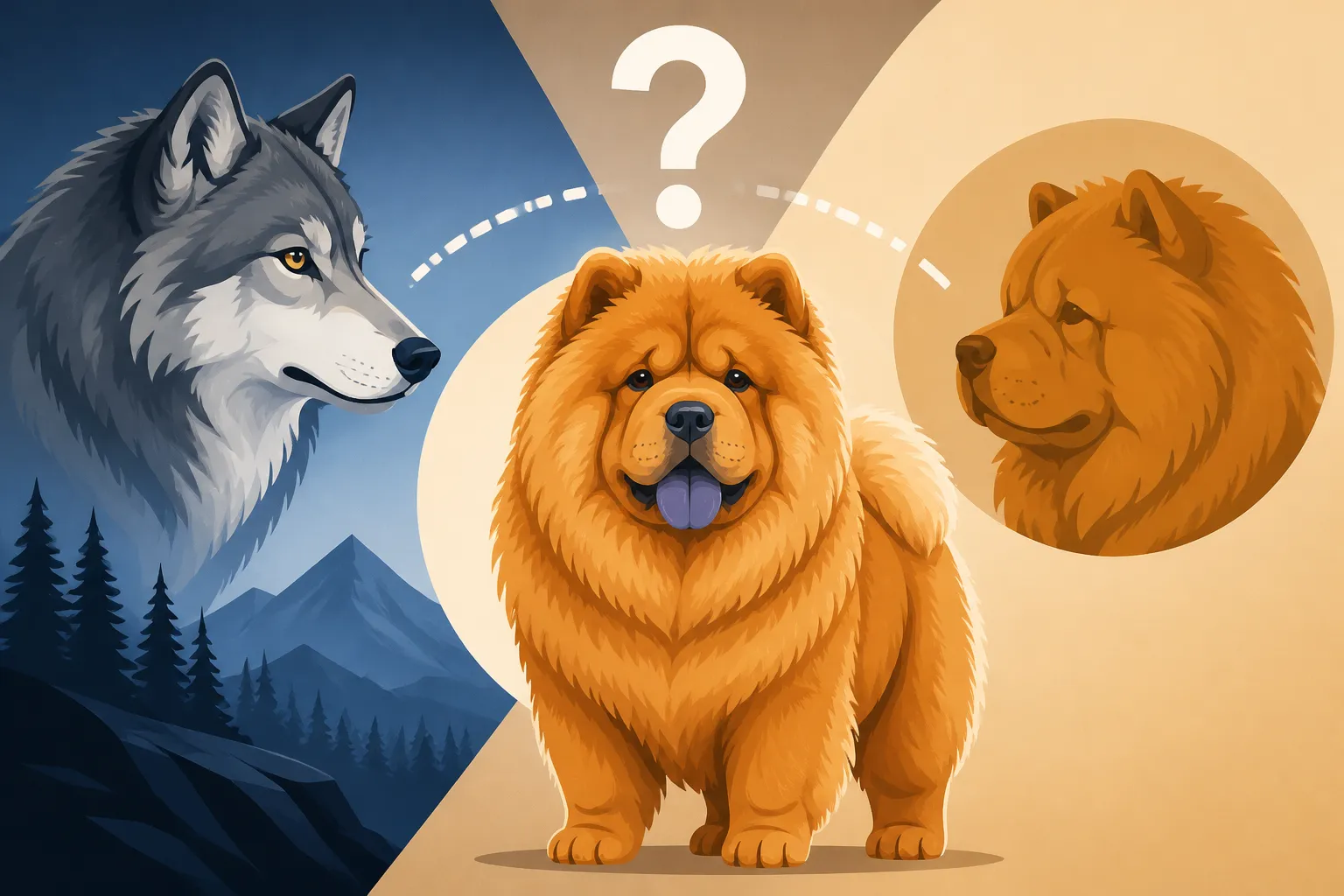
Whether the Chow Chow Descends From the Wolf Directly
One of the most persistent questions I hear from fellow Chow Chow enthusiasts, and even those just curious about these magnificent lions, is whether these dignified dogs are direct descendants of wolves. It's a natural question, given their ancient appearance and somewhat reserved nature, but the truth is a bit more nuanced than a simple "yes" or "no." This guide dives deep into the Chow Chow's genetic past, unraveling the fascinating story of its origins and clarifying its unique place in canine history.
Unpacking the Ancient Ancestry of the Chow Chow
When we talk about the Chow Chow, we often hear the term "ancient breed," and it conjures up images of wild dogs roaming primordial lands. While there's a kernel of truth to the "ancient" part, it's crucial to understand what that actually means in the grand scheme of canine evolution. Our Chows are indeed old souls, but they're still very much domesticated dogs.
Distinguishing Ancient Breeds from Direct Wolf Descendants
It's easy to conflate "ancient breed" with "straight from the wolf," but these are distinct concepts. An ancient breed, like our beloved Chow Chow, is one whose genetic lineage diverged very early from the gray wolf during the initial domestication process, before most other modern dog breeds began to take shape. Think of it like a family tree: while all modern dogs share a common wolf ancestor, some branches split off much, much earlier than others. The Chow Chow is on one of those very early, robust branches.
This early divergence means they retain some genetic markers that are closer to their wild ancestors than, say, a Labrador Retriever or a Poodle. However, they are not wolves, nor are they a direct, untamed offshoot that has remained wild. They have been companions, guardians, and working dogs alongside humans for millennia, adapting and evolving in a domesticated context. Their ancient status speaks to their deep historical roots and unique genetic blueprint, not a lack of domestication.
The Chow Chow's Deep Roots in Canine History
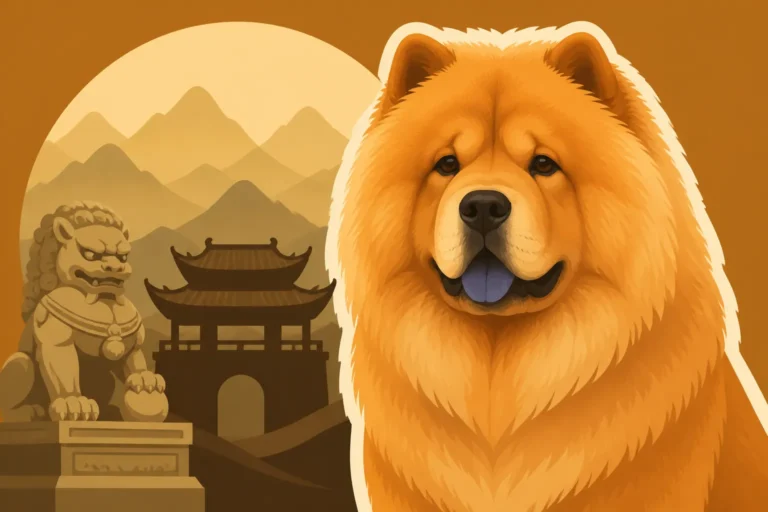
The Chow Chow truly is a living piece of history. The Chow Chow Is One of the Oldest Breeds in the World. Archaeological evidence and ancient texts suggest dogs resembling Chows have existed in China for thousands of years. These aren't just vague suggestions; we're talking about tangible artifacts, like pottery and sculptures from the Han Dynasty (206 BC to 220 AD) that depict dogs with the distinctive lion-like mane, scowling expression, and curled tail that are hallmarks of the breed today. This long, unbroken lineage is what truly sets them apart.
Imagine your Chow's ancestors patrolling imperial palaces, guarding temples, or even accompanying nomadic hunters across vast landscapes. Their history is interwoven with the very fabric of Chinese civilization. This isn't just a romantic notion; it's backed by scientific study and cultural records. The consistent depiction over millennia suggests a stable, recognized type of dog that has played a specific role in human society for a very, very long time. This deep history has shaped not only their physical appearance but also their independent, dignified temperament.
Scientific Insights into the Chow Chow's Lineage
While history gives us clues, modern science, particularly genetics, provides undeniable proof of the Chow Chow's unique position among dog breeds. DNA analysis has been a game-changer in understanding canine origins, and it consistently places the Chow Chow in a very special category.
What DNA Says About the Chow Chow's Age
Genetic research has repeatedly confirmed that the Chow Chow is one of the most ancient dog breeds. Studies comparing the DNA of various dog breeds to their wolf ancestors show that the Chow Chow diverged from the wolf line much earlier than most other breeds. It's often grouped with other "basal" or ancient breeds, meaning their genetic blueprint carries a stronger signal of that initial split from the wild. What DNA Says About the Chow Chow's Age This isn't to say they are wolves, but rather that their genetic makeup hasn't been as extensively diluted or diversified by subsequent breeding programs that created the vast array of modern dog breeds we see today.
This early genetic split is fascinating because it implies a very long period of isolated development within a domesticated setting. While other dog types were cross-breeding and evolving rapidly in different parts of the world, the Chow Chow's lineage remained relatively stable, preserving many of the traits that were present in those early domesticated canines. This genetic evidence helps to explain their unique characteristics, from their blue-black tongues to their somewhat "primitive" appearance.
Comparing Genetic Divergence with Other Breeds
To truly appreciate the Chow Chow's ancient status, it helps to understand how its genetic profile compares to other breeds. Most modern dog breeds, particularly those developed in Europe in the last few hundred years (like retrievers, terriers, and many shepherd dogs), show a much more recent genetic divergence from their common ancestors. Their gene pools are quite intertwined, reflecting a history of selective breeding for specific traits or functions. The Chow Chow, however, stands somewhat apart.
When geneticists map out the canine family tree, the Chow Chow often appears on a branch that splits off very close to the base, near the wolf, but still distinctly after the initial domestication event. This is different from a breed like a German Shepherd, which would be much further up the tree, having diverged from a common ancestor shared with many other herding breeds. This makes the Chow Chow a valuable living link to the very early days of dog-human cohabitation, offering insights into what those foundational domesticated dogs might have been like. For example, Which Breeds the Chow Chow Is Most Related To often highlights other ancient breeds like the Akita and Shar Pei as being on similarly old branches.
Historical Evidence and Geographic Origins
Beyond genetic markers, the historical record and geographical context further reinforce the Chow Chow's ancient and distinct lineage. Their story is deeply embedded in the history of China itself.
Tracing the Chow Chow Back to Ancient China
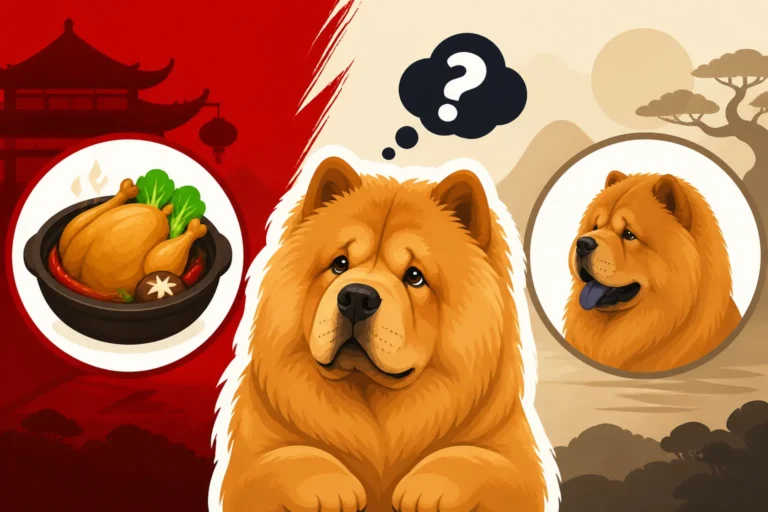
The geographical origin of the Chow Chow is unequivocally China. For thousands of years, these dogs have been depicted in Chinese art and literature, serving various roles from guarding temples to hunting game and even, unfortunately, as a source of food and fur. How Far Back the Chow Chow Is Recorded in China This long and often challenging history in a specific region allowed the breed to develop distinct characteristics without much influence from dog populations in other parts of the world until relatively recently.
Ancient Chinese texts, imperial records, and artwork – from elaborate bronze vessels to delicate silks – frequently feature dogs with the unmistakable traits of the Chow Chow. These portrayals aren't just fleeting images; they show a consistent type, suggesting that the breed was well-established and recognized. This deep cultural integration indicates a long-standing relationship between the Chow Chow and the people of China, a relationship that predates many of the more "modern" breed developments elsewhere.
The Role of Isolation and Adaptation in Its Development
China's historical isolation, particularly from Western Europe for long periods, played a significant role in preserving the Chow Chow's unique genetic identity. Without extensive interbreeding with dog populations from other continents, the Chow Chow's distinct traits, which had diverged early from the wolf, were largely maintained. This isolation allowed them to adapt specifically to the needs and environment of ancient China, shaping their physical form, temperament, and even their unusual blue-black tongue.
Their thick double coat, for instance, is perfect for the colder climates of parts of China, while their somewhat reserved and independent nature likely served them well as temple guardians or watchful protectors. This development in relative isolation means that while they are domesticated, they retained an almost primal strength and independence, making them different from breeds that have undergone intense selective breeding for specialized tasks in more recent centuries. This distinctive heritage is part of what makes them so captivating to us today.
Debunking the "Direct Wolf Descendant" Myth
It's tempting to think of the Chow Chow as a direct portal to the ancient wild, especially with their majestic, somewhat untamed appearance. However, embracing this idea can lead to misunderstandings about their nature and needs. They are dogs, first and foremost, albeit very special ones.
Understanding Canine Evolution and Domestication
The story of dog domestication is a complex one, spanning tens of thousands of years. It wasn't a single event, but a long process of mutual adaptation between early humans and wolves. Over generations, wolves that were less fearful of humans, or perhaps scavenged near human settlements, gradually became more tolerant, then dependent, and eventually, domesticated. This process led to significant genetic and behavioral changes, transforming wolves into dogs. Even the most ancient dog breeds, like the Chow Chow, have undergone these changes. They are not simply wolves that decided to hang out with people; they are the result of countless generations of selective pressure, both natural and human-driven, that molded them into the companions we know today.
Think about the sheer difference between a wild wolf and even the most "primitive" dog. Wolves retain keen hunting instincts, a strong fight-or-flight response, and a highly structured pack hierarchy, none of which truly define a domesticated dog, even one as independent as a Chow. While a Chow Chow might exhibit a certain primal dignity, they still respond to human companionship, training, and the comforts of a home in ways a wild wolf never would. Even for training essentials, you'd head to Chewy for treats, not a hunting expedition.
Why "Ancient" Doesn't Mean "Wild"
Being an ancient breed means the Chow Chow's genetic lineage is old and diverged early, not that they are wild animals or have skipped the domestication process entirely. They are dogs, through and through, with all the behavioral traits and needs that implies. Yes, they can be aloof, independent, and sometimes stubborn, but these are traits of a dog breed, refined over millennia of human interaction in China, not characteristics of a wild animal.
Their unique characteristics, such as Why a Chow Chow's Tongue Is Not Pink or their "stilted" gait, are breed-specific traits that developed within a domesticated context, not adaptations for survival in the wild as a wolf would have. They thrive on routine, respond to positive reinforcement (even if they pretend not to hear you sometimes!), and form deep, if sometimes selective, bonds with their human families. You wouldn't find a wild wolf enjoying a cozy dog bed from Chewy or patiently waiting for its dinner served in a bowl. Their needs are those of a domestic canine, requiring proper nutrition, veterinary care, and thoughtful socialization, perhaps with some specialized tools from Chewy to keep their coat in top condition.
So, while the Chow Chow carries echoes of its ancient past and stands as a testament to early dog domestication, it's firmly planted in the world of domesticated dogs, far removed from its wild wolf ancestors in behavior and daily needs.
| Characteristic | Chow Chow | Gray Wolf |
|---|---|---|
| Species | Canis familiaris (Domestic Dog) | Canis lupus (Wild Animal) |
| Primary Socialization | Bonds with humans (often selectively) | Bonds with a wolf pack, wary of humans |
| Diet | Commercial dog food (e.g., from Chewy), cooked meats, fruits, vegetables | Hunts live prey, scavenges |
| Habitat | Human homes, domesticated environments | Wild forests, tundras, mountains |
| Temperament | Dignified, independent, aloof, protective of family | Instinctual, highly predatory, survival-driven |
| Vocalization | Barks, growls (less frequent than some breeds) | Howls, barks (warning), whines, growls |
| Trainability | Can be trained with patience and positive reinforcement | Instinct-driven, not typically trainable by humans |
| Appearance | Distinctive mane, scowl, curled tail, blue-black tongue | Leaner build, straight tail, pink tongue, specific fur patterns |
In conclusion, while the Chow Chow's lineage is incredibly ancient, stretching back thousands of years and placing it among the earliest divergences from the gray wolf, it is not a direct descendant in the sense of being a wild animal or having skipped the domestication process. Our Chows are deeply domesticated dogs, albeit with a unique genetic heritage that makes them incredibly special. They represent a living link to the very beginnings of the dog-human bond, embodying a history that is both profound and endlessly fascinating. Understanding their ancient roots helps us appreciate their independent spirit and dignified nature even more. Whether the Chow Chow Descends From the Wolf Directly isn't just a historical curiosity; it helps us understand our furry companions better.
Disclaimer
This article is for general informational purposes only and does not constitute professional advice. Laws, prices and regulations vary by location and change over time. Consult a qualified professional for guidance on your specific situation.