Whether a Chow Chow’s Cat Foot Is Standard
A Chow Chow’s “cat foot” can sound like a strange anatomical feature, especially if you are comparing your dog’s paws with a cat’s. It is actually a breed-description term for a compact, rounded paw and the way the dog stands on its toes. This guide explains what the term means, what is normal, and when a paw difference deserves attention.
What “cat foot” means in the Chow Chow
It describes shape and stance, not cat anatomy
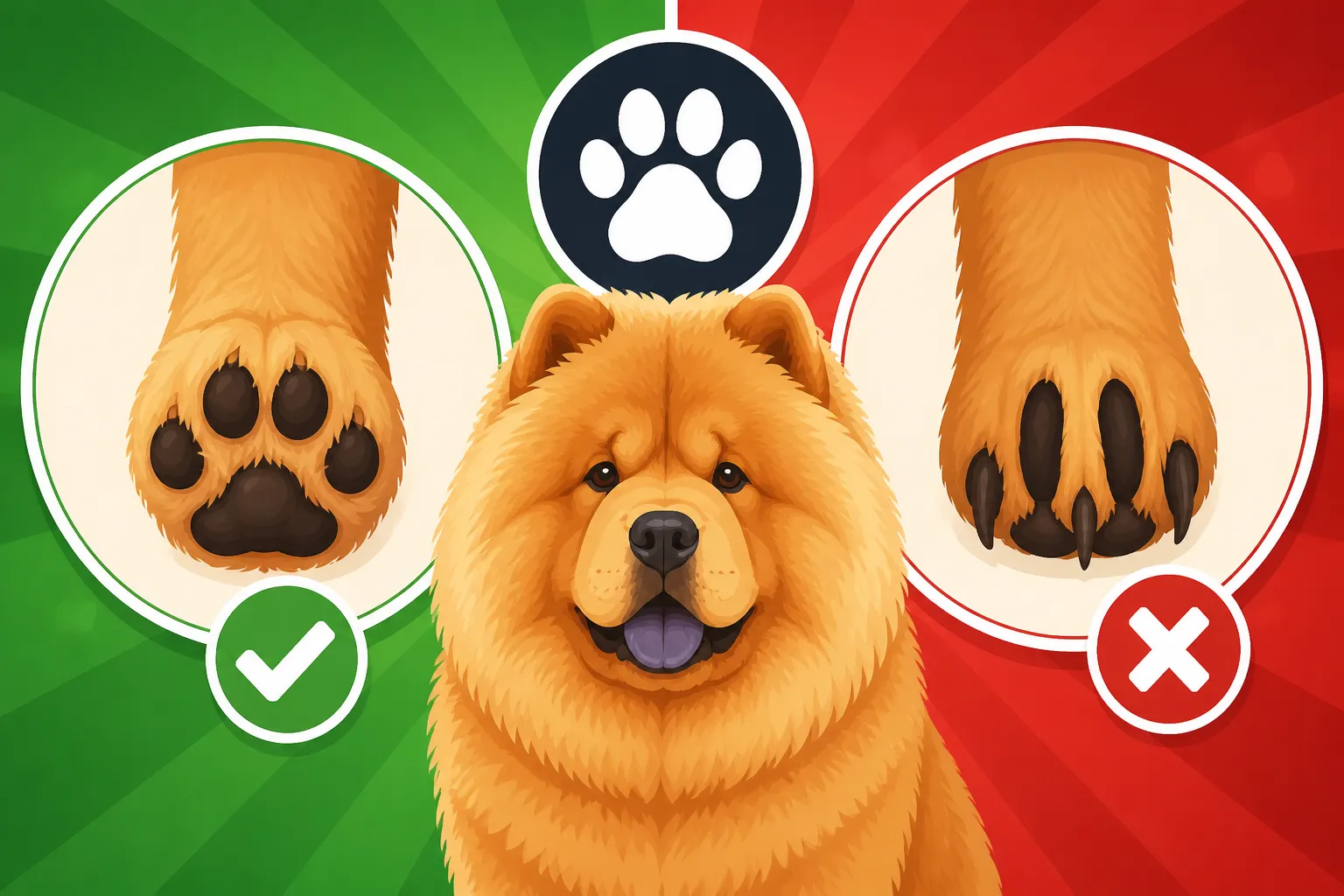
In Chow Chow breed descriptions, the feet are characterized as small, round, compact, and cat-like, with the dog standing well up on its toes. The phrase is about the paw’s overall appearance and how it meets the ground. It does not mean the dog has a cat’s paws, retractable claws, or unusual anatomy.
A Chow Chow’s foot should look gathered rather than broad and flat. The toes sit close together, and the pads help cushion the paw as the dog walks. From the side, the dog appears supported on its toes instead of settling heavily onto a flattened foot. This compact look contributes to the breed’s distinctive, firm outline.
That description is useful when discussing conformation, or how closely a dog’s structure matches the breed type. It is not a health diagnosis by itself. A paw that looks a little different from a show dog’s may still be comfortable and functional; pain, persistent limping, swelling, or sudden changes matter more than whether the paw looks perfectly “cat-like.”
What the standard is asking you to look for
The key qualities are compactness, roundness, and a well-supported stance. When your Chow Chow is standing naturally on a level surface, the toes should not look widely spread, and the paw should not seem to collapse outward. The dog should be able to walk comfortably and bear weight without favoring one foot.
“Small” is relative to the dog’s overall build. It does not mean the feet should look delicate or unable to support a sturdy dog. If you are comparing dogs, remember that coat, camera angle, stance, and the dog’s age can all change how large or rounded the feet appear. A fluffy coat can also obscure the outline of the toes.
The paw description is one part of a much bigger picture. A dog’s proportions, movement, temperament, and overall condition all matter; no single feature tells the whole story. For more on the breed’s body proportions, see What a Chow Chow Weighs and How Tall It Stands.
How to assess a Chow Chow’s feet at home
Look at the feet while your dog is standing and walking
Start with a calm, ordinary observation. Ask your dog to stand on a flat, nonslip surface, such as a dry floor or a patch of pavement. Look at each paw from the front and side. Notice whether the toes appear close together, whether the dog distributes weight evenly, and whether one foot looks noticeably different from the other three.
Then watch your dog walk at a relaxed pace. A compact paw does not guarantee a particular gait, and a paw that appears slightly splayed in one moment may look more gathered when the dog stands squarely. Avoid forcing the feet into a pose or repeatedly handling them if your dog is uncomfortable. A strained stance can make a healthy foot look abnormal, while a thick coat may hide the details you are trying to see.
Chow Chows have a characteristic way of moving, so judging foot shape from a single stride can be misleading. If you are curious about the breed’s movement, Why a Chow Chow Walks Stiffly explains why its gait can look different from that of many other dogs. The hind-leg structure is part of that picture too; Why the Chow Chow's Rear Leg Is Almost Straight provides more context.
Notice changes, not just differences from a picture
A paw that has always looked a little broad is different from one that becomes swollen or sore over a day. Pay attention to changes in weight-bearing, repeated licking, reluctance to walk, tenderness when touched, broken nails, cuts, or redness between the toes. Those signs are more useful than comparing your dog’s feet with an idealized photograph.
If your Chow Chow suddenly limps, cannot comfortably put weight on a foot, or seems to be in significant pain, contact a veterinarian. A new paw problem might involve a torn nail, a thorn, a pad injury, inflammation, or another issue that cannot be sorted out by looking at the foot’s shape alone. Do not assume a sudden change is simply a breed trait.
For routine questions, take a clear photo of each paw while your dog is standing naturally and note when you first noticed the difference. That can help you describe the concern during a veterinary visit. The practical distinction is simple: breed type is about general structure; discomfort and abrupt changes call for attention to health.
Cat feet, splayed toes, and other paw variations
How a compact paw differs from a splayed paw
A compact paw has toes that sit relatively close together, creating a rounded outline. A splayed paw looks wider because the toes spread apart. The difference can be subtle, especially when the dog is standing on a slippery floor, shifting its weight, or placing one foot at an angle.
| What you notice | What it may mean | What to do |
|---|---|---|
| Rounded paw with toes held close | Consistent with the compact, cat-like description | Keep up normal paw and nail care |
| Toes spread briefly on a slippery surface | The dog may be adjusting for traction | Recheck on a stable, nonslip surface |
| One paw looks newly wider or swollen | Possible change from injury or irritation | Contact your veterinarian if it persists or is painful |
| Long hair hides the toe outline | Coat may make assessment difficult | Have the feet tidied safely if needed |
| Limping or reluctance to bear weight | A possible health problem, not simply a conformation question | Seek veterinary advice |
A splayed appearance does not automatically mean something is seriously wrong. Some dogs naturally have feet that look less compact than the ideal description, and posture can change the appearance. But if the toes are spreading alongside soreness, weakness, or a change in movement, ask a veterinarian to examine the dog rather than trying to correct the foot yourself.
The breed term is not a reason to reshape the paw. Do not tape toes together, trim nails unusually short to change the stance, or use restrictive devices without veterinary guidance. Those approaches can cause discomfort and will not safely turn a dog’s natural foot structure into a different one.
Puppy feet and normal variation
Puppies are still growing, and their proportions can look different from those of adults. A young Chow Chow may seem a little loose or awkward on its feet as it learns to move and grows into its body. That alone does not establish whether its adult feet will match the breed description closely.
Look for comfortable, even movement rather than trying to predict a puppy’s final conformation from one snapshot. A puppy that plays, walks, and bears weight normally may simply have feet that look different at that stage. If the puppy consistently limps, cries when a paw is touched, or avoids using a leg, contact the breeder and a veterinarian instead of waiting for the dog to “grow out of it.”
If you are choosing a puppy, ask the breeder how the litter is moving and whether any puppy has shown ongoing lameness or a paw problem. Breed structure matters, but it should not replace questions about health, temperament, and the parents’ overall condition. The same care applies when meeting other dogs: How a Chow Chow Differs From an Akita and How a Chow Chow Differs From a Shar Pei can help put breed-specific features into context.
Paw care that supports a healthy, comfortable stance
Keep nails and paw hair manageable
Overgrown nails can affect how a dog places its feet. If a nail is long enough to press against the floor while your Chow Chow stands, it may change the paw’s contact with the ground and make walking uncomfortable. Check the nails regularly, and trim them gradually if your dog tolerates it. If nail care is stressful or you are unsure where to cut, ask a groomer or veterinary professional to show you a safe approach.
Hair between the toes can collect debris and make the paw outline harder to inspect. It may be tidied for cleanliness and comfort, but the goal is not to sculpt the paw into a show-ring shape at home. Take care not to cut close to the skin, and stop if your dog becomes distressed. For a broader overview of safe foot trimming, see Whether a Chow Chow's Feet Can Be Trimmed.
For basic grooming supplies, some owners look at retailers such as Chewy for items like nail clippers, a comb, or paw-cleaning products. Choose tools that fit your dog and your comfort level rather than buying something just because it is marketed for a particular breed. If your Chow Chow resists paw handling, short, positive practice sessions can make care easier; Teaching a Chow Chow to Have Its Feet Handled offers a step-by-step approach.
Check paws after walks and make handling predictable
After a walk, look between the toes and around the pads for burrs, grit, small cuts, or irritation. This is especially useful after walking through dry grass, gravel, or areas where seed heads can cling to fur. Wipe away dirt with a damp cloth and dry the feet if they remain wet. Chewy may carry paw wipes and other grooming basics, but a clean damp cloth is often enough for routine dirt; avoid fragranced or medicated products unless your veterinarian recommends them.
Make paw checks brief and predictable. Start by letting your dog see and sniff the grooming tool, then touch one paw lightly and reward calm behavior. You do not need to complete all four feet in one sitting. If the dog pulls away, growls, or stiffens, pause and give it space rather than holding on tighter. Building cooperation is safer than turning a routine check into a struggle.
A Chow Chow’s feet do not need to be handled only when there is a problem. Gentle practice during calm moments helps you notice what is normal for your own dog, making it easier to spot a true change later. If you are choosing supplies through Chewy or another retailer, match them to the task: a comb for tangles is not a substitute for nail clippers, and cleaning wipes are not a treatment for a sore or infected paw.
Disclaimer
This article is for general informational purposes only and does not constitute professional advice. Laws, prices and regulations vary by location and change over time. Consult a qualified professional for guidance on your specific situation.