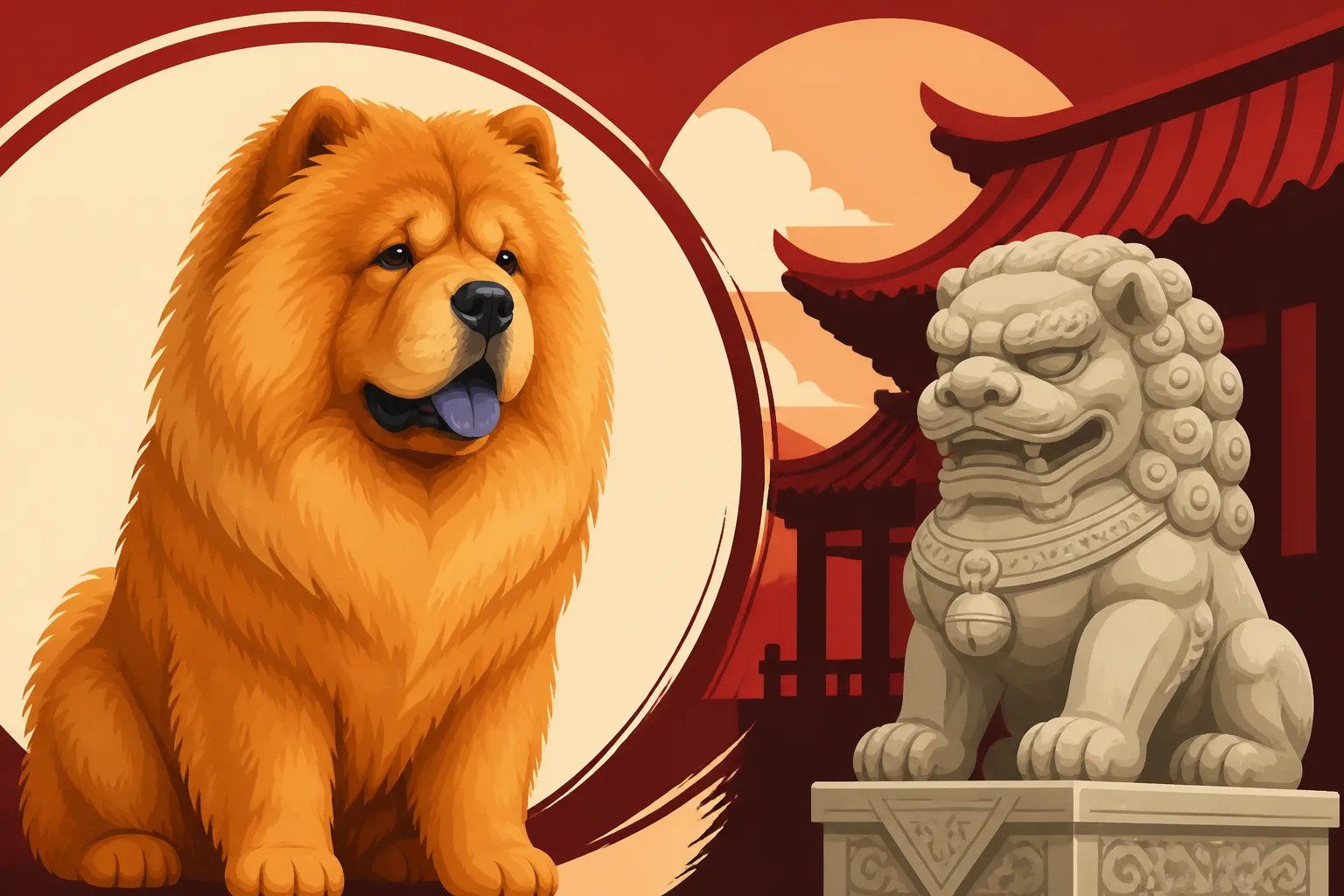
Whether a Chow Chow Appears in Chinese Sculpture
It’s a truly captivating thought for any Chow Chow enthusiast: did the majestic, lion-like dogs we cherish today roam the courtyards of ancient China, captured in stone or clay by skilled artisans? Many owners feel an undeniable connection to history when they look at their Chow Chow, pondering if this distinctive breed, with its unique scowl and regal bearing, truly inspired the "lion dog" figures that dot ancient Chinese temples and tombs. This guide will explore the fascinating historical and artistic evidence, looking at how the Chow Chow's ancestors likely appeared in Chinese sculpture and what those ancient carvings tell us about the breed's deep roots.
Tracing Canine Depictions in Ancient Chinese Art
For millennia, dogs have played integral roles in human societies across the globe, and ancient China was no exception. From hunting companions to guardians of the home and even spiritual protectors, canines were deeply woven into the fabric of daily life and religious beliefs. Naturally, their presence often found its way into the art forms of the time, providing us with intriguing glimpses into their appearance and significance.
Early Dynasties and the Role of Dogs
Archaeological discoveries from China reveal that dogs were domesticated as early as the Neolithic period, with their remains found in settlements dating back thousands of years. During the Shang Dynasty (c. 1600–1046 BCE), dogs were not only companions but were also sometimes sacrificed and buried with their masters, highlighting their perceived importance even in the afterlife. The art from these early periods might not always offer highly detailed, breed-specific representations, but it clearly indicates the presence and value placed on these animals. As we move into later dynasties, the artistic renderings become more sophisticated, offering greater insights.
The Zhou Dynasty (c. 1046–256 BCE) continued to depict dogs in various forms, often in bronze ware or jade carvings. These early images tend to be stylized, focusing on the essence of the dog rather than precise anatomical details we might associate with modern breed standards. However, the general impression often conveys a powerful, alert animal. It’s a starting point, a foundation upon which more recognizable forms would later emerge. Understanding these early artistic trends helps us appreciate the evolution of canine representation and how the unique features of a dog like the Chow Chow might have gradually become more distinct in art.
The Symbolism of Canines in Chinese Culture
Throughout Chinese history, dogs held a rich tapestry of symbolic meanings. They were seen as loyal companions, fierce protectors against evil spirits, and symbols of good fortune. This symbolic weight often influenced how they were depicted in art. For instance, the "lion dog," or foo dog as they're often called in the West, became a prominent motif, particularly as guardians outside imperial palaces, temples, and government offices. These mythical creatures, often portrayed with powerful, muscular bodies and flowing manes, were believed to ward off malevolent influences and symbolize prosperity.
While these foo dogs are stylized and often imbued with mythical elements, it's undeniable that their inspiration likely came from real, lion-like dogs that existed in China. The Chow Chow, with its natural mane, sturdy build, and dignified stance, fits this description remarkably well. The connection isn't just coincidental; it speaks to a cultural appreciation for dogs that possessed certain powerful and protective attributes, attributes that the Chow Chow embodies physically. These symbolic roles meant that artisans weren't always aiming for photographic realism, but rather an idealized form that conveyed strength and guardianship.
Identifying Chow Chow Characteristics in Sculptural Forms
When we look for the Chow Chow in ancient Chinese sculpture, we're not necessarily searching for a perfect replica of a modern show dog. Instead, we're looking for consistent features that align with the breed's most iconic traits. These are the details that would have stood out to ancient observers and that artists would have chosen to emphasize.
The Iconic "Lion Dog" Appearance
The Chow Chow is often referred to as a "lion dog" because of its distinctive full mane, sometimes called a ruff, around its head and shoulders. This powerful, leonine appearance is a hallmark of the breed, especially in the Rough Coated variety. When observing ancient Chinese sculptures, particularly those from the Han Dynasty (206 BCE – 220 CE) onwards, we frequently encounter dog figures with these very characteristics. Sculptures found in tombs, or even decorative pieces, often feature a robust build, a broad skull, and a pronounced ruff. What Han Dynasty Bas Reliefs Show can offer further insights into these early artistic representations.
Think about the impressive guardian statues often positioned outside important buildings; many have a thick, almost exaggerated ruff, a sturdy, compact body, and a somewhat serious, watchful expression. While these might be idealized or even slightly mythical, the underlying features strongly suggest a dog with a dense, stand-off coat and a powerful physique – qualities inherent to the Chow Chow. It’s not just the hair, though; it's the overall impression of solidity and presence that aligns so well.
Artistic Interpretations of the Distinctive Chow Chow Gait and Build
Beyond the coat, a Chow Chow's unique structure influences its movement and silhouette. The breed possesses relatively straight rear legs, which results in a somewhat stilted or ponderous gait, giving it a distinctive movement that is often described as "stuffy" or "paddling." This isn't a flaw, but a characteristic bred into them for purposes like guarding or hunting in specific terrains. This unique build means a Chow Chow stands squarely and powerfully.
In ancient sculptures, many dog figures are depicted with a solid, blocky body and a very upright, almost unyielding posture. While movement is hard to capture in static sculpture, the robust, balanced stance often seen in these ancient works aligns with the Chow Chow's physical presence. Their compact body and powerful neck also contribute to an overall impression of strength and endurance, which would have been valued in a working dog and subsequently reflected in art. You can learn more about this unique structure in Why a Chow Chow's Straight Rear Leg Limits Running.
A lesser-known but equally telling feature is the Chow Chow's deep-set eyes and the characteristic "scowl" created by the folds of skin around its eyes and muzzle. This contributes to their rather solemn, discerning expression. What the Standard Means by a Chow Chow's Scowl gives an idea of how this look is valued even today. While fine facial details can be challenging to render in rough stone or aged pottery, many ancient canine sculptures do possess a somewhat severe or watchful facial expression, often with eyes that seem slightly recessed, echoing this particular Chow Chow trait.
Notable Examples and Periods of Chow Chow-Like Sculpture
The pursuit of identifying Chow Chows in ancient Chinese art often leads us through various dynasties, each with its own artistic styles and preferred subjects. While a definitive "This is a Chow Chow" label is rare for ancient works, the accumulation of circumstantial evidence is compelling.
Han Dynasty Pottery and Bas Reliefs
The Han Dynasty is particularly rich in its depictions of dogs. It was a period of significant cultural and artistic flourishing, and dogs were frequently included in burial contexts, both as actual sacrifices and as pottery figures (mingqi) meant to accompany the deceased into the afterlife. These pottery figures often show dogs with a sturdy build, a curled tail over their back, and sometimes a hint of a dense coat or mane.
Consider the various ceramic dog figures unearthed from Han tombs. Many exhibit a robust physique, with strong, muscular legs and a thick neck. The tails are almost invariably curled tightly over the back, a hallmark feature of the Chow Chow. Even if the details are somewhat simplified due to the medium and artistic style, the overall impression strongly points to a dog breed with these characteristics. Han Dynasty Pottery Shows a Dog That Looks Like a Chow Chow delves deeper into these specific examples. It’s fascinating to imagine that the people of the Han Dynasty appreciated and immortalized dogs that looked quite similar to our modern-day Chows.
Imperial Guardians and Temple Dogs
As Chinese architecture and religious practices evolved, so too did the role of guardian figures. The iconic "lion dogs" or Shishi that flank the entrances of temples, palaces, and homes across China and East Asia are perhaps the most famous examples of canine sculpture. While highly stylized and often infused with mythical attributes – sometimes depicted with dragon claws or horns – their core inspiration is widely believed to be the powerful, lion-like dogs of China.
The Chow Chow, with its distinctive appearance, has long been considered one of the primary candidates for inspiring these majestic guardians. The term "Songshi Quan," which means "puffy-lion dog," is an ancient Chinese name for the Chow Chow, further cementing this connection. You can read more about this in What Songshi Quan Means. These sculptures embody strength, dignity, and a protective spirit, qualities that are intrinsically linked to the Chow Chow. The very existence of such an ancient breed, known for its protective nature and lion-like appearance, makes it highly plausible that they were the real-life muses for these grand artistic statements. Even today, modern Chow Chows, much like their ancient counterparts guarding temples, can be found diligently protecting their homes and families. Owners will ensure they have the best food and supplies for their noble guardians, readily available from places like Chewy.
The Enduring Legacy: From Ancient Art to Modern Companion
The journey of the Chow Chow, from likely inspiration for ancient Chinese sculpture to a beloved companion in homes worldwide, is a testament to its enduring appeal and distinctive heritage. This breed carries with it a deep sense of history, a silent narrative carved in stone and painted on pottery.
Bridging the Past and Present Through Art
The ancient sculptures, though often generalized or idealized, offer a tangible link to the Chow Chow's past. They show us that for centuries, a type of dog resembling the Chow Chow was present and highly valued in Chinese society. These artistic depictions allow us to envision the breed's ancestors performing various roles, from companions to guardians, and even participating in imperial hunts, as mentioned in What the Chow Chow Did for a Chinese Emperor. The continuity of these features across millennia is remarkable.
Today, when we look at a Chow Chow, we are seeing a living piece of history. The very features that captivated ancient artisans – the regal ruff, the deep-set eyes, the sturdy build, the curled tail – are still present in our modern Chows. It’s a powerful connection that adds another layer of appreciation for this unique breed. The pride of owning such an ancient dog is part of the Chow Chow experience, reminding us that their lineage stretches back further than many other breeds.
The Pride of Owning an Ancient Breed
Owning a Chow Chow is truly a unique experience. Knowing that your dog's ancestors likely inspired the magnificent "lion dog" sculptures of ancient China adds a profound sense of heritage to your daily life. It’s not just a dog; it’s a living monument to a rich cultural past. This lineage can explain some of their more "cat-like" or independent behaviors, as they were bred for different purposes than many modern companion breeds.
For dedicated Chow Chow owners, understanding this historical context can deepen their bond with their pet. It helps explain their inherent dignity, their sometimes aloof nature, and their unwavering loyalty to their chosen person. While ancient artisans captured their likeness in stone, today's Chow Chow owners can ensure their furry emperors receive top-notch nutrition and care, finding everything from specialized food to grooming tools at reputable online retailers like Chewy. The dedication to their dogs shown by ancient Chinese artisans is mirrored in today's committed Chow Chow parents, who pour over health information and seek the best supplies, often from convenient sources like Chewy, to honor their unique companions. Whether they were called "bear dogs" or "wolf dogs" as noted in Whether a Chow Chow Was Called a Bear Dog or Whether a Chow Chow Was Called a Wolf Dog, their distinctive traits have certainly left an indelible mark on history and art.
| Chow Chow Trait | Common Depiction in Chinese Sculpture | Relevance/Connection |
|---|---|---|
| Lion-like Mane | Thick, flowing ruff around the neck | Often exaggerated in guardian figures, symbolizing power and protection. This dense coat was also practical in cold climates, and its impressive appearance naturally lent itself to artistic idealization. |
| Deep-set Eyes / Scowl | Hooded eyes, sometimes giving a stern look | Contributes to the formidable, protective appearance, suggesting vigilance and an intimidating presence. While artistic interpretations may vary, the essence of a watchful, serious demeanor is often conveyed. |
| Curled Tail | Tail carried over the back, tight curl | A distinctive feature frequently replicated in dog sculptures across various dynasties, from small pottery figures to grand guardians. This consistent detail strongly links these ancient depictions to the Chow Chow's characteristic tail set. |
| Stiff, Stilted Gait | Stocky build, upright posture | Reflects the unique rear angulation and powerful stance of the Chow Chow. Sculptures often convey a sense of immobility and strength, rather than dynamic motion, which aligns with the Chow Chow's typical steady, unhurried movement and solid, muscular frame. |
| Broad Skull, Flat Face | Powerful head, sometimes slightly brachy | Common in 'lion-dog' and guardian figures, emphasizing strength and a formidable presence. The broad head and strong jawline contribute to the overall impression of a capable protector. |
Disclaimer
This article is for general informational purposes only and does not constitute professional advice. Laws, prices and regulations vary by location and change over time. Consult a qualified professional for guidance on your specific situation.