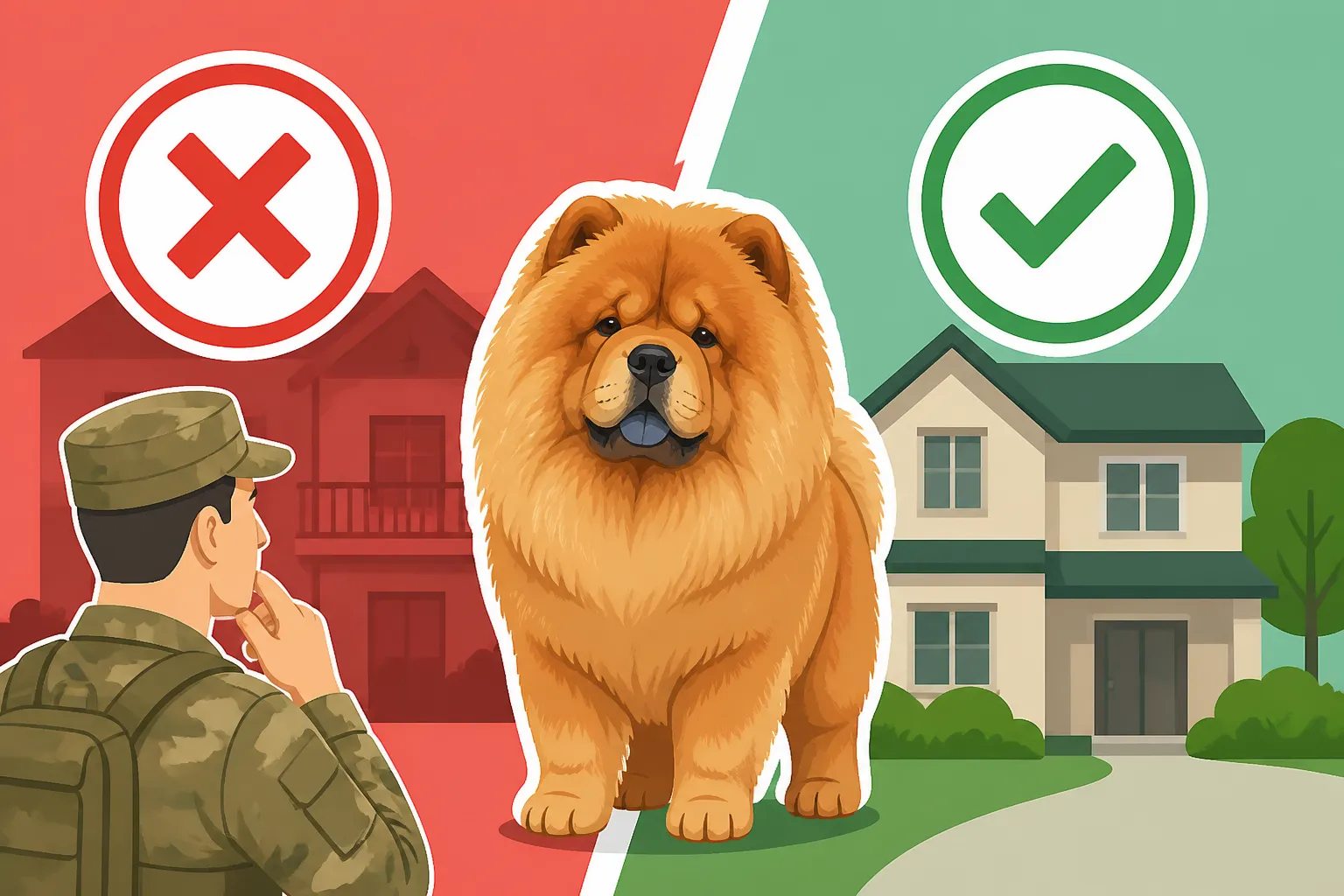
Whether a Chow Chow Is Restricted on Military Housing
One of the most significant stresses military families face, especially when PCS orders come through, is figuring out if their beloved dog can join them in their new home. For Chow Chow owners, this anxiety is often compounded by the widespread presence of breed-specific legislation and housing restrictions that can make finding suitable accommodation incredibly difficult. This guide will meticulously break down the policies regarding Chow Chows in military housing, explain how to navigate these often-complex rules, and offer practical advice for ensuring your furry family member can stay with you, no matter where your service takes you.
The Landscape of Breed Restrictions on Military Housing
Moving with pets is already a logistical puzzle, but for military families, the challenge is often magnified by strict breed restrictions imposed by housing authorities, both on-base and off. These policies are not arbitrary; they stem from a combination of liability concerns, perceived safety risks, and insurance requirements. Understanding the foundation of these rules is the first step in successfully navigating them with your Chow Chow.
Why Restrictions Are Put in Place
Breed restrictions on military installations typically arise from a desire to mitigate risk. The Department of Defense, and by extension, individual base housing authorities, have a responsibility to ensure the safety and well-being of all residents. Certain dog breeds, often those with a history of being used for guarding or fighting, or those with strong prey drives, are frequently identified as having a higher potential for causing injury. While many of these perceptions are based on generalization rather than individual temperament, the policies aim to create a predictable environment. Insurance carriers also play a significant role here; many homeowner's insurance policies, which cover the housing units, may either refuse to cover or charge higher premiums for properties where certain breeds reside. This directly impacts the cost and feasibility of providing housing. Furthermore, past incidents on installations, regardless of breed, can sometimes lead to blanket restrictions being applied more broadly.
The focus is less on whether an individual dog is well-behaved and more on the statistical probability assigned to its breed. While frustrating for responsible owners, this bureaucratic approach allows housing offices to create clear, enforceable guidelines. It's not about singling out your sweet, fluffy companion, but about adhering to a set of rules designed for broad application. This perspective can make it harder to argue on a case-by-case basis, emphasizing the need for thorough preparation and understanding of the exact policy language.
These restrictions are also influenced by community standards and perceived public safety. Military bases are tightly-knit communities, and any incident involving a dog can quickly create tension and concern among residents. To avoid such issues, housing commands often err on the side of caution, implementing blanket bans on breeds that have, rightly or wrongly, gained a reputation for aggression or unpredictability. This creates a difficult situation for owners of breeds like the Chow Chow, who know their individual dog's loving nature but are up against institutional policies.
Common Breeds on Restricted Lists
While the exact list can vary slightly from one installation to another, there's a fairly consistent roster of breeds that routinely appear on restricted lists across military housing, as well as in many civilian apartment complexes and homeowner's insurance policies. These typically include breeds like Pit Bulls (various types), Rottweilers, Doberman Pinschers, German Shepherds, Akitas, Mastiffs, and often, wolves and wolf-hybrids. The common thread among these breeds is their perceived strength, protective instincts, or past association with dog fighting.
Chow Chows, unfortunately, frequently find themselves on these restricted lists. Their powerful build, deep-set eyes that can make them appear perpetually scowling, and reputation for being aloof and sometimes protective, contribute to their inclusion. Despite being known by their owners as fiercely loyal and calm companions, the breed's historical guarding instincts and sometimes misunderstood body language often lead to them being categorized as "dangerous" or "aggressive" by insurance companies and housing authorities. Owners need to be acutely aware that their Chow Chow will likely be scrutinized under these rules.
It’s not just the purebred Chow Chows that face these restrictions. Often, any dog that appears to be a mix of a restricted breed, even if DNA tests prove otherwise, can be denied. This can be particularly challenging for rescue Chows where parentage might be unknown. This ambiguity means that a visual assessment by a housing officer or even a neighbor's complaint could trigger a review, adding another layer of stress for military families trying to secure housing with their furry friend.
Where the Chow Chow Stands in Military Housing Policies
Understanding the general landscape of breed restrictions is one thing, but pinpointing exactly how your Chow Chow will be affected on a military installation requires diving into the specifics of Department of Defense directives and local base policies. This is where the real legwork begins for military pet owners.
Official Department of Defense Guidance
For a long time, individual military installations had a lot of autonomy in setting their own pet policies, leading to a patchwork of rules across the branches and geographic locations. This meant what was acceptable at Fort Bragg might be a complete no-go at Camp Pendleton. However, the Department of Defense (DoD) has worked to standardize some aspects of pet ownership on military installations. There is often overarching guidance from the DoD that outlines categories of restricted animals, which usually includes specific dog breeds, exotic animals, and sometimes even limits on the number of pets.
While the DoD aims for uniformity, the implementation can still have nuances at the installation level. Generally, the guidance leans towards identifying breeds deemed "aggressive" or "dangerous." Unfortunately, the Chow Chow often appears on these master lists. This means that at the highest level, there's a presumption against the breed. The reasons cited typically align with the general concerns: perceived aggression, strong guarding instincts, and potential for harm. Owners should be prepared that the default position for many DoD housing operations will be to consider the Chow Chow restricted. This requires proactive planning and a deep dive into specific installation rules. Which Home Insurers Name the Chow Chow on a Banned List often reflect similar concerns as military housing policies, highlighting a broader industry trend against certain breeds.
It's important to remember that these policies are subject to change. What was allowed last year might not be this year, or vice versa, especially if there's been a local incident or an update to DoD-wide directives. Therefore, relying on outdated information or anecdotal experiences from other military families can be risky. Always seek out the most current policy documents directly from the housing office of your gaining command or installation. This level of diligence is crucial for a smooth transition with your Chow Chow.
Installation-Specific Variances and Exceptions
Despite the overarching DoD guidance, individual military installations often retain some authority to refine or interpret these policies, creating variances. This means that while a Chow Chow might be on a general restricted list, a specific base might have a nuanced approach. Some installations might allow a restricted breed if the dog has undergone specific training and certification, like a Canine Good Citizen award, or if it's a certified service animal. Others might have a grandfather clause for existing pets when new policies are introduced, though this is less common for new arrivals.
For example, one base might have a blanket ban, while another might require a temperament evaluation by a certified professional, mandatory liability insurance coverage (often an additional rider to your personal liability insurance, sometimes quite costly for a restricted breed, or specific pet insurance plans like Healthy Paws or Chewy that do cover breed-restricted animals), or a specific approval process through the housing command. These exceptions are rare and usually require extensive documentation and advocacy from the owner. You might need to provide veterinary records, training certificates, and a letter from your previous landlord or housing office attesting to your Chow Chow's good behavior.
It is absolutely paramount to contact the housing office at your specific gaining installation before you arrive. Do not rely on information from general online forums or even other military members at different bases. Get the exact, current pet policy in writing. Ask about specific breed restrictions, weight limits, and any processes for requesting waivers or exceptions for breeds on the restricted list. This direct communication is your best tool for understanding the particular rules your Chow Chow will face, as policies can even vary between different types of housing on the same base (e.g., enlisted housing versus officer housing).
How to Navigate Military Housing with Your Chow Chow
Facing breed restrictions can feel like an uphill battle, but with careful preparation and persistent communication, you can significantly improve your chances of securing appropriate housing for your Chow Chow. The key is to be proactive and informed every step of the way.
Proactive Research and Communication
The moment you receive PCS orders, or even if you're just considering adopting a Chow Chow while in the military, your first step should be extensive research. Look up the pet policies of the installations you might be assigned to. Many military base websites will have their housing rules, including pet policies and restricted breed lists, available online. However, don't stop there. This is just a starting point.
The next critical step is direct communication. Call the housing office or the specific lodging facilities at your new duty station. Ask very specific questions about their pet policy, explicitly mentioning your Chow Chow. Inquire about:
- Their current list of restricted breeds.
- Whether there are any exceptions for certified service animals or emotional support animals (understanding the difference is crucial here).
- Any waiver processes.
- Required documentation for pets.
- Maximum number of pets allowed.
- Any associated fees or deposits.
Get the answers in writing if possible, whether through email or by requesting a copy of their official pet policy document. This written documentation can be invaluable if any discrepancies or challenges arise later. Building a positive relationship with the housing office from the outset can also be beneficial. Remember, they are often dealing with many families and inquiries, so being organized and polite can go a long way.
Required Documentation and Health Records
When you do find an installation that might permit your Chow Chow, or if you need to apply for an exception, be prepared to provide a comprehensive dossier on your dog. This isn't just a casual conversation; it's often a formal application process. Think of it as presenting your dog's resume.
Essential documentation often includes:
- Proof of Vaccination: Up-to-date rabies, distemper, parvovirus, and often kennel cough vaccines.
- Spay/Neuter Certificate: Many military housing units require all pets to be spayed or neutered.
- Microchip Registration: Proof of current microchip registration with your contact information.
- Health Certificate: A recent health certificate from your veterinarian, especially if crossing state lines or moving overseas. This shows your Chow Chow is in good health and parasite-free.
- Behavioral References/Training Certificates: If your Chow Chow has earned obedience titles or undergone professional training, provide those certificates. A letter from a previous landlord or veterinarian attesting to your dog's good temperament can also be helpful. Brands like Chewy or Ollie often provide resources for responsible pet ownership, which can include tips on documenting your pet's health and training.
- Photographs: Clear, recent photos of your Chow Chow to confirm their appearance.
- Proof of Insurance: If required, proof of a specific liability insurance policy that covers your Chow Chow, particularly for "restricted" breeds. This could be a separate policy or an addition to your homeowner's insurance. Remember that What a Chow Chow Adds to a Homeowners Premium can be substantial for certain breeds.
The more thoroughly you document your Chow Chow's health and impeccable behavior, the stronger your case will be. These documents demonstrate that you are a responsible pet owner who has taken every step to ensure your dog is a well-adjusted and safe member of the community. What a Chow Chow Costs Over Its Lifetime will inevitably include these types of administrative and veterinary expenses.
Considering Off-Base Alternatives
Sometimes, despite your best efforts, military housing policies simply cannot accommodate your Chow Chow. This can be a tough pill to swallow, but it's important to have a backup plan. Exploring off-base housing options early in the PCS process can save immense stress later on.
Looking for housing in the surrounding civilian community opens up more possibilities, though you'll still encounter breed restrictions with many landlords and apartment complexes. Focus your search on independent landlords or smaller rental companies rather than large apartment communities, as they may have more flexibility. Be upfront about having a Chow Chow and be ready to provide all the documentation mentioned above, potentially even offering a higher pet deposit or a "pet rent" to ease their concerns. Finding an Apartment That Accepts a Chow Chow will require a similar dedicated effort.
Remember that living off-base comes with its own considerations, such as commuting to the installation, local school districts if you have children, and ensuring you still have access to base amenities if needed. It also means you'll be responsible for your own utility bills and potential property maintenance. This option provides more freedom regarding pet choice but also entails more personal responsibility for finding and maintaining housing. Many military families find this trade-off worthwhile to keep their entire family, furry members included, together.
The Impact of Breed Restrictions on Military Families
The constant uncertainty and the potential for separation caused by breed restrictions can take a heavy toll on military families. Pets are often considered integral family members, providing comfort and stability during frequent moves and deployments. The thought of having to rehome a beloved Chow Chow due to housing policies is heartbreaking and can significantly impact morale and well-being.
The stress isn't just emotional; it can also be financial. If on-base housing is denied, families face the burden of finding suitable, often more expensive, off-base accommodation. This might involve higher rent, additional pet deposits, or even needing to break a lease if a subsequent PCS leads to another restricted base. The search itself consumes valuable time and energy during an already demanding transition period. Moreover, the long-term impact on the dog itself cannot be overlooked. A Chow Chow, being a breed known for bonding deeply with its primary person, can find frequent moves and changes in environment particularly unsettling. How Territorial a Chow Chow Is and Why a Chow Chow Snaps at Someone It Did Not See highlights the importance of stable environments for their specific behavioral traits.
For this reason, being fully informed and proactive is your most powerful tool. Consider the long-term implications for your Chow Chow's well-being and your family's stability when making decisions about housing and pet ownership in the military. While the military lifestyle demands flexibility, advocating for your pet within the established guidelines is a vital part of being a responsible owner. Pet insurance providers like Healthy Paws can help manage the financial strain of unexpected vet bills, whether on or off-base, ensuring your Chow Chow remains healthy through every move. It's not just about finding a roof; it's about preserving the family unit.
| Military Housing Pet Policy | Key Considerations for Chow Chows | Actionable Steps for Owners |
|---|---|---|
| Breed Restrictions | Chow Chows often on "restricted" lists due to perceived aggression/liability. | Contact specific installation housing office ASAP for current policy. Get it in writing. |
| DoD Guidance | Overarching rules exist, but local interpretation varies. | Research DoD directives and local base supplements. |
| Installation-Specific Rules | Each base can have unique waivers, requirements, or exceptions. | Ask about temperament evaluations, special insurance, or training requirements. |
| Required Documentation | Comprehensive records crucial for approval or waivers. | Compile vet records (vaccines, spay/neuter, microchip), training certs, and a health certificate. |
| Insurance & Liability | Higher premiums or specific policies may be mandated. | Investigate pet liability insurance options, including from providers like Healthy Paws, early on. What Pet Insurance Costs on a Chow Chow at Eight can vary significantly. |
| Off-Base Options | May be necessary if on-base housing denies the breed. | Begin searching for civilian rentals early; be prepared for higher costs and pet deposits. Finding an Apartment That Accepts a Chow Chow is possible but requires effort. |
| Impact on Family | Emotional and financial stress of potential rehoming or difficult moves. | Plan well in advance, maintain open communication, and prioritize your Chow Chow's well-being. |
Disclaimer
This article is for general informational purposes only and does not constitute professional advice. Laws, prices and regulations vary by location and change over time. Consult a qualified professional for guidance on your specific situation.