When the First British Chow Chow Club Formed
A breed club may sound like a small footnote in Chow Chow history, but it helped turn scattered interest in the breed into an organized community. The first British Chow Chow Club formed in 1895, when the breed was attracting greater attention in Britain. Here’s what that milestone meant, how it fits into the breed’s arrival and recognition, and what it did—and did not—change.
When the first British Chow Chow Club formed
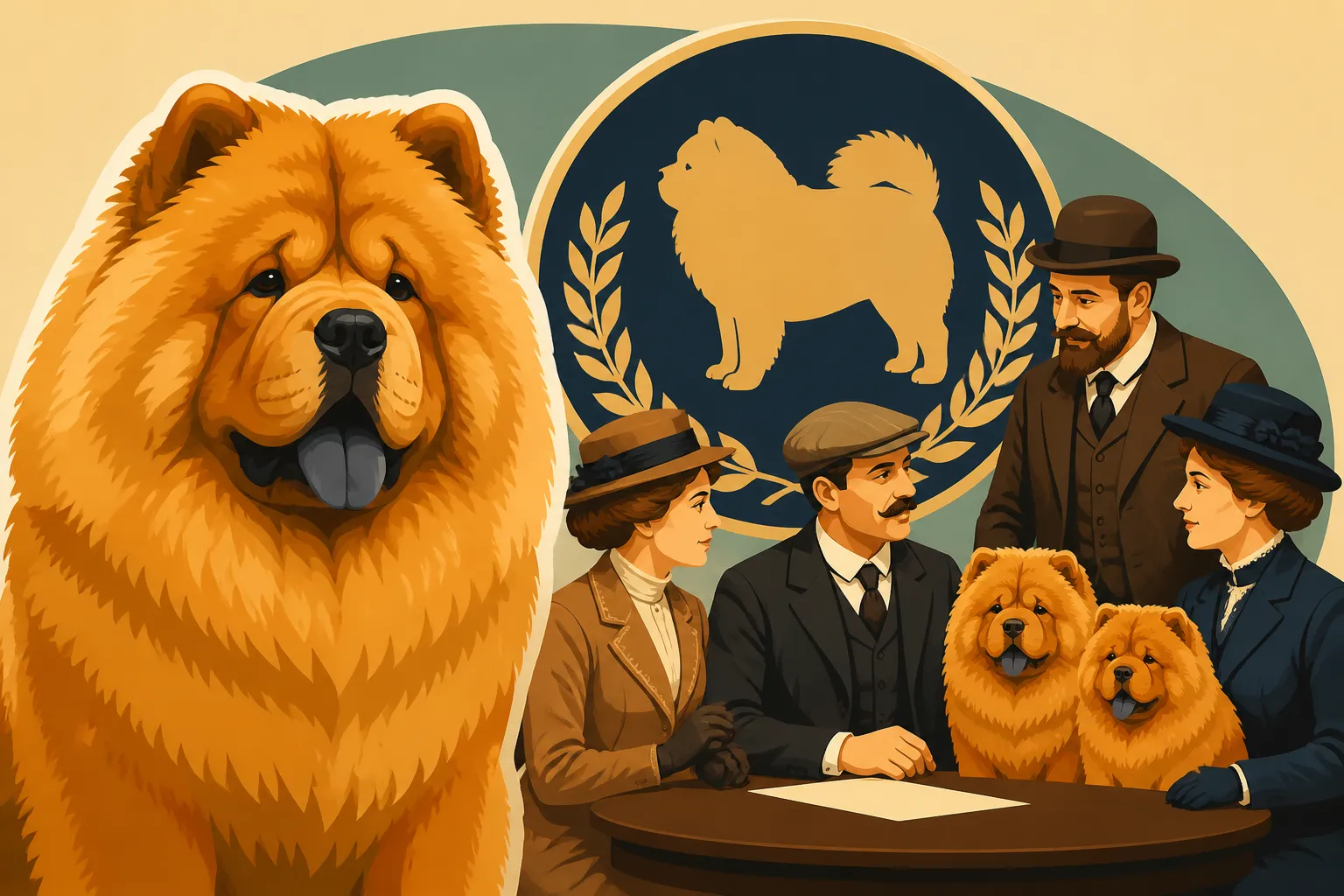
The club was established in 1895
The first British Chow Chow Club formed in 1895. That date marks the organization of people in Britain who shared an interest in the breed; it is not the date the Chow Chow first arrived in the country, nor the date the breed itself began.
That distinction matters because several milestones can get blurred together in a short breed history. A dog may be known in a country before a formal club exists. A kennel club may recognize a breed before or after enthusiasts create a club to support it. Registration, organized breed advocacy, and the arrival of individual dogs are related events, but they are not interchangeable.
The club’s formation is best understood as a sign that interest in Chow Chows had become established enough to support a dedicated organization. Enthusiasts could meet, exchange knowledge, and work toward a shared understanding of the breed. For a dog with a distinctive appearance and a relatively unfamiliar background to many British fanciers, that kind of coordination was valuable.
For a broader look at the earlier arrival of the breed, see How the Chow Chow Reached England. The club belongs to a later chapter: not the beginning of the breed’s presence in Britain, but a step in making that presence more organized.
It was a breed-club milestone, not a breed-origin story
The Chow Chow’s history reaches much farther back than the club’s founding. Its ancestry and early role are often discussed in relation to China, while its growing visibility in Britain belongs to a later period of international exchange and dog fancying. The 1895 club date therefore tells us about the development of organized interest in Britain, rather than where or when the breed originated.
It also helps to separate the club from the name. “Chow Chow” was already being used before the club existed, and the name has its own complicated history. If you’re untangling those details, Where the Name Chow Chow Came From looks specifically at how the English name became associated with the breed.
A simple timeline makes the distinction clearer:
| Milestone | What it represents |
|---|---|
| Chow Chows become known in Britain | The breed is present or attracting attention in the country |
| Kennel-club recognition | A national kennel organization recognizes the breed for its own purposes |
| The British Chow Chow Club forms in 1895 | Breed enthusiasts create a dedicated organization |
| The club develops its work | Members support shared knowledge, breed presentation, and community |
These events can occur close together, which is why short histories sometimes compress them into one sentence. But they answer different questions: when the breed was known, when it was officially recognized, and when its supporters organized themselves.
Why British fanciers organized a Chow Chow club
Shared knowledge helped define the breed
A breed club gives people a place to discuss what makes a dog representative of its breed. That can include appearance, movement, temperament, health, and the practical details of keeping and breeding the dogs. In the late nineteenth century, as formal dog showing and breed classification developed, agreement about those features was especially important.
That does not mean every early club member agreed about every detail, or that a club could instantly make the breed uniform. Rather, an organization gave enthusiasts a way to compare ideas and build a more consistent description over time. Without that shared conversation, breeders and judges might have relied on different expectations of what a Chow Chow should look like.
A club could also help newcomers learn the difference between a genuine breed characteristic and a passing fashion. The Chow Chow’s heavy coat, distinctive head, and blue-black tongue made it memorable, but a striking feature alone does not explain the whole dog. Breed-focused discussion helps put those visible traits in context.
For readers curious about one of the breed’s most recognizable features, Why a Chow Chow's Tongue Is Not Pink explores the tongue’s pigmentation and the questions it raises.
A club supported a community around shows and breeding
Dog clubs are not the same thing as kennel clubs. A kennel club registers dogs, sets broader rules, or administers shows and breed classifications. A breed club focuses on a particular breed and the people who care for it. In practice, the two kinds of organizations may interact, but they serve different roles.
For Chow Chow enthusiasts, having a dedicated British club meant there was a clearer place to share breed-specific knowledge and connect with others. That mattered for a breed still gaining recognition among people who may have known little about its history or needs. Meetings, publications, and show-related activity can all help a small community become more visible and better informed.
The club’s formation also fits into the wider rise of organized dog showing. As more breeds were exhibited and classified, fanciers had reasons to clarify what distinguished one breed from another. The British club’s establishment in 1895 reflects that wider movement, while remaining specifically tied to Chow Chow enthusiasts.
The club was one part of the breed’s public profile
The public profile of a breed is shaped by more than a club. Individual dogs, prominent owners, exhibitions, written descriptions, and the work of breeders can all contribute to familiarity. The British club offered a stable framework for enthusiasts, but it did not single-handedly introduce the Chow Chow to the country or make it popular overnight.
Queen Victoria’s interest in a Chow Chow is one well-known part of the breed’s British story. It is useful context, but it should not be mistaken for the club’s founding. For the royal connection, see When Queen Victoria Got a Chow Chow. The club came later, as breed interest became organized rather than resting only on attention to individual dogs.
The same caution applies to public displays. Exhibitions and other appearances can help people recognize a breed, but they are separate from the creation of a breed club. Whether the London Zoo Displayed Chow Chows explores another strand of the breed’s public history and helps show how many different paths contributed to its visibility.
How the 1895 club fits into wider Chow Chow history
British recognition and club formation are separate events
It is easy to assume that formal recognition and the founding of a breed club happened at exactly the same time. They did not have to. Recognition is an administrative milestone handled by a kennel organization; club formation is an organizational milestone made by breed enthusiasts.
That difference is useful when comparing national histories. Britain’s club was created for British Chow Chow supporters. Later developments in the United States followed their own path, shaped by local breeders, shows, and kennel-club systems. The existence of a British club did not automatically create an American organization or determine how the breed would be handled across the Atlantic.
For that reason, the date 1895 is a precise answer to one question—when the first British Chow Chow Club formed—but it should not be used as a catch-all date for every major change in the breed’s history. To compare the two countries’ development, see When the AKC Recognized the Chow Chow and When the Chow Chow Club of America Was Founded.
The club helped preserve a shared breed identity
A breed club’s influence is often gradual. It can encourage people to record information, discuss standards, support shows, and stay connected across generations of owners and breeders. Those efforts help a breed retain a recognizable identity even as its popularity and public image change.
This is particularly relevant for a dog whose appearance can invite strong assumptions. A Chow Chow may look plush and bear-like, but coat and expression do not tell someone everything about temperament, exercise, handling, or health. Breed clubs can help keep conversation grounded in the whole dog rather than a single striking feature.
That does not mean a club can prevent every poor breeding choice or guarantee that all dogs will match an ideal description. A club is a community and a resource, not a substitute for careful research or responsible decisions. Its historical significance lies in creating a dedicated structure for people to learn and participate.
The British story became part of an international one
The Chow Chow’s later history did not stop at Britain. The breed reached other countries, where local enthusiasts formed their own communities and worked within their own kennel systems. Those developments created a broader network of breed history, while each country retained its own dates and institutions.
The British club’s founding is therefore a useful early organizational marker, not the end point of the story. The American timeline, for example, includes both formal recognition and the creation of a dedicated club. Which Chow Chow Was the First AKC Champion offers another point of comparison by looking at an American show milestone.
When reading breed histories, it helps to ask which organization or country a date refers to. “The first club,” “the first registration,” and “the first champion” may all refer to different events, and they may happen in different places. Keeping those distinctions clear makes the timeline easier to follow.
What the club’s history means to Chow Chow owners today
History adds context, but it does not replace practical care
Learning that the first British Chow Chow Club formed in 1895 gives the breed a place within the history of organized dog fancying. It does not, by itself, tell a prospective owner whether a Chow Chow fits their home, schedule, or experience. Those decisions depend on the individual dog and the realities of daily care.
A person drawn in by the breed’s history may soon be thinking about grooming, feeding, and keeping a dog comfortable. A dense double coat needs regular attention, and owners may find it useful to compare grooming tools and everyday supplies through retailers such as Chewy. That practical research is separate from the historical role of breed clubs, but it often follows naturally from learning more about the breed.
Food is another individual decision rather than a historical one. If you are comparing options through Chewy or another retailer, consider your dog’s age, body condition, activity, and any veterinary guidance instead of choosing based on breed imagery or a product label alone. A Chow Chow’s heavy coat can also make changes in body shape less obvious, so regular hands-on checks matter.
Warm-weather planning deserves the same care. Owners looking for cooling products at Chewy should still treat shade, fresh water, and avoiding strenuous activity in hot conditions as essentials; a cooling item is not a replacement for sensible heat management. Breed history can be fascinating, but the daily work of keeping a dog comfortable is what turns interest into responsible ownership.
Use clubs as a starting point for informed questions
A breed club can be a useful place to learn about the breed’s history, common characteristics, and community. It is still wise to approach any club or breeder with specific questions. Ask how they discuss health, temperament, and responsible placement, and look for explanations that recognize individual variation rather than promising that every dog will behave or develop in exactly the same way.
The same approach applies to reading historical claims. Look for dates tied to a clearly identified event. If a source says “the breed was recognized” or “the first club appeared,” ask which country and which organization it means. That small habit prevents the most common confusion in the Chow Chow timeline.
The first British Chow Chow Club formed in 1895, at a point when breed interest had grown enough to support a dedicated organization. It was an important step in organizing British enthusiasts, but it was one milestone among many: the breed’s earlier presence, public attention, formal recognition, and later national clubs each belong to their own part of the story.
Disclaimer
This article is for general informational purposes only and does not constitute professional advice. Laws, prices and regulations vary by location and change over time. Consult a qualified professional for guidance on your specific situation.