Why a Chow Chow’s Tail Curls Over Its Back
A Chow Chow’s tail may look as if it has been curled into place, but the high, close curl is a familiar part of the breed’s silhouette. If you are wondering whether it is normal, how it develops, or what a change in tail carriage could mean, this guide explains the anatomy, breed features, everyday care, and signs that deserve a closer look.
Why a Chow Chow’s tail curls over its back
A high tail set is part of the breed’s outline
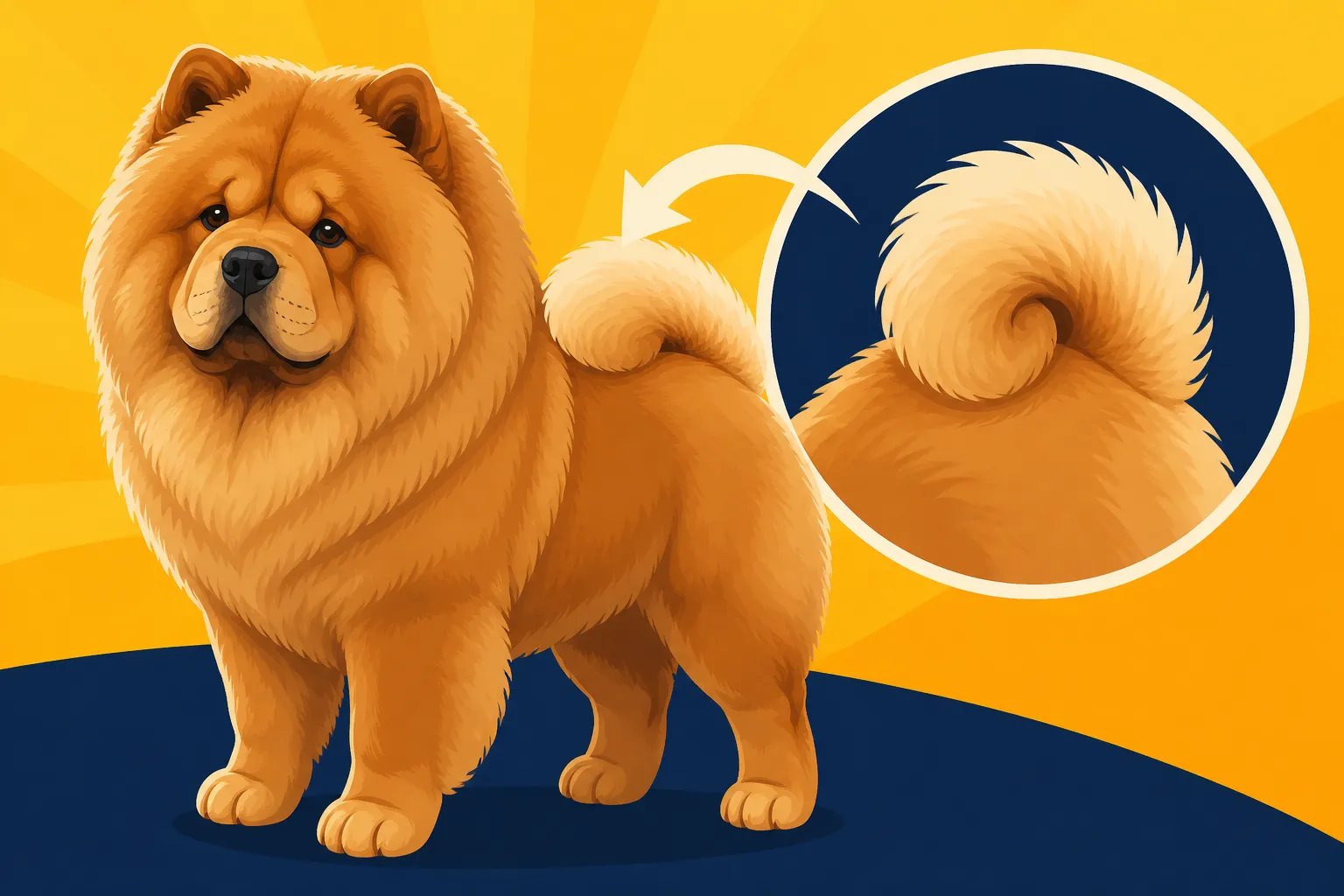
The Chow Chow’s characteristic tail is set high and carried over the back, often close against it. The tail is made of the same basic parts as any dog’s tail: a line of small bones, muscles, connective tissue, skin, and hair. What makes the Chow Chow’s tail look distinctive is how it is set and carried, together with its thick coat and plume-like feathering.
This is not a tail that has been curled by grooming, tied into position, or docked to create the breed’s appearance. A healthy Chow Chow typically holds it in a natural curve. The exact shape varies: one dog may have a more visible ring, while another’s tail may sit in a softer curve against the back. Coat thickness can also make the curl look tighter or more dramatic than it is.
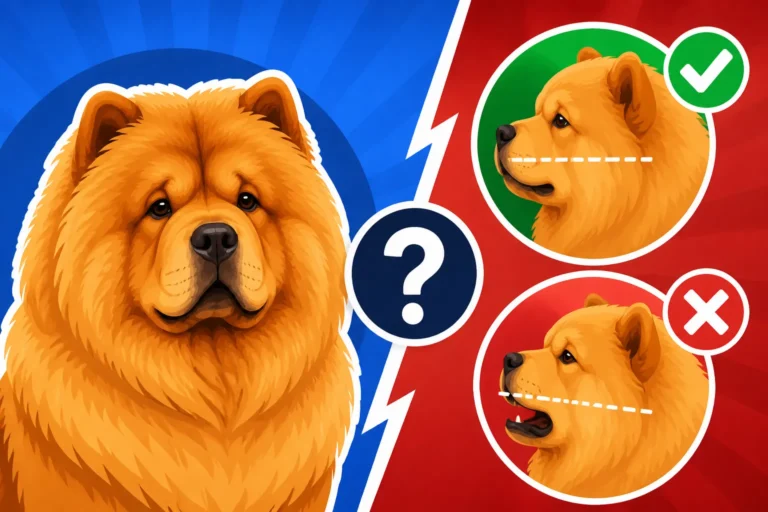
The tail is one part of a larger breed silhouette. A broad skull, small rounded ears, dense coat, and curled tail all contribute to the recognizable outline. If you are comparing the tail with the breed’s other physical features, What Gives a Chow Chow Its Scowl and What a Chow Chow Weighs and How Tall It Stands offer useful context for understanding how those features fit together.
The curl is not the same as a painful kink
A normal curled tail should not look swollen, sharply bent, or uncomfortable to touch. Its curve is generally smooth and consistent, and the dog should be able to move the tail at its base, even if the heavy coat makes the movement subtle. Some Chow Chows carry the tail more tightly over the back than others; variation alone does not mean there is a problem.
A kink is different from the breed’s usual curve. A sudden bend, an unusual angle, a limp tail, or a tail that hangs down when it normally rests over the back can be a reason to check in with a veterinarian. So can tenderness, swelling, a wound, or a sudden reluctance to sit or be handled near the tail. These changes do not identify a specific cause, but they are worth taking seriously.
It helps to judge your dog against their own normal posture rather than against a photo of another Chow Chow. If your dog has always carried the tail in a relaxed curl and moves comfortably, that is more reassuring than a comparison with a show photograph. If the shape or carriage changes unexpectedly, note when you first noticed it and what else has changed, such as activity, appetite, or willingness to jump.
The tail is one feature among many
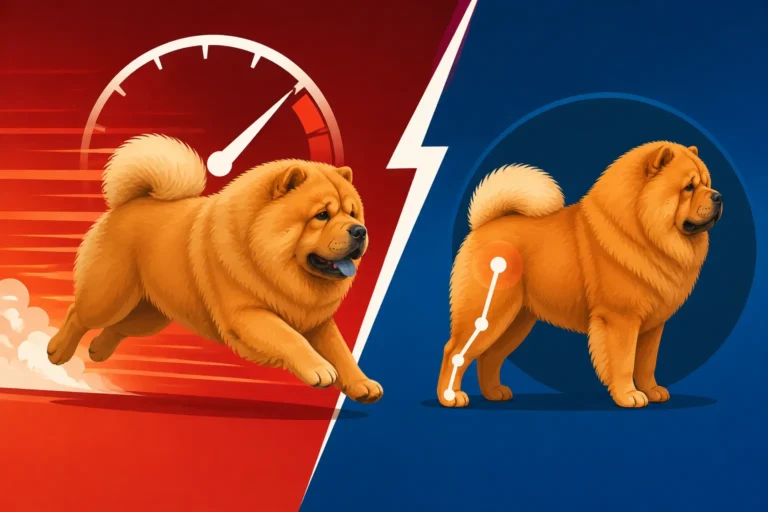
Breed descriptions often focus on the tail because it is so visible, but it does not work in isolation. A Chow Chow’s posture and movement reflect the dog’s whole body, including its back, hips, legs, and feet. For example, the breed’s comparatively straight rear legs help explain its distinctive outline and movement; Why a Chow Chow's Rear Leg Is Almost Straight explores that feature in more detail.
A tail held over the back also does not mean a dog is always confident, relaxed, or happy. Tail carriage is only one piece of body language, and a Chow Chow’s coat can make small movements hard to read. Look at the whole dog: posture, facial expression, ears, muscle tension, and whether the dog is choosing to approach or move away.
That broader view is especially helpful around unfamiliar people or dogs. A Chow Chow can appear imposing even when simply standing still, so it is better to give the dog room and read its full posture instead of treating the curled tail as a simple emotional signal.
How a Chow Chow’s tail develops and varies
Puppies may not look like miniature adults
A Chow Chow puppy’s proportions and coat change as the dog grows. The tail may look less prominent when the puppy is small, then become more noticeable as the body and feathering develop. Puppy posture can also vary from one moment to the next: a pup may carry the tail differently while playing, resting, exploring, or feeling unsure.
There is no need to force a puppy’s tail into a particular position or repeatedly handle it to make it curl. Its natural carriage is not something an owner should train through manipulation. Instead, let the puppy move normally and become comfortable with gentle handling throughout the body, including brief, relaxed checks around the tail base.
If you are assessing a puppy’s overall development, consider the whole picture rather than focusing on one feature. Growth, coat development, and movement all change over time. When a Chow Chow Puppy's Coat Type Is Obvious is a related read for owners curious about how the breed’s appearance evolves as a puppy matures.
Coat and posture can change what you see
The Chow Chow’s thick coat can hide the tail’s outline. Feathering may fan out and make the tail appear larger, while a dense coat over the back can soften the definition of the curl. After grooming or during seasonal shedding, the tail may look different even though its underlying shape has not changed.
Posture matters, too. A dog that is relaxed may carry the tail in its familiar curve, while discomfort, stress, fatigue, or excitement can affect how it is held. One brief change is not automatically a health concern. A repeated or persistent change, especially one accompanied by pain or difficulty moving, is more useful information to share with a veterinarian.
For a clearer comparison, observe your dog at different times: standing naturally at home, walking at an easy pace, and resting. Avoid pulling the tail upward or trying to straighten it. If the coat makes it hard to inspect the skin, part the hair gently rather than tugging on the plume.
Individual shape does not tell the whole story
Not every Chow Chow has an identical curl. The tail may sit close to the back or form a more visible curve, and the coat can alter how that shape looks. Photos can be misleading because of camera angle, stance, grooming, and the dog’s momentary posture. A single image is not a reliable way to judge whether a tail is healthy or typical.
If you are choosing a puppy, ask the breeder about health, temperament, and the parents’ overall condition rather than making the tail’s exact shape the main deciding factor. A puppy’s future appearance can change with maturity, and responsible breeding discussions should cover far more than a single feature. The breed’s characteristic tail is part of its appearance, not a guarantee of health or temperament.
It is also worth remembering that a Chow Chow mix may inherit a different combination of physical traits. A curled tail can appear in dogs with varied ancestry, and it does not prove that a dog is purebred. For more on how traits can vary in mixed dogs, see How to Tell a Chow Chow Mix From a Purebred.
| What you notice | What it may mean | A sensible next step |
|---|---|---|
| A smooth curl that has been present for as long as you can remember | Likely your dog’s usual tail carriage | Observe it without trying to reshape it |
| A change in appearance after shedding or grooming | Coat volume may be affecting the outline | Part the coat gently and check the skin |
| A tail that suddenly hangs lower or looks sharply bent | A change from your dog’s normal posture | Contact your veterinarian, especially if it persists |
| Swelling, a wound, or clear sensitivity | Possible injury or irritation | Arrange veterinary advice rather than handling repeatedly |
| A curled tail with no discomfort but a shape unlike another Chow Chow | Normal individual variation may be involved | Compare with your dog’s own usual posture, not just photos |
Caring for the tail and the skin beneath it
Inspect the coat gently
The tail’s plume can collect loose undercoat, debris, or small tangles, particularly where the hair meets the back. During brushing, part the coat in small sections so you can see closer to the skin. Work slowly and stop if the dog becomes uncomfortable. Pulling at a tight mat can hurt, and repeated tugging may make future grooming more stressful.
A comb can help you check whether the hair is separating cleanly, but the aim is not to create a particular tail shape. Keep the session calm and brief if your Chow Chow is new to grooming. Rewarding a few seconds of relaxed handling can be more useful than trying to complete a full brushing session all at once. Owners comparing grooming tools or coat-care supplies can browse options at Chewy, while checking that any tool is appropriate for a dense double coat and their dog’s comfort.
Look for redness, dampness, odor, scabs, or areas where the hair seems unusually thin. These signs can have several possible explanations, so avoid assuming that the tail itself is the cause. If the skin looks irritated or your dog repeatedly licks or chews at the area, ask a veterinarian what to do rather than applying a human product.
Keep grooming comfortable and practical
Some Chow Chows dislike having their hindquarters or tail handled. That does not mean grooming should become a wrestling match. Start by letting the dog see and sniff the brush, then touch the back or hip briefly before moving closer to the tail. Keep your hands visible and avoid reaching suddenly from behind, particularly if the dog cannot see you clearly through its coat.
If tangles are recurring, consider whether the brushing routine is reaching the undercoat or whether friction from bedding, a harness, or other gear is contributing. A well-fitted harness should not rub persistently at the tail base or restrict movement. When shopping for grooming or walking supplies, Chewy may be one place to compare product styles and sizing guidance; measure your dog and check the fit rather than relying on breed labels alone.
For bath time, make sure the coat is rinsed and dried thoroughly, including the hair close to the skin around the tail. Dense fur can retain moisture, and dampness trapped against the skin may contribute to irritation. The same principle applies after swimming or getting caught in rain: dry the coat carefully, without blasting sensitive areas or forcing the dog to tolerate equipment that frightens them.
Make veterinary handling less stressful
A Chow Chow may not welcome a stranger reaching for its tail, especially in a clinic where the dog is already uncertain. Practice calm, brief handling at home when the dog is relaxed. Touch the hip, pause, and reward calm behavior; later, gradually work toward a brief touch near the tail base. Do not hold the tail down or continue if the dog shows discomfort.
If a veterinary examination is needed, tell the clinic what you have noticed and how your dog responds to handling. A short written timeline can help: when the change began, whether it is constant, and whether you have seen limping, changes in sitting, or sensitivity. That gives the veterinary team a clearer starting point and can reduce unnecessary repeated handling.
For grooming supplies, it is reasonable to compare brushes, combs, and drying tools at Chewy or another retailer, but buying a tool will not resolve pain or a skin problem. If you find a mat tight to the skin, an injury, or a painful area, ask a groomer or veterinarian how to proceed rather than cutting blindly near the tail. The skin can be difficult to see through the coat, and an anxious dog may move suddenly.
What a curled tail can and cannot tell you
Read the dog’s whole body
The curled tail is a breed feature, but it is not a mood meter. A Chow Chow with its tail over its back might be comfortable, alert, or simply standing in its usual posture. The tail’s limited visible movement can make it harder to interpret than the tails of some other breeds, and thick feathering may hide small changes.
Pay attention to the dog’s weight distribution, facial tension, ears, and willingness to engage. A loose body and a dog choosing to approach tell a different story from stiffness, avoidance, or a fixed stare. Give the dog a clear path to move away, and do not assume that a person can safely reach over to pet them because the tail is curled.
Movement can be part of the broader picture, too. A Chow Chow’s gait may look different from that of a more lightly built, long-striding breed. Why a Chow Chow Walks Stiffly discusses the breed’s characteristic movement, while any sudden change in your individual dog’s mobility is a separate reason to seek veterinary advice.
Know when a change deserves attention
A curled tail that looks consistent with your dog’s long-standing normal posture is generally less concerning than a sudden change. Call your veterinarian if the tail becomes persistently limp, appears newly crooked, or is painful to touch. A dog that is reluctant to sit, has trouble walking, or seems distressed should also be assessed, particularly if those changes appear suddenly.
Do not try to straighten a tail, massage a painful area, or give medication intended for people. These steps can worsen discomfort or create additional risk. If you are unsure whether the dog is hurting, keep handling to a minimum and describe what you see to the veterinary team.
And if your Chow Chow is simply carrying a familiar, comfortable curl, there is no special exercise or corrective routine needed. The best care is ordinary, gentle coat maintenance and attention to changes in your own dog. That approach keeps the tail in perspective: an unmistakable feature of the breed, but only one small part of the animal in front of you.
Disclaimer
This article is for general informational purposes only and does not constitute professional advice. Laws, prices and regulations vary by location and change over time. Consult a qualified professional for guidance on your specific situation.