Whether a Chow Chow Should Have Forty Four Teeth
A Chow Chow should ordinarily have 42 adult teeth, not 44. If you count 44, the difference may come from retained puppy teeth, extra teeth, or simply a tricky view inside a furry, strong-jawed mouth. This guide explains the normal count, why two additional teeth may appear, and when a veterinarian should take a closer look.
How many teeth should an adult Chow Chow have?
The normal count is 42 adult teeth
Like most adult dogs, a Chow Chow normally has 42 permanent teeth: 20 in the upper jaw and 22 in the lower jaw. These include incisors at the front, larger canine teeth, premolars along the sides, and molars toward the back. The lower jaw has more molars, which accounts for the difference between the upper and lower totals.
A puppy’s mouth is different. Puppies generally have 28 deciduous, or baby, teeth. As adult teeth come in, the baby teeth loosen and fall out. That transition can make a young dog’s mouth look crowded for a while, especially if a puppy tooth remains beside the adult tooth that is replacing it.
For a closer look at the usual adult count, see How Many Teeth a Chow Chow Should Have. The key point is that a count of 44 is not the ordinary adult total, but it does not by itself tell you whether there is a serious problem. The location and condition of the additional teeth matter.
A breed’s bite is not the same as its tooth count
People sometimes hear that a breed should have a particular bite and assume that this means it must have an unusual number of teeth. Those are separate details. A bite describes how the upper and lower teeth meet when the mouth is closed; a tooth count describes how many teeth are present.
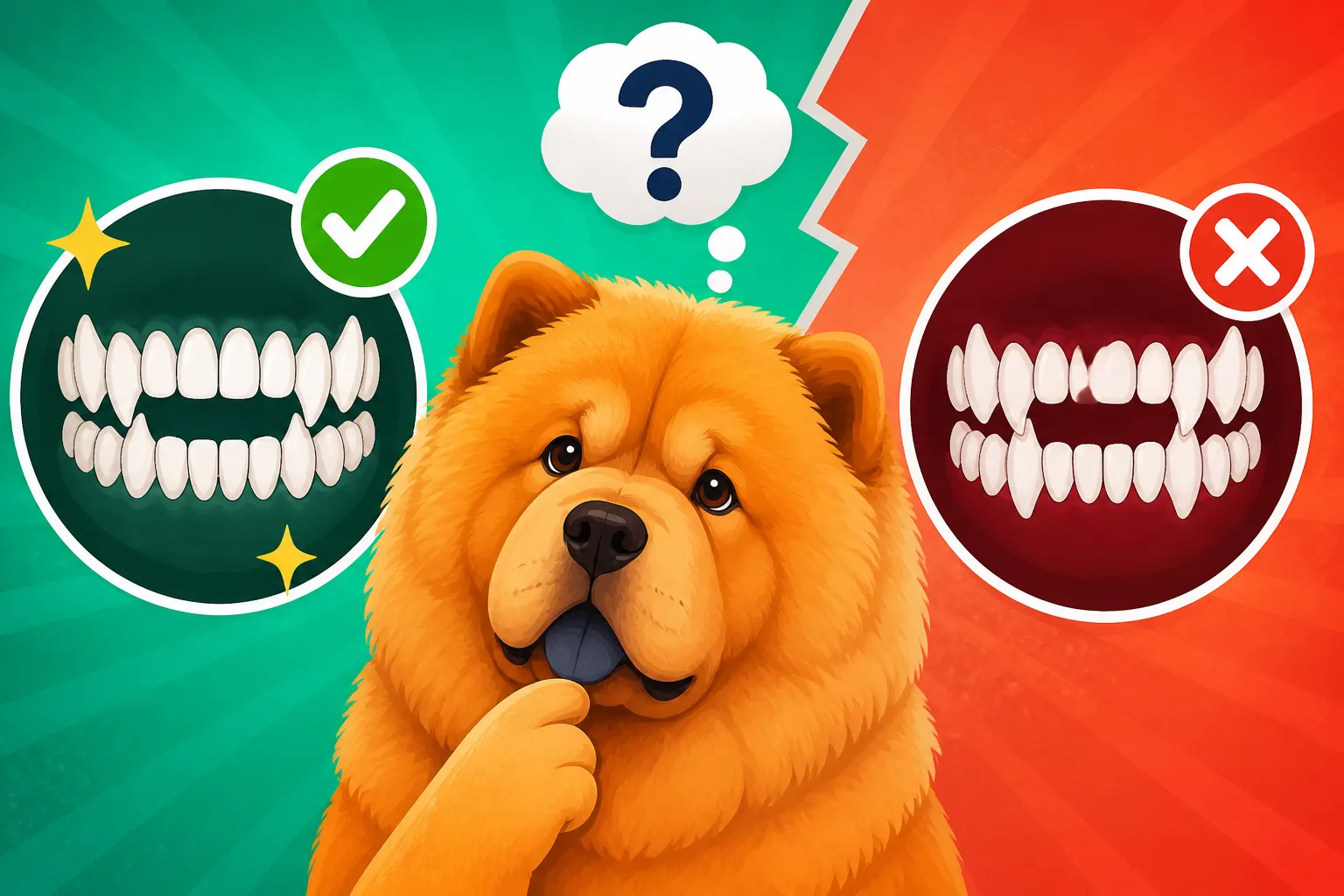
Chow Chows are generally expected to have a scissors bite, where the upper incisors sit just in front of the lower incisors. That describes the alignment at the front of the mouth, not a requirement for 44 teeth. You can read more about alignment in Whether a Chow Chow's Bite Should Be Level.
A dog may have the expected bite and still have a tooth that is crowded, missing, retained, or extra. Conversely, a dog with 42 teeth may have a bite that deserves veterinary attention. Count and alignment should be considered separately rather than treating one as proof of the other.
Why might a Chow Chow appear to have 44 teeth?
Retained puppy teeth can create a double row
One common reason an owner thinks a young dog has extra teeth is that a baby tooth has not fallen out after its permanent replacement has erupted. The two teeth may sit side by side, making the mouth appear to have more teeth than it should. This is especially noticeable with the canine teeth, which are easy to spot near the front corners of the mouth.
Retained baby teeth can crowd the adult teeth and interfere with their normal position. The close spacing may also create places where food and debris collect, making the area harder to keep clean. If you notice two teeth occupying what looks like one position, or a puppy tooth that remains after its adult tooth has come through, ask your veterinarian to check it rather than trying to pull it yourself.
The timing of tooth replacement varies, so a quick home count is not enough to diagnose a retained tooth. Your vet can examine the mouth and decide whether the tooth is still part of normal development or needs treatment. For broader guidance on oral care at home, see Whether a Chow Chow Needs Its Teeth Brushed.
Extra teeth are possible, but a count alone is not a diagnosis
A dog can rarely develop supernumerary teeth, meaning teeth beyond the usual number. If a Chow Chow truly has 44 permanent teeth, two may be extra. They might be visible in the mouth, or they may be positioned where a casual look makes them difficult to distinguish from crowded or overlapping teeth.
An apparent extra tooth can also result from a missed count. Chow Chows have substantial lips and facial features that can make a full mouth inspection awkward, and many dogs do not enjoy having their mouths held open. Trying to count every tooth while your dog resists is uncomfortable for both of you—and can make the result less reliable.
A veterinary exam can identify whether the teeth are permanent, retained baby teeth, or supernumerary teeth. Depending on what the vet sees, dental X-rays may help reveal roots and teeth that are partly hidden beneath the gum. The right answer comes from evaluating the whole mouth, not just arriving at a number.
| What you notice | Possible explanation | Sensible next step |
|---|---|---|
| A puppy has two teeth close together in one spot | A baby tooth may still be present beside its adult replacement | Arrange a veterinary mouth check |
| Your adult dog appears to have 44 teeth | Extra teeth, crowding, or a counting error may be involved | Ask your veterinarian to confirm the count |
| Teeth look crowded or overlap | Tooth position may be affecting cleaning or the bite | Have the mouth assessed |
| Your dog drops food, chews on one side, or avoids eating | Oral discomfort or another health issue may be present | Contact your veterinarian promptly |
| You cannot safely inspect the mouth | The dog may be uncomfortable, wary, or simply difficult to handle | Don’t force the exam; ask the veterinary team for help |
When can extra teeth cause trouble?
Crowding and poor positioning matter more than the number
Two extra teeth do not automatically mean a Chow Chow will have pain or require treatment. A veterinarian will look at where those teeth sit, whether they are pushing other teeth out of position, and whether the dog can close its mouth comfortably. A tooth that sits harmlessly may be treated differently from one that presses against another tooth or traps debris.
Crowding can make cleaning difficult. It may also contribute to gum irritation or create a spot where food becomes lodged. If the teeth interfere with the bite, rub against soft tissue, or appear damaged, that is more important than the fact that the count is above 42.
Watch for changes in how your dog eats. A Chow Chow that suddenly chews more slowly, drops kibble, favors one side, paws at the mouth, or becomes reluctant to have its face touched may be uncomfortable. Dogs do not always make pain obvious, so a behavior change can be the first clue. For related guidance on mouth checks, see Whether a Chow Chow's Tongue Should Be Checked.
Signs that deserve a veterinary appointment
Arrange a veterinary appointment if you see a retained puppy tooth, a crowded area that is difficult to keep clean, bleeding gums, persistent bad breath, or a tooth that seems loose or broken. Those signs do not prove that 44 teeth are the cause, but they do justify an examination. Your vet can check for dental disease, injury, abnormal positioning, and other sources of discomfort.
A dog that stops eating, cries when chewing, has swelling around the face, or shows bleeding from the mouth needs prompt attention. If your Chow Chow seems suddenly unwell or cannot comfortably eat or drink, contact a veterinary clinic for advice rather than waiting to see whether the problem resolves on its own.
Not every examination is simple. Some Chow Chows are wary of having their lips lifted or their mouths handled, and forcing the inspection at home can increase stress or risk a bite. If handling is a challenge, Why a Chow Chow Is Hard to Examine at the Vet explains why cooperative care and a calm approach can matter. Your veterinary team can also discuss whether additional support is needed for a thorough exam.
What to do if you count 44 teeth
Let your veterinarian confirm what you are seeing
If you think your Chow Chow has 44 teeth, note where you see the apparent extras and whether your dog is a puppy or an adult. A clear description can help the veterinary team prepare, but don’t pry the mouth open or use tools to inspect between teeth. It is safer to let a professional do the examination, especially if your dog pulls away or becomes tense.
The vet may visually inspect the teeth and gums, assess how the jaws meet, and recommend dental imaging if the tooth roots or developing teeth cannot be evaluated from the surface. The exam helps distinguish a true extra tooth from a retained baby tooth or a mistaken count. Treatment, if needed, depends on the tooth’s position, the dog’s age, and whether it is causing a problem.
If your Chow Chow finds veterinary handling stressful, mention that when you book. A team familiar with the breed can plan a quieter, more gradual visit and explain what handling will be involved. For more about appointment preparation, see Whether a Chow Chow Needs Sedation for a Checkup. Sedation is not automatically needed just because a dog has an unusual tooth count; the veterinarian determines whether it is appropriate for the individual dog and procedure.
Keep everyday dental care gentle and consistent
Regular tooth brushing can help reduce plaque, but it does not replace a dental examination. Use toothpaste made for dogs, introduce the brush gradually, and stop if your dog becomes distressed. Start by letting your Chow Chow sniff the brush and taste a small amount of dog-safe toothpaste, then build toward brief brushing sessions rather than trying to clean every tooth at once.
If you shop for dental supplies through Chewy or another retailer, check that the toothpaste is specifically labeled for dogs and follow your veterinarian’s advice about suitable products. Human toothpaste is not intended for dogs. A brush or dental product also cannot correct crowding or remove a retained tooth, so don’t treat a product as a substitute for a professional assessment.
Chewy may be one place owners look for basic brushing supplies, but product availability does not establish that a particular item suits your dog. If your Chow Chow has sore gums, loose teeth, or a known dental condition, ask the veterinary team before starting a new dental routine. For additional oral health context, see How to Check a Chow Chow's Mouth for Melanoma; routine checks can help you notice changes, but a veterinarian should assess anything unusual.
The practical takeaway is simple: a healthy adult Chow Chow usually has 42 permanent teeth. If you count 44, don’t panic and don’t attempt to remove anything yourself. Make a note of what you see, watch for signs of discomfort, and have your veterinarian confirm whether the extra count reflects normal development, retained teeth, or a genuine dental variation.
Disclaimer
This article is for general informational purposes only and does not constitute professional advice. Laws, prices and regulations vary by location and change over time. Consult a qualified professional for guidance on your specific situation.