Why Chow Chow Fur Was Valuable
Chow Chow fur was valued because its dense coat could provide warmth and useful material in cold conditions, but the history is less tidy than the popular claim that the breed was simply raised for its pelt. Historical accounts of dogs and fur in China do not always identify a modern breed with certainty. This guide separates what is plausible from what the evidence cannot firmly establish.
Why Chow Chow fur attracted practical interest
A dense coat offered warmth and material
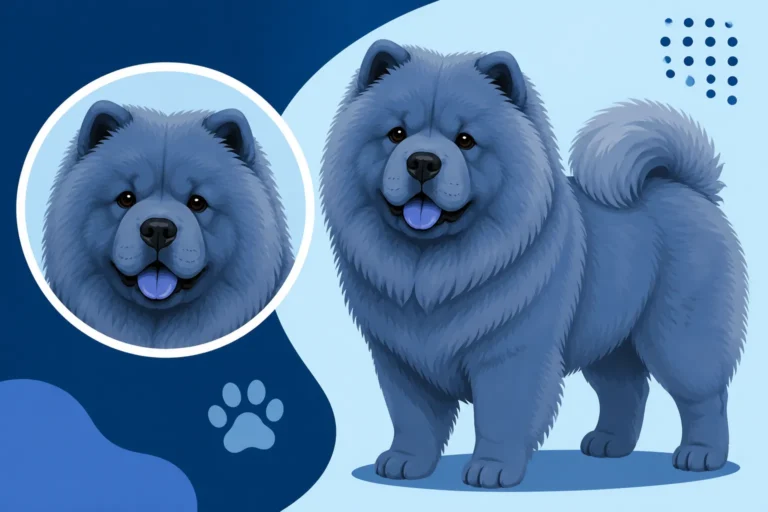
A Chow Chow’s thick double coat is striking today, but its practical value would have been easy to recognize in a cold climate. The outer coat helps protect against weather, while the soft undercoat provides insulation. A hide with substantial fur could therefore be useful as a warm covering or garment material, depending on how it was prepared and used.
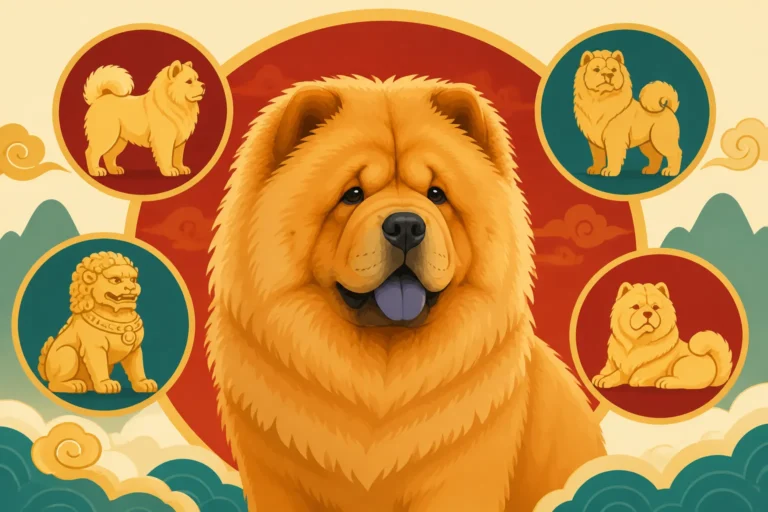
That does not mean every Chow Chow coat was collected for clothing, or that the breed was developed primarily for fur. A dog’s coat could be useful without being the main reason people kept that dog. Chow Chows and dogs resembling them had a range of roles over time, and their history is not reducible to a single purpose. For a broader look at those roles, see What the Chow Chow Did for a Chinese Emperor.
The dog’s coat also helps explain why the breed’s appearance and working history are often discussed together. A thick covering is suited to cold weather, but it demands considerable care in a modern home. Owners dealing with loose undercoat or tangles can find practical coat advice in Why a Chow Chow Has an Outer and an Under Coat.
Fur value was tied to everyday use
When people describe Chow Chow fur as “valuable,” they may mean that it had practical utility, not that it was a luxury product with a standardized market price. Fur could serve as insulation or be made into useful items. Its worth would have depended on local needs, the quality and condition of the material, and the resources available to process it.
That distinction matters because the phrase can suggest a well-documented commercial trade focused specifically on Chow Chow pelts. The historical picture is more complicated. Accounts of dog keeping and the use of dog products in China are not always detailed enough to confirm which dogs were involved, how consistently a practice occurred, or whether the dogs would be considered Chow Chows by modern breed standards.
So, the careful answer is that the Chow Chow’s dense coat may have had practical value, and historical writing connects dogs in China with uses that included fur. But it is difficult to turn that broad account into a precise claim about every Chow Chow or a single, uniform tradition. The related article Whether Chow Chows Were Raised for Meat and Fur explores that wider question.
What the historical record can and cannot tell us
Ancient dogs were not always identified by modern breed names
It is tempting to look at an old description of a thick-coated Chinese dog and immediately label it a Chow Chow. That can go too far. The modern breed has a recognizable appearance, but historical names, descriptions, and categories did not necessarily match today’s formal breed definitions.
The word “Chow Chow” itself has a complicated history, and the breed’s roots are associated with China long before its later recognition in the West. But a long history for a type of dog does not prove that every ancient reference to a Chinese dog describes the modern Chow Chow. Where the Chow Chow Comes From and Which Chinese Names the Chow Chow Has Carried offer more context on names and origins.
This is why careful accounts use qualified language. A source might refer to dogs with thick coats, dogs kept for particular tasks, or dogs whose products were used. Unless it identifies the animals clearly, it cannot establish that the dogs were all Chow Chows as we understand the breed now.
Broad cultural accounts are not the same as breed-specific proof
Historical summaries sometimes group several claims together: dogs were kept for work, some were used for food or fur, and the Chow Chow belonged to that broader world. Those statements can become blurred in retellings until they sound like a single, well-documented account of the breed.
A better approach is to ask what each claim actually establishes. Evidence that dogs were used for fur in a region does not, by itself, prove that Chow Chows were the only dogs involved. Evidence that a dog resembling a Chow Chow existed does not prove that its pelt was routinely traded. And evidence that a coat was useful does not reveal how common that use was.
This does not make the story meaningless. It simply means the most responsible version is narrower: the coat’s density made it potentially useful, and accounts of dog fur in China form part of the context. The details of who used which dogs, at what scale, and in which period remain less certain than popular retellings often imply.
| Historical question | What can be said cautiously | What should not be assumed |
|---|---|---|
| Could the coat provide useful material? | Its dense, insulating qualities made it practically useful. | That every coat was collected or processed for fur. |
| Were dogs in China associated with fur use? | Historical accounts describe the use of dog fur in broader contexts. | That every account refers specifically to modern Chow Chows. |
| Was fur the breed’s sole purpose? | The breed’s history includes multiple roles and interpretations. | That Chow Chows were developed only as fur-bearing animals. |
| Can an old reference identify a modern Chow Chow? | Some descriptions may resemble the breed. | That resemblance proves exact breed identity. |
Why the Chow Chow’s coat suited cold-weather use
The double coat has two different jobs
A Chow Chow’s coat is not just a mass of long hair. It has an outer layer and an undercoat, and each contributes differently to protection. The outer coat helps shield the dog from the elements; the undercoat provides insulation. Together, those layers create the dense appearance that makes the breed so recognizable.
The coat can vary in length and texture. Rough-coated Chow Chows have a more prominent ruff and feathering, while smooth-coated dogs have a shorter, closer coat. Neither version should be treated as a simple measure of historical value. The useful properties of a coat depend on its condition and how it is handled, not merely on whether it looks especially full.
For readers interested in how this distinctive appearance developed, What a Chow Chow's Ruff Was For in Cold Weather looks at the protective role of the ruff. It is a useful reminder that features admired as decoration today may also have had practical value in the environments where dogs lived.
A coat useful in cold weather needs careful handling today
What once made a thick coat useful can make modern grooming challenging. Undercoat can loosen heavily during seasonal shedding, and mats can form close to the skin—especially behind the ears, under the collar, behind the elbows, and around the hindquarters. A quick brush over the surface may leave the dense lower layers untouched.
A routine built around patient, section-by-section brushing is more helpful than waiting until the coat is tangled. Owners who are shopping for tools can compare suitable combs and undercoat rakes through retailers such as Chewy, while checking that the tool matches their dog’s coat and does not scratch the skin. Chewy is one possible place to look, but the important part is choosing a tool the dog will tolerate and learning to use it gently.
For example, if a Chow Chow starts shifting away as soon as the brush reaches the britches, forcing a long grooming session can turn a manageable chore into a lasting struggle. Work in short sessions, reward calm behavior, and check the skin as you go. Owners who prefer to shop online may also compare grooming supplies at Chewy, but no product replaces careful handling. If the coat is already tightly matted, a professional groomer can help assess the safest next step.
The dense coat also changes what “clean and dry” means. Water can take time to reach the skin, and dampness trapped in the undercoat can contribute to skin irritation. Chewy may offer basic bathing and grooming supplies, but owners should follow a suitable grooming routine and make sure the coat is thoroughly dried after a bath. For a deeper explanation of the breed’s history beyond its coat, see How Old the Chow Chow Breed Is.
How to understand the claim that Chow Chow fur was valuable
Think practical usefulness, not a simple price tag
“Valuable” can mean several things. It might mean a material was useful, hard to obtain, or worth keeping because it served a household need. It does not automatically mean that Chow Chow fur had a consistent price, that there was a large organized trade in the breed’s coats, or that every region valued it in the same way.
Without reliable, specific evidence, assigning a fixed historical price or describing a universal market would create false precision. Conditions, local customs, available materials, and the period in question all matter. The safest interpretation is that a dense coat could be useful in practical ways, while the scale and organization of any fur use remain difficult to pin down.
It is also worth separating the coat’s value to people from the dog’s broader place in history. Chow Chows were not simply coats on four legs. They were living animals kept in different settings and associated with different tasks and traditions. Understanding the breed means keeping those dimensions together rather than letting one striking claim stand in for its whole past.
Keep modern breed care separate from historical claims
A modern Chow Chow’s coat is not a historical artifact. Owners should focus on the dog in front of them: keeping the skin healthy, preventing painful mats, and helping the dog feel safe during brushing. The fact that fur may have had practical value in the past does not change what the animal needs now.
If grooming becomes difficult, it can help to break care into small steps. Start with brief handling around easy areas, then gradually work toward more sensitive spots. Check for redness, odor, dampness, or tenderness under the coat, and ask a veterinarian or experienced groomer about skin concerns rather than assuming every problem is ordinary shedding. A dog that resists being brushed may be uncomfortable, worried, or simply unfamiliar with the process.
The historical takeaway is therefore measured: the Chow Chow’s dense coat had qualities that could make it useful, and accounts of dog fur in China provide a wider context. But not every historical reference can be assigned confidently to the modern breed, and the claim that Chow Chow fur was “valuable” should not be stretched into a certainty about routine trade or a single purpose. That distinction keeps the breed’s past interesting without making it sound more settled than it is.
Disclaimer
This article is for general informational purposes only and does not constitute professional advice. Laws, prices and regulations vary by location and change over time. Consult a qualified professional for guidance on your specific situation.