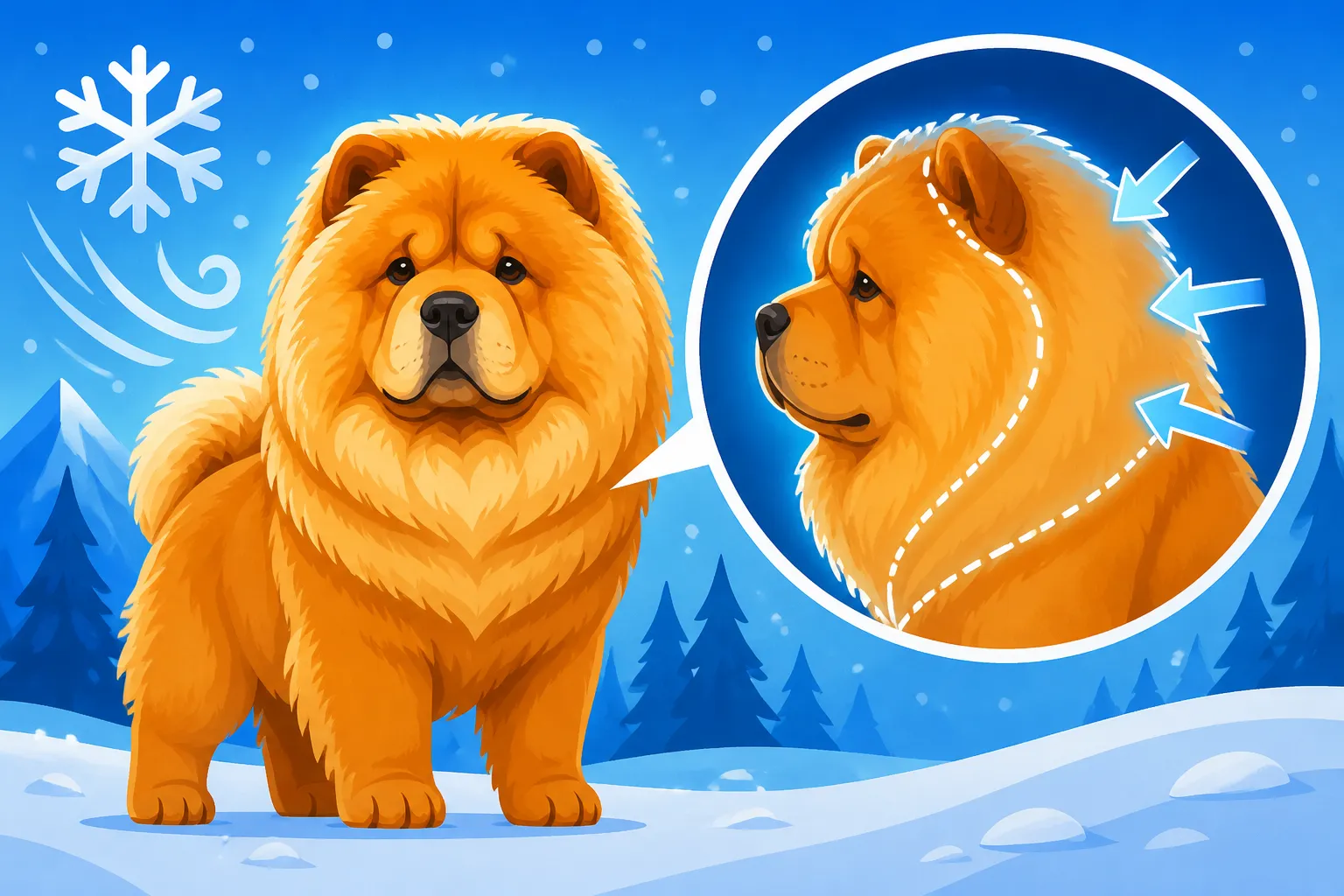
What a Chow Chow’s Ruff Was For in Cold Weather
A Chow Chow’s thick neck ruff looks dramatic, but it is more than decoration: it is part of a dense coat that helps insulate the dog in cold conditions. That does not mean every Chow Chow was bred for one precise job or can safely stay outside in any winter weather. This guide explains what the ruff does, how it fits into the breed’s history, and how to care for it.
What a Chow Chow’s ruff is and how it insulates
The ruff is part of the coat, not a separate feature
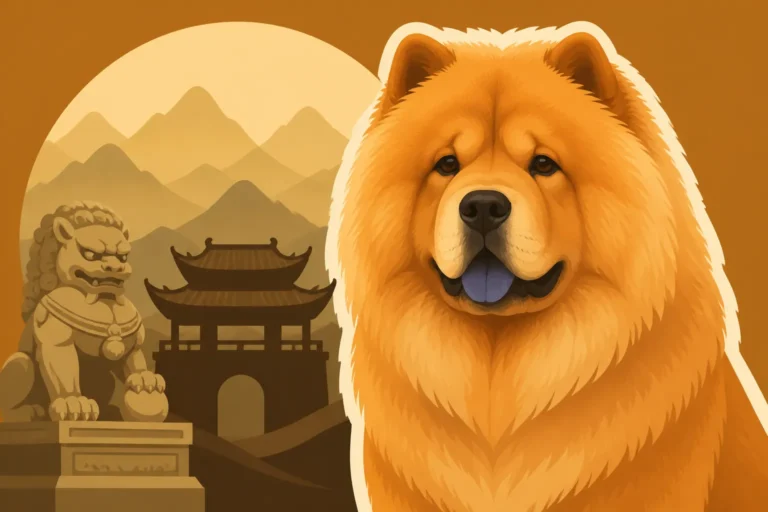
The ruff is the longer, fuller hair around a rough-coated Chow Chow’s neck and shoulders. It frames the head and gives the dog its familiar lion-like outline. It is not a mane made of a different material or a removable layer; it is part of the dog’s coat, with the same basic structure as the rest of its body hair.
A Chow Chow’s coat includes an outer layer and a softer, denser undercoat. Together, these layers can hold a pocket of air close to the body, helping slow the loss of body heat. The longer hair around the neck contributes to that overall insulation, though the ruff is only one part of a coat that covers the whole dog. For more on how the layers work together, see What a Chow Chow's Double Coat Is Made Of and Why a Chow Chow Has an Outer and an Under Coat.
It helps to think of the ruff as one piece of a winter-ready coat rather than as a built-in scarf that guarantees protection. The neck hair may offer extra coverage around an exposed area, but it does not replace shelter, a dry resting place, or sensible limits on time outdoors.
Why the rough coat looks especially full around the neck
Rough-coated Chow Chows have longer hair around the neck, shoulders, legs, and tail than smooth-coated Chow Chows. The contrast between the shorter hair on the face and the fuller neck coat makes the ruff stand out. The coat’s shape is part of the breed’s distinctive appearance, but its insulating effect comes from the coat as a whole—not from appearance alone.
A smooth-coated Chow Chow still has a dense coat and undercoat. It simply has shorter, more even outer hair, so it does not develop the same prominent ruff. That difference can make a smooth-coated dog look less bundled up, but it does not mean the dog has no insulation. The distinction between the varieties is explained further in How a Rough Chow Chow Differs From a Smooth.
Coat volume also varies between individual dogs. A young Chow Chow may not yet have the full adult coat, and changes in age, health, season, and grooming can affect how thick or prominent the ruff looks. A smaller-looking ruff by itself does not prove a dog is cold or unwell; pay attention to the dog’s comfort and overall condition.
How the ruff helps in cold weather
The most useful way to understand the ruff is as part of a coat that can help buffer the dog from cold air. The undercoat provides much of the dense insulation, while the longer outer hair adds coverage and helps protect the coat beneath it. In cold, dry conditions, a healthy and well-maintained double coat can be helpful.
But fur is not a weatherproof barrier. A Chow Chow can still get chilled, especially if it is wet, exposed to wind for a long time, very young or old, unwell, or not used to the conditions. A dog that has been indoors may not be comfortable simply because its breed has a thick coat. Likewise, the ruff cannot keep the skin warm and dry if the coat is soaked through or tangled.
Watch the individual dog rather than relying on its appearance. If your Chow Chow is shivering, persistently trying to get indoors, lifting its paws, or acting unusually subdued in the cold, bring it somewhere sheltered and warm. The ruff may help with insulation, but it does not make the dog immune to discomfort or cold-related risk.
What the ruff can tell us about the Chow Chow’s history
A cold-suited coat is not proof of one specific origin story
The Chow Chow is an old breed with roots in China, but the details of its early development and the exact roles it performed across different places and periods should not be reduced to a single neat explanation. A dense coat is well suited to colder conditions, and that is a reasonable part of understanding the breed’s physical traits. It is harder to claim that the ruff developed solely for one job or one climate.
The breed’s history includes different working and household roles, and its appearance reflects a long history rather than a modern purpose-built winter garment. For broader context, see The Chow Chow Is One of the Oldest Breeds in the World and Where the Chow Chow Comes From.
This distinction matters because breed features can be easy to overinterpret. A visible ruff may have practical insulating value while also being part of the breed’s characteristic look. Those explanations can coexist. It is more careful to say that the coat offers protection and insulation than to claim the ruff alone tells us exactly how every early Chow Chow lived.
The coat was one part of a versatile dog
Chow Chows have been associated with a range of historical roles, including guarding and hunting. Those roles varied, and the breed’s past is not a simple story of dogs used only for cold-weather work. The ruff should be understood within the wider picture of the breed’s body, coat, temperament, and history.
A dog with a substantial coat could be useful in chilly conditions, but coat thickness does not prove that a dog was intended to remain outdoors around the clock. Working animals still needed shelter, rest, food, and care. The historical discussion of the breed’s roles is explored in What the Chow Chow Did for a Chinese Emperor.
For owners today, the practical takeaway is modest: the coat is an adaptation that can help with insulation, not a guarantee of comfort in every winter environment. A Chow Chow living in a cold region still needs attentive daily care, and a dog in a warm climate may need protection from heat despite its cold-weather coat.
The ruff is not a reliable measure of cold tolerance
Two Chow Chows can have very different-looking coats and still react differently to the same weather. One dog may be comfortable walking briskly on a crisp morning, while another may want to head home. Age, body condition, health, coat condition, wind, dampness, and the dog’s previous exposure to cold all matter.
That is why a dramatic ruff should not be treated as a signal to leave a Chow Chow outside longer. The dog’s behavior and circumstances are more useful than the amount of hair around its neck. In particular, wet fur and wind can make outdoor conditions uncomfortable even for a thick-coated dog.
It is also worth remembering that the coat can create a different seasonal challenge: overheating. A Chow Chow’s insulation does not switch off in summer, and heavy coat does not mean the dog can handle heat safely. Cold-weather suitability and heat tolerance are separate questions; the coat may help with one while making the other more complicated.
Caring for a Chow Chow’s ruff through the seasons
Keep the coat clean, dry, and free of mats
The ruff can hide tangles close to the skin, especially behind the ears and where the neck meets the shoulders. Mats are not just cosmetic. They can pull on skin, trap moisture, and make it harder to spot irritation. Part the coat in sections and check down to the skin rather than brushing only the visible surface.
A metal comb can help you find small tangles that a brush may glide over. Work gently from the ends of a knot toward the skin, supporting the hair so you are not tugging painfully. If you are comparing grooming tools online, Chewy is one place to look at combs and brushes, but choose based on the tool’s design and your dog’s coat—not just the product label.
After a bath, make sure the dense coat is thoroughly dried. A ruff that feels dry on the surface may still be damp underneath. Take care around the neck and behind the ears, and do not force a dryer on a dog that is frightened by the sound or sensation. If drying is difficult, ask a groomer to show you a calm, safe routine.
Do not shave the ruff to make winter or summer care easier
Shaving may seem like a quick way to reduce coat volume, but it removes the outer hair and undercoat that form the dog’s natural coat system. It also changes the coat’s protection from sun and weather. Shaving is not a dependable shortcut for keeping a Chow Chow cool, and the coat may grow back unevenly or with a different texture. Read more in Why a Chow Chow Must Never Be Shaved.
If the ruff is heavily matted, do not try to solve the problem by cutting close to the skin with household scissors. Dense mats can pull the skin up into the tangle, making it easy to cut the dog accidentally. A professional groomer can assess whether the mat can be safely loosened or needs careful removal.
For routine maintenance, short, regular grooming sessions are often easier than waiting until the coat is packed with loose undercoat. If you need supplies, Chewy’s listings can help you compare comb styles and grooming basics; check that the tool is appropriate for a double-coated dog and that it feels manageable in your hand.
Make winter decisions based on weather and the dog
A Chow Chow may enjoy a brisk walk in cool weather, but that does not mean it should be left outdoors without supervision or shelter. Consider wind, rain, snow, the length of the outing, and whether the dog can return to a warm, dry place. A wet coat takes longer to dry than a short coat, so check the skin and dense hair after snowy or rainy outings.
The dog’s age and health matter too. A senior Chow Chow with stiff joints may be less comfortable on icy ground, while a puppy may not yet have the same coat and cold tolerance as an adult. If your dog has a medical condition or seems unusually sensitive to cold, ask your veterinarian for advice tailored to that dog rather than assuming the breed’s coat is enough.
A useful routine is to check the neck and chest after outdoor time, towel off any dampness, and look for packed snow or debris caught in the hair. If you shop online for towels or coat-care tools, Chewy may be one convenient option, but the important part is having supplies that fit your dog and using them gently. For broader coat-care guidance, Why a Chow Chow's Ruff Mats Behind the Ears covers a common trouble spot.
Ruff, coat type, and cold-weather expectations
The table below separates what the ruff can reasonably do from what it cannot promise. Individual dogs vary, so use it as a practical guide rather than a substitute for watching your Chow Chow.
| Feature | What it may help with | What it does not guarantee |
|---|---|---|
| Full neck ruff | Adds hair coverage around the neck and shoulders | Protection from every temperature or wind condition |
| Dense undercoat | Helps insulate the body by holding air close to it | Comfort when the coat is wet, matted, or dirty |
| Rough coat | Creates the familiar fuller outline and prominent ruff | Greater cold tolerance in every individual dog |
| Smooth coat | Provides a shorter, more even outer coat over a dense coat | Lack of undercoat or lack of insulation |
| Regular brushing | Helps remove loose hair and reveal tangles near the skin | A coat that never mats or needs professional care |
| Indoor shelter and supervision | Gives the dog a place to warm up and rest | A reason to ignore signs of discomfort outdoors |
The Chow Chow’s ruff is best understood as part of a substantial double coat that can contribute to insulation in cold weather. Its distinctive shape has practical value, but it is not a stand-alone winter garment, and it does not tell you exactly how long a particular dog can remain outdoors. Keep the coat in good condition, avoid shaving it as a shortcut, and let the dog’s comfort guide your decisions.
Disclaimer
This article is for general informational purposes only and does not constitute professional advice. Laws, prices and regulations vary by location and change over time. Consult a qualified professional for guidance on your specific situation.