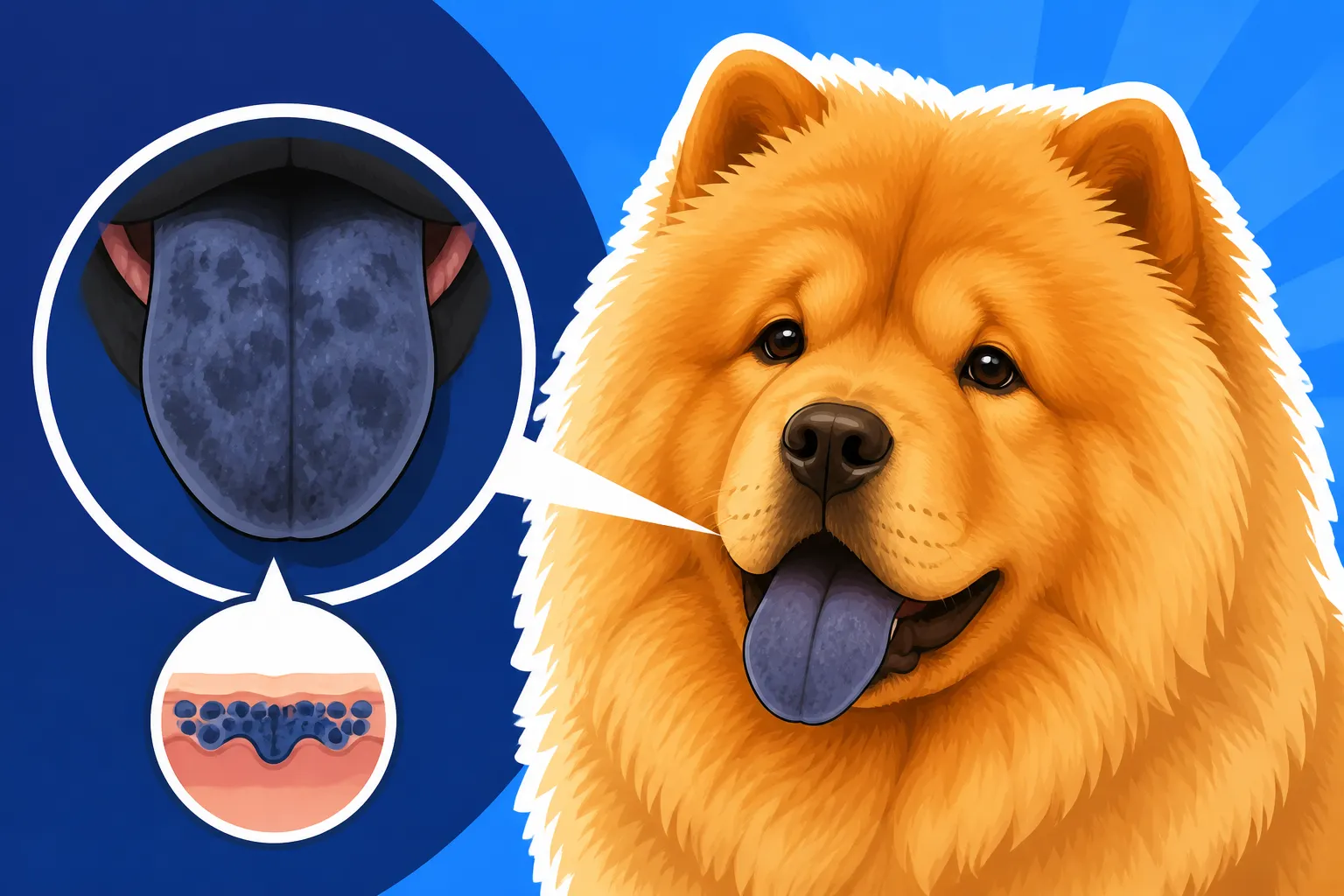
Why the Chow Chow’s Tongue Is Blue Black
One of the most striking and often perplexing features of the beloved Chow Chow is its distinctive blue-black tongue. For many new Chow Chow owners or those simply curious about the breed, seeing a dog with a tongue that isn't pink can be quite a surprise, sometimes even prompting worry. This comprehensive guide will delve into the fascinating reasons behind this unique pigmentation, explaining its genetic origins, how it develops, and what it truly means for your furry companion.
The Striking Feature: Why a Chow Chow's Tongue is Not Pink
Imagine looking into your dog's mouth and seeing a tongue the color of a blueberry or even dark charcoal. It's certainly not what most people expect from a canine companion, whose tongues are almost universally a healthy shade of pink. But for a Chow Chow, this blue-black or deep purple hue is not only normal but a hallmark of the breed, a defining characteristic that sets it apart. It’s one of those things that instantly makes someone say, "Oh, that's definitely a Chow Chow!" even if they don't know much else about them.
This unique coloration isn't just on the surface; it penetrates the entire tongue, often extending to the gums and the roof of the mouth as well. It’s not a medical anomaly or a sign of poor health, but rather a genetic trait that has been present in the breed for centuries. You might occasionally see pink spots or areas, especially in a puppy, but the dominant color will be that rich, dark pigment. Understanding this natural variation is key to appreciating the Chow Chow's distinctiveness.
It’s worth noting that while the blue-black tongue is a breed standard, it doesn't mean every Chow Chow will have a completely solid blue-black tongue. Some may have tongues with noticeable pink spots or even be mostly pink with dark spots. These variations are still considered normal for a Chow Chow, though a solid blue-black tongue is generally preferred in show circles. If you're wondering Why a Chow Chow's Tongue Is Not Pink, it really boils down to centuries of selective breeding accentuating a specific genetic trait.
When the Blue-Black Tongue Develops in a Chow Chow Puppy
When a Chow Chow puppy is born, its tongue isn't typically blue-black right away. This can often lead to confusion or even concern for new owners who might be expecting to see the signature dark tongue from day one. In reality, a newborn Chow Chow puppy's tongue will start out pink, much like any other breed. This is a crucial detail for anyone getting a young pup, as it means you won't immediately see the iconic trait.
The pigmentation process begins shortly after birth and is a gradual transformation. Over the first few weeks and months of a puppy's life, the melanocytes – the cells responsible for producing pigment – start to become active in the tongue tissue. You might first notice small dark spots or patches appearing on the pink surface, almost like tiny ink splotches spreading out. These spots will slowly expand and merge until the entire tongue, or at least the majority of it, takes on that characteristic blue-black or deep purple shade. This transition period is fascinating to observe.
Generally, the tongue should have achieved its full adult coloration by the time the puppy is around 8 to 12 weeks old, though it can sometimes continue to deepen slightly for a few more months. So, if you pick up your Chow Chow puppy at eight weeks and its tongue still has some pink, don't panic! It's likely still in the process of developing. A good breeder will be able to tell you more about the progression of the tongue color in their lines. You can learn more about this development by looking into When a Chow Chow Puppy's Tongue Turns Blue.
The Genetics Behind the Unique Pigmentation
The striking blue-black tongue of the Chow Chow is a fascinating example of genetics at play. It's not a mystery, but rather a clear demonstration of how specific genes control physical traits in dogs. Understanding the science behind it can demystify this unusual characteristic and help us appreciate the breed even more. It’s all about melanin, the same pigment that gives us our skin, hair, and eye color.
At the heart of the Chow Chow's unique tongue color is the presence of an abundance of melanocytes – the cells responsible for producing melanin – in the tissues of the tongue, gums, and sometimes even the roof of the mouth. This isn't just any melanin; it's eumelanin, which typically produces black or brown pigmentation. In the case of the Chow Chow's tongue, the sheer density and distribution of these melanin-producing cells create the deep blue-black or purplish hue. It's essentially an overabundance of pigment in an unusual location.
While the exact genetic mechanism is complex and involves multiple genes, it's understood to be an inherited trait. Reputable breeders will always prioritize this characteristic, as a solid blue-black tongue is a key component of the Chow Chow breed standard. This means that generations of selective breeding have reinforced the genes responsible for this heavy pigmentation, ensuring that most Chow Chows inherit this distinctive feature. It’s a trait passed down through their lineage, just like their dense double coat or their unique lion-like mane. What Pigment Makes a Chow Chow's Tongue Blue further explores this fascinating aspect.
Myths and Legends Surrounding the Chow Chow's Blue Tongue
Throughout history, unique traits in animals have often sparked folklore and fantastical tales, and the Chow Chow's blue-black tongue is no exception. These stories, though not scientifically accurate, add a rich layer of mystique to the breed's ancient origins and cultural heritage. They speak to a time when people sought to explain the unexplainable through myth and legend, and the Chow Chow, with its distinctive appearance, was certainly a subject ripe for such tales.
One of the most enduring legends suggests that when the world was being created, bits of the night sky fell to Earth. The Chow Chow, being a very ancient breed The Chow Chow Is One of the Oldest Breeds in the World, was supposedly one of the few creatures allowed to lick up these fallen pieces of the heavens. In doing so, its tongue was permanently stained the deep blue-black of the night sky. It's a charming story that beautifully connects the dog to the cosmos, highlighting its ancient and almost mystical presence. This narrative perfectly encapsulates the breed's serene and somewhat otherworldly demeanor.
Another popular tale links the Chow Chow to Buddhist mythology. It's said that these dogs were companions to Buddhist monks and even followed Buddha himself. When Buddha fell ill, the Chow Chows stayed by his side, licking up the drops of medicine that fell from his mouth, which then stained their tongues blue-black. While these stories are certainly not factual, they contribute to the breed's allure and reflect the deep cultural significance the Chow Chow has held in its native China for centuries. Which Legends Explain the Chow Chow's Tongue offers more fascinating insights into these captivating narratives.
Chow Chow Tongue Versus Other Breeds
When you see a dog with a blue-black tongue, your mind might instantly jump to the Chow Chow, and rightly so. It's the breed most famously associated with this unique trait. However, it's a common misconception that Chow Chows are the only dogs with blue-black tongues. While they are certainly the poster children for this characteristic, there are actually a few other breeds that can also exhibit similar pigmentation, although often not to the same degree or consistency.
The Shar-Pei is perhaps the most well-known "other" breed with a blue-black tongue. Like the Chow Chow, the Shar-Pei originated in China and shares some genetic lineage, making this shared trait less surprising. However, even within the Shar-Pei breed, a solid blue-black tongue isn't as universally prevalent as it is in Chow Chows. Many Shar-Peis might have tongues that are spotted pink and black, or more mottled. Other breeds, especially those with some Chow Chow ancestry or other Asian spitz-type dog genes, might occasionally display dark tongue spots. For instance, sometimes you'll see a small patch of black pigment on the tongue of a Border Collie or even a German Shepherd, but these are usually just spots, not a fully blue-black tongue.
It's really important to distinguish between a fully pigmented blue-black tongue, which is a breed standard for the Chow Chow, and simple dark spots that can appear on the tongues of many breeds. These spots, often called "pigment spots" or "gum spots," are harmless and essentially canine freckles. They don't indicate any specific lineage or health condition. So, while a dark tongue might suggest Chow Chow heritage in a mixed breed, it's not a definitive indicator on its own, especially if it's just a few spots rather than a solid color. If you're curious about Which Other Breed Has a Blue Tongue, the Shar-Pei is definitely the closest contender in terms of consistent blue-black pigmentation.
| Breed | Tongue Color Expectation | Typical Pigmentation |
|---|---|---|
| Chow Chow | Blue-black or deep purple | Solid blue-black; some pink spots acceptable |
| Shar-Pei | Blue-black or mottled | Blue-black, purplish, or heavily spotted pink/black |
| Akita | Pink | Occasional dark spots possible |
| Australian Shepherd | Pink | Common to have dark spots |
| Pomeranian | Pink | Rarely, small dark spots |
| Labrador Retriever | Pink | Sometimes small dark spots |
What a Chow Chow Owner Should Look For: Variations and Health
While the blue-black tongue is a cherished characteristic of the Chow Chow, it's natural for owners to have questions or concerns about variations in color or what a change might mean for their dog's health. Most of the time, any variations are perfectly normal, but knowing what to look for can provide peace of mind and help you understand your dog better.
As mentioned, a Chow Chow puppy's tongue starts pink and gradually darkens. It's quite common for adult Chow Chows to have some pink spots on their blue-black tongues, or even a tongue that is primarily pink with significant blue-black patches. These variations are generally considered acceptable, especially for companion animals. In the show ring, a uniformly blue-black tongue is preferred, but for a family pet, a spotted tongue is simply part of their unique charm. Whether a Pink Spotted Tongue Disqualifies a Chow Chow delves deeper into these aesthetic considerations for the breed standard.
However, any sudden change in the color of an adult Chow Chow's tongue, especially if accompanied by other symptoms, should always prompt a call to your veterinarian. While rare, a tongue that suddenly appears very pale, bluish-white, or has unusual red streaks could indicate an underlying health issue such as a lack of oxygen (cyanosis), anemia, or a bleeding disorder. These situations are medical emergencies. Similarly, any sores, growths, or persistent irritation on the tongue should be checked by a professional. Most of the time, your Chow Chow's tongue will be healthy and vibrant in its unique hue, but it's always good to be observant. Regular dental check-ups, often done by your vet or professional groomer, can also help catch any oral health issues early. Products like dental chews available on Chewy can help maintain oral hygiene between vet visits.
Does the Blue-Black Tongue Serve Any Practical Purpose?
It’s only natural to wonder if such a distinctive and unique feature like the Chow Chow's blue-black tongue serves any practical purpose. In the animal kingdom, many traits evolve to provide a survival advantage, whether for camouflage, communication, or specific bodily functions. However, when it comes to the Chow Chow's tongue, the answer is a bit less dramatic than some might hope.
From a purely biological and evolutionary standpoint, there is no scientific evidence to suggest that the blue-black pigmentation of the Chow Chow's tongue offers any known functional advantage. It doesn't enhance their sense of taste, improve their ability to cool down, or provide any specific benefit for eating or drinking. Unlike, for example, a camel's broad feet designed for walking on sand, or a bird's beak shaped for specific feeding, the blue-black tongue appears to be purely a cosmetic trait. It's a fascinating example of how certain genetic mutations, once established, can simply persist without necessarily conferring any particular benefit or detriment.
Instead, the blue-black tongue is primarily a result of centuries of selective breeding within the Chow Chow lineage. Breeders valued this unique characteristic, and over time, dogs with increasingly dark tongues were favored for breeding. This emphasis on appearance means that the trait was preserved and accentuated for aesthetic and breed identification reasons, rather than for a functional purpose. It’s a breed hallmark, a distinctive feature that makes a Chow Chow a Chow Chow, much like their lion-like mane or stilted gait. So, while it makes them incredibly unique and visually striking, don't expect it to help them hunt better or withstand extreme temperatures!
The Blue-Black Tongue in the Chow Chow Breed Standard
For anyone involved in the world of purebred dogs, the breed standard is the blueprint, the ideal description against which individual dogs are judged. It meticulously outlines the physical characteristics, temperament, and movement expected of a perfect specimen of the breed. For the Chow Chow, its distinctive blue-black tongue isn't just a quirky feature; it's a deeply ingrained and essential part of its breed standard.
According to various kennel clubs around the world, the Chow Chow's tongue is required to be solid blue-black or lavender. While minor pink spots may sometimes occur, especially in puppies, a heavily pink or entirely pink tongue would be considered a serious fault, potentially even a disqualification in the show ring. This strict requirement underscores just how important this characteristic is to the breed's identity and historical lineage. It's a defining trait, as fundamental to the Chow Chow's appearance as its dense double coat or its unique, scowling expression. When judges evaluate a Chow Chow, checking the tongue color is a standard part of their examination.
This emphasis in the breed standard means that responsible breeders, like those registered with the Chow Chow Club of America, will always strive to produce puppies with the correct tongue pigmentation. They understand that upholding the standard is crucial for maintaining the integrity and distinctiveness of the breed. This dedication to the blue-black tongue ensures that future generations of Chow Chows will continue to carry this ancient and captivating feature, making them instantly recognizable. When you acquire a Chow Chow from a reputable breeder, they will often ensure the puppy's tongue pigmentation is developing correctly, giving you confidence in your new companion. You can explore more about the physical traits of the breed by checking out What a Chow Chow Weighs and How Tall It Stands, among other details.
Caring for Your Chow Chow's Oral Health
Even though your Chow Chow has a wonderfully unique blue-black tongue, its oral health care needs are much the same as any other dog. In fact, due to the Chow Chow’s often deep facial folds and dense coat, keeping an eye on their mouth and general hygiene can sometimes be a bit more challenging, but it’s absolutely essential for their overall well-being and lifespan. Neglecting dental care can lead to serious health issues down the road, impacting everything from their ability to eat comfortably to their heart health.
Regular dental hygiene is paramount. This includes brushing their teeth several times a week, or ideally, daily. Finding dog-specific toothbrushes and enzymatic toothpastes from stores like Chewy can make this process easier. It might take some time and patience to get your Chow Chow accustomed to having their mouth handled, especially given their naturally reserved nature. Starting this routine early in puppyhood is always recommended. Focus on making it a positive experience with lots of praise and treats. You might even find that certain dental treats or water additives can help supplement brushing, though they rarely replace it entirely.
Beyond home care, regular veterinary check-ups are crucial. Your vet can assess the overall health of your Chow Chow's teeth and gums, looking for signs of plaque buildup, tartar, gum disease, or any unusual growths. Due to their deep-set eyes and dense ruff, it can sometimes be hard for owners to spot issues themselves, so a professional eye is invaluable. Sometimes, professional dental cleanings under anesthesia may be recommended by your vet to address stubborn tartar or existing gum disease. These cleanings allow for a thorough examination and scaling, reaching areas that brushing at home simply cannot. Maintaining excellent oral health is a vital part of helping your The Eight to Twelve Years a Chow Chow Gets be as healthy and comfortable as possible.
Disclaimer
This article is for general informational purposes only and does not constitute professional advice. Laws, prices and regulations vary by location and change over time. Consult a qualified professional for guidance on your specific situation.