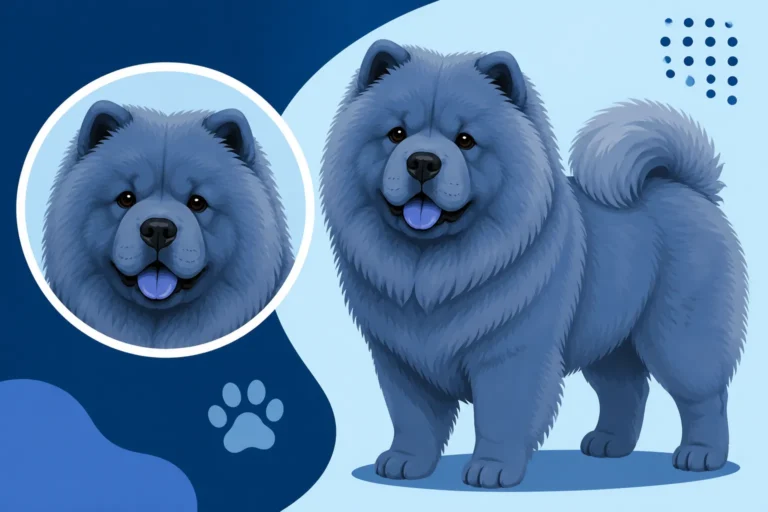
When a Chow Chow Puppy’s Tongue Turns Blue
It’s a common moment of confusion and sometimes even concern for new Chow Chow puppy parents: you bring home your fluffy bundle of joy, perhaps expecting that iconic blue-black tongue, only to find a pink one peeking out when they yawn. This guide will walk you through the fascinating process of when and why a Chow Chow puppy's tongue transforms from a baby pink to its characteristic blue-black hue, clearing up any worries and explaining what to expect along the way.
The Mystery of the Blue-Black Tongue
The blue-black tongue is perhaps one of the most distinctive and talked-about features of the Chow Chow, setting them apart in the canine world. It’s not just a curious anomaly; it’s a hallmark of the breed, as integral to their identity as their lion-like mane or their dignified scowl. But what exactly gives their tongue this unique coloration?
Melanin: The Pigment Behind the Blue
The secret to the Chow Chow's blue-black tongue lies in melanin, the same natural pigment responsible for skin, hair, and eye color in humans and animals. In most dog breeds, melanin production is concentrated in other areas, leaving the tongue pink due to the underlying blood vessels. However, Chow Chows possess a genetic predisposition for an abundance of melanin-producing cells within the tissues of their tongues. This high concentration of pigment creates the deep, dark coloration we associate with the breed. It's not unlike how certain human skin tones have more melanin, leading to darker complexions. This isn't a sign of any specific health condition; rather, it’s a completely normal and healthy genetic trait that has been bred into the Chow Chow for centuries.
More Than Just the Tongue: Gums and Roof
It's not just the tongue that gets this special treatment! If you've ever had a peek inside a mature Chow Chow's mouth, you'll notice that the blue-black pigmentation often extends beyond just the tongue. The gums, the roof of the mouth, and sometimes even the inside of their lips can display this same dark, almost inky hue. This further emphasizes the widespread genetic tendency for hyperpigmentation in the breed's oral cavity. For some, the inside of the mouth might be a uniform dark color, while for others, it might be a mosaic of blue-black and dusky pink, especially on the gums. This variation is entirely normal and simply reflects the individual dog's genetic blueprint. Observing these areas as your puppy grows can be quite interesting, as they too will undergo changes alongside the tongue. You might also notice dark spots developing on other areas of their body, particularly on their skin under their dense coat, all thanks to the same melanin at work.
The Puppyhood Transformation
One of the most common surprises for new Chow Chow owners is seeing their puppy with a pink tongue. It's a natural starting point, but rest assured, the transformation is usually just around the corner. Understanding this developmental timeline can ease any worries and help you appreciate the unique journey your Chow Chow takes.
Born Pink: A Natural Start
Just like nearly all other dog breeds, Chow Chow puppies are typically born with pink tongues. When they first arrive, tiny and vulnerable, their bodies haven't yet ramped up the melanin production that will eventually give their tongues their distinctive color. This initial pink is completely normal and healthy. It's a stage that many first-time Chow Chow owners find unexpected, leading them to wonder if their puppy is truly a purebred or if there's something amiss. There’s absolutely no need for concern at this stage; it’s simply part of their early development. Think of it like a baby bird hatching without its full plumage – the adult features develop over time.
The Initial Darkening Phase
The magical transformation usually begins within the first few weeks of life, often between 2 and 8 weeks of age. You might first notice faint dark spots or patches appearing on the tongue, almost like smudges of ink spreading across a pink canvas. These patches will gradually grow larger and darker, eventually merging to cover more of the tongue's surface. It's a gradual process, not an overnight change. One day you might notice a few greyish spots, and the next week they're a deeper blue. This darkening can sometimes appear unevenly at first, with some areas becoming pigmented faster than others. Don't worry if it looks a bit patchy; it's all part of the process as the melanin cells become more active. Many breeders will keep a close eye on this development, often noting the progress for prospective owners.
When the Color Stabilizes
While the initial darkening occurs relatively quickly in puppyhood, the tongue's color can continue to deepen and settle over several months. Typically, by the time a Chow Chow puppy is around 4 to 6 months old, the blue-black pigmentation should be fully established across their tongue. However, some dogs might take a little longer, with full coloration not being evident until they are closer to a year old. It’s a bit like a child’s eye color, which can shift in the first few months before settling on a permanent shade. Once the tongue has achieved its full, stable blue-black hue, it generally remains that color throughout the dog's life, though natural aging might subtly alter its intensity over many years. Regular check-ups with your vet can help ensure overall oral health, and they'll be accustomed to seeing a variety of stages in The Age a Chow Chow's Tongue Finishes Darkening.
What Influences the Blue Hue
The unique blue-black tongue of a Chow Chow isn't just a random occurrence; it's a deeply ingrained characteristic shaped by their ancestry. While primarily genetic, understanding other subtle influences can give you a fuller picture of this fascinating trait.
Genetic Predisposition: It's in Their DNA
At the heart of the blue tongue phenomenon is genetics. Chow Chows carry specific genes that dictate the overproduction and distribution of melanin in their oral tissues. This isn't just a dominant gene; it's a characteristic that has been selectively bred for over countless generations, becoming a signature trait of the breed. If both parents are purebred Chow Chows with fully pigmented blue-black tongues, their puppies have an extremely high likelihood of developing the same coloration. This strong genetic link is why it's considered a breed standard and why a reputable breeder will be very familiar with this aspect of their puppies' development. It’s a clear marker of their heritage, going back centuries to Where the Chow Chow Comes From in Asia.
Development Timing and Individual Variation
While the genetic blueprint is strong, the exact timing and precise shade of blue can vary slightly from one puppy to another, even within the same litter. Just as human siblings might have different hair shades or grow at slightly different rates, individual Chow Chow puppies can show variation in their pigmentation development. Some might start darkening at 3 weeks, while others might not show significant changes until 6 or 8 weeks. Some might develop a very deep, uniform blue-black, while others retain a slightly lighter or more mottled appearance. These individual differences are usually nothing to worry about and simply reflect the natural biological diversity within the breed. As long as the darkening process is occurring, even if slowly, it’s generally within the normal range for Chow Chows.
Health and Pigmentation
While genetics are the primary driver, a puppy's overall health and nutritional status can play a minor, indirect role in the vibrancy of their pigmentation. A healthy, well-nourished puppy with no underlying health issues is more likely to develop strong, consistent pigmentation. Conversely, a puppy struggling with illness or severe malnutrition might potentially have a less robust development of pigment, though this is rare and usually secondary to more serious health concerns. It’s not that diet causes the blue tongue, but a healthy body facilitates the expression of its genetic traits. Ensuring your Chow Chow puppy receives a high-quality, balanced diet, perhaps from trusted brands like Chewy, is crucial for their overall development, including healthy skin and coat, which are also influenced by melanin. Regular veterinary check-ups for your puppy are always recommended to ensure they are thriving.
When Pink Spots Linger
It's natural to have expectations about your Chow Chow's blue tongue, but sometimes, despite their purebred lineage, a few pink spots might remain. This isn't necessarily a cause for alarm, but it's good to understand what it means.
Understanding Partial Pigmentation
Some Chow Chows, even purebreds from excellent lines, might never develop a uniformly blue-black tongue. They may retain small, noticeable pink spots or patches, usually on the underside or edges of the tongue, or sometimes in the roof of the mouth. This is known as partial pigmentation. It means that in those specific areas, the melanin-producing cells simply aren't as active, or aren't present in the same density, as in the blue-black sections. It's a genetic variation, much like some people have freckles while others don't – it's just how their body's melanin distribution works. These pink spots are usually harmless and don't indicate any underlying health problem. They just make your Chow Chow a little more unique!
Is a Pink-Spotted Tongue a Health Concern?
For the vast majority of Chow Chows, a pink-spotted tongue or even a predominantly pink tongue that never fully darkens is purely a cosmetic trait and holds no health implications. It doesn't mean your dog is unhealthy or prone to any particular illnesses. The key is to ensure the tongue and oral tissues are healthy in general – no sores, lesions, or unusual growths, regardless of color. If you do notice any changes to the color of your Chow Chow's tongue or mouth after it has fully developed, or if the pink areas suddenly change, it's always wise to consult your veterinarian, just as you would with any sudden change in your dog's health. But a persistent pink spot from puppyhood is typically nothing to worry about.
Pink Tongues and Breed Standards
When it comes to show dogs, breed standards are very particular. For the Chow Chow, a solid blue-black tongue is a highly desired trait. According to most breed standards, a pink or pink-spotted tongue can be considered a fault or even a disqualification in the show ring, depending on the extent of the pink. This is purely an aesthetic judgment based on historical breed characteristics, not a reflection of the dog's health or temperament. If you have no aspirations for showing your Chow Chow, then a pink-spotted tongue is entirely irrelevant. For a family pet, it simply adds to their charm and uniqueness. What matters most is a healthy, happy companion, regardless of whether their tongue fully conforms to show ring ideals. This characteristic is often something that serious breeders check for when determining Whether a Pink Spotted Tongue Disqualifies a Chow Chow.
Other Breeds with Blue Tongues
The blue-black tongue is famously associated with the Chow Chow, but they aren't the only canine companions who sport this intriguing trait. Understanding other breeds and mixes can help dispel common myths.
The Shar Pei Connection
Perhaps the most well-known "other" breed with a blue-black tongue is the Chinese Shar Pei. Like the Chow Chow, the Shar Pei is an ancient breed with roots in China, and it's believed that they share a common ancestry or at least a very distant genetic link. Because of this shared heritage, the Shar Pei also possesses the genetic predisposition for heavy melanin pigmentation in their oral cavity. Their tongues typically range from solid blue-black to a deep lavender or even spotted with blue and pink. So, if you see a Shar Pei puppy with a pink tongue, expect a similar transformation process to that of a Chow Chow. This shared trait further reinforces the idea that the blue tongue is an ancient characteristic, not unique to just one breed, and you might consider exploring Whether Shar Peis and Chow Chows Are Related for more insights.
Chow Chow Mixes and Tongue Color
Given the strong genetic component, it's not uncommon for Chow Chow mixes to inherit the blue-black tongue trait, at least partially. If a Chow Chow is bred with a pink-tongued breed, the resulting puppies might display a range of tongue colors. Some might have fully blue-black tongues, particularly if the Chow Chow parent's genes are dominant for this trait. Others might have tongues with distinct blue or black spots on a pink background, or a mottled appearance. Still others might have entirely pink tongues, especially if the pink-tongued parent's genes are more influential in that particular puppy. It's a fascinating example of Mendelian genetics at play. Seeing a blue tongue in a mixed-breed dog often makes people immediately assume there's Chow Chow lineage, and they are usually correct in that assumption.
Dispelling the "Blue Tongue = Chow" Myth
While the blue tongue is a strong indicator of Chow Chow (or Shar Pei) heritage, it's important to understand that it's not an exclusive club. There are a handful of other breeds, like the Akita, Australian Shepherd, German Shepherd, and even some Labradors, that can occasionally display blue or black spots on their tongues. These are usually isolated spots, not a full blue-black tongue, and are considered normal pigment variations, not a sign of Chow Chow ancestry. So, while a fully blue-black tongue is almost certainly a sign of Chow Chow or Shar Pei blood, a dog with a few dark spots on an otherwise pink tongue isn't necessarily a Chow Chow mix. It’s a common misconception, but knowing the nuances helps you appreciate the true uniqueness of the Chow Chow's consistent and widespread oral pigmentation.
Caring for Your Chow Chow's Mouth
Beyond the fascinating color, a Chow Chow's mouth, like any dog's, requires attentive care to ensure overall health. Understanding their unique oral anatomy and how to keep it clean and healthy is paramount for their well-being.
Regular Oral Health Checks
With their deep-set eyes and often dense facial fur, a Chow Chow's face can sometimes make it challenging to get a good look inside their mouth. However, regular oral health checks are incredibly important, regardless of their tongue color. You should aim to gently lift their lips and examine their gums, teeth, and tongue a few times a week, if possible. Look for any signs of redness, swelling, unusual growths, or bad odor. Pay close attention to their teeth for tartar buildup, especially on the back molars. While their blue-black tongue might hide some issues, the gums and inner cheeks can still show signs of inflammation or irritation. Teaching your Chow Chow to accept this handling from an early age, possibly with positive reinforcement and tasty treats from Chewy, can make these checks much easier as they grow. Early detection of any problems can prevent more serious issues down the line.
Observing for Changes or Anomalies
Beyond routine cleaning, it’s vital to be observant of any changes in your Chow Chow's mouth. If their formerly uniformly blue-black tongue suddenly develops pale patches, or if the texture changes, that could be a cause for concern. Similarly, if you notice any unusual lumps, bumps, or ulcerations on their tongue, gums, or the roof of their mouth, it warrants a prompt veterinary visit. While the blue pigmentation itself is benign, Chow Chows, like all breeds, can be susceptible to oral cancers or other dental diseases. A sudden refusal to eat, excessive drooling, or pawing at the mouth are also red flags that should be investigated. Given that a Chow Chow's dark mouth can sometimes obscure subtle changes, being proactive with your observations is key to their long-term health. Consider discussing routine dental care and any specific Chow Chow predispositions with your vet during your annual wellness exam.
Here's a quick look at the typical tongue development timeline for Chow Chow puppies:
| Age Range | Typical Tongue Appearance | Notes |
|---|---|---|
| Birth to 2 Weeks | Pink, just like other puppies. | No melanin production in the tongue yet. |
| 2 to 8 Weeks | Faint dark spots or patches begin to appear. | Pigmentation starts, often unevenly. |
| 2 to 4 Months | Patches grow, deepen in color, and merge. | Tongue becomes predominantly blue-black, though some pink might remain. |
| 4 to 6 Months | Pigmentation generally fully established. | Tongue should be uniformly blue-black. Some individual variation is possible. |
| 6 Months + | Stable blue-black. Occasional pink spots can persist. | If pink spots remain, they are usually cosmetic and not a health concern. |
Understanding this timeline can help you know what to expect and when to simply enjoy the unique characteristic of your Chow Chow. Remember, every puppy is an individual, and some might develop faster or slower than others. What's most important is that they are healthy and happy! You can always reach out to your breeder or vet if you have any questions or concerns about your puppy's specific development. The age a Chow Chow puppy's tongue turns blue is a common question for new owners, and now you know the general journey.
Disclaimer
This article is for general informational purposes only and does not constitute professional advice. Laws, prices and regulations vary by location and change over time. Consult a qualified professional for guidance on your specific situation.