Where Pemphigus Appears on a Chow Chow First
It’s a truly unsettling moment when you notice something isn't quite right with your beloved Chow Chow's skin. With their magnificent, dense coats, spotting any underlying issues can feel like trying to find a needle in a haystack, and when you finally do, the worry sets in. This guide is here to shed light on Pemphigus Foliaceus, a challenging autoimmune skin condition, focusing specifically on where these troubling lesions typically make their unwelcome first appearance on a Chow Chow, and what you can do about it.
Understanding Pemphigus Foliaceus in Chow Chows
Pemphigus Foliaceus (PF) is an autoimmune skin disease, which simply means your dog's own immune system, for reasons we don't fully understand, decides to attack its healthy skin cells. Instead of fighting off invaders like bacteria or viruses, it mistakenly targets the "glue" that holds skin cells together in the outermost layer of the epidermis. This attack leads to a breakdown in cellular adhesion, causing pus-filled blisters, crusting, and hair loss. It’s not contagious, but it is chronic and can be incredibly uncomfortable for your dog. For a Chow Chow owner, discovering such a condition can be heartbreaking, especially when it's initially masked by their voluminous fur.
What is Pemphigus Foliaceus?
At its core, Pemphigus Foliaceus is characterized by the formation of pustules—small, pus-filled bumps—that quickly rupture and dry out, forming crusts. These crusts are often what you'll notice first, rather than the fragile pustules themselves, which are easily missed or rubbed away by scratching or normal activity. Imagine tiny, itchy blisters appearing on the skin, then bursting and leaving behind a yellowish or brownish scab. These lesions can be intensely itchy, leading your Chow Chow to scratch, rub, or lick the affected areas, which only exacerbates the problem and can introduce secondary bacterial infections. The discomfort can range from mild irritation to significant pain, making your otherwise stoic Chow Chow visibly distressed. It’s crucial to understand that while it’s a skin disease, it stems from an internal immune system malfunction, making it different from typical skin allergies or superficial infections.
Why Chow Chows Are Prone to Autoimmune Skin Conditions
It's a frustrating reality that certain breeds, and our Chows are among them, seem to carry a genetic predisposition to a range of autoimmune diseases. We've seen it with other conditions, and Pemphigus Foliaceus is no exception. While the exact genetic markers are still being researched, there's a strong belief among veterinarians and breeders that an underlying genetic component makes a Chow Chow's immune system more likely to misfire. This isn't your fault, nor is it something you could have prevented through better care or diet. It's simply an unfortunate roll of the genetic dice that some Chow Chows experience. This predisposition means that if you own a Chow Chow, you need to be particularly vigilant about any unusual skin changes, knowing that an autoimmune response might be at play. Understanding "Why a Chow Chow's Immune System Attacks Its Skin" can provide further context into this breed-specific vulnerability, highlighting the importance of early detection and management.
The Frustration of Hidden Symptoms
One of the biggest challenges of owning a Chow Chow, despite their many wonderful qualities, is their incredible, dense double coat. This magnificent fur, while beautiful, is also a master at hiding everything from minor skin irritations to serious underlying conditions. You might not notice the small pustules or even the initial crusts because they're buried deep within the fur. By the time you spot something, the condition might be more advanced, or a secondary infection could have taken hold. This delay can lead to feelings of guilt or frustration, wondering how you could have missed it. But honestly, it's not always easy. The sheer volume and thickness of their coat mean you need to be proactive with regular, thorough skin checks, especially in the areas we're about to discuss, even if your Chow Chow seems perfectly fine on the surface. We explore this further in "Why a Chow Chow's Dense Coat Hides Skin Disease."
The Initial Telltale Signs: Where Pemphigus Often Starts
When Pemphigus Foliaceus first emerges in a Chow Chow, it tends to follow a predictable pattern, focusing on specific parts of the body before potentially spreading. Recognizing these initial "hot spots" can be invaluable for early diagnosis and treatment.
The Bridge of the Nose and Nasal Planum
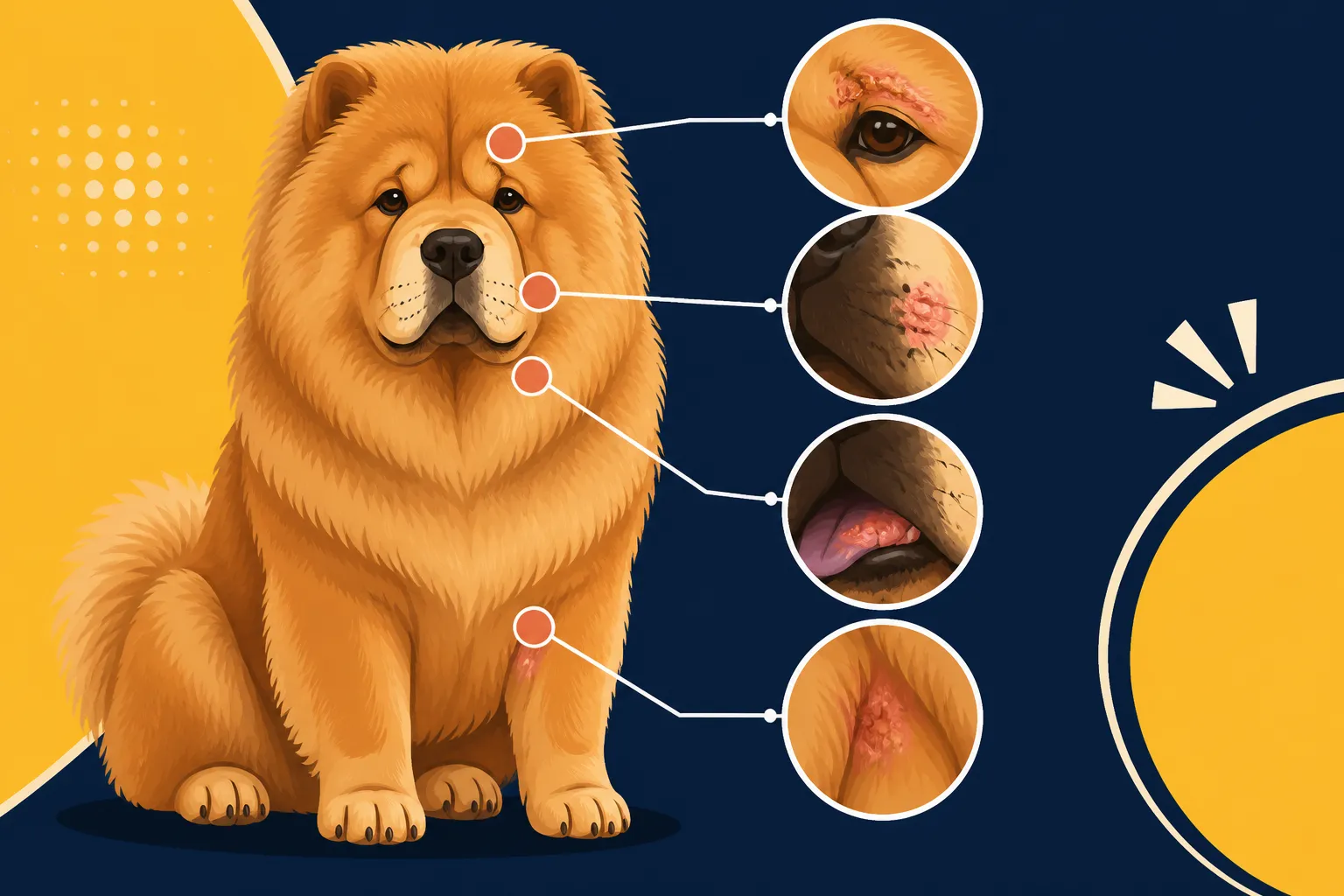
Perhaps the most common initial site for Pemphigus Foliaceus in Chow Chows is the bridge of the nose and the nasal planum (the hairless part of the nose). You might start to notice small crusts forming, almost as if your dog has dry skin or a minor abrasion. These aren't just dry patches, though. They often have a yellowish or brownish tint, are flaky, and can be quite adherent to the skin. As the condition progresses, the crusting can become more pronounced, developing into thick, scabby lesions.
Alongside the crusting, you might observe a loss of pigment on the nose, an issue detailed in "Whether a Chow Chow's Nose Loses Pigment." What was once a deep, uniform black nose might develop pinkish or mottled areas where the skin has been affected. The area can also become red and inflamed, tender to the touch, and your Chow Chow might paw at their nose or rub it against furniture or the ground in an attempt to relieve the itch or irritation. It's easy to mistake these early signs for a superficial scrape or a reaction to pollen, but if they persist or worsen, especially with crusting, Pemphigus should definitely be on your radar.
Around the Eyes and Ear Flaps
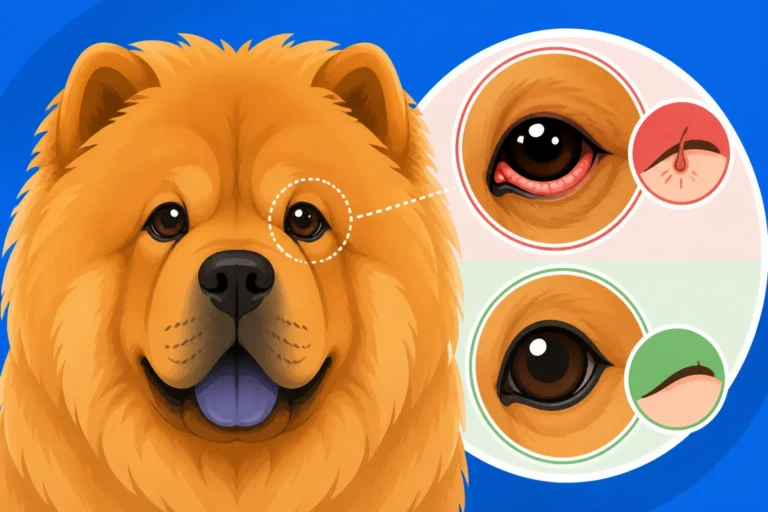
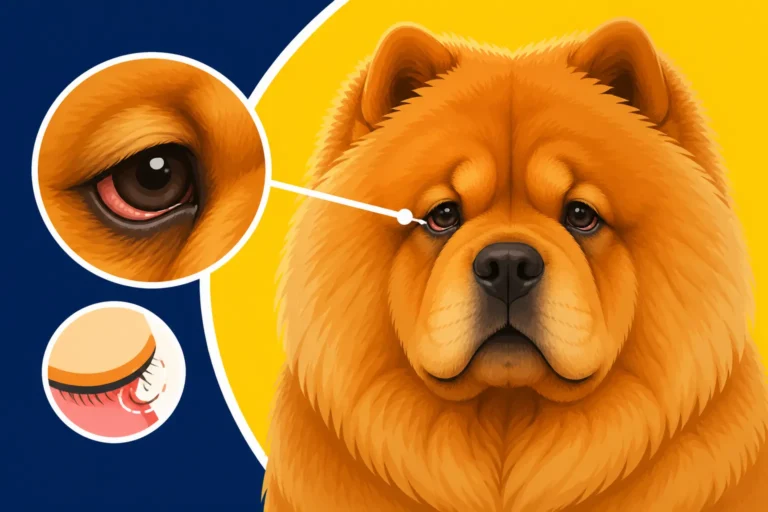
Another common starting point for Pemphigus Foliaceus is the delicate skin around the eyes and on the ear flaps (pinnae). Around the eyes, you might see small, scaly crusts forming on the eyelids or at the corners of the eyes. These can look a bit like dried discharge, but they're typically more tenacious and often accompanied by some hair loss in the immediate vicinity. Your Chow Chow might squint or seem more sensitive to light, indicating discomfort.
On the ear flaps, particularly on the inner surface or the edges, you might find crusts and scales similar to those on the nose. The skin can become thickened, red, and intensely itchy. Your Chow Chow might shake their head excessively, scratch at their ears with their back paws, or rub their ears against things. Sometimes, the initial lesions here can mimic ear mites or a yeast infection, but if standard treatments for those conditions don't work, PF needs to be considered. The deep-set eyes of a Chow Chow already make eye issues a concern, and adding a skin condition to the mix only increases the difficulty of observation and diagnosis.
Paw Pads and Nail Beds
While less common as the absolute first visible sign, the paw pads and nail beds are significant primary locations for Pemphigus Foliaceus, and when affected, they can be particularly debilitating for your Chow Chow. You might notice your dog starting to limp, or being reluctant to walk or put weight on a particular paw. Upon closer inspection, the paw pads themselves can become dry, cracked, and hyperkeratotic (thickened and hard), sometimes with fissures that bleed. You might also see pustules or crusts forming between the toes or on the top of the paw, where the skin meets the fur.
What’s particularly distressing is when the nail beds are involved. The nails might become brittle, discolored, or start to separate from the quick (onycho-shedding). This can be incredibly painful, making walking agonizing for your Chow Chow. This presentation is often seen in more severe or advanced cases, but it can occasionally be the very first thing an owner notices if their dog suddenly becomes lame or obsessive about licking their paws. Given a Chow Chow's natural stoicism, any sign of lameness or paw sensitivity should be investigated immediately, as it often means they are in considerable pain.
Progression and Other Areas to Watch For
Pemphigus Foliaceus, if left untreated, rarely stays confined to its initial presentation sites. The condition has a tendency to spread, sometimes rapidly, impacting a larger surface area of your Chow Chow's skin. Understanding this progression is key to appreciating the urgency of diagnosis and treatment.
Expanding Lesions and General Body Involvement
Once Pemphigus Foliaceus takes hold in the initial areas like the nose, ears, or paws, it often begins to generalize. This means the crusts, scales, and hair loss can spread to other parts of the body. You might start to see lesions appearing on the belly, in the groin area, in the armpits, or along the back. These areas are often where skin folds or friction occur, which can make the lesions more irritated and prone to secondary bacterial or yeast infections. The crusts can become quite extensive, sometimes covering large patches of skin, creating a distinct "moth-eaten" appearance as hair falls out in affected areas.
The itchiness, known as pruritus, can become generalized as well, leading to intense scratching and discomfort for your Chow Chow. This can seriously impact their quality of life, making them restless, irritable, and unable to find comfort. In severe cases, the lesions can become so widespread and deep that they impair the skin's protective barrier, leaving your dog vulnerable to systemic infections. This highlights why "Signs a Chow Chow Has an Autoimmune Skin Disease" often include a widespread deterioration of skin and coat health.
Oral Cavity and Mucous Membranes
It’s worth noting that while Pemphigus Foliaceus primarily affects the skin and mucocutaneous junctions (where skin meets mucous membranes, like the nostrils or eyelids), it rarely affects the true mucous membranes of the mouth or internal organs. This is a critical distinction from other types of pemphigus, such as Pemphigus Vulgaris, which commonly causes painful ulcers in the mouth and esophagus.
For PF, you might see crusting and lesions on the lips or around the muzzle, extending to the external mucosal areas, but deep oral ulcers are typically not a feature. This characteristic helps veterinarians differentiate PF from other, sometimes more severe, autoimmune blistering diseases. If your Chow Chow develops lesions or ulcers inside their mouth, it’s a strong indicator that the diagnosis might be something other than, or in addition to, Pemphigus Foliaceus, and further investigation would be warranted immediately.
The Importance of a Full Body Check
Given the Chow Chow's dense coat and their stoic nature, performing regular, thorough full-body checks is absolutely essential. Don't wait until your dog is visibly scratching or showing obvious discomfort. Make it a routine part of your grooming sessions. Take your time, systematically parting the fur down to the skin, checking every inch. Pay extra attention to the areas discussed: the bridge of the nose, around the eyes, the ear flaps, between the toes, and on the paw pads.
Feel for any bumps, crusts, or areas of thickened skin. Look for redness, hair loss, or any discharge. Lift their lips to check the gums and the area where the lips meet the muzzle. Regularly checking these areas allows you to catch changes early, which can make a world of difference in the prognosis and management of a condition like Pemphigus Foliaceus. It’s a bit of extra effort, but for a breed that excels at hiding symptoms, it's one of the most loving and responsible things you can do.
Here's a quick overview of common initial sites and their characteristics:
| Initial Area | Common Signs | Owner Observation | Urgency Level |
|---|---|---|---|
| Bridge of Nose/Nasal | Crusting, scaling, depigmentation, redness, small pustules | Dry patches, scabs, pink areas on black nose, rubbing nose | High |
| Around Eyes | Crusts on eyelids, hair loss, redness, irritation | Squinting, sticky eyes, rubbing face, dried discharge-like crusts | High |
| Ear Flaps | Crusting, scaling, redness, intense itchiness, thickened skin | Head shaking, scratching ears, ear odor (secondary infection) | High |
| Paw Pads | Dryness, cracking, hyperkeratosis, fissures, crusts between toes | Limping, reluctance to walk, excessive paw licking/chewing | Very High |
| Nail Beds | Brittle nails, nail separation (onycho-shedding), pain | Lameness, sensitivity when paws handled, discolored nails | Very High |
What to Do If You Suspect Pemphigus
Discovering any unusual skin condition on your Chow Chow, let alone something as potentially serious as Pemphigus Foliaceus, can be incredibly stressful. But the good news is that with prompt veterinary attention and a clear plan, this condition can often be managed effectively, allowing your Chow Chow to live a comfortable life.
Seeking Veterinary Diagnosis
If you observe any of the initial signs we've discussed, the very first step is to schedule an appointment with your veterinarian. Don't delay. Your vet will conduct a thorough physical examination, paying close attention to the affected skin areas. They will likely want to take samples for diagnostic testing. The definitive diagnosis for Pemphigus Foliaceus typically involves a skin biopsy. This is a minor surgical procedure where small pieces of affected skin are removed under local anesthesia or light sedation and sent to a specialized laboratory for histopathological examination. The pathologist looks for specific changes in the skin layers and the presence of acantholytic cells, which are characteristic of PF.
In addition to a biopsy, your vet might perform other tests, such as skin scrapings or fungal cultures, to rule out other common skin conditions like mange, ringworm, or bacterial infections, which can sometimes mimic the symptoms of PF. It’s vital to get an accurate diagnosis because the treatment for autoimmune diseases is very different from that for infections or parasites. Understanding "How Pemphigus Is Diagnosed in a Chow Chow" will give you a better idea of what to expect during this process.
Managing the Condition
Once Pemphigus Foliaceus is diagnosed, the primary goal of treatment is to suppress the immune system's overreaction. This usually involves corticosteroids, such as prednisone, which are powerful anti-inflammatory and immunosuppressive drugs. Often, treatment begins with a higher dose to get the condition under control, and then gradually tapered to the lowest effective dose for long-term maintenance. Your vet might also prescribe other immunosuppressive medications, like azathioprine or cyclosporine, particularly if your Chow Chow doesn't respond well to corticosteroids alone, or to minimize steroid side effects. You can learn more about "Which Medication a Chow Chow With Pemphigus Takes" to be prepared.
Alongside immunosuppressants, antibiotics may be prescribed to treat any secondary bacterial infections that have developed due to the compromised skin barrier. Medicated shampoos and topical ointments can also help manage symptoms and improve skin health. It's important to understand that Pemphigus Foliaceus is often a lifelong condition, meaning your Chow Chow will likely require ongoing medication and regular veterinary check-ups to monitor their response to treatment and adjust dosages as needed. This long-term commitment is explored further in "Whether Pemphigus Is Lifelong in a Chow Chow."
Financial Considerations and Support
Let’s be real, managing a chronic condition like Pemphigus Foliaceus can be financially demanding. The diagnostic tests, ongoing medications, and regular vet visits can add up quickly, becoming a significant burden for any pet owner. This is where pet insurance can be a real lifesaver. Many owners find that having a comprehensive pet insurance plan, like those offered by Healthy Paws, helps to offset the considerable costs associated with managing such conditions. It's something to seriously consider, especially with a breed like the Chow Chow, which can be prone to various health issues.
When looking at pet insurance, make sure you understand what chronic conditions are covered and at what percentage. An illness that might start costing hundreds in diagnosis could easily run into thousands over your dog's lifetime for medication and monitoring. While it might feel overwhelming at first, remember that there are resources and support available. Discuss payment options with your vet, look into breed-specific rescue organizations that might offer assistance, and definitely explore pet insurance plans as an option for future financial peace of mind. While we never want our pets to get sick, being prepared can make all the difference.
Disclaimer
The information provided in this guide is for general educational purposes only and should not be considered a substitute for professional veterinary advice. Always consult with a qualified veterinarian regarding any health concerns or before making any decisions about your Chow Chow's medical care.