Whether a Black Chow Chow Fades to Brown
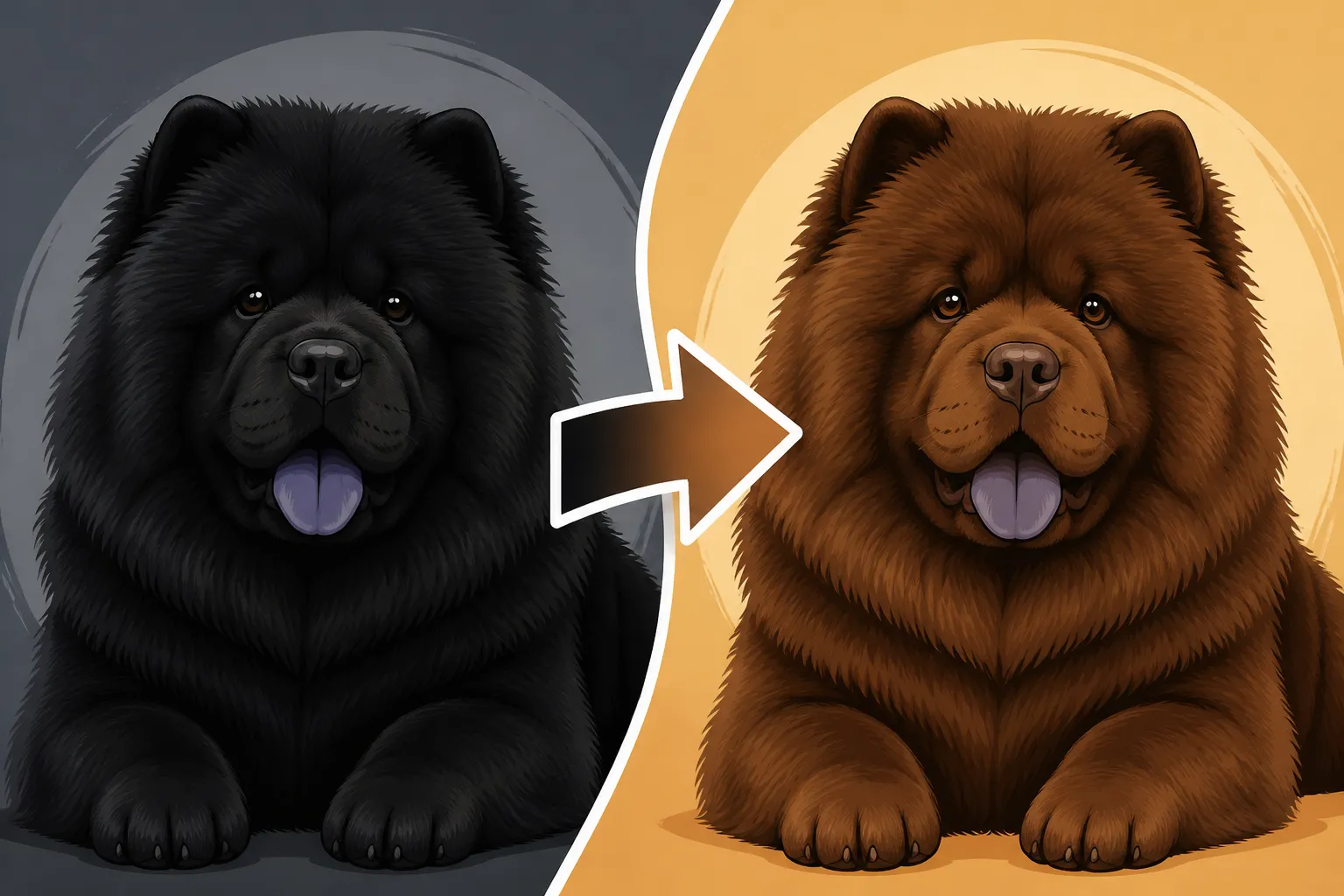
A black Chow Chow can develop a rusty or brownish cast, especially across the back, shoulders, and tail. That change is often caused by sun exposure or the way the coat is growing and shedding, rather than a black dog turning into a different color. This guide explains what fading can look like, what to check at home, and when a coat change deserves a veterinary visit.
Why a black Chow Chow can look brown
Sunlight can bleach the visible coat
A Chow Chow’s dense double coat has a soft undercoat and longer outer hairs. The outer hairs are exposed to sunlight, weather, and everyday friction, so they may look warmer or lighter than the hair closer to the skin. In a black dog, that can show up as a brown, reddish, or rusty sheen rather than an even, inky black.
The effect can be easiest to notice on the back, shoulders, and top of the tail, where the coat receives more direct light. A dog that spends sunny afternoons in the yard may look browner along the top of its coat than on the underside, even if the hair near the skin remains dark. A change that is gradual and limited to sun-exposed areas is often less concerning than a sudden change accompanied by other symptoms.
Lighting also makes a surprising difference. Black fur can look brown in strong sunlight, warm indoor lighting, or phone photos with automatic color adjustment. Before deciding that your dog’s coat has changed, look at it in natural shade and compare the same area over time. A single photo taken at golden hour can make a black coat look much warmer than it appears in person.
Puppy coats and seasonal shedding change the appearance
A puppy’s coat does not always look exactly like the adult coat that follows. As the puppy coat changes, the texture, length, and apparent shade may shift. Some black Chow Chows develop lighter-looking tips or a warmer cast during that transition. This does not automatically mean the dog is becoming a cinnamon Chow Chow or that its underlying color has changed.
Seasonal shedding can make the color seem different, too. During a coat blow, loose undercoat and old outer hairs may come away in clumps, leaving the coat looking uneven or less dense for a while. When fresh hair grows in, the overall appearance can change again. If the color shift happens around a heavy shed, see When a Chow Chow Blows Its Coat and How Much a Chow Chow Sheds for more on how coat turnover affects appearance.
Age can bring gradual changes in coat texture and shade, but a dramatic or patchy transformation is not something to explain away as normal aging without looking more closely. Whether a Chow Chow's Coat Darkens With Age explores those gradual changes, while the breed’s recognized color range is covered in Five Colors and Nothing Else: the Chow Chow Palette.
A brown cast is not necessarily a different coat color
A black Chow Chow that looks rusty in sunlight is still not necessarily a brown-colored dog. The breed’s commonly recognized colors include black, red, blue, cinnamon, and cream. “Brown” may be used casually to describe how a coat looks, but it does not identify the cause of the color or establish the dog’s genetic coat color.
Cinnamon is generally described as a fawn-to-cinnamon shade, while a black coat has dark pigment that may appear warmer at its tips or in certain lighting. Blue Chow Chows have a diluted, slate-like appearance and are not simply black dogs whose coats have faded in the sun. If you are unsure whether a dog is black, blue, cinnamon, or another color, a photograph alone may not settle it—particularly if the coat is long, changing, or photographed in warm light. The related discussion of Whether a Blue Chow Chow's Coat Fades explains why blue coats can also be mistaken for changing color.
| What you notice | A possible explanation | What to check |
|---|---|---|
| Brown or rusty tips on the back and shoulders | Sun exposure or weathering of the outer coat | Whether the hair near the skin remains dark and the skin looks healthy |
| Uneven color during heavy shedding | Coat turnover or a changing mix of old and new hairs | Whether the coat is regrowing and whether the skin is clear |
| A puppy’s coat looks different as it matures | Puppy-to-adult coat transition | Whether the change is gradual and the puppy otherwise seems well |
| Sudden color change with thinning, itching, odor, or sores | A skin or health problem may be involved | Arrange a veterinary examination rather than treating it as ordinary fading |
How to check whether the color change is ordinary
Look beneath the outer coat
A Chow Chow’s coat can hide what is happening at skin level. Part the hair with your fingers in several places, including the area that looks brownest, and check whether the hair is changing only at the tips or whether the roots and skin look different too. The coat should not be so tightly matted that you cannot see down to the skin.
Compare the affected area with a less sun-exposed part of the body, such as the underside or inner leg. If the roots remain dark and the skin looks calm, while only the exposed hair has a rusty cast, weathering is one plausible explanation. This is a clue, not a diagnosis; it is simply a more useful observation to share with your veterinarian if you remain concerned.
While checking, notice whether the skin is red, flaky, greasy, unusually dark, or sore. Look for bald patches, broken hairs, scabs, a strong new odor, or areas your dog repeatedly licks or scratches. Because a Chow Chow’s dense coat can conceal skin trouble, Why a Chow Chow's Dense Coat Hides Skin Disease offers useful context for why a seemingly small change may be difficult to assess from the surface.
Track the change instead of relying on memory
Coat color is easy to misremember, especially when the change is gradual. Take a clear photo in the same place and lighting every few weeks, parting the coat in one or two consistent spots so you can compare the roots as well as the surface. Note whether the change follows a sunny season, a coat blow, a grooming appointment, a new shampoo, or a change in diet.
Keep the notes practical rather than trying to diagnose the cause yourself. For example: “Rusty tips along the back, dark roots, no itching” is more helpful at an appointment than “the whole coat looks wrong.” If you notice hair loss or skin irritation, include when it started, whether it is spreading, and whether your dog seems uncomfortable.
A coat can also look different after bathing because wet or freshly dried fur lies in a different direction and reflects light differently. If the coat looks brown only when wet, under a particular lamp, or in photos, compare it again when dry in neutral daylight. That simple check can prevent a normal lighting effect from becoming a source of needless worry.
Grooming and everyday care for a fading-looking coat
Keep the coat clean, dry, and combed through
Regular brushing helps remove loose coat and makes it easier to see whether a color change is limited to the outer hairs. A line-brushing approach—working in small sections and checking down toward the skin—can reveal mats and irritated patches hidden beneath the mane. For a rough-coated Chow Chow, the mane, behind the ears, the britches, and areas under a collar deserve particular attention. See How Often a Rough Coated Chow Chow Needs Brushing for a grooming routine suited to that coat type.
A metal comb and suitable brush are more useful than repeatedly scrubbing the coat in an attempt to restore a darker color. If you are building a grooming kit, retailers such as Chewy carry a range of combs and brushes; choose tools that suit your dog’s coat and that you can use gently. Stop if your dog becomes distressed, and ask a groomer or veterinary professional to demonstrate a safe technique if mats are close to the skin.
Bathing does not reverse sun bleaching, and frequent or harsh washing can irritate the skin or leave the coat dry. Use a dog-specific product and rinse thoroughly, then dry the coat completely down to the skin. If you are comparing gentle dog shampoos or basic grooming supplies, Chewy can be one place to review product options, but the key is choosing a product appropriate for your dog—not a color-restoring or human hair product.
Avoid quick fixes that can damage the coat
Do not dye, bleach, or apply household color products to your Chow Chow’s fur. Products intended for people can irritate a dog’s skin, and coloring the coat can make it harder to notice a developing rash or other change. “Color-enhancing” products are not a substitute for finding out why the coat looks different.
Avoid shaving the coat to remove brown-looking tips or to make the dog cooler. Shaving does not correct pigment changes, and it can interfere with the coat’s normal protective function. If the coat is badly tangled or you cannot safely reach the skin, ask a groomer experienced with double-coated breeds for help rather than cutting mats out close to the body.
Be cautious with supplements, too. A complete, balanced diet is a better starting point than adding oils, vitamins, or minerals in the hope of darkening the coat. Supplements are not automatically harmless, and they may be inappropriate for a particular dog. If you are considering a diet change because the coat has altered, discuss the full picture—including appetite, weight, stool, and skin—with your veterinarian first.
When a coat change needs veterinary attention
Watch for symptoms beyond color
A slowly developing brown cast on the sun-exposed tips, with normal-looking skin and no discomfort, is different from a sudden change accompanied by hair loss or irritation. Make a veterinary appointment if you see persistent itching, repeated licking, inflamed or scaly skin, a new odor, sores, bald areas, or coat thinning that continues to spread. These signs can have multiple causes, and the coat’s appearance alone cannot tell you which one is responsible.
Also pay attention to changes in your dog’s overall condition. Unexplained weight changes, low energy, altered appetite, or unusual behavior alongside coat changes deserve a discussion with a veterinarian. Not every color shift signals illness, but a combination of changes is more useful to assess than coat shade in isolation. If you have been tracking the coat with photos, bring them along; they may help show how quickly the change developed.
Chows can have skin concerns that are easy to miss beneath a thick coat. If the skin is becoming irritated or the hair is breaking or disappearing, avoid applying products to hide the appearance before an examination. A veterinarian can inspect the skin and decide whether testing or treatment is appropriate. The goal is not to assume the worst—it is to avoid overlooking a problem because the coat makes it hard to see.
Share a clear history with your veterinarian
Before the visit, write down when you first noticed the fading, where it began, and whether it is getting worse. Mention changes in sun exposure, bathing products, grooming, food, medications, or routine. Tell the clinic whether your dog scratches, licks, smells different, or has patches of hair loss. These details can help the veterinarian distinguish a surface color change from a broader skin or health issue.
Do not feel you need to identify the exact shade or cause before calling. “The coat looks rusty along the back, and the skin there is itchy” gives the clinic a useful starting point. If the skin looks normal but you remain uncertain, a non-urgent appointment can still provide reassurance and a baseline examination.
For ordinary fading, the realistic expectation is that weathered outer hairs may remain lighter until they shed and are replaced. Grooming can keep the coat clean and manageable, but it cannot reliably restore sun-lightened hair to its original shade. Chewy may be convenient for routine grooming supplies, but if the color change comes with discomfort or skin symptoms, a veterinary assessment matters more than another coat product.
Disclaimer
This article is for general informational purposes only and does not constitute professional advice. Laws, prices and regulations vary by location and change over time. Consult a qualified professional for guidance on your specific situation.