Five Colors and Nothing Else: the Chow Chow Palette
When you embark on the journey of finding a Chow Chow, you might quickly realize there's a world of color out there, some recognized, some not. It can be incredibly confusing to sift through all the different terms, especially with online listings or social media posts throwing around words like "silver" or "white" that don't quite align with official breed standards. This guide aims to clear up that rainbow of confusion, helping you understand the five official colors of the Chow Chow and what each one truly means for this magnificent breed.
The Official Chow Chow Color Palette
Stepping into the world of purebred dogs means embracing breed standards, and for the Chow Chow, that includes a very specific and beautiful range of coat colors. Forget the endless variety you might see in mixed breeds; a purebred Chow Chow adheres to a traditional palette, each shade contributing to the breed's iconic look.
The Five Recognized Shades
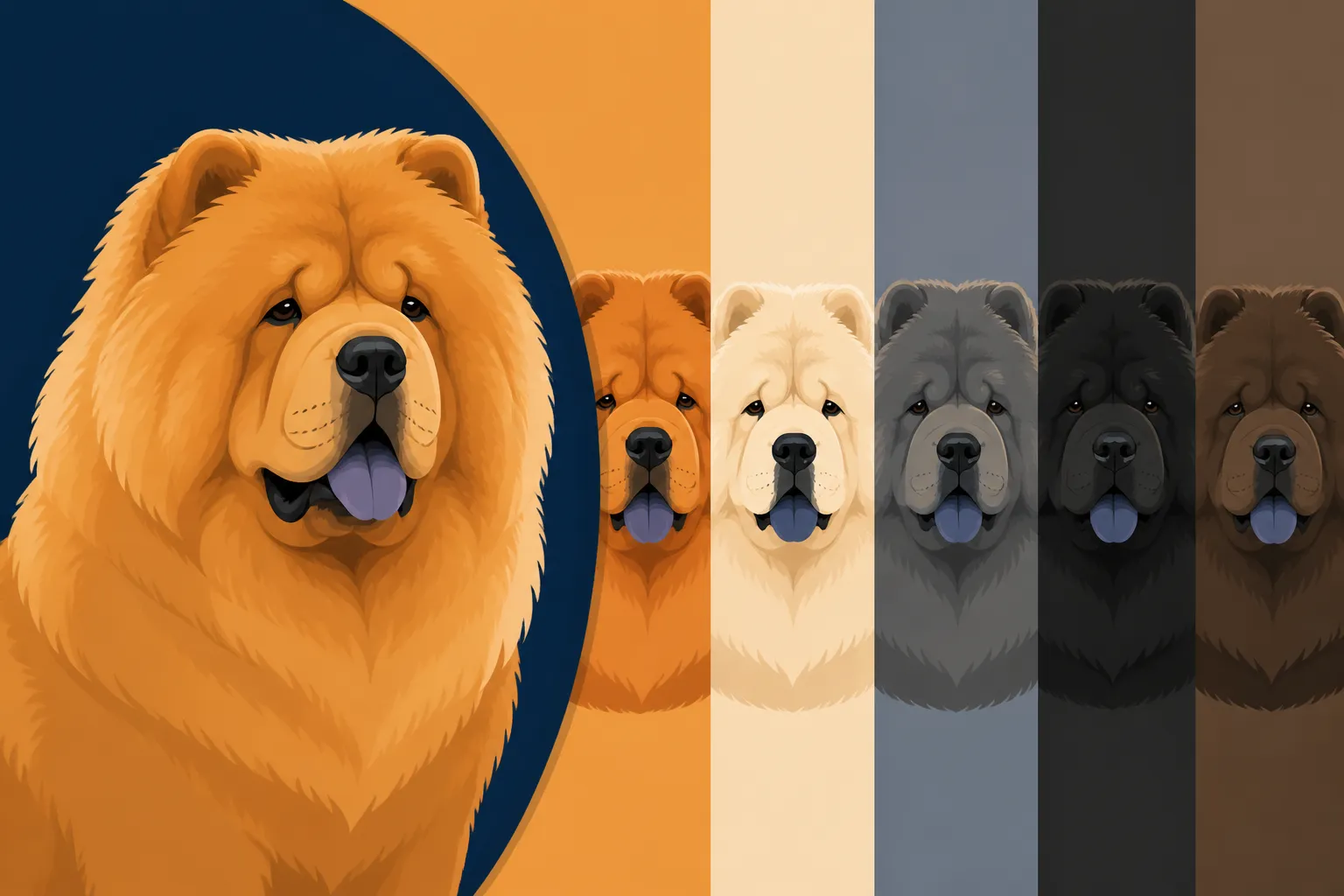
Globally, major kennel clubs, like the American Kennel Club (AKC) and the Kennel Club (UK), recognize just five distinct colors for the Chow Chow: Red, Black, Blue, Cinnamon, and Cream. These aren't just arbitrary classifications; they are the colors that have been part of the breed's heritage for generations, carefully preserved by dedicated breeders.
It's truly a common frustration for new prospective owners when they stumble upon online ads or social media groups touting "rare" or "exotic" Chow Chow colors that fall outside these five. While these dogs might be lovely in their own right, it's crucial to understand that if they don't fit into one of these five categories, they are either a result of mixed breeding or a non-standard variation that doesn't meet the breed's established criteria. The goal of the breed standard is to maintain the purity and integrity of the Chow Chow, and that extends to their coat colors. We're talking about consistency in color throughout the body, though some natural shading is always expected, particularly with age or sun exposure.
Why "Palette" Instead of Just "Colors"?
Using the term "palette" might seem a bit artful, but it truly captures the essence of Chow Chow colors. It's not simply about five solid blocks of color; within each category, there's a desired richness, depth, and variation that makes each individual dog unique. For example, a "Red" Chow isn't just one single shade of red. It can range from a light golden red to a deep, rich mahogany, all falling within the acceptable red spectrum.
The goal is a vibrant, well-pigmented coat that enhances the Chow Chow's noble appearance. Lighting, of course, plays a huge trick on the eyes. A black Chow Chow can look almost blue in certain light, or a cinnamon might appear more red depending on the sun. This is why experienced breeders and judges look at the dog's coat in various conditions, and also consider the nose, eye rim, and lip pigment, which are critical indicators of true color. Understanding this "palette" helps you appreciate the subtle beauty within each recognized color category, rather than expecting a single, unvarying hue.
Red Chows: The Most Common Hue
When most people picture a Chow Chow, they often envision a beautiful red one. And for good reason – red is by far the most common and recognizable color within the breed. It’s a classic for a reason, offering a range of warmth and depth that truly embodies the breed's majestic presence.
From Light Gold to Deep Mahogany
The spectrum of red in a Chow Chow is absolutely captivating. You'll find Chows with a lighter, almost golden red coat, particularly noticeable on the tips of their outer guard hairs. Then, at the other end of the spectrum, there are Chows boasting a deep, rich mahogany red, almost like burnished copper. This variation is entirely acceptable and part of the beauty of the red palette.
This color is certainly the most prevalent, and it’s often the first shade that comes to mind when you think of the breed's fluffy, lion-like mane. It's important to know that a red Chow's coat can lighten or darken over its lifetime. Puppies might start out one shade and mature into another. Sun exposure, especially on dogs who spend a lot of time outdoors, can also cause the red to lighten or even develop a bleached appearance on the tips. Seasonal coat changes, particularly during their significant "coat blows," can also alter the perceived depth of color. What’s important is that the overall color is an even shade, without random white patches or overly distinct lighter areas that suggest a different genetic base.
The Genetics Behind Red
Genetically speaking, red is a fascinating color in Chows. It's often considered a visually dominant color, which means that if a Chow Chow inherits genes for red, that’s usually what you’ll see. When two red Chow Chows are bred, they will most frequently produce red puppies. However, it's possible for them to carry recessive genes for other colors, like blue or cinnamon, and surprise you with a more varied litter if both parents carry the same recessive trait.
A crucial characteristic of a red Chow Chow, regardless of its shade, is its black nose pigment. Their eye rims and lips will also be black. This deep, dark pigment provides a striking contrast to their warm coats and is a hallmark of a healthy, standard-compliant red Chow. Reputable breeders can discuss the genetic history of their lines, often having information about what recessive genes their dogs might carry, helping you understand the potential for different colors in future generations. You can learn more about What a Chow Chow Breeder Should Have Tested to ensure you're getting a healthy pup.
Black Chows: Striking and Sometimes Surprising
For those who appreciate dramatic elegance, the black Chow Chow is a truly stunning sight. Their coats are often described as dense and majestic, offering a stark contrast to their typically dark eyes and iconic blue-black tongues.
The Deepest Night Shade
An ideal black Chow Chow should possess a dense, pure black coat, reminiscent of the deepest night sky. When you look closely, you shouldn't see any significant rusty or reddish tones within the coat itself. However, many owners are surprised to find that black Chows, especially those who spend time outdoors in the sun, can develop a reddish-brown tinge, particularly on their glorious ruff, tails, and sometimes along their backs. This phenomenon, often called "rusting," is entirely natural and is not considered a fault. It's simply the sun's way of lightening the black pigment, much like how human hair can lighten in the sun.
Despite this potential for sun-induced "rust," the overall impression should still be one of a truly black dog. The contrast with their intense, dark eyes and the ever-present black nose pigment (along with black eye rims and lips) creates a powerful and striking appearance that demands attention. You’ll often find these beautiful dogs looking even more imposing with their dense, profuse coat.
Black's Genetic Story
Genetically, black in Chow Chows is considered a "true" black, meaning it's not a diluted version of another color. It's a fundamental expression of eumelanin, the black/brown pigment, without any other genes diluting or modifying it. This means a black Chow Chow carries the genetic blueprint for black pigment.
Interestingly, black Chow Chows can actually hide other genetic traits. For instance, a black Chow could genetically carry the blue gene or the cinnamon gene in its DNA without displaying those colors itself. If such a black Chow were bred to another Chow carrying the same recessive gene, blue or cinnamon puppies could appear in the litter. This is part of why understanding the parentage and genetic background of a Chow Chow is so important, especially for breeders. The consistent black pigmentation of the nose, eye rims, and lips is a key identifier for a true black Chow, distinguishing it from a very dark blue or a severely sun-faded red. You can gain further insight into the breed's unique traits by reading about The Eight to Twelve Years a Chow Chow Gets, which covers general health and lifespan.
Blue Chows: The Elusive Slate
If you're seeking a Chow Chow that stands out from the crowd with a sophisticated and slightly mystical air, a blue Chow Chow might be just what you're looking for. These dogs possess a unique charm, their coats ranging from a subtle silvery sheen to a profound slate hue.
A Spectrum of Gray
The color "blue" in dogs, including the Chow Chow, refers to a diluted black. It's not a vibrant sky blue, but rather a range of grays. This spectrum can span from a very light, almost silvery-gray, which can look incredibly delicate and ethereal, to a deep, rich slate blue that is strong and commanding. Regardless of the specific shade, the blue Chow Chow always exudes a distinctive elegance.
Blue Chow Chows are notably rarer than their red or black counterparts, which often adds to their allure. Many people mistakenly identify a highly sun-faded black Chow as a blue, or simply refer to blue Chows as "gray." However, there's a crucial distinguishing factor: a true blue Chow Chow will have self-colored blue nose pigment, blue eye rims, and blue lips. This is a definitive trait that sets them apart from other colors. Without this distinct blue pigmentation, a "gray" Chow Chow is likely a faded black or a non-standard color. To truly appreciate this unique coloration, you might want to see What a Blue Chow Chow Looks Like.
The Dilution Gene
The beautiful blue coat of a Chow Chow is all thanks to a specific genetic factor: the dilution gene. This gene, often referred to as the 'd' allele, effectively dilutes black pigment into blue. For a Chow Chow to express the blue color, it must inherit two copies of this recessive dilution gene (dd), one from each parent.
This genetic mechanism explains why blue Chows are less common. Two blue Chow Chows, both carrying two copies of the dilution gene, will exclusively produce blue puppies. However, a black Chow Chow can "carry" the blue gene (meaning it has one copy of the dominant black gene and one copy of the recessive dilution gene). If two such black carriers are bred together, or a black carrier is bred to a blue Chow, then blue puppies can indeed appear in the litter. This hidden genetic potential is a significant aspect of responsible breeding. Owners of blue Chows often wonder about their coats changing, and you can explore this further by reading Whether a Blue Chow Chow's Coat Fades with age or sun exposure.
Cinnamon Chows: A Lighter, Warmer Brown
Often mistaken for a lighter red, the cinnamon Chow Chow holds its own unique place in the breed's color palette. It’s a truly charming color, distinguished by its warm, earthy tones and a distinctly different pigmentation from the reds.
The Rich, Spicy Hue
Imagine the warm, inviting color of ground cinnamon or nutmeg – that’s precisely the essence of a cinnamon Chow Chow. This color presents as a lighter, reddish-brown, sometimes leaning towards a fawn or sandy hue, especially on the undercoat and feathering. It possesses a softness that is quite appealing, offering a gentle yet still distinct appearance.
A common point of confusion arises when trying to differentiate a cinnamon Chow from a light red one. The critical differentiator is the nose pigment. While red Chows have a black nose, eye rims, and lips, cinnamon Chows exhibit what's called a "self-colored" nose pigment, which is typically brown or liver-colored. This brown pigmentation is consistent across their eye rims and lips as well. If you’re ever unsure whether a Chow is a light red or a true cinnamon, simply checking the nose color will usually give you the definitive answer. The desired cinnamon color avoids any hint of gray or an overly strong red, aiming for that perfect balance of warm, spicy brown. For a visual understanding, check out What a Cinnamon Chow Chow Looks Like.
Genetic Nuances of Cinnamon
The genetics behind the cinnamon color are distinct from red, indicating a different set of gene expressions. Cinnamon is often considered a dilute form of red, but it's specifically tied to the 'b/b' genotype at the B locus, which affects the production of black and brown pigment. In simpler terms, this genetic combination results in a reduction of the black pigment (eumelanin) that would typically create a red coat with a black nose, instead producing a brown or liver pigment for the nose and a lighter, warm coat.
When two cinnamon Chow Chows are bred together, they will consistently produce cinnamon puppies, as they both carry the necessary recessive genes. Similarly, a red Chow Chow can carry the cinnamon gene. If this red carrier is bred to another carrier or a cinnamon Chow, then cinnamon puppies can be part of the litter. Understanding these genetic nuances is part of responsible breeding, allowing breeders to anticipate and plan for the colors of their litters.
Cream Chows: Soft and Sometimes Misunderstood
The cream Chow Chow is a picture of serene beauty, often exuding a softer, almost ethereal quality. However, this delicate color is frequently misunderstood, with many mistaking it for pure white or even albino.
The Pale Spectrum
The term "cream" in Chow Chows encompasses a broad range of hues, from a remarkably pale, almost off-white, to a rich, warm butterscotch or pale golden color. It’s important to clarify a common misconception: true white Chow Chows, in the sense of pure, unpigmented white, are exceedingly rare and typically fall outside the breed standard, sometimes being associated with albinism. What most people refer to as "white" Chow Chows are, in reality, very pale creams.
For a cream Chow Chow to be considered standard, it must still possess strong black pigmentation on its nose, eye rims, and lips. This is a critical distinction. A true cream will have these dark points, providing a lovely contrast to their pale coats. If a Chow Chow lacks this black pigmentation, having pink or liver-colored points instead, it may indicate a different genetic makeup or health concern, which would fall outside the recognized standard. The desired cream color is one of substance and warmth, not a bleached-out appearance. You can delve deeper into this topic with Whether a Cream Chow Chow Is Standard.
The Genetics of Cream
The stunning cream coat of a Chow Chow is a result of a specific genetic mechanism: the 'e/e' gene at the E locus. This gene essentially prevents the full expression of eumelanin (black/brown pigment) in the coat, allowing only phaeomelanin (red/yellow pigment) to be expressed, which is then diluted to a cream color. It’s a dilution, but specifically of red pigment.
What's particularly interesting about cream genetics is that the 'e/e' gene can actually "hide" other colors. This means that a cream Chow Chow, while appearing pale, could genetically be a red, black, blue, or cinnamon underneath that cream dilution. The 'e/e' gene acts as an epistatic gene, meaning it overrides the expression of other color genes on the coat. When two cream Chows are bred together, they will consistently produce cream puppies because both parents contribute the 'e/e' gene. Understanding this genetic masking is key for breeders who aim to predict the color outcomes of their litters. If you're curious about the true rarity of specific shades, you might want to read Whether a White Chow Chow Exists.
Understanding Chow Chow Color Genetics
Delving into the world of dog coat colors can feel a bit like cracking a secret code, but at its heart, it’s all about genetics. For Chow Chows, understanding a few basic principles helps demystify why they come in their stunning five-color palette.
A Simple Breakdown of the Basics
At the most fundamental level, dog coat colors are determined by genes, which are inherited from both parents. Every dog gets two copies of each gene, one from its mother and one from its father. Some genes are dominant, meaning only one copy is needed for that trait to show up. Others are recessive, requiring two copies (one from each parent) to be expressed.
For Chow Chows, like many breeds, there are several key genetic "loci" (locations on the chromosome) that dictate color. For example:
- The A Locus (Agouti Series): This primarily influences where and how black pigment is distributed. In Chows, this is less about patterns and more about the intensity of red or black.
- The B Locus (Brown/Black Pigment): This determines whether a dog produces black pigment (dominant B) or brown pigment (recessive b). A cinnamon Chow, for instance, has two copies of the 'b' gene (bb), which changes its black pigment to brown.
- The E Locus (Extension Series): This gene is crucial for red and cream Chows. The 'e/e' combination prevents black pigment from extending into the coat, leaving only red/yellow pigment. If there’s also a dilution gene, this can result in a cream coat.
- The D Locus (Dilution Series): This gene is responsible for diluting black pigment to blue. A Chow with two copies of the recessive 'd' gene (dd) will have a blue coat and blue nose.
Reputable breeders invest time and effort in understanding these genetics. This knowledge allows them to predict the potential colors of a litter, but more importantly, it helps them make informed decisions to ensure healthy pairings and uphold the breed standard. They can even provide insights into Whether a Chow Chow Puppy's Coat Type Is Obvious early on, as genetics play a role in that too.
The Role of Pigment
At the core of all dog coat colors are two main types of pigment:
- Eumelanin: This is the black and brown pigment. The B locus modifies this to be either black (B) or brown (b). The D locus can dilute this to blue (dd) or liver (dd, bb).
- Phaeomelanin: This is the red and yellow pigment. The E locus controls whether phaeomelanin is expressed.
For Chow Chows, the expression and modification of these pigments create their recognized colors. A red Chow, for example, primarily expresses phaeomelanin, with a black nose (eumelanin). A black Chow primarily expresses eumelanin. A blue Chow is a black Chow where the eumelanin has been diluted. A cinnamon Chow is a red Chow where the eumelanin in the nose, eye rims, and lips has been turned brown. And a cream Chow is a red Chow where the phaeomelanin itself has been lightened to a very pale shade.
This understanding also explains why the nose, eye rim, and lip pigment are so critical for identifying true color. For red, black, and cream Chows, black pigment is desired for these features. For blue Chows, it's blue pigment. For cinnamon Chows, it's brown or liver pigment. These pigmented areas are often the clearest indicators of a Chow Chow's underlying genetic color, regardless of any fading or sun-bleaching that might affect the coat itself.
| Chow Chow Color | Primary Coat Appearance | Nose Pigment | Genetic Basis (Simplified) |
|---|---|---|---|
| Red | Golden to rich mahogany red | Black | Primarily phaeomelanin (red pigment) with black eumelanin points |
| Black | Dense, pure black | Black | Primarily eumelanin (black pigment) |
| Blue | Silver-gray to deep slate blue | Blue | Diluted eumelanin (dd genotype) |
| Cinnamon | Warm reddish-brown, fawn-like | Brown/Liver | Modified eumelanin (bb genotype) for points |
| Cream | Pale white to rich butterscotch | Black | Diluted phaeomelanin (ee genotype) |
What About "White" or "Silver" Chow Chows?
It’s natural to be drawn to unique and unusual appearances, and terms like "white" or "silver" Chow Chows often pique interest. However, for those dedicated to the breed standard, these terms typically lead to important clarifications.
Common Misconceptions
When people ask about "white" Chow Chows, they are almost always referring to what is officially recognized as a very pale cream. As we discussed, true white, in the sense of pure, unpigmented white, is extremely rare in Chow Chows and is not part of the breed standard. This kind of pure white is often associated with albinism or other genetic conditions that are not desirable or healthy for the breed. So, if you see a "white" Chow Chow advertised, it's virtually certain to be a stunning, very light cream.
Similarly, "silver" Chow Chows are typically either very light blue Chows or black Chows whose coats have extensively faded or "rusted" due to sun exposure and age. The silvery sheen of a dilute blue coat can indeed look quite striking and might be described as "silver" by an enthusiast. However, within the breed's official lexicon, "silver" isn't a recognized color. These terms are often used in marketing, sometimes to suggest rarity or uniqueness, but it's important for prospective owners to understand that they don't align with the established breed standard. If you’re ever curious about truly unusual genetic variations, you might be interested in Whether a Merle Chow Chow Is Real in the breed (spoiler: it's not standard).
Why These Are Not Standard
The reason "white" (as a distinct color from cream) and "silver" are not recognized by major kennel clubs boils down to maintaining the breed's purity and health. Breed standards are meticulously developed to preserve the historical characteristics, appearance, and genetic health of a breed. Deviations from these standards, especially concerning coat color, can sometimes indicate mixed breeding or the presence of genes that are not traditionally part of the Chow Chow lineage.
Some unscrupulous breeders might intentionally use "rare" or "exotic" color descriptors like "white" or "silver" to generate excitement and command higher prices. This can be a significant red flag. A reputable breeder will always be transparent about their dogs' true colors, using the official terminology, and will prioritize the health and temperament of their puppies above all else. They will also emphasize the importance of the recognized color palette as defined by organizations like the AKC. Rather than focusing on non-standard colors, it’s always best to engage with a breeder who adheres to the official Which Five Colors the Chow Chow Standard Accepts and can provide documentation of health testing.
Why Breed Standard Colors Matter
Breed standards aren’t just about aesthetics; they are comprehensive guidelines that encompass everything from temperament and structure to, yes, coat color. For a breed as ancient and distinct as the Chow Chow, adhering to these standards is crucial for their long-term well-being and preservation.
Preserving Breed Integrity and Health
The adherence to specific breed standard colors is more than just a matter of appearance; it’s intrinsically linked to preserving the integrity and overall health of the Chow Chow breed. These standards have been developed over generations to reflect the characteristics that define the Chow Chow. When breeders deviate from these standards, particularly by breeding for non-standard or "fad" colors, there can be unintended consequences.
Sometimes, seeking out unusual colors can lead to breeding practices that overlook critical health testing or temperament evaluations, simply because the focus is solely on a novel coat. While the standard Chow Chow colors themselves are not typically linked to specific health issues unique to that color (unlike, for example, the merle gene in some other breeds), irresponsible breeding focused on rarity can introduce problems. Responsible breeders prioritize the full spectrum of the breed standard, including robust health and stable temperament, ensuring their lines are free from common Chow Chow ailments like entropion, hip and elbow dysplasia, and thyroid disease. You can find more information about crucial health checks in Which Health Tests a Chow Chow Breeder Should Run. Maintaining the standard helps ensure that the Chow Chow remains a healthy, characteristic example of its heritage.
What to Look For in a Reputable Breeder
Navigating the search for a Chow Chow puppy can feel overwhelming, but focusing on finding a reputable breeder is the most important step. A good breeder is your partner in bringing a healthy, well-adjusted Chow into your home, and they’ll prioritize far more than just a dog’s color.
Here's what a reputable breeder will always emphasize:
- Health First: They will openly discuss the health of their breeding stock and provide verifiable results for health screenings relevant to Chow Chows, such as OFA certifications for hips and elbows, and current eye certifications from a veterinary ophthalmologist. They understand that What a Chow Chow Breeder Should Have Tested is paramount.
- Temperament is Key: Chows have a unique personality, and a good breeder will prioritize sound temperament, ensuring their puppies are well-socialized from an early age. They will ask you questions about your lifestyle to ensure a Chow Chow is the right fit.
- Adherence to Standard: While color is part of the standard, they will not compromise on other crucial aspects for a "rare" color. They will be knowledgeable about the five recognized colors and will not try to market dogs using non-standard terms. They often belong to national breed clubs that uphold these standards.
- Transparency and Support: A reputable breeder will welcome questions, allow visits to meet the dam (and potentially the sire), and provide a clear contract. They'll be a resource for you for the lifetime of your dog.
- Lifelong Commitment: They often have a clause in their contract stating that if for any reason you can no longer keep your Chow Chow, the dog must be returned to them. This speaks volumes about their commitment to the breed.
When you're looking for products for your new Chow Chow, whether it's specific food that supports their development or grooming tools for their dense coats, resources like Chewy can be incredibly helpful. They often have detailed product descriptions and reviews that can guide your choices, and reputable breeders might even recommend specific brands they trust. Choosing a Chow Chow from a breeder who aligns with these principles ensures you’re getting a dog that is not only beautiful in its standard color but also a healthy and happy companion for years to come.
Disclaimer
This article is for general informational purposes only and does not constitute professional advice. Laws, prices and regulations vary by location and change over time. Consult a qualified professional for guidance on your specific situation.