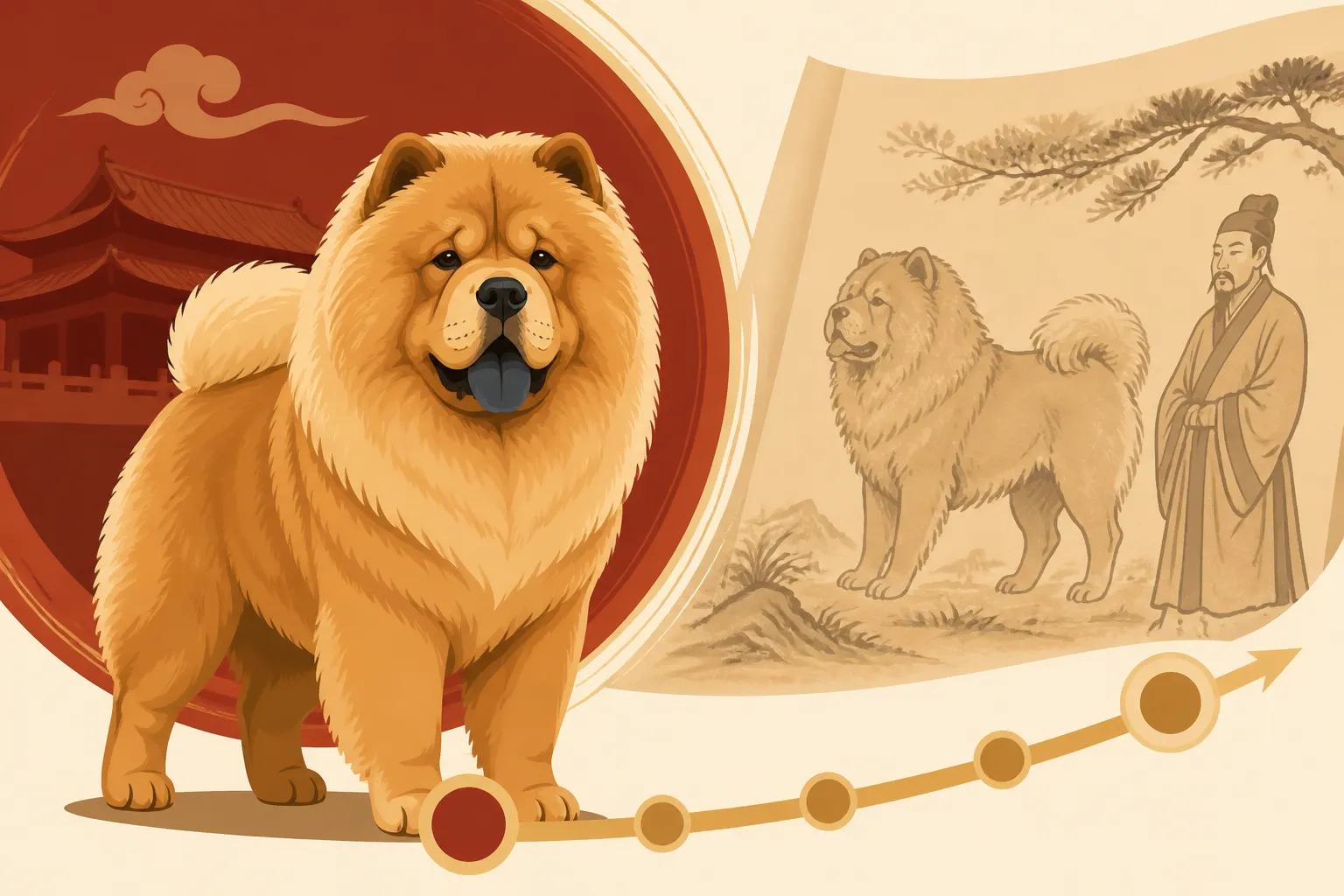
How Far Back the Chow Chow Is Recorded in China
When you first look at a Chow Chow, with that noble lion's mane and distinctive blue-black tongue, there’s an immediate sense of ancient history, isn't there? It’s not just a feeling; it’s a connection to a past stretching back centuries. Many of us wonder just how far back these incredible dogs have been part of human life, and what kind of records exist to prove their long and storied origins in China. This guide will explore the fascinating historical and archeological evidence that confirms the Chow Chow's exceptionally deep roots in Chinese culture.
The Deep Roots of the Chow Chow: More Than Just a Legend
It’s easy to dismiss claims of "ancient breeds" as mere folklore, but with the Chow Chow, the evidence is surprisingly robust. This isn't a story passed down purely by word of mouth; it's a narrative supported by tangible artifacts and historical documentation that paints a clear picture of a dog that has existed in its recognizable form for an incredibly long time. The journey to understand The Chow Chow Is One of the Oldest Breeds in the World truly begins in its homeland, deeply woven into the fabric of Chinese civilization.
Unraveling the Myth and the Evidence
For dog lovers, especially those of us drawn to unique and historically significant breeds, the idea of owning a living piece of history is incredibly appealing. But it also raises questions. How do we know a breed is ancient? What constitutes "recorded history" for a dog? For the Chow Chow, it's not about specific birth certificates from a thousand years ago, but rather a collection of cultural markers – art, written accounts, and even archeological finds – that collectively tell a powerful story. We’re not looking for a single definitive document, but a mosaic of evidence that, when pieced together, reveals an unmistakable continuity over millennia. This breed isn’t just old; it’s profoundly old, and its physical traits have remained remarkably consistent over this vast stretch of time.
The Earliest Glimpses: Han Dynasty Pottery and Bas Reliefs
Perhaps the most compelling visual evidence for the Chow Chow’s ancient lineage comes from the Han Dynasty, which flourished from 206 BC to 220 AD. Imagine artisans, thousands of years ago, creating sculptures and pottery that depicted the everyday life and beloved animals of their time. It’s in these very pieces that we see dogs that bear an uncanny resemblance to the modern Chow Chow. These aren't just generic dog figures; they display the characteristic broad skull, deep-set eyes, and curled tail that are hallmarks of the breed today. Han Dynasty Pottery Shows a Dog That Looks Like a Chow Chow isn't just a casual observation; it's a testament to the breed's stable appearance across vast historical periods.
Consider the meticulous detail often found in these artifacts. The pottery figures, sometimes funerary guardians meant to accompany their owners into the afterlife, depict stocky, powerful dogs with dense coats and the distinct "scowl" that Chow Chow owners know so well. These were clearly important animals, valued enough to be immortalized in art. The bas reliefs, carved into stone walls or monuments, also show similar dogs engaged in hunting scenes or standing protectively. These aren't just decorative elements; they reflect the working roles these dogs played, roles that would shape their temperament and physical traits for generations. These early artistic representations provide a solid foundation for understanding the Chow Chow’s long historical presence.
Written Records and Artistic Depictions Through the Ages
Beyond the Han Dynasty, the presence of Chow Chow-like dogs continues to surface in various forms throughout Chinese history. These aren't always explicit mentions of "Chow Chows" by name, but rather descriptions and depictions of a distinct type of dog that aligns with what we recognize today. Understanding the cultural context of these records helps us appreciate the breed's enduring significance.
Imperial Chronicles and Artistic Representations
As Chinese dynasties rose and fell, the importance of dogs, particularly those with guardian or hunting capabilities, remained constant. During the Tang Dynasty (618-907 AD), for instance, there are records of emperors keeping vast kennels, sometimes numbering in the thousands, for hunting and companionship. While specific breed names as we understand them today were less common, descriptions of powerful, lion-like dogs with dense coats fit the Chow Chow profile. These dogs were often described as courageous and formidable, traits that anyone who has lived with a Chow Chow can attest to. What the Chow Chow Did for a Chinese Emperor often involved accompanying them on hunts or standing guard, highlighting their dual utility as companions and protectors.
Later periods also offer glimpses. In ancient texts, the Chow Chow was sometimes referred to by names like Songshi Quan, meaning "puffy-lion dog," a remarkably accurate descriptor for its appearance. What Songshi Quan Means perfectly captures the essence of the breed's impressive coat and dignified demeanor. Other historical monikers include Hei She Tou, or "black-tongue dog," directly referencing its unique oral pigmentation. Which Chinese Names the Chow Chow Has Carried throughout history further reinforces the distinctive traits that made this dog stand out, even when formal breed registries didn't exist. These names weren't arbitrary; they were direct observations of the physical characteristics that have persisted in the breed.
| Era/Dynasty | Type of Evidence | Key Characteristics Observed | Significance to Chow Chow History |
|---|---|---|---|
| Han Dynasty | Pottery, Bas Reliefs, Tomb Figurines | Stocky build, dense coat, curled tail, deep-set eyes, "scowl" | Earliest concrete visual evidence of a distinct Chow Chow type |
| Tang Dynasty | Imperial records, historical accounts | Lion-like appearance, powerful, guardian/hunting roles | Indicates continued presence in imperial courts, high value |
| Later Dynasties | Written descriptions, folklore, art | "Puffy-lion dog" (Songshi Quan), "black-tongue dog" (Hei She Tou) | Naming conventions highlight unique and consistent breed traits |
| Modern Archeology | Canine remains, genetic testing | Confirmation of direct lineage, ancient East Asian origin | Scientific validation of claims based on historical artifacts |
Understanding the Context of Ancient Dog Breeds in China
It's crucial to understand that ancient China didn't classify dog breeds in the same way Western kennel clubs do today. Breeds often developed based on function, local geography, and specific physical traits. So, when we look for "Chow Chow" in ancient texts, we are searching for descriptions and images that match its unique phenotype and historical roles. The dogs that fit the Chow Chow's description were likely invaluable for various purposes, from guarding homes and property to herding and hunting. Sometimes, the dogs were referred to as "bear dogs" due to their impressive size and formidable presence. Whether the Chow Chow Was Called a Bear Dog further illustrates how deeply its appearance impacted its perception and naming.
These were not merely pets in the modern sense; they were integral members of the household and working communities. Their aloofness and strong guarding instincts, which we recognize in today's Chow Chow, would have been highly prized. This utilitarian aspect contributed to the breed's stability over time, as desirable traits were naturally selected for. The continuity of these traits, both physical and temperamental, provides compelling evidence that the Chow Chow as we know it today has a history far longer and more integrated into human society than many might initially realize.
What Modern Science Adds to the Historical Narrative
While ancient art and literature provide compelling historical records, modern scientific advancements, particularly in genetics, offer a new and incredibly precise lens through which to view the Chow Chow's past. This scientific evidence doesn't just corroborate the historical claims; it often pushes the timeline even further back, solidifying the breed's status as one of the truly foundational dog breeds.
Genetic Studies Confirming Ancient Lineage
In recent decades, DNA analysis has revolutionized our understanding of dog evolution and breed origins. When scientists examine canine genomes, they look for markers that indicate deep ancestral roots. The Chow Chow consistently appears in studies as one of the most ancient dog breeds, showing minimal genetic divergence from wolves and other early canine populations. This isn't just about being "old"; it's about being one of the direct descendants of the earliest domesticated dogs, existing almost as a living fossil in the canine world. What DNA Says About the Chow Chow's Age is incredibly powerful, providing irrefutable proof that this isn't just a modern breed with a romanticized past. These studies place its origins firmly in East Asia, predating most other recognized breeds by thousands of years.
The genetic markers suggest a lineage that hasn't undergone extensive crossbreeding with other dog types for a very long time, maintaining a distinct genetic signature. This helps to explain why its physical traits, from its unique tongue color to its specific gait, have remained so consistent. Whether the Chow Chow Descends From the Wolf Directly is a fascinating question that these genetic studies help to answer, indicating a very early divergence from the ancestral wolf population. It's truly a testament to selective breeding within a culturally isolated region that such a distinct and ancient genetic profile has been preserved.
Connecting Ancient Art to Today's Chow Chow
Imagine looking at a Han Dynasty sculpture of a dog and then looking at a photograph of a modern Chow Chow. The resemblance is striking, almost eerie. The combination of archeological finds, historical documentation, and genetic science creates an unbroken chain of evidence for the breed’s deep history. The dogs depicted in ancient Chinese art are not merely generic canines; they are detailed portrayals that align perfectly with the Chow Chow's distinctive features. The broad head, the small rounded ears, the deeply set eyes giving that characteristic scowl, and the profuse stand-off coat are all clearly visible.
This consistency across thousands of years speaks volumes. It tells us that these were not just random dogs, but a recognized type that was important enough to be carefully preserved and reproduced. Even aspects like the Chow Chow’s relatively straight rear leg, which contributes to its unique "stilted" gait, can be inferred from some ancient depictions showing a less angulated hindquarters. The story of the Chow Chow isn’t just recorded in ancient texts; it’s etched into the very bones and genes of the breed, a continuous narrative stretching from imperial China to the modern family home. And it shows that the care for such a unique breed, from its The Age a Chow Chow Is Considered Senior to selecting the right food, is part of a very long tradition.
Conclusion
The Chow Chow's journey through time is one of enduring presence and remarkable consistency. From the tangible evidence of Han Dynasty pottery and bas reliefs dating back over two millennia, to the consistent descriptions in imperial chronicles, and finally, to the unequivocal confirmations from modern genetic research, the record of this breed in China is exceptionally deep. It’s clear that the Chow Chow isn’t just an old breed; it’s a living bridge to an ancient past, a testament to its intrinsic value and distinct characteristics that have captivated people for thousands of years. When you look into the deep-set eyes of a Chow Chow, you are truly gazing back into history.
Disclaimer
This article is for general informational purposes only and does not constitute professional advice. Laws, prices and regulations vary by location and change over time. Consult a qualified professional for guidance on your specific situation.