What Han Dynasty Bas Reliefs Show
For anyone who’s ever fallen head over heels for the majestic, lion-like Chow Chow, there’s an undeniable curiosity about their origins. It’s a bit like trying to trace your own family tree back thousands of years—it can feel impossible to find definitive proof. Thankfully, ancient Chinese art offers us fascinating clues, particularly the detailed carvings found on Han Dynasty bas reliefs, which paint a compelling picture of dogs that bear a striking resemblance to our beloved Chows. This guide will delve into what these ancient artworks reveal about the breed's deep historical roots.
Glimpses of an Ancient Companion: Understanding Han Dynasty Bas Reliefs
When we talk about the history of a breed that dates back millennia, we can't just flip through old photo albums. We have to rely on the artistic and archaeological records left behind by ancient civilizations. The Han Dynasty, a truly pivotal era in Chinese history, provides a treasure trove of such evidence through its distinctive bas reliefs.
What Are Bas Reliefs and Why Are They Important?
Bas reliefs are a form of sculpture where the carved figures project only slightly from the background, creating a shallow three-dimensional effect. Imagine a drawing that's been brought to life just enough to give it texture and depth, but without fully detaching from the surface. In ancient China, particularly during the Han Dynasty (roughly 206 BC to 220 AD), these reliefs were incredibly common. They adorned tombs, temples, and important buildings, serving as more than just decoration. They were storytelling devices, historical records, and often, a way to depict the daily life, beliefs, and even the cherished possessions of the people of that time.
For us, trying to understand the lineage of a breed like the Chow Chow, these bas reliefs are invaluable. They offer a visual snapshot of what animals looked like, how they were perceived, and what roles they played in society, long before cameras ever existed. Without this kind of visual documentation, our understanding of truly ancient breeds would be far more speculative. It’s a unique window into a world where a dog's form and function were etched into stone for eternity.
The Han Dynasty Context: A Flourishing Era
The Han Dynasty was a golden age for China, marked by significant advancements in culture, technology, and governance. It was a period of immense stability and prosperity, allowing for complex social structures and a rich artistic tradition. In this flourishing society, animals played crucial roles. Horses were vital for transportation and warfare, oxen for agriculture, and various livestock for sustenance. Dogs, however, held a special place, often depicted not just as utilitarian creatures but as companions and protectors.
During the Han era, people engaged in hunting, kept guards for their homes and property, and sometimes simply enjoyed the presence of animals. This meant that dogs were integrated into many facets of daily life, from the practical to the ceremonial. The way they were portrayed in art reflects this deep connection, giving us insight into their appearance and their perceived value. These depictions, carved into stone, show us that the "dog-type" that would eventually evolve into the Chow Chow was already a familiar and significant part of the Han world.
The Dog-Like Figures: Interpreting the Visual Evidence
Now, let's get to the exciting part: what these ancient carvings actually show us. When you look at many of the dog figures on Han Dynasty bas reliefs, it’s like seeing an ancestor of the Chow Chow staring back at you from across the centuries. The resemblance is often uncanny, especially once you understand the characteristic traits of the breed.
Key Features Resembling the Modern Chow Chow
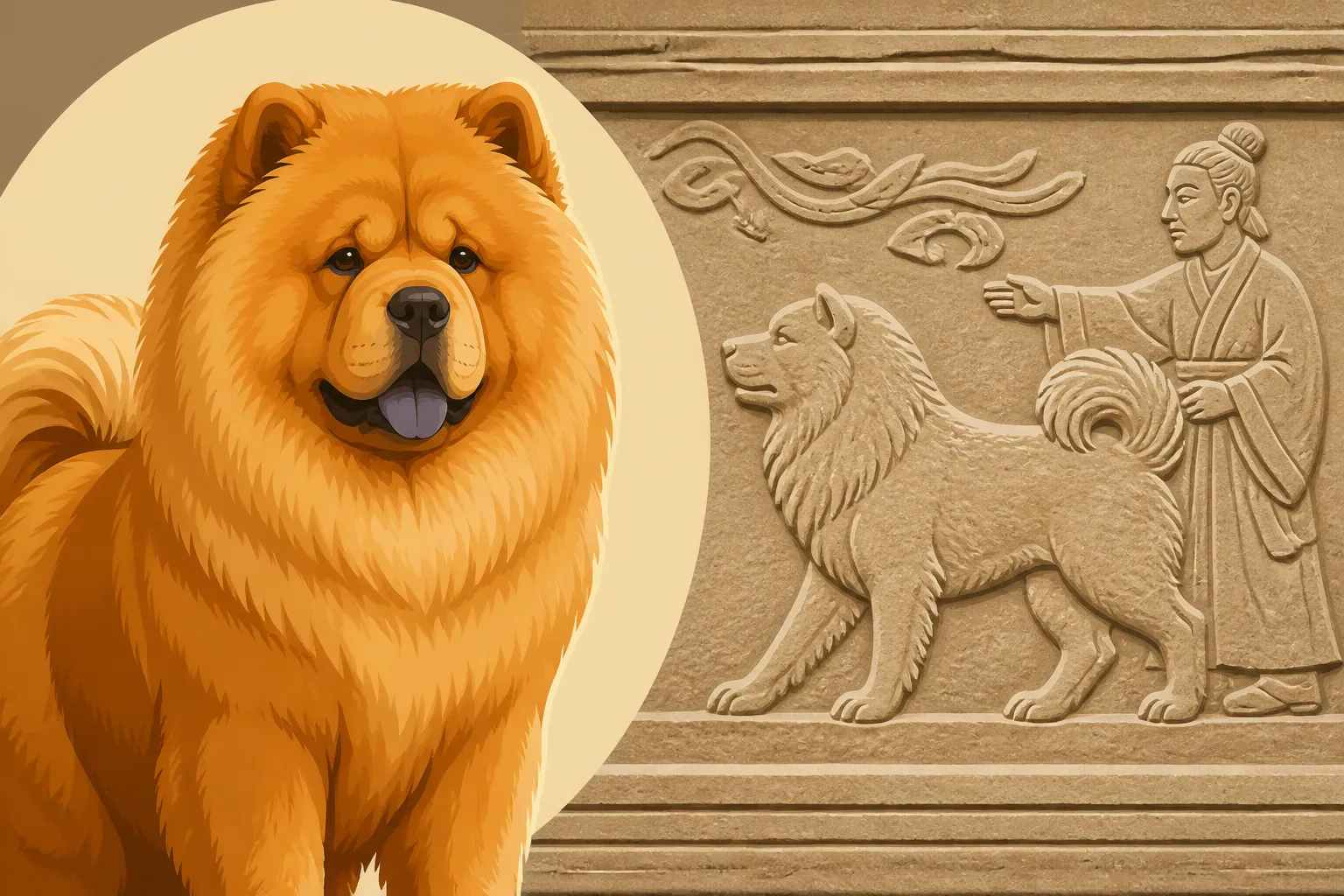
Many of the dogs depicted in these reliefs possess a distinct set of features that closely align with the physical characteristics we associate with today's Chow Chow. You can often discern a compact, sturdy build, indicative of strength and resilience. These weren't dainty little pups; they were robust animals. Furthermore, the body shape frequently suggests a dense, thick coat, giving the dogs a substantial, almost bulky appearance. While you can't see individual hairs in a stone carving, the overall silhouette conveys a plushness that mirrors the Chow's famous double coat.
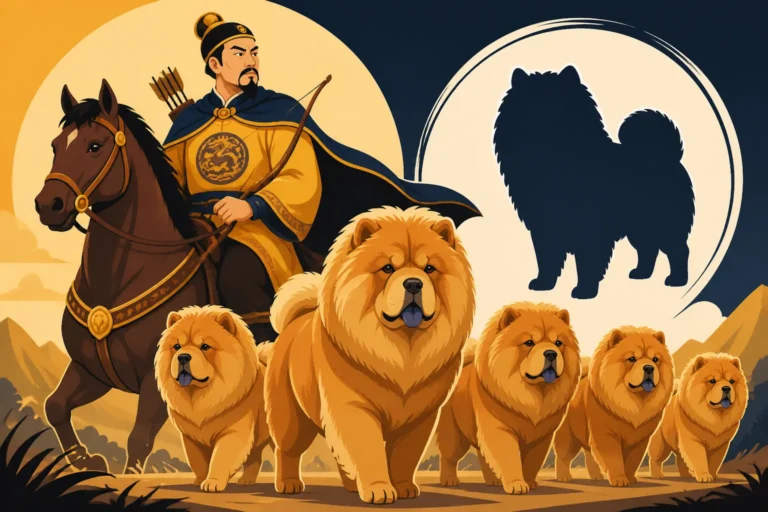
Perhaps one of the most striking resemblances is the tail: many of these ancient dogs are shown with tails curled tightly over their backs, a signature trait of the modern Chow Chow. This isn’t a feature common to all dog breeds, making its prevalence in these ancient depictions particularly noteworthy. Beyond the tail, the general head shape often indicates a broad skull and a somewhat shortened muzzle, contributing to a powerful, albeit stylized, facial expression. While the deep-set eyes and famous scowl of the Chow Chow might be harder to capture in early relief work, the overall structure points towards a similar aesthetic. These dogs were clearly not sighthounds or long-legged retrievers; they had a distinct, bear-like presence. What the Chow Chow Did for a Chinese Emperor often included using these robust dogs for various tasks, requiring a certain physique that these reliefs portray.
The Purpose of These Ancient Dogs in Art
The way these dogs are depicted also gives us clues about their roles. We see them in various scenarios, suggesting they were versatile and important animals. Many reliefs show these dog-like figures accompanying hunters, indicating their use in the chase and retrieval of game. This speaks to their intelligence and tracking abilities, essential for survival in ancient times. Other carvings portray dogs guarding gates or accompanying nobles, underscoring their protective instincts and loyalty. Imagine a carved scene on a tomb wall: a procession of figures, and right there, at the side of a prominent individual, a stout, thick-coated dog with its tail curled, a silent sentinel even in stone.
These artistic representations align with historical accounts that describe the ancient "Songshi Quan" or "puffy-lion dog" as being used for hunting, guarding, and even pulling carts. The inclusion of these specific dogs in funerary art often symbolized protection in the afterlife or represented cherished companions in this life. It tells us that these dog-types were not just present, but held a significant, respected place within Han society. It’s compelling evidence that the fundamental nature and utility of these dogs were recognized and valued by people thousands of years ago, much like we value our Chows today. Whether Chow Chows Guarded Temples is a question often pondered, and these reliefs certainly suggest a role in protection for important sites and individuals.
Bridging the Centuries: From Bas Reliefs to Breed Standard
It's easy to get excited and declare, "Look, a Chow Chow!" when you see these ancient carvings. But as responsible enthusiasts and historians, we need to approach the identification with a realistic perspective. There’s a crucial distinction between seeing a strong resemblance and declaring a definitive, unbroken genetic line.
The Challenges of Definitive Identification
While the similarities are striking, it's important to remember that ancient art is, by its very nature, stylized. Artists weren't aiming for photographic accuracy. Their goal was often to convey an idea, a status, or a symbolic meaning, rather than a perfect anatomical drawing. Proportions might be exaggerated, certain features emphasized, and others simplified. This makes it challenging to say with 100% certainty, "This is exactly what the Chow Chow looked like during the Han Dynasty." Furthermore, breeds evolve over millennia. What constitutes a "Chow Chow" today, with its specific breed standard and genetic markers, has been shaped by centuries of selective breeding, both intentional and unintentional. It's improbable that a Han Dynasty dog was identical in every minute detail to a show-ring champion of the modern era.
Think about how many distinct breeds exist today that might share some ancestral characteristics. It’s like looking at a very distant cousin and seeing a family resemblance without them being identical twins. Nevertheless, the consistent depiction of dogs with specific "Chow-like" traits across numerous reliefs certainly points to a distinct type of dog that was prevalent and recognizable in ancient China. It confirms the ancient roots of The Chow Chow Is One of the Oldest Breeds in the World.
The Role of Bas Reliefs in Chow Chow History
Despite these challenges, the Han Dynasty bas reliefs play an undeniable and critical role in piecing together the Chow Chow's long history. They provide concrete visual proof that a dog-type with many of the breed's most distinctive features—the sturdy build, the dense coat, the curled tail—existed in China at least two millennia ago. This visual evidence strongly supports the narratives found in ancient texts and oral traditions about the Chow Chow's deep lineage.
These carvings help to cement the Chow Chow's status as a truly ancient breed, one that has been a part of human civilization for a very long time. They offer a tangible connection to the past, allowing us to visualize these dogs not just as abstract concepts from historical records, but as living, breathing creatures that once roamed alongside emperors and commoners alike. They are a powerful testament to How Far Back the Chow Chow Is Recorded in China and demonstrate that these unique dogs have long held a place in Chinese culture and art. Indeed, Whether a Chow Chow Appears in Chinese Sculpture is strongly confirmed by these intricate stone carvings.
Beyond the Bas Reliefs: Other Historical Contexts
While bas reliefs offer a magnificent visual feast, they are just one piece of the puzzle. A more complete picture of the Chow Chow’s ancient past comes from combining this artistic evidence with other forms of historical and archaeological discovery.
Literary and Anecdotal Evidence from the Period
Beyond the stone carvings, historical texts, and anecdotal records from ancient China also speak of dogs that seem to describe the Chow Chow. Though they might not use the specific breed name we recognize today, descriptions of "puffy-lion dogs" or "bear dogs" hint at the distinctive appearance and temperament. These written accounts, when combined with the visual evidence of the bas reliefs, create a richer tapestry of understanding. We also have archaeological finds, such as dog skeletons unearthed from ancient burial sites, which, though not always visually telling of coat or specific features, can confirm the presence of domestic dogs of a certain size and build during these periods. This multidisciplinary approach strengthens the argument for the Chow Chow's ancient lineage.
Think of how invaluable it is to have both a picture and a written description of something from long ago. The Han reliefs give us the "picture," while these texts provide the narrative, often describing their use in hunting or guarding, much like the functions depicted in the art. This convergence of evidence provides a compelling case for the Chow Chow's antiquity.
The Enduring Legacy of the Ancient Chinese Dog
The fact that we can look at art created thousands of years ago and see such clear precursors to the modern Chow Chow is truly remarkable. It highlights the incredible continuity of this breed and its deep, undeniable roots in Chinese culture. It's a reminder that when you look into the eyes of your own Chow Chow, you are connecting with a lineage that stretches back through time, a dog whose ancestors walked with the people of the Han Dynasty.
This ancient heritage is part of what makes the Chow Chow so special and enduring. It's not just a cute face; it's a living piece of history, carrying the echoes of ancient China in its powerful build, its distinctive coat, and even its characteristic independent spirit. While the blue-black tongue of the Chow Chow isn't something visible on a bas relief, Why a Chow Chow's Tongue Is Blue Black is another unique trait that speaks to its distinctive genetic history. Similarly, the unique gait caused by The Straight Rear Leg No Other Breed Has further sets it apart. Understanding these ancient ties helps us appreciate the breed's place in history and its continued presence in our lives today, making its journey from ancient bas reliefs to our homes a truly fascinating one. Even today, finding high-quality food and appropriate grooming supplies for such a unique breed can be done through modern retailers like Chewy.
Here's a quick look at how features from Han Dynasty reliefs compare to the modern Chow Chow:
| Feature | Han Dynasty Bas Reliefs (Depicted) | Modern Chow Chow Standard |
|---|---|---|
| Build | Sturdy, compact, muscular | Compact, powerful, sturdy; well-balanced |
| Coat (Implied) | Appears dense, voluminous, substantial | Abundant, dense double coat (rough or smooth) |
| Tail | Carried tightly curled over the back | Carried closely curled over the back |
| Head Shape | Broad skull, somewhat short muzzle (stylized) | Broad, flat skull; broad, deep muzzle |
| Expression | Often regal, watchful, independent (stylized) | Characteristic scowl; discerning, intelligent |
| Role (Depicted) | Hunting, guarding, companionship | Companion, guard dog, loyal protector |
This article is for general informational purposes only and does not constitute professional advice. Laws, prices and regulations vary by location and change over time. Consult a qualified professional for guidance on your specific situation.