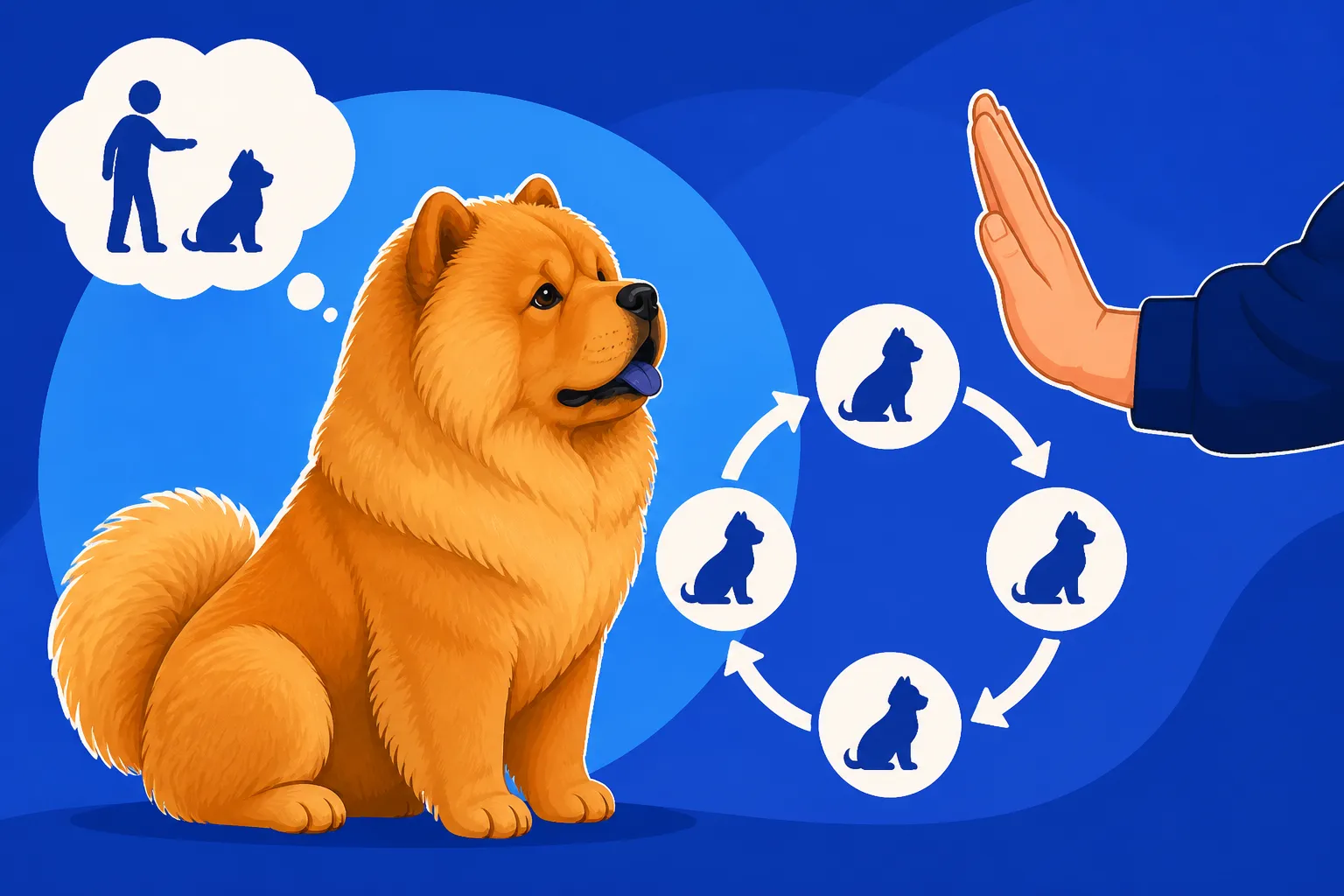
How Many Times a Chow Chow Will Repeat a Cue
The frustration is real: you stand there, treat in hand, asking your Chow Chow to "sit" for the fifth time, and they just… look at you. It’s not that they don’t understand; it’s that their unique intelligence and independent spirit mean they respond very differently to repetition than most breeds. This guide will help you understand how many times a Chow Chow will typically repeat a cue before disengaging and how to adapt your training methods to maintain their interest and cooperation.
Understanding the Chow Chow's Training Philosophy
Chow Chows are often described as "cat-like" for a reason. They are intelligent, discerning, and have a profound sense of self-importance that dictates their willingness to participate in activities, especially training. Expecting them to perform endless repetitions of a learned cue is often a recipe for frustration – for both you and your Chow.
The Myth of Endless Repetition
Many traditional dog training methods heavily rely on repetition and drill. The idea is that the more times a dog performs an action for a reward, the more ingrained it becomes, and the more reliably they will respond. While this holds true for many breeds, particularly those bred for intense cooperation and eagerness to please, it often falls flat with a Chow Chow.
A Chow Chow learns quickly. They are astute observers and can grasp the meaning of a cue after just a few successful repetitions. Once they understand what "sit" means and that it results in a treat, they often consider the lesson learned. To them, being asked to do it five, ten, or twenty more times in the same session is redundant, tedious, and frankly, insulting to their intelligence. They aren't trying to be defiant; they simply see no logical reason to continue performing an action they've already mastered. It's like asking a human to solve the same simple math problem repeatedly – after the first few times, their interest wanes, and they wonder what the point is. Why Repetition Bores a Chow Chow can shed more light on this unique trait.
Intelligence vs. Compliance
It’s crucial to distinguish between a Chow Chow's intelligence and their compliance. These dogs are highly intelligent, capable of understanding complex commands and discerning subtleties in human behavior. They are excellent problem-solvers and can quickly figure out how to get what they want. However, this intelligence doesn't automatically translate into a desire for unwavering obedience. Unlike some breeds that live to please their owners, a Chow Chow’s primary motivation is often self-interest or maintaining their comfortable routine.
If a Chow Chow ignores a cue it knows, it's rarely because they don't understand it. More often, it's because they're making a calculated decision: Is the reward worth the effort right now? Is there something more interesting happening? Am I simply not in the mood? This isn't a flaw in their intelligence; it's a characteristic of their independent nature. They often operate on their own terms, making them a fascinating, albeit challenging, breed to train. Understanding this fundamental difference is key to developing a training strategy that works with your Chow Chow, rather than against them. Why a Chow Chow Ignores a Cue It Knows explores this further.
The "What's In It For Me?" Mentality
The golden rule for training a Chow Chow is to remember their "What's in it for me?" attitude. Every interaction, every request, is viewed through this lens. If the perceived reward isn't compelling enough, or if the task seems pointless to them, they will simply disengage. This isn't stubbornness in the human sense; it's a practical, self-serving approach to life.
For your Chow Chow, a "sit" isn't just a "sit" – it's a transaction. If the treat offered for the tenth "sit" in a row is the same mundane kibble they always get, and they just had a big meal, they might decide the effort isn't worth the paltry payout. This is why high-value rewards are absolutely paramount when training a Chow Chow, especially when introducing new concepts or working in distracting environments. The reward needs to be something truly irresistible, something they genuinely desire at that moment. This could be a tiny piece of cheese, cooked chicken, or a special squeaky toy. Without a strong incentive, their innate independence will almost always win out over your request. Which Treat a Chow Chow Will Work Hardest For can give you some excellent ideas for motivating your Chow Chow.
Factors Influencing a Chow Chow's Willingness to Repeat
Several elements play into how many times your Chow Chow will willingly repeat a cue. It's a delicate balance of motivation, engagement, and understanding their unique personality. Get these factors right, and your training sessions will be far more productive and enjoyable for both of you.
Motivation and High-Value Rewards
As we touched on, motivation is everything for a Chow Chow. Unlike some breeds that thrive on praise alone or the sheer joy of performing for their person, a Chow Chow often needs a tangible, high-value incentive. What constitutes "high-value" can vary greatly from dog to dog, and even from moment to moment for the same dog.
For some Chows, a piece of dehydrated liver might be the ultimate prize. For others, it’s a sliver of rotisserie chicken or a dollop of peanut butter. The key is to find what truly excites your Chow Chow and reserve these top-tier treats specifically for training. If you use them too often outside of focused training, they lose their special appeal. Think of it like this: if you always get paid in pocket change, you might not put in extra effort. But if a bonus is on the table, you're far more likely to go the extra mile. The same goes for your Chow. Keep a variety of high-value treats on hand, perhaps sourced from a diverse selection you can find on Amazon, to ensure you always have something tempting. The stronger the motivation, the more likely they are to offer a few extra repetitions, even if they still won't do twenty in a row. How Food Motivated a Chow Chow Is goes into more detail about how to leverage this for training.
The Impact of Boredom and Short Attention Spans
Chow Chows have a remarkably low tolerance for boredom. Their keen intelligence means they quickly grasp concepts, but it also means repetitive drills become tedious very fast. Once they understand a cue, repeating it endlessly feels pointless to them, and they'll simply "check out." You might see them turn their head, lie down, start sniffing the ground intently, or even just walk away. These aren't signs of defiance; they're signs of a bored Chow Chow who has decided there are better things to do.
Training sessions, therefore, need to be kept short, sharp, and engaging. Aim for 5-minute bursts, maybe 2-3 times a day, rather than one long 30-minute session. During these short sessions, vary the cues you ask for, the location you train in, and the rewards you offer. Keep them guessing, make it fun, and always end on a high note. If you notice your Chow's attention drifting, it's time to stop the formal training before frustration sets in for either of you. It's better to end with a successful "sit" and a happy Chow than to push for one more repetition that leaves both of you feeling exasperated. How Long a Chow Chow's Training Session Should Be provides further insights into ideal session lengths.
Consistency and Proofing Cues
While a Chow Chow resists endless repetitions within a single session, consistent exposure to cues over time, in varied environments, is absolutely critical for solidifying their understanding and reliability. Once your Chow knows a cue, the goal isn't to get them to do it 20 times in a row in the living room; it's to get them to do it once, reliably, when asked in the living room, the backyard, on a walk, at the park, or even at the vet's office. This is what trainers call "proofing" a cue.
Proofing involves practicing known behaviors in different locations, with different levels of distraction, and with different people. For a Chow Chow, this means many short training interactions spread throughout the day and week, over many weeks and months. For instance, ask for a "sit" before putting down their food bowl. Ask for a "stay" before opening the door for a walk. Request a "down" while you're watching TV. Each of these counts as a valuable, low-pressure repetition in a real-life context. This builds their understanding that the cue applies everywhere, not just in a formal training setting, without making any single session feel like a tedious drill. It's this long-term, consistent application, rather than intense, repetitive bursts, that truly embeds behaviors for your Chow Chow. Consider resources like BAXTER & Bella, whose online programs emphasize integrating training into daily life, which aligns perfectly with a Chow Chow's learning style.
Adapting Your Training Approach for Optimal Results
Given their unique personality, successfully training a Chow Chow requires a different mindset than you might apply to other breeds. It’s less about imposing your will and more about establishing a cooperative partnership based on clear communication, strong motivation, and mutual respect.
Keeping Sessions Short and Engaging
The most effective training strategy for a Chow Chow involves frequent, ultra-short, and highly engaging sessions. Forget hour-long obedience classes; your Chow will be mentally checked out long before you finish your warm-up exercises. Instead, think in terms of 2-5 minute bursts of focused training. You can do this several times a day, perhaps during commercial breaks, before meals, or as a quick break from their nap.
The goal is to stop before your Chow Chow gets bored or frustrated. Always aim to end the session on a positive note, even if it's just one successful "shake a paw" followed by a jackpot treat and enthusiastic praise. This leaves them wanting more, rather than dreading the next training session. By keeping it brief and fun, you reinforce the idea that training is a rewarding activity, not a chore. This approach also helps prevent your Chow from developing a strong aversion to repetitive commands, which can happen if you push them too far.
Varying Rewards and Environments
To keep a Chow Chow engaged and prevent them from anticipating (and thus potentially ignoring) the same old routine, it’s vital to vary both your rewards and your training environments. Don't always use the same type of treat, and don't always train in the same room.
Think about a diverse "training buffet." One day, it might be tiny bits of cheese; the next, it's a few pieces of boiled chicken. Sometimes, the reward might be a quick game of tug with a favorite toy you bought from Amazon. Varying the reward keeps them interested and motivated, as they're never quite sure what amazing thing they'll get next. Similarly, take your training "on the road." Practice "sit" in the living room, then move to the kitchen, the backyard, a quiet street, or even a local pet-friendly store once they're comfortable and vaccinated. Each new environment adds a layer of challenge and interest, helping your Chow generalize their understanding of cues rather than associating them only with one specific spot. This approach not only makes training more fun but also builds a much more reliable response in real-world situations.
Knowing When to Quit (for now)
Perhaps the most crucial skill a Chow Chow owner can develop is knowing when to gracefully end a training session. Your Chow Chow will give you clear signals when they’ve had enough. These might include:
- Slower Responses: Taking longer to react to a cue.
- Turning Away: Deliberately avoiding eye contact or facing their body away from you.
- Excessive Sniffing: Suddenly becoming intensely interested in the ground or air.
- Lying Down: Refusing to get up or staying down even when a cue is given.
- "Hard" Stare: A fixed, unblinking gaze that often signals disengagement or annoyance.
Pushing a Chow Chow past these signals is counterproductive and can seriously damage your bond. They don't respond well to pressure or perceived coercion. Why Harsh Correction Backfires on a Chow Chow is essential reading for understanding this dynamic. If you continue to push, you risk creating negative associations with training, leading to further reluctance in the future. Instead, acknowledge their signals, end the session immediately with a cheerful "all done!" or "good job!" (even if they just did one simple thing), and release them to do something they enjoy.
It’s always better to stop while your Chow is still willing and engaged, leaving them with a positive feeling about training. You can always pick it up again later, perhaps after a short break or in a completely different context. This strategy respects their independent spirit and fosters a cooperative relationship where they choose to work with you because it's a pleasant and rewarding experience. For continuous learning and support, programs like BAXTER & Bella can offer guidance on reading your dog's body language and adapting your training in real-time.
| Training Aspect | Conventional Approach (Many Breeds) | Chow Chow Approach |
|---|---|---|
| Repetition | High, sustained repetition for mastery | Low, brief repetition to confirm understanding |
| Motivation | Praise, toys, lower-value treats often sufficient | High-value, varied rewards are essential |
| Session Length | 15-30 minutes, 1-2 times daily | 2-5 minutes, multiple times daily (short bursts) |
| Engagement Focus | Compliance and consistency | Interest, cooperation, and enjoyment |
| Environment | Can start in one environment, gradually add distractions | Vary environments and distractions from the outset |
| Ending Sessions | End when desired proficiency is met, or time is up | End before boredom/frustration, always on a high note |
Disclaimer
This article is for general informational purposes only and does not constitute professional advice. Laws, prices and regulations vary by location and change over time. Consult a qualified professional for guidance on your specific situation.