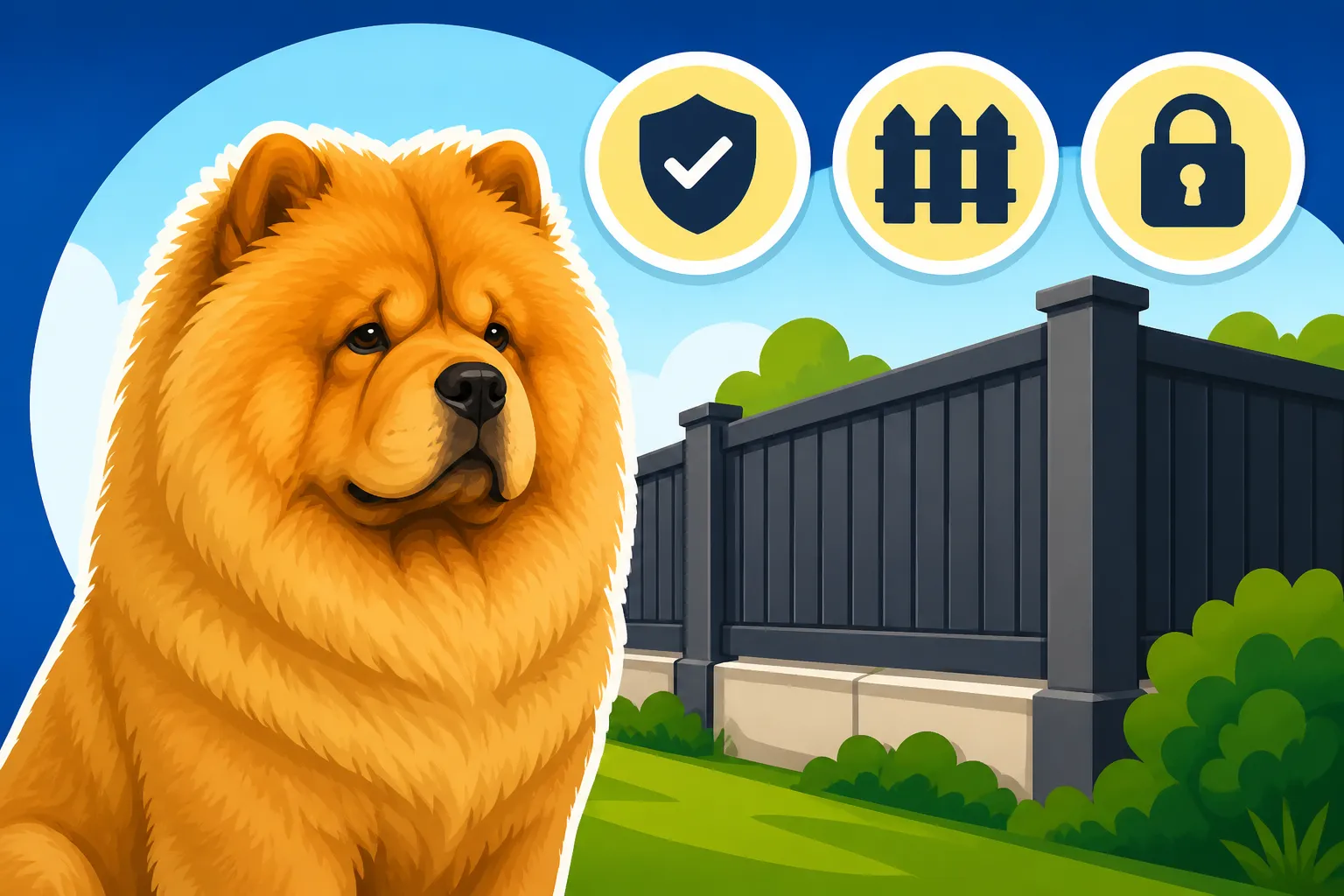
What Fencing a Chow Chow Requires
The distinct temperament and robust build of a Chow Chow mean that simply "having a fence" often isn't enough to keep them safe and sound in your yard. Many owners discover, often after a stressful escape, that their existing barrier simply doesn't stand up to the unique challenges this breed presents. This comprehensive guide will walk you through exactly what you need to consider when planning or upgrading your fencing to ensure your Chow Chow's safety and your peace of mind.
Understanding the Chow Chow's Unique Fencing Needs
Chow Chows are a magnificent breed, known for their lion-like mane, distinctive blue-black tongue, and often reserved nature. However, these very traits that make them so appealing also dictate very specific requirements when it comes to containing them safely. They aren't the kind of dog you can expect to ignore an open gate or a tantalizing scent on the wind.
Their Independent and Territorial Nature
One of the first things you learn about a Chow Chow is their independent spirit. They're not typically "velcro dogs" who cling to your side, shadowing your every move. This independence, while endearing in many ways, means they might not automatically choose to stay close to home if an opportunity for adventure arises. They have a strong sense of territory and will often patrol their boundaries, which means they'll be inspecting your fence regularly. If there's a weak point, they'll find it.
Consider how a Chow Chow's territorial nature shapes their behavior. They view their yard as their space, and while this can make them excellent guardians, it also means they need a clear, secure perimeter that reinforces that boundary. An open gate is an invitation to expand their patrol, which can lead to conflict with other dogs or people they perceive as intruders, even if they're just friendly neighbors.
A Powerful Prey Drive and Curious Nose
Despite their seemingly calm demeanor, many Chow Chows possess a significant prey drive. That squirrel scampering across the neighbor's fence, a rabbit hopping through the tall grass, or even a leaf blowing just right can trigger their instincts. Once that switch is flipped, a Chow Chow can become incredibly focused and determined to pursue. A flimsy fence or one with gaps is simply not a match for a motivated Chow intent on a chase.
Their keen sense of smell also plays a huge role. Imagine a fascinating scent trail leading just beyond your property line. To a Chow, this isn't just a smell; it's a mystery waiting to be solved, an adventure calling. If your fence doesn't present a solid, unwavering barrier, that curiosity can quickly turn into a focused effort to find a way out. This is especially true for those fascinating scents from smaller animals. Whether a Chow Chow Chases Small Animals is a critical question for any owner, and for many, the answer is a resounding yes.
The "Stilted" Gait and Guarding Instinct
Chow Chows are built with a unique, nearly straight rear leg assembly that gives them their characteristic "stilted" gait. While this isn't about speed, it doesn't mean they aren't agile enough to exploit a weakness in a fence. They might not be champion jumpers, but they are sturdy and powerful. A fence that wobbles or has easily climbable elements can be overcome by sheer determination.
Their guarding instinct, coupled with their deep-set eyes that limit their peripheral vision, means they can be easily startled or feel threatened by things they don't immediately see approaching. Why a Chow Chow Snaps at Someone It Did Not See explains this behavior. A solid, tall fence not only keeps your Chow in but also prevents unexpected approaches from strangers or other animals that could trigger a defensive reaction. This visual barrier can actually contribute to a calmer, more secure Chow Chow.
Choosing the Right Physical Barrier for Your Chow Chow
When it comes to fencing for a Chow Chow, you need to think "fortress, not garden border." This isn't about keeping out the occasional curious stray; it's about providing a robust, reliable barrier for a dog with a strong will and specific needs.
Height and Material: No Compromises
The height of your fence is paramount. For most Chow Chows, a minimum of a six-foot-tall fence is highly recommended. While they aren't typically known as Olympic jumpers, a determined Chow, especially one with a strong motivation like a squirrel or an unfamiliar dog passing by, can clear surprisingly high obstacles. Anything less than six feet offers too much opportunity for them to gauge a jump or find a toehold.
Material also matters immensely. Chain link, while seemingly secure, can be climbed with surprising ease by some dogs, and the individual links can be bent or pried apart over time, especially by a persistent Chow. Wood privacy fences are generally a good option, offering both height and a visual barrier, but they require regular maintenance to ensure no planks warp, rot, or come loose, creating escape routes. Vinyl fencing offers durability and low maintenance, making it an excellent choice for many Chow owners, as it lacks footholds and is resistant to chewing or digging attempts.
Here's a quick comparison of common fencing materials:
| Fence Type | Minimum Height Recommendation | Security for Chow Chows | Maintenance Level | Visual Barrier | Notes |
|---|---|---|---|---|---|
| Wood Privacy | 6 feet | Good, if well-maintained. Prevents climbing if solid. | High | Excellent | Prone to rot/warping, requires regular inspection for loose boards. Digging under can occur. |
| Vinyl Privacy | 6 feet | Excellent. Smooth surface prevents climbing. Durable. | Low | Excellent | More expensive upfront, but very long-lasting. Digging under can occur. |
| Chain Link | 6 feet, preferably 8 feet | Moderate. Climbable if not managed (e.g., top-bar extensions). | Low | Poor | Visibility can trigger guarding. Easily scaled. Needs careful ground securing. |
| Wrought Iron | 6 feet | Good, if vertical bars are close enough (no climbing). | Moderate | Poor | Aesthetic, but gaps between bars can be an issue for smaller dogs/puppies or for stimulating prey drive. Digging under. |
| Invisible/Electric | N/A | Unsuitable as primary containment. | Low | None | Primarily a deterrent; not a physical barrier. Unreliable for strong-willed Chows. See below. |
The Problem with Invisible Fencing
While invisible or electric fences might seem like a modern solution, they are generally not suitable as the sole containment for a Chow Chow. These systems rely on a static correction to deter the dog from crossing a boundary. The problem is that a strong-willed Chow, especially when motivated by prey drive or a perceived threat, may decide the momentary zap is worth the reward of chasing that squirrel or confronting that passing dog.
Furthermore, invisible fences do nothing to keep other animals or people out of your yard. A curious stray dog or a child could easily wander into your Chow's territory, potentially leading to dangerous confrontations, especially given their independent and protective nature. For a breed like the Chow, a physical, undeniable barrier is always the safest bet. It's simply not worth the risk.
Considerations for Gates and Access Points
A fence is only as strong as its weakest link, and that weakest link is almost always the gate. Gates need to be as robust and tall as the rest of your fence, if not more so. They should have secure, multi-stage latches that cannot be easily bumped open by a snout or paw, or by a forgetful guest. Spring-loaded gates that automatically swing shut are a fantastic addition, reducing the chance of accidental escapes.
Ensure that the gate posts are deeply set and reinforced, as a heavy gate can sag over time, creating gaps that your Chow will undoubtedly discover. If you have a walk-through gate and a drive-through gate, make sure both are equally secure. It’s a pain to be diligent, but that diligence is key to preventing escapes that can lead to heartbreak, not to mention significant vet bills if your Chow gets into an accident, which What a Chow Chow's Final Illness Costs could illustrate the extreme end of.
Securing Your Chow Chow's Outdoor Space Against Escapes
Even with a tall, sturdy fence, a clever or determined Chow Chow can still find a way out. They are problem-solvers, and if there's a loophole, they'll exploit it. You need to think like a Chow Chow when securing your yard.
Preventing the Great Escape: Digging and Climbing
Digging is a common escape tactic for many breeds, and some Chow Chows are no exception. To prevent digging under the fence:
- Bury a wire mesh barrier: Extend hardware cloth or chicken wire horizontally from the fence line, buried at least 12-18 inches deep and bent outwards into an L-shape underground. This creates a deterrent that they hit before they can tunnel effectively.
- Install a concrete footer: A more permanent solution is to pour a concrete footer along the entire fence line, sinking it a few inches into the ground.
- Place large rocks or landscape timbers: Along the bottom interior of the fence, placing heavy, flat rocks or landscape timbers can make it difficult for them to get a good digging purchase.
Climbing, while less common for Chows than digging, is still a possibility if the fence offers footholds. For chain link fences, consider installing "lean-in" extensions at the top, which angle inwards to make climbing over much harder. For solid fences, ensure there are no nearby objects like woodpiles, trash cans, or garden trellises that could serve as a boost. Sometimes even a thick snowdrift can give them enough height, so be mindful of the elements.
Supervising Outdoor Time and Enrichment
Even the most secure fence isn't a substitute for supervision. A Chow Chow left alone for extended periods might become bored or anxious, leading them to look for ways out. Regular check-ins and active supervision, especially when they are younger or new to the yard, are crucial.
Make the yard an engaging place to be. Provide shade, fresh water, and stimulating toys. Durable chew toys or puzzle feeders can keep them occupied. Rotate their toys to keep things fresh. A bored Chow is a destructive Chow, and that destruction can include digging at the fence line or chewing on boards. Consider toys from retailers like Chewy, which offer a wide range of enrichment options designed for robust chewers.
It's also important to recognize the signs that your Chow might be uncomfortable or distressed in the yard. Signs a Chow Chow Is Uncomfortable can include pacing, whining, or obsessively checking fence lines. If they're not enjoying their outdoor time, they're more likely to look for an exit.
The Importance of Routine and Training
While a physical fence is your primary barrier, good training and a solid routine can bolster its effectiveness. A strong recall command, even if you don't plan to let them off-leash outside the fence, is invaluable if an escape does occur. Knowing that your Chow will come when called, even with distractions, can be a literal lifesaver. This kind of specialized training might require professional help; Whether a Chow Chow Needs a Professional Trainer Early is an article worth exploring.
Establishing a routine for yard time helps your Chow understand when they'll be outside and for how long. This can reduce anxiety and the urge to "break out." When you bring them in, always do a quick check of the fence line for any new damage or potential weak spots. This diligence is part of owning a Chow.
What to Do If an Escape Happens
Despite all your best efforts, an escape can still happen. The first step is to stay calm and systematically search your immediate area. Chows often don't wander far initially, preferring to patrol nearby territory. Have photos of your Chow readily available on your phone to show neighbors. Contact local animal shelters and vets immediately.
Prevention is always better than cure. Beyond physical fencing, having your Chow microchipped and wearing identification tags is non-negotiable. If they do get out and are found by a good Samaritan, a microchip registered with your current contact information is often the fastest way to a reunion. If they get injured during their adventure, having pet insurance like Healthy Paws can be a massive relief, covering unexpected emergency vet visits. Even if you're feeding a premium food like Ollie, ensuring your dog's safety outside the home is a multi-faceted approach.
Disclaimer
This article is for general informational purposes only and does not constitute professional advice. Laws, prices and regulations vary by location and change over time. Consult a qualified professional for guidance on your specific situation.