Signs a Chow Chow Is Uncomfortable
It can be incredibly frustrating and even a little scary when your Chow Chow is clearly unhappy or stressed, but you just can't quite pinpoint why or what they're trying to tell you. Their stoic nature and unique facial structure often mask the subtle cues other breeds might broadcast more overtly. This guide is here to help you unlock the mysteries of your Chow Chow's body language, enabling you to recognize the early signs of discomfort and respond effectively to build a stronger, more trusting relationship.
The Unique Challenges of Reading a Chow Chow's Body Language
Chow Chows are a breed unlike many others, and that extends to how they communicate their feelings. If you've ever felt like your Chow is an enigma wrapped in a fluffy mystery, you're not alone! Their physical characteristics and inherent personality traits combine to make their signals of discomfort particularly subtle, often leading to misunderstandings for even the most devoted owners.
Why Their "Scowl" Is So Misleading
Let's face it, one of the most iconic features of a Chow Chow is that magnificent, often seemingly stern, expression. It's often described as a "scowl," and while it's part of their charm, it can be incredibly misleading when you're trying to gauge their mood. This perpetually serious look is largely due to their deep-set eyes and the natural folds of skin around their muzzle.
Because their eyes are so deep-set, and often partially obscured by their fur or the folds of their face, it's hard to see the subtle shifts in the sclera (the white part of the eye) or the pupil that might indicate stress in other breeds. What might be a worried look in a retriever can just look like a standard Chow Chow gaze. This makes it challenging for casual observers, and even experienced owners, to differentiate between a relaxed Chow and one who is feeling anxious or threatened. It’s also a factor in How a Chow Chow's Deep Set Eye Limits Its Vision, meaning they might startle more easily when approached from the side or behind, contributing to their perceived aloofness.
The sheer volume of their fur, particularly the dense mane around their head and neck, also plays a role. It can obscure tension in their jowls or the subtle flattening of their ears that might be obvious on a short-coated dog. This means we have to look for other, less obvious indicators to truly understand what's going on behind that regal facade.
The Limited Tail and Ear Communication
Most dog owners are familiar with reading a dog's tail – a high, fast wag often means excitement, while a tucked tail signals fear. And ears? Pricked forward for attention, flattened back for submission or fear. But with a Chow Chow, these common indicators are often significantly limited, adding another layer to the communication puzzle.
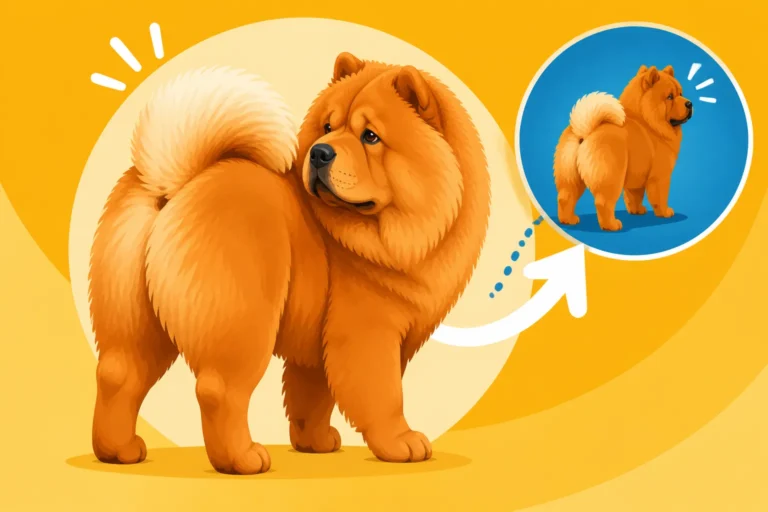
A Chow Chow's tail naturally curls tightly over their back, often resting against their spine. This unique conformation means it doesn't have the wide range of motion or expressive capability that a loose, flagging tail on a Labrador or a German Shepherd does. While a very stiff, low-set tail can indicate stress, and a slight relaxation of the curl might happen, it's not the primary way they communicate joy, fear, or anxiety. Relying solely on tail position to understand a Chow's mood is a recipe for misinterpretation.
Similarly, their small, rounded ears are not as mobile or expressive as those of many other breeds. They don't have the dramatic swivels or pin-back potential. Slight changes in ear position – a subtle flattening against the head or a tensing – can be present, but they are incredibly difficult to spot beneath their thick fur. You really have to be paying close attention, often looking for the direction the ear canal is slightly shifting rather than the whole ear moving, to catch these subtle signals.
Their Natural Aloofness and Independence
Chow Chows are famous for their independent and somewhat aloof nature. They're often described as "cat-like" in their demeanor, not typically seeking constant validation or overt affection. This intrinsic trait, while endearing, also means they often don't display their discomfort or distress as overtly or immediately as more effusive breeds might.
A Chow Chow might internalize stress or try to manage a situation on their own rather than immediately seeking comfort or displaying clear signs of distress. This can lead to a situation where they appear calm or unbothered, while internally, they are quite uncomfortable. This stoicism can be a double-edged sword: it means they often handle minor annoyances with quiet dignity, but it also means that by the time their discomfort becomes visible, it might be quite pronounced. How Aloof a Chow Chow Really Is helps shed light on this aspect of their personality.
Understanding this inherent independence is crucial. It means that as owners, we have to be incredibly observant and proactive in reading their signals. We can't always expect a dramatic plea for help; sometimes, their quiet withdrawal is the loudest cry they can make.
Subtle Visual Cues of Discomfort in a Chow Chow
Given the challenges of their unique appearance and reserved nature, recognizing discomfort in a Chow Chow means paying very close attention to a constellation of subtle visual cues. These aren't always grand gestures, but rather tiny shifts in their demeanor, often fleeting, that tell a story to the observant owner.
Eye and Facial Expressions Beyond the Scowl
While their deep-set eyes and facial folds make reading expressions difficult, there are still crucial signs to look for. Think of it as looking past the "scowl" to the actual emotion beneath. One key indicator is a softening of the eyes – while their eyes are deep-set, a truly comfortable Chow will have a softer, almost sleepy gaze. When uncomfortable, their eyes might become harder, more fixed, or you might notice rapid blinking, which is a common calming signal in dogs.
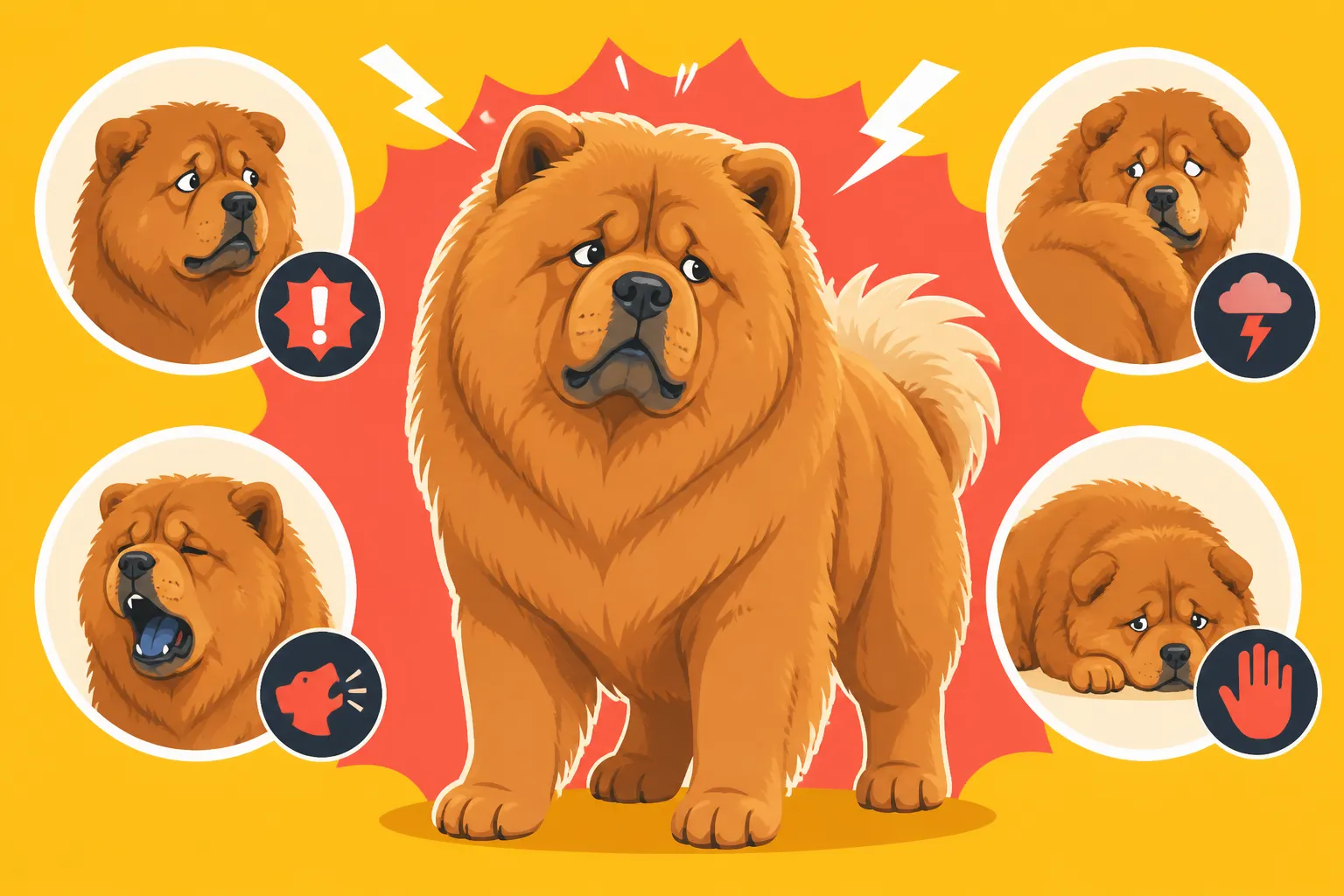
Another significant sign is the "whale eye," where you can see the whites of their eyes, particularly on the outer edges. This is a clear indicator of stress or anxiety across many breeds, and it holds true for Chows, even if it's only a sliver of white you can catch. Beyond the eyes, watch their mouth. A tense mouth, where the lips are pulled back tightly or held in a rigid line, often indicates stress. Excessive lip licking when there's no food around is another classic appeasement or stress signal. They might also engage in repeated, slow yawning when they're not tired, which is a self-calming behavior. A slightly furrowed brow, even more pronounced than their usual serious expression, can also suggest concentration or concern. Understanding these nuances is part of learning How to Read a Chow Chow's Face.
Body Posture and Movement Changes
A Chow Chow's overall body posture and the subtle shifts in their movement can tell you a great deal about their comfort level. A truly relaxed Chow will have a somewhat loose, confident posture, perhaps with a slight sway. When uncomfortable, you might notice stiffening of their body, where their muscles visibly tighten. They might freeze in place for a moment, or their movements might become slow and deliberate, almost hesitant.
Watch for a Chow Chow who shifts their weight away from an interaction, or actively leans back, creating distance. If they lower their head slightly or deliberately avoid eye contact with you or a perceived threat, they are often trying to de-escalate a situation or signal their discomfort. Trembling or shivering, when the environment isn't cold, is a clear sign of anxiety or fear. While Why a Chow Chow Moves With a Stilted Gait is a normal characteristic of the breed due to their unique hindquarters, any sudden change in their gait, such as increased stiffness or reluctance to move, can be a red flag for physical discomfort or severe stress.
Subtle Vocalizations and Breathing
Chow Chows are not typically known for being highly vocal, but their subtle sounds and changes in breathing can be powerful indicators of their state of mind. A low growl, often barely audible and sometimes without any visible movement of their lips, can be a clear warning. This is their way of saying, "I'm uncomfortable, please back off." Ignoring such a subtle growl can be dangerous, as it's often the last verbal warning before they feel they need to escalate.
Beyond growling, listen for soft whines or even deep sighs. A soft whine can indicate mild distress or a need for something, while a sigh can sometimes be a sign of resignation or stress release, depending on the context. Pay close attention to their breathing. Rapid, shallow breathing, or panting when they haven't been exercising or when it's not particularly hot, is a strong indicator of stress or anxiety. This stressed panting is different from the deep, rhythmic panting they do to cool themselves down. Remember that Why a Chow Chow's Short Muzzle Cools Poorly makes them prone to panting from heat, so differentiate between genuine cooling efforts and stress-induced breathing. If the panting is accompanied by other tension signs, it's likely stress.
Behavioral Indicators of a Chow Chow's Unease
Beyond the physical cues, a Chow Chow's behavior offers a wealth of information about their comfort level. These are often actions they take (or don't take) to manage their environment and communicate their boundaries. Learning to recognize these behavioral signals is key to proactive management and preventing escalation.
Averting Gaze and Turning Away
One of the most common and often overlooked signs of discomfort in a Chow Chow is their use of avoidance behaviors. If your Chow turns their head away when you try to pet them, or shifts their entire body to present their side or back to you, they are trying to signal that they are uncomfortable with the interaction. This isn't necessarily a sign of aggression; it's more of a polite "no, thank you" or "please give me space."
This averted gaze or turning away is a classic appeasement signal in dogs. They're attempting to de-escalate a perceived threat or to avoid confrontation. Many people misinterpret this as rudeness or disinterest, when in fact, it's a critical communication. Directly staring at a Chow Chow, especially one who is already feeling uneasy, can be perceived as a challenge, so if they're averting their gaze, they're likely asking you to do the same. This applies significantly when you're learning How to Introduce a Chow Chow to a Stranger, emphasizing the importance of respecting their need for space and indirect greetings.
Lip Licking, Yawning, and Nose Nudging
We touched on some of these as visual cues, but their active deployment as behavioral responses to discomfort deserves its own mention. Lip licking, especially when rapid and repetitive, and yawning (not due to tiredness) are frequently used by Chow Chows to self-soothe or to communicate their stress to others. If you see your Chow doing this in a busy environment, or when a stranger approaches them, they're likely feeling overwhelmed or anxious.
Another subtle but firm behavioral indicator is nose nudging or a gentle push with their head. If they nudge your hand away when you reach for them, or subtly push into your leg or body to create a barrier or shift your position, they're asking for distance. It's their way of setting a boundary without resorting to more aggressive signals. This is often a precursor to more overt warnings if their subtle requests for space are ignored. Recognizing these low-level signals is crucial because it allows you to intervene and de-escalate the situation before your Chow feels compelled to use stronger, less desirable behaviors.
Seeking Distance or Hiding
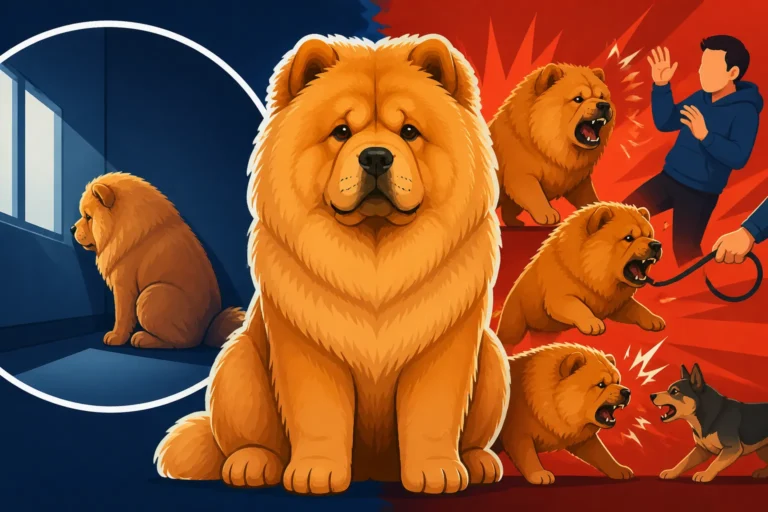
When a Chow Chow is truly uncomfortable, their instinct is often to create distance from the source of their discomfort or to retreat entirely. This can manifest as moving behind their person, using you as a shield from something they find intimidating. They might also try to move behind furniture or simply try to leave the room or situation altogether.
If your Chow Chow suddenly becomes unresponsive to cues they normally obey, or appears to "zone out" in a stressful situation, they might be shutting down due to overwhelming anxiety. They're trying to cope by disengaging. This is distinct from their usual independence; it's a profound withdrawal. Observing these behaviors is especially important as Chows, known for their self-sufficiency, typically cope well alone, as explored in How Well a Chow Chow Copes Alone. If they're actively seeking to hide or withdraw from you or a situation, it's a significant indicator of distress that needs to be addressed. Perhaps a cozy crate from Amazon provides them a safe haven to retreat to, or online resources from BAXTER & Bella could offer strategies for managing anxiety.
When Discomfort Escalates: Warning Signs
While Chow Chows are generally reserved, like any dog, if their subtle signals of discomfort are ignored or misunderstood, they may escalate their communication. These are the more urgent warning signs that indicate your Chow Chow is feeling pushed beyond their comfort zone and may be on the verge of a more pronounced defensive reaction.
Subtle Nipping or "Air Snapping"
This is a critical warning sign that absolutely must not be dismissed. A subtle nip might be a quick, soft contact with skin without breaking it, or what's often called an "air snap" – a quick opening and closing of the mouth, usually close to the perceived threat, but without making contact. This is your Chow Chow's emphatic "STOP NOW!" message.
Many owners mistakenly believe that because no skin was broken, it wasn't a serious warning. In reality, it's often the last warning before a real bite. A Chow Chow is telling you, in no uncertain terms, that their boundaries have been severely violated and they are feeling deeply threatened or overwhelmed. It's a testament to their self-control that they often provide these non-damaging warnings, but it's a very clear signal that you need to back off and reassess the situation immediately. This behavior highlights the importance of understanding Why a Chow Chow Gives Little Warning – the warnings they do give are often subtle and quickly escalate if unheeded.
Resource Guarding and Territoriality
Chow Chows have a natural inclination towards guarding, given their historical roles. They are often protective of their home and their chosen person. However, an escalation or uncharacteristic display of resource guarding or territoriality can be a strong sign of underlying discomfort or stress. While What a Chow Chow Guards and Why is important to understand in general, watch for situations where they guard items they usually don't care about, or if their guarding becomes excessively intense.
This might look like stiffening over a favorite toy, growling at someone approaching their food bowl (even if they usually don't), or becoming agitated if someone comes too close to their bed or a preferred resting spot. They might use their body to block access to a particular area or item. If a Chow Chow, who normally tolerates people near their things, suddenly becomes tense and defensive, it's a sign that they're feeling insecure or stressed about something else, and their guarding behavior is a manifestation of that underlying anxiety.
Avoidance and Uncharacteristic Aggression
When a Chow Chow feels cornered, severely threatened, or is in pain, their coping mechanisms can break down. This can lead to overt avoidance or, more alarmingly, uncharacteristic aggression. If your Chow suddenly refuses to be touched or handled in a way they normally tolerate – for example, resisting brushing, nail trims, or even a gentle pat – it could indicate pain or extreme discomfort. Always consider a vet visit if normal handling becomes an issue, as pain is a common driver of behavioral changes.
If your Chow Chow snaps, lunges, or growls directly at family members or in situations where they've previously been calm, it's a serious red flag. This is not typical Chow Chow behavior in a stable home environment and points to significant distress. It could be due to fear, pain, or a feeling of being trapped with no other escape. It's crucial to calmly remove your Chow from the stressful situation and seek professional help from a certified behaviorist or your veterinarian. In situations requiring handling for medical care, Whether a Chow Chow Needs Sedation for a Checkup is a valid consideration, as their tolerance for restraint can be low when they're uncomfortable.
These escalating behaviors are your Chow Chow's desperate pleas for understanding and intervention. Learning to see them, and react appropriately, is fundamental to maintaining a safe and loving relationship with your magnificent companion.
| Sign Category | Subtle Discomfort Cues | Escalated Warning Signs |
|---|---|---|
| Facial & Eyes | Rapid blinking, slight whale eye, tense mouth, lip licking, yawning, furrowed brow | Fixed stare, intense whale eye, snarling, prolonged lip licking |
| Body Posture | Stiffening, freezing, leaning back, low head, trembling | Cowering, flattened body, aggressive stance, raised hackles |
| Movement | Slow, hesitant movement, turning away, seeking distance | Trying to flee, lunging, snapping, reluctant to move (pain) |
| Vocalizations | Soft whine, sigh, low, subtle growl | Loud, sustained growl, bark-snapping, snarling, whimpering |
| Behavioral | Averting gaze, nose nudging, withdrawal, unresponsive | Resource guarding, refusal to be handled, uncharacteristic aggression, frantic escape attempts |
Recognizing these signs, from the most subtle to the more overt, will allow you to build a stronger bond with your Chow Chow, based on mutual respect and understanding. Being attuned to their needs before they reach a breaking point is the mark of a truly great Chow Chow owner.
Disclaimer
This article is for general informational purposes only and does not constitute professional advice. Laws, prices and regulations vary by location and change over time. Consult a qualified professional for guidance on your specific situation.