Whether Martha Stewart Keeps Chow Chows
People often see Martha Stewart pictured with a Chow Chow and wonder whether the breed is still part of her household. The short answer is that she has been closely associated with Chow Chows, including dogs named Genghis Khan and Empress Wu, but that public history does not establish that she currently keeps one. Here’s how to separate the well-known story from the present-day question.
Martha Stewart and her Chow Chows
She is known for having owned Chow Chows
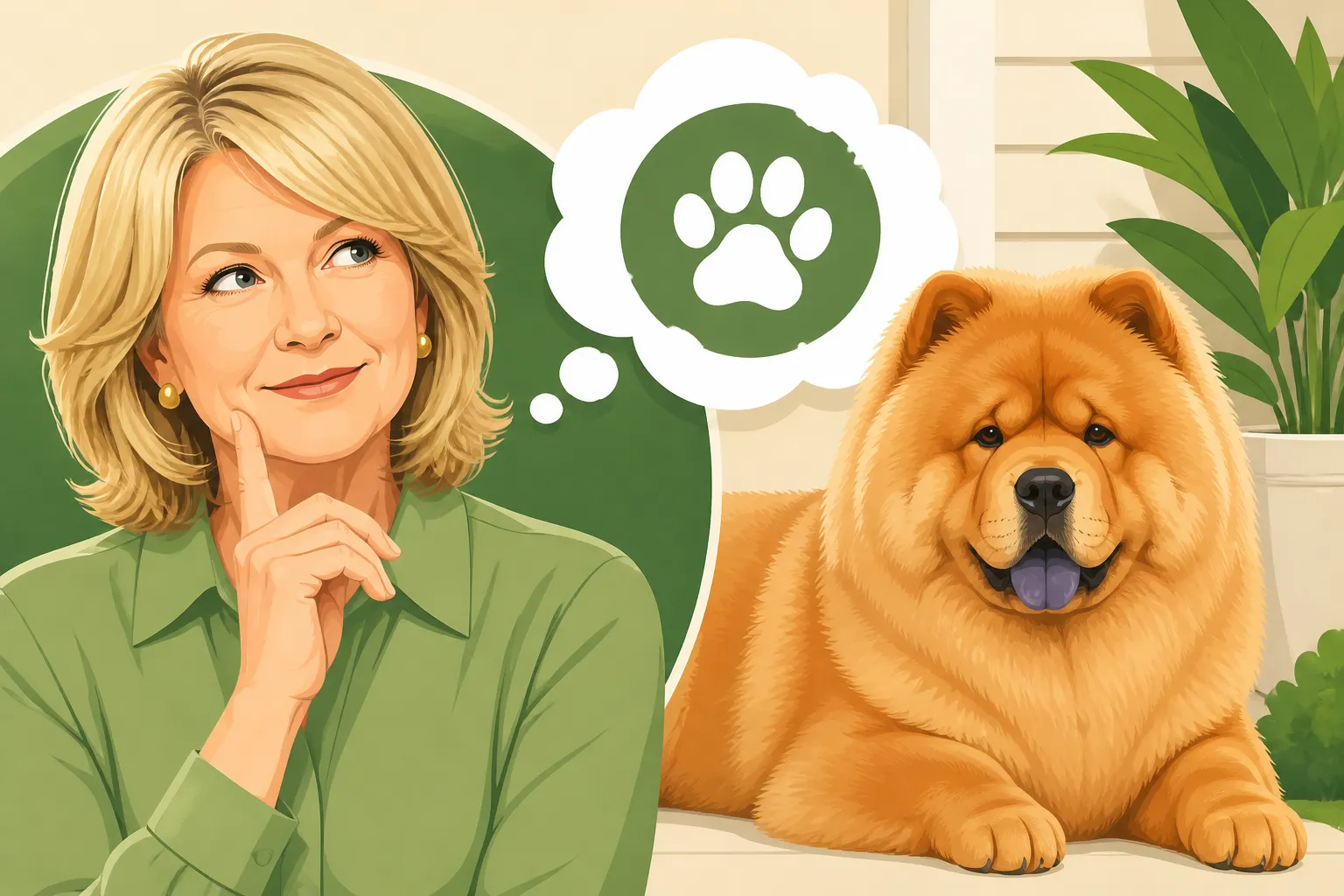
Martha Stewart has been publicly associated with Chow Chows, especially two dogs known as Genghis Khan and Empress Wu. They became recognizable companions in the world around her public life, which is why people still connect her name with the breed. Their distinctive appearance—a broad head, dense coat, and often serious-looking expression—made them memorable whenever they appeared in photographs or other public material.
That history is different from saying she keeps a Chow Chow today. Celebrity pets can remain part of a person’s public identity long after the animals have died or the household has changed. Old photos and repeated stories may resurface online without indicating anything about a person’s current pets.
The names are part of the dogs’ appeal, too. Chow Chows have a long history and have carried different names and descriptions across time; readers curious about that background can explore Which Chinese Names the Chow Chow Has Carried. In Stewart’s case, the names Genghis Khan and Empress Wu are often the detail that prompts people to look up her connection to the breed.
The dogs’ visibility helped make the breed familiar
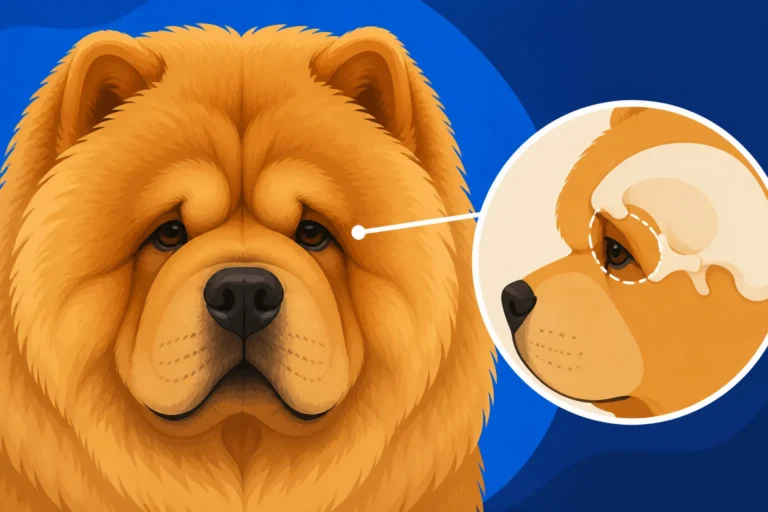
A Chow Chow is hard to mistake for many other dogs. Its thick coat, compact build, small upright ears, and blue-black tongue give it a distinctive look. When a well-known person is photographed with one, the dog can become part of the public image people remember, even if the owner has other pets later.
That association can also shape what people assume about the breed. A viewer might see a beautifully groomed Chow Chow beside a celebrity and imagine that every dog of the breed is naturally calm, easy to manage, or content to pose for photographs. Real life is more varied. Coat care, socialization, health, temperament, and the individual dog’s history all matter.
Chow Chows are often described as independent and reserved, but those traits shouldn’t be confused with a lack of attachment. Their relationships with household members can look different from the exuberant, attention-seeking style people expect from some breeds. For more on that, see How a Chow Chow Treats the Rest of the Family and Why a Chow Chow Is Called Cat Like.
A past association is not proof of a current pet
When asking whether Martha Stewart “keeps” Chow Chows, the key is the tense of the question. The public record of her well-known Chow Chows supports saying she has owned or been associated with the breed. It does not, by itself, show that a Chow Chow currently lives with her.
This distinction matters because search results often blend older photographs, archived interviews, and newer stories. A page may use present-tense wording in its headline even when the material describes a dog from years earlier. A photo can be genuine and still tell you nothing about what pets are in the household now.
A careful answer is therefore: Martha Stewart is known for having Chow Chows, including Genghis Khan and Empress Wu, but her past connection should not be treated as confirmation that she currently keeps one. If a current pet roster matters, look for a recent direct statement or recent reporting that clearly identifies the animal and the timing.
What the public story can and cannot tell you
Celebrity pet histories often outlast the pets themselves
Pets become part of public memory through books, interviews, photographs, social media posts, and television appearances. When an animal is distinctive, those images can circulate for years. That is especially true of a Chow Chow, whose coat and silhouette are recognizable even to people who do not know much about dogs.
As a result, an older image may appear beside a current headline or in a social post without much context. Readers can easily take “Martha Stewart with a Chow Chow” to mean “Martha Stewart currently owns a Chow Chow,” though the image may simply document a past companion. The caption date, the dog’s name, and the original context are more useful clues than the photo alone.
A practical rule is to ask three questions: Is the material recent? Does it identify the dog as a current pet? And is the wording coming directly from Stewart or from a source with clear, recent reporting? If those details are missing, it is safer to describe the connection as historical rather than current.
Separate ownership, affection, and present-day household status
Someone may have loved and owned a breed without keeping that breed throughout their life. They may have had a dog in the past, supported a breed publicly, or appeared with a friend’s dog. Those are meaningful connections, but they are not interchangeable.
For Martha Stewart, the Chow Chow association is rooted in her well-known dogs. That makes “She has had Chow Chows” a more supportable description than “She currently keeps Chow Chows” unless a recent, reliable update establishes the latter. This careful wording avoids turning a past pet story into an unsupported claim about the present.
It also avoids implying that a celebrity’s choice is a recommendation. A famous person’s experience can make a breed more visible, but it does not tell a prospective owner whether that dog will suit their own home, schedule, or experience. Anyone considering one should learn about the breed’s needs and meet individual dogs rather than choosing based on celebrity photographs.
| Question | What can reasonably be said |
|---|---|
| Has Martha Stewart been associated with Chow Chows? | Yes. She is well known for having had Chow Chows, including Genghis Khan and Empress Wu. |
| Does that prove she currently owns a Chow Chow? | No. Past photographs and stories do not establish current ownership. |
| Why does the association remain familiar? | Her dogs were distinctive, and public images and stories can stay visible long after a pet’s lifetime. |
| What would confirm a current pet? | A recent, clearly dated statement or reliable report identifying the dog as a current companion. |
The Chow Chow behind the celebrity image
The breed’s appearance is only one part of the story
A Chow Chow’s lion-like mane and dense coat tend to draw immediate attention. The rough-coated variety has longer hair around the neck and more feathering, while the smooth-coated variety has shorter, denser outer hair. Both coat types still need regular care; a shorter-looking coat does not mean the dog is maintenance-free. The breed’s appearance is explored further in Five Colors and Nothing Else: the Chow Chow Palette.
For owners, the work is practical as well as cosmetic. Coat care means checking down to the skin, brushing areas that tangle, and keeping the dog dry after bathing. Mats can hide beneath the surface, especially around the neck, behind the ears, under the collar, and in the feathering. A tidy photograph cannot show the steady routine behind a healthy coat.
For a new owner preparing supplies, it helps to choose a comb and brush suited to a dense double coat rather than relying on a quick surface brush. Retailers such as Chewy can be one place to compare basic grooming tools, but the right choice depends on the individual dog’s coat and comfort. A groomer experienced with double-coated breeds can help explain what tools are useful and how to use them without irritating the skin. The breed’s grooming needs are discussed in Rough or Smooth: the Two Chow Chow Coats and What Each Needs.
Temperament requires thoughtful handling
Chow Chows are often loyal to their families but may be reserved with unfamiliar people. That does not mean every Chow Chow is unfriendly, nor does it mean a dog should be expected to welcome every stranger. Calm introductions, respectful space, and positive early experiences help a dog learn how to handle ordinary encounters.
Their facial structure and deep-set eyes can also affect how they perceive people approaching from the side or behind. A person who reaches suddenly over a dog’s head may startle it, even if the person means well. It is better to let the dog notice someone, approach at its own pace, and have a safe way to move away. These details are useful for anyone who meets the breed, whether at a friend’s home or in a public setting. See How to Approach a Chow Chow Safely for more on reading the interaction.
A famous owner’s polished public appearances cannot capture all the everyday work of raising a dog. Socialization, routine veterinary care, grooming practice, and teaching a dog to accept handling are part of responsible ownership. People considering the breed can read Why Early Socialization Decides What a Chow Chow Becomes and Whether a Chow Chow Suits a First Time Owner before deciding if its needs match their household.
Care choices should be based on the individual dog
A Chow Chow’s care plan should reflect its age, health, coat, temperament, and living conditions, not an assumption that all dogs of the breed are alike. One may tolerate brushing easily; another may need gradual practice and short sessions. One may enjoy meeting people; another may prefer a quiet greeting and more space.
Even everyday purchases are easier when they solve a specific problem. For example, a household dealing with a coat blow may need a suitable undercoat tool, while a dog uneasy about grooming may benefit more from short, reward-based handling practice than from buying a collection of equipment. Chewy can help owners compare routine pet-care products, but a veterinarian or qualified groomer is a better source for advice about a medical concern, painful matting, or skin irritation.
That balanced approach is more useful than treating a celebrity’s pet history as a blueprint. Martha Stewart’s Chow Chows help explain why the breed is so recognizable, but their story cannot tell a prospective owner what any particular Chow Chow will be like. Learning about the breed’s needs, meeting the dog, and planning for its care are the steps that matter most.
How to answer the question accurately
Use wording that matches the evidence
If someone asks whether Martha Stewart keeps Chow Chows, answer with the distinction between past and present: she is known for having had Chow Chows, including Genghis Khan and Empress Wu, but that history alone does not confirm she currently owns one. This is both clear and fair to the facts.
Avoid wording that turns an old photo into a current claim. “Martha Stewart’s Chow Chows” can refer to her well-known past dogs. “Martha Stewart currently has a Chow Chow” is a different statement and needs recent evidence. The difference may seem small, but it prevents outdated information from being repeated as fact.
Check the date and context of any new claim
When a current update appears, look for when it was published and whether it actually identifies a pet as part of her household now. An undated image, a recycled story, or a caption that merely says she “loves dogs” does not settle the question. A direct, recent statement or clearly reported update is much stronger evidence.
This is a useful habit beyond celebrity pet searches. Public figures may have owned several animals over time, and the internet does not always distinguish a former companion from a current one. The safest phrasing reflects what is known: Martha Stewart has a notable history with Chow Chows, while present-day ownership should only be stated when recent information supports it.
Keep the breed’s needs separate from celebrity interest
A celebrity connection can spark curiosity, but it should be the beginning of research rather than the deciding factor in choosing a dog. Learn about the breed’s temperament, grooming, exercise needs, and health considerations. The Chow Chow’s independent nature and dense coat deserve realistic planning, not just admiration for its striking appearance.
If the interest has turned into a serious plan to bring home a Chow Chow, talk with a veterinarian, responsible breeder, rescue organization, and experienced groomer. Consider what daily care will look like during shedding, how the dog will be introduced to visitors, and whether everyone in the household can respect its boundaries. That is a much better guide to fit than any celebrity association.
Disclaimer
This article is for general informational purposes only and does not constitute professional advice. Laws, prices and regulations vary by location and change over time. Consult a qualified professional for guidance on your specific situation.