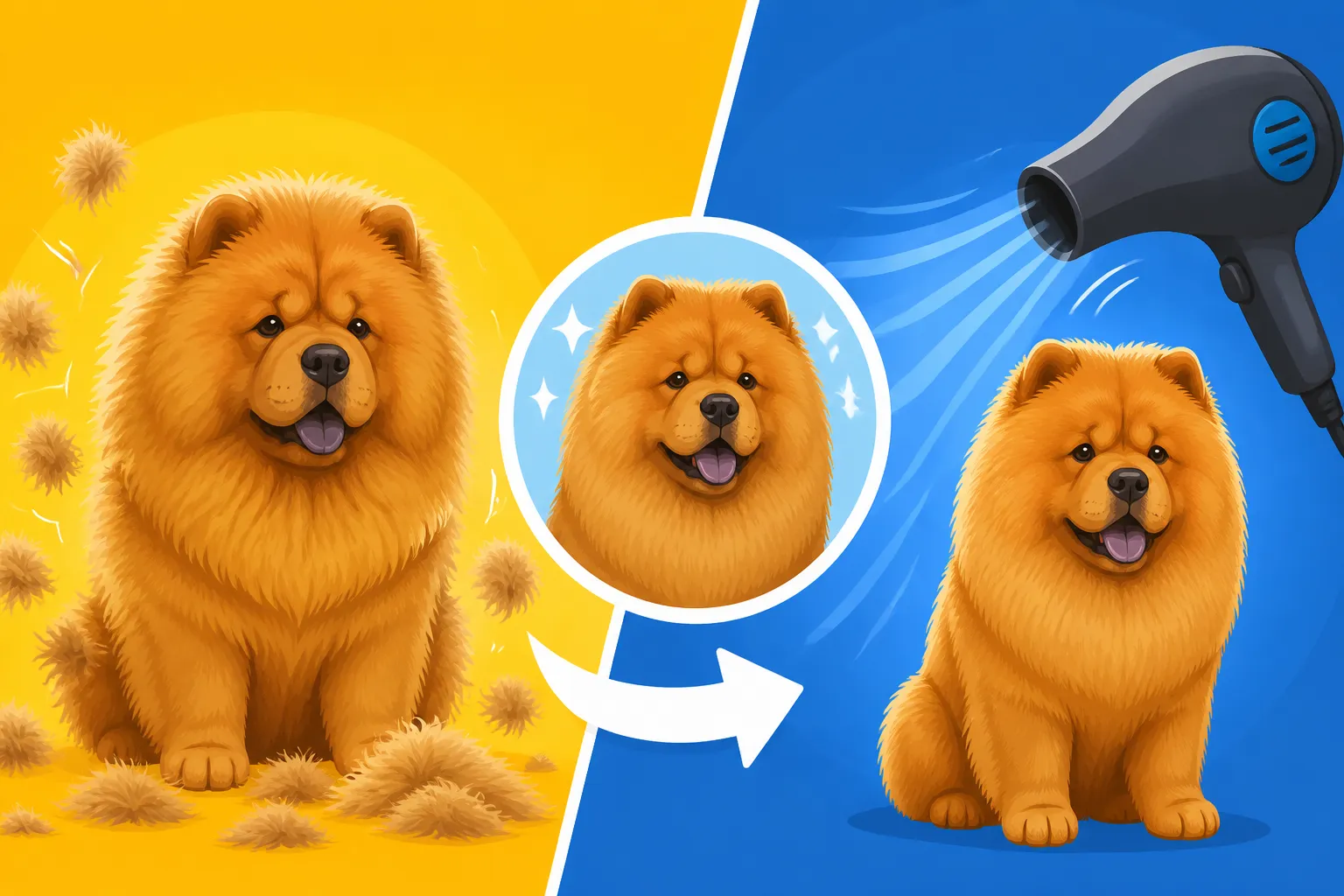
Whether a High Velocity Dryer Helps a Chow Chow Shed
Dealing with the seemingly endless cascade of Chow Chow fur, especially during those infamous "coat blows," can feel like a losing battle. You vacuum daily, brush diligently, and still, tumbleweeds of fluff drift through your home, clinging to everything. Many Chow Chow owners wonder if there's a more efficient way to manage this glorious but demanding coat, and that's where the high-velocity dryer often comes into play. This guide will walk you through exactly how these powerful tools work, whether they're truly a game-changer for shedding, and how to safely incorporate one into your grooming routine.
Understanding the Chow Chow's Unique Double Coat
Before we dive into the wonders of a high-velocity dryer, it's crucial to appreciate what makes a Chow Chow's coat so special – and such a shedding challenge. Unlike many breeds with single coats, Chows boast a magnificent double coat, a defining characteristic of the breed. This isn't just a thick layer of fur; it's a sophisticated system designed by nature to protect them from extreme temperatures.
The outer coat consists of longer, coarser guard hairs that are relatively straight and stand off the body, giving the Chow Chow its distinctive lion-like ruff and plush appearance. These guard hairs act like a protective shield, repelling water, dirt, and even keeping snow from reaching the skin. Underneath this impressive outer layer lies the true engine of warmth and, yes, shedding: a dense, woolly undercoat. This soft, fine fur is incredibly insulating, trapping air close to the body to keep the Chow warm in cold climates. It’s also the primary culprit behind the constant battle against shedding in your home. For a deeper dive, read What a Chow Chow's Double Coat Is Made Of.
The shedding isn't constant in the same way all year. Chow Chows experience what's affectionately (or sometimes despairingly) known as a "coat blow" at least twice a year, typically in spring and autumn. This is when their body adapts to the changing seasons, shedding the old undercoat to make way for a new one. During these periods, the amount of loose fur can be truly astonishing. It can feel like your dog is literally disintegrating into a cloud of fluff. Daily brushing with traditional tools often feels like merely scratching the surface, as the sheer volume of dead undercoat trapped beneath the guard hairs is immense. Without proper intervention, this trapped fur can quickly lead to painful mats and skin issues. It's a natural process, but one that requires active management to keep your Chow comfortable and your home somewhat fur-free. You can learn more about this process in When a Chow Chow Blows Its Coat.
How a High-Velocity Dryer Tackles Chow Chow Shedding
So, you're faced with mountains of fur, and your regular brush just isn't cutting it. This is precisely where a high-velocity dryer steps in as a true grooming hero for Chow Chow owners. It's not just a fancy hairdryer; it's a powerful tool specifically designed to blast water off a dog's coat and, more importantly for shedding, to force loose undercoat out from the dense layers.
The mechanism is surprisingly simple yet incredibly effective. A high-velocity dryer works by generating a strong, concentrated stream of air, often at a lower temperature than a human hairdryer. This powerful airflow penetrates the Chow Chow's thick double coat, reaching right down to the skin. As the air moves through the fur, it literally "lifts" and "pushes" out the dead and shedding undercoat that brushing alone often struggles to remove. Think of it like a miniature hurricane for your dog's fur, systematically dislodging all that trapped fluff. The force of the air is what does the work, not excessive heat, which is crucial for preventing skin irritation and overheating in a breed prone to it.
Compared to a regular human blow dryer, the difference is night and day. A standard hairdryer relies on heat to evaporate water, which is slow and inefficient for a Chow's dense coat, and the high heat can easily burn their skin. High-velocity dryers, on the other hand, prioritize airflow volume and pressure. They remove water by physically blowing it off the dog, significantly cutting down drying time. But beyond drying, their real superpower for Chows is deshedding. This concentrated blast of air can remove an incredible amount of loose fur in a short session, often revealing the sheer volume of shedding that was completely missed by even thorough brushing. This not only reduces the fur around your house but also helps prevent painful matting, which is a common problem when shed undercoat isn't properly removed. Furthermore, by ensuring the coat is completely dry, you mitigate the risk of skin issues that can arise from damp fur. A high-velocity dryer can truly help you get a Chow Chow through a coat blow faster and more efficiently.
Practical Steps for Using a High-Velocity Dryer on Your Chow Chow
Using a high-velocity dryer effectively on a Chow Chow isn't just about pointing and blasting; it requires the right equipment, proper introduction, and a systematic approach to ensure safety and comfort for your dog.
Choosing the Right Dryer
First things first, you need the right tool for the job. Not all high-velocity dryers are created equal. When shopping for one for your Chow Chow, look for a model with at least two speed settings and, ideally, adjustable heat. While the primary function is air volume, a low heat setting can sometimes be helpful in cooler environments, but always prioritize powerful airflow over heat. The most important features are strong air pressure and volume. Consider the noise level; some dryers are quieter than others, which can make a big difference for sensitive dogs. Also, check for various nozzle attachments. A flat, wide nozzle is great for covering large areas, while a narrower concentrator nozzle can help direct air into dense sections or deep into the ruff.
You can find a wide range of reputable high-velocity dryers at online retailers like Amazon, or specialty pet supply stores like Chewy. Always read reviews from other large or double-coated dog owners to gauge performance and durability. Investing in a good quality dryer might seem like a splurge initially, but it will save you countless hours of brushing and potentially expensive professional grooming appointments in the long run.
Getting Your Chow Chow Used to the Dryer
Chow Chows, with their often reserved and independent nature, can be wary of new experiences, especially loud, powerful ones. Introducing the high-velocity dryer needs to be a gradual, positive process. Start by simply letting your Chow see and sniff the dryer while it's turned off, offering treats and praise. Once they're comfortable with its presence, turn it on away from them, perhaps in another room or even outside, just for a few seconds. Gradually increase the duration and proximity over several sessions.
When you finally introduce the running dryer to your dog, begin with the lowest speed setting and direct the air far from their face, ears, and sensitive areas. Aim for their back or hindquarters first. Keep sessions extremely short, just a minute or two, always ending on a positive note with plenty of high-value treats and calm, soothing praise. The goal is to build a positive association, so they learn that the dryer brings good things (treats!) and isn't something to fear. Patience is key here. Remember, training a Chow Chow requires agreement, not just obedience, and forcing them will likely backfire. For more on positive exposure, check out Teaching a Chow Chow to Accept a Dryer.
The Drying and Deshedding Process
Once your Chow Chow is comfortable with the dryer, you can begin regular deshedding and drying sessions. Start with a thorough pre-brushing using an undercoat rake and a slicker brush to remove as much loose hair as possible. This initial brushing helps the dryer work more efficiently and prevents large clumps of wet, loose fur from tangling. For effective brushing, refer to How to Line Brush a Chow Chow and understanding that Why a Slicker Alone Will Not Reach a Chow Chow's Skin.
After a bath – and ensuring your Chow is thoroughly washed and conditioned – towel dry them as much as you can. Then, set up your drying station. A grooming table can be incredibly helpful, but if you don't have one, a non-slip mat on the floor works. Always work in a well-ventilated area, and never dry your Chow in a small, enclosed space, as overheating is a serious concern for this breed.
Start drying from the hindquarters and work your way forward. Use one hand to gently lift sections of the coat, while the other directs the airflow with the dryer nozzle. Keep the nozzle moving constantly, never letting the air blast on one spot for too long. Pay close attention to the dense areas like the ruff, britches, and tail where undercoat tends to accumulate most. As you dry, you'll see clouds of loose fur being literally blown off the dog. This is normal and expected! Keep a slicker brush or undercoat rake handy to brush through sections as they dry, further aiding in the removal of dead fur. Be extra careful around the face, ears, and genitals, using a lower setting and keeping the air well away from the eyes and ear canals. Drying to the skin is paramount, as Why a Chow Chow Must Be Dried to the Skin explains. The whole process, especially for a rough-coated Chow, can take a while, as How Long Brushing a Rough Chow Chow Takes can attest, but the results are worth it.
Beyond Shedding: Additional Benefits and Considerations
While the primary appeal of a high-velocity dryer for Chow Chow owners is undoubtedly its shedding prowess, these powerful tools offer a host of other benefits that contribute to your dog's overall health and your peace of mind.
One of the most significant advantages is mat prevention and treatment. Chow Chows have thick coats that, if not properly maintained, can quickly develop painful mats, particularly in areas like behind the ears, under the elbows, and in the "britches" around their hindquarters. These mats not only pull on the skin but can also trap moisture, leading to skin infections and hot spots. A high-velocity dryer, when used regularly, helps to keep the undercoat separated and free of tangles, making it much harder for mats to form. If you do encounter small mats, the focused airflow can sometimes help to loosen them before they become severe, though never force air on a tightly matted area as it can pull on the skin. You definitely want to avoid Why a Groomer Charges More for a Matted Chow Chow.
Beyond preventing mats, thoroughly drying your Chow Chow to the skin after a bath dramatically reduces the risk of skin issues. A damp undercoat creates a perfect breeding ground for bacteria and yeast, leading to unpleasant odors, itching, and infections. Why a Damp Chow Chow Gets Skin Trouble is a serious concern. By ensuring every layer of their magnificent coat is completely dry, you promote healthier skin and a fresher-smelling dog. This also contributes to a cleaner home environment, as there will be less moisture-trapping fur to shed onto your furniture and floors. It also ensures you extract How Much Undercoat Comes Off a Chow Chow.
From an owner's perspective, the high-velocity dryer significantly cuts down on the amount of loose fur circulating in your home. While Chow Chows will always shed – Whether an Indoor Chow Chow Sheds Year Round confirms this – regular high-velocity drying sessions, especially during coat blows, can reduce the frequency of vacuuming and the constant battle against dog hair on clothes and furniture.
However, there are also a few considerations. The initial cost of a good quality high-velocity dryer can be an investment, though many owners find it pays for itself by reducing grooming bills. The noise level can also be a challenge for some Chows, necessitating the careful desensitization process mentioned earlier. Some highly sensitive dogs might never fully tolerate the dryer, in which case professional grooming might remain the best option. Additionally, ensure you use the dryer in a well-ventilated space to prevent overheating, both for your dog and for yourself!
Here’s a quick comparison of drying methods:
| Feature | High-Velocity Dryer | Regular Human Hairdryer | Air Drying |
|---|---|---|---|
| Drying Speed | Very Fast (15-45 mins for a Chow) | Very Slow, inefficient (hours) | Extremely Slow (half a day or more) |
| Shedding/Deshedding | Excellent – actively blasts out loose undercoat | Poor – minimal deshedding action | None – loose fur remains trapped |
| Mat Prevention | Good – helps separate undercoat, prevents tangles | Poor – can worsen tangles if fur is not brushed | Poor – fur settles and can easily mat, especially if damp |
| Skin Health | Excellent – ensures thorough drying, reduces risk of infections | Poor – high heat can burn skin; inefficient drying leaves dampness | Poor – prolonged dampness can lead to hot spots and infections |
| Cost | Higher upfront investment | Low, but not recommended for dogs | Free |
| Dog Comfort | Can be noisy; requires gradual introduction | Can be noisy; too hot for dog skin | Quiet, but can lead to discomfort from prolonged dampness |
| Recommended for Chows | Yes, highly recommended for health and coat management | No, generally not suitable due to heat and inefficiency | No, insufficient for dense double coat, health risks |
Ultimately, a high-velocity dryer is a powerful ally for any Chow Chow owner committed to maintaining their dog's majestic coat and overall well-being. It effectively tackles the shedding challenge, prevents painful matting, and promotes healthier skin, making the investment of time and money well worth it.
Disclaimer
This article is for general informational purposes only and does not constitute professional advice. Laws, prices and regulations vary by location and change over time. Consult a qualified professional for guidance on your specific situation.