How to Get a Chow Chow Through a Coat Blow Faster
If you've ever found yourself wondering if your Chow Chow is secretly trying to redecorate your entire home with their glorious, abundant fur, you're not alone. The "coat blow" is a phenomenon that strikes fear into the hearts of even the most seasoned Chow Chow owners, turning otherwise peaceful households into a whirlwind of shedding undercoat. This comprehensive guide will walk you through proven strategies to manage and significantly speed up your Chow Chow's coat blow, helping you reclaim your vacuum cleaner and your sanity.
Understanding the Chow Chow Coat Blow Phenomenon
First off, let's establish something: the Chow Chow coat blow is real. It’s not just a little extra shedding; it's an event, a seasonal shedding frenzy where your magnificent fluffball decides to divest itself of a substantial portion of its dense undercoat. If you’re feeling overwhelmed, know that this is a completely normal, albeit often messy, part of life with a Chow Chow.
What is a Coat Blow and Why Does it Happen?
A coat blow, often referred to as "blowing coat," is the natural process where a dog with a double coat sheds its entire undercoat in a relatively short period. For Chow Chows, this typically happens twice a year, usually in spring to prepare for warmer weather and in fall to make way for a thicker winter coat. Hormonal changes, particularly in intact dogs or after spaying/neutering, can also trigger or intensify a coat blow. It's their body's way of adapting to environmental temperatures, ensuring they are insulated when it's cold and can stay cooler when it's warm. Without this seasonal shedding, a Chow Chow would quickly overheat, a serious concern as Heat Is the Chow Chow's Most Immediate Danger. Understanding that this is a biological necessity can help you frame it not as a nuisance, but as a crucial aspect of their health.
The Sheer Volume of Fur: A Daily Reality
The reality of a Chow Chow coat blow is often startling for new owners and can still be a challenge for veterans. You might wake up to tumbleweeds of fur rolling across your floor, find strands clinging to every piece of clothing, and feel like you're constantly battling a furry tide. This isn't just stray hairs; it's literally handfuls, sometimes even bagfuls, of soft, downy undercoat that detaches from the skin. The thick, plush undercoat is designed to provide insulation, but once it serves its purpose, it needs to be removed to prevent matting and allow new, healthy growth. If you don't actively help remove this dead undercoat, it can become tightly packed, leading to skin irritation, infections, and discomfort for your Chow Chow. It can also make them feel even hotter, exacerbating their natural tendency to Why a Chow Chow Overheats So Easily.
Essential Tools and Techniques for a Faster Coat Blow
Getting through a coat blow faster isn't about wishing it away; it's about active, consistent intervention with the right tools. Think of it as a methodical excavation project, where each stroke of the brush or blast of air helps reveal the beautiful dog underneath.
Brushing, Brushing, and More Brushing
This is your primary weapon. Regular and thorough brushing is the single most effective way to manage a coat blow. But it's not just surface brushing; you need to get down to the skin to remove the dead undercoat before it can tangle or fall out all over your house.
- Line Brushing: This technique is critical for double-coated breeds like Chow Chows. You part the coat and brush a small section at a time, starting from the skin outwards. It's meticulous but incredibly effective. Begin at the bottom of a leg or flank, hold the top hair up with one hand, and brush downwards through a small section with the other. Once that section is tangle-free, drop a little more hair and repeat. This ensures you aren't just brushing the top layer but are truly clearing the dead undercoat from the roots. If you only brush the top, the undercoat will compact and form painful mats. You can learn more about this technique in How to Line Brush a Chow Chow.
- The Right Brushes: You'll need an arsenal.
- Undercoat Rake: This tool is specifically designed with long, sturdy teeth to reach through the dense guard hairs and pull out the loose undercoat. Look for one with rotating teeth to prevent snagging. Brands like Furminator (though some find them too harsh if not used correctly) or simple, sturdy rakes available on platforms like Amazon or Chewy are indispensable.
- Slicker Brush: A large, firm slicker brush is excellent for general brushing, removing smaller tangles, and fluffing the coat once the bulk of the undercoat is out. It’s also great for catching loose hairs from the outer coat.
- Pin Brush: Useful for longer areas like the mane and tail feathering, this brush can help separate strands without pulling too much.
- Steel Comb: After using the rake and slicker, a wide-toothed steel comb run through the coat from root to tip will confirm that you've removed all tangles and dead undercoat. If the comb glides smoothly, you're golden. If it snags, go back with your rake!
During a coat blow, brushing should be a daily, or at least every-other-day, commitment. Even 15-20 minutes of dedicated line brushing can make a huge difference in how quickly the process moves along and how much fur ends up on your furniture.
The Power of the High-Velocity Dryer
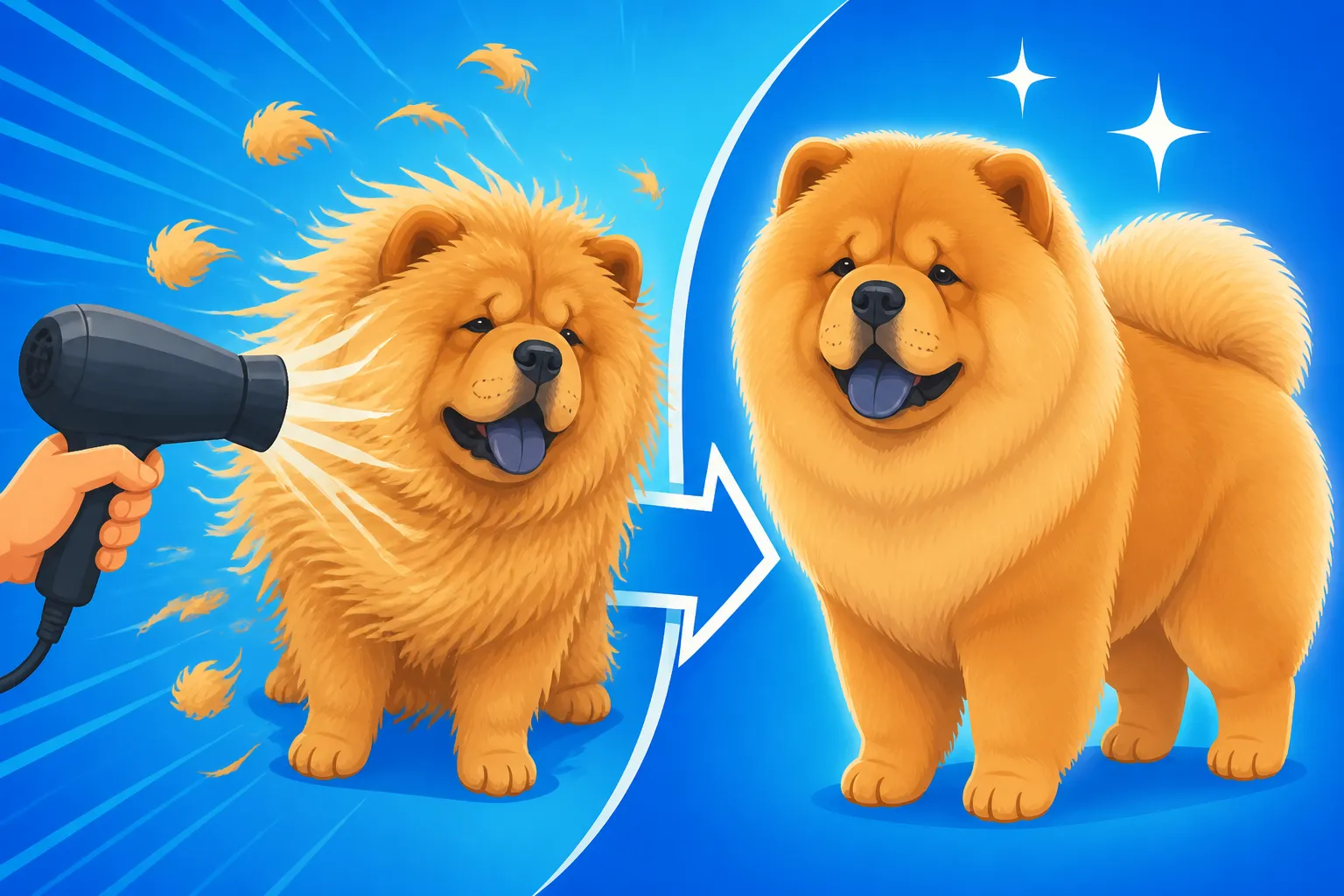
If there's one tool that will truly transform your coat blow experience, it's a high-velocity dryer. These aren't your human hairdryers; they're powerful machines designed to blast water out of a dog's coat, and in the process, they also blast out loose undercoat.
- How it Works: The forceful air stream from a high-velocity dryer, often referred to as a "force dryer," penetrates the double coat, separating the individual hairs. This action physically expels dead undercoat that brushing alone might miss or struggle to remove. It's incredibly efficient at dislodging vast quantities of fur. Many groomers rely on these for dematting and deshedding, and they're invaluable for Chow Chows. You can dive deeper into its benefits in Whether a High Velocity Dryer Helps a Chow Chow Shed.
- Safe Usage: Always introduce your Chow Chow to the dryer gradually, starting on a low setting and ensuring they are comfortable with the noise and sensation. Keep the nozzle moving to avoid concentrating heat in one spot (though most high-velocity dryers produce minimal heat). Use it outdoors if possible, or in a garage, because the amount of fur that flies will be astounding! This can significantly reduce the duration of the coat blow by extracting weeks' worth of shedding in a few concentrated sessions.
Strategic Bathing
Bathing your Chow Chow during a coat blow can be a double-edged sword: incredibly effective if done right, disastrous if done wrong. The key is thorough drying.
- The Process: A good bath helps loosen dead hairs. Use a deshedding shampoo and conditioner, working them deep into the coat. Let the conditioner sit for a few minutes to help release fur. Rinse thoroughly, making sure no residue is left behind, as this can irritate the skin.
- The Critical Drying Stage: This is where the high-velocity dryer becomes non-negotiable. You must dry your Chow Chow completely, all the way down to the skin. If the undercoat remains damp, it will mat severely, creating a far worse situation than before the bath. The thick coat of a Chow Chow can take a long time to dry naturally, making them prone to skin issues like hot spots if left even slightly damp. As discussed in Bathing and Drying a Chow Chow's Dense Coat, patience and the right tools are key here. A damp, compacted undercoat will not shed out efficiently and will be very uncomfortable for your dog.
Practical Strategies for Managing the Mess
Even with the best tools, a coat blow still means fur. Lots of it. Having a game plan for containment can make the whole ordeal much more manageable.
Daily Routine for Success
Consistency is your friend. Instead of trying to do one epic grooming session and then giving up for a week, aim for shorter, more frequent efforts.
- Short, Focused Sessions: Dedicate 15-30 minutes each day to brushing during the peak of a coat blow. This prevents fur from building up and matting, making each subsequent session easier.
- Location, Location, Location: Choose a designated grooming spot, preferably easy to clean. Outdoors is ideal for brushing if weather permits. If indoors, consider a large sheet or tarp to catch the fur, which can then be easily gathered and disposed of. This beats trying to vacuum fur out of every nook and cranny.
- Positive Reinforcement: Make grooming a positive experience for your Chow Chow. Offer treats, praise, and keep sessions calm and gentle. This builds trust and makes future grooming much easier.
Containing the Fur in Your Home
While you're working to get the fur off your Chow Chow, you also need strategies to keep it from taking over your living space.
- Invest in a Good Vacuum: This might sound obvious, but a powerful vacuum designed for pet hair is a lifesaver. Look for models with strong suction and specialized attachments for upholstery. You'll be using it often, so a reliable machine is worth the investment.
- Furniture Covers: Drape blankets or washable covers over your furniture. This creates a barrier, capturing loose fur that your Chow Chow might shed while relaxing, and they can be easily removed and washed.
- Air Purifiers: While they won't stop the shedding, air purifiers with HEPA filters can help capture airborne dander and fine fur particles, improving air quality and reducing allergens during intense shedding periods.
- The Fur Catcher: Consider using a grooming apron or a large, washable fabric sheet to wrap around your Chow Chow during brushing sessions. This creates a collection zone for the fur, making cleanup much faster.
When to Call in the Pros
Sometimes, even with the best intentions and tools, the coat blow can feel overwhelming. Don't hesitate to seek professional help.
- Professional Groomers: A skilled groomer who specializes in double-coated breeds can be an invaluable resource. They have industrial-strength dryers, professional tools, and the experience to efficiently de-shed a Chow Chow. They can often accomplish in one or two sessions what might take you weeks at home. This can be especially helpful at the very beginning of a coat blow to get a head start, or if you find yourself struggling with mats. You can inquire about deshedding services at local salons; the cost will vary, but it's often worth it for the sheer volume of fur removed and the peace of mind. To understand the financial commitment, consider What Professional Grooming Costs for a Chow Chow. Many groomers might carry products like specialized deshedding shampoos and conditioners which you could potentially find at stores like Chewy.
| Tool Type | Best Use Case | Frequency During Coat Blow | Notes |
|---|---|---|---|
| Undercoat Rake | Reaching deep into the undercoat to pull out dead fluff | Daily to every other day | Essential for initial heavy deshedding. |
| Slicker Brush | Removing surface tangles, general brushing, fluffing | Daily | Follows the rake to smooth and gather remaining loose hairs. |
| Pin Brush | Gentle brushing for long feathering (mane, tail), sensitive areas | As needed | Good for maintaining fluff and preventing minor tangles. |
| Steel Comb | Checking for missed tangles and mats, finishing | After each brushing session | Ensures no hidden knots remain, particularly in problem areas. |
| High-Velocity Dryer | Blasting out loose undercoat, thorough drying after bath | 1-2 times a week, or after baths | A game-changer for speed and efficiency. Use carefully. |
Supporting Your Chow Chow's Health During the Coat Blow
A coat blow isn't just about managing fur; it's also about ensuring your Chow Chow remains healthy and comfortable throughout the process.
Comfort and Skin Health
The dense coat can hide a lot, so you need to be extra vigilant during a coat blow.
- Watch for Hot Spots: Mats and trapped moisture in the undercoat can quickly lead to painful "hot spots"—bacterial skin infections. If you notice your Chow Chow incessantly licking, scratching, or chewing at an area, or if you detect a foul odor, check for hot spots. They can escalate rapidly, so early detection and veterinary attention are crucial. This is especially true because Whether a Matted Chow Chow Gets Hot Spots is a significant concern.
- Check for Parasites: The thick coat can also provide a haven for fleas and ticks. Regular grooming allows you to inspect their skin for any unwelcome guests or irritations. Maintaining a consistent flea and tick preventative is always wise, but never more so than when grooming is intense.
- Skin and Coat Supplements: Supporting healthy skin and coat from the inside out can contribute to more manageable shedding and overall coat quality. Omega-3 fatty acids (like fish oil) are often recommended for their anti-inflammatory properties and ability to promote healthy skin and shiny fur. You can find many reputable supplements at pet supply stores or online retailers like Chewy and Ollie. Always consult with your vet before introducing new supplements.
Hydration and Nutrition
A healthy body produces a healthy coat, which sheds more efficiently and grows back strong.
- Adequate Hydration: Ensure your Chow Chow always has access to fresh, clean water. Good hydration is essential for overall health, including skin and coat condition.
- Quality Diet: Feed a high-quality, balanced diet appropriate for your Chow Chow's age and activity level. A diet rich in essential nutrients, proteins, and healthy fats will support healthy skin and a robust coat. If their diet is lacking, their coat can become dry, brittle, and shed poorly, potentially prolonging the coat blow. If your Chow Chow is a bit of a fussy eater, ensuring they still get their necessary nutrients is paramount. You might consider fresh food options or high-quality kibble from brands like Ollie, which can contribute to overall skin and coat health. The phrase "you are what you eat" applies to our furry friends, too!
Dealing with a Chow Chow's coat blow can be a challenge, but with the right tools, consistent effort, and a little patience, you can navigate it successfully. By understanding the process and being proactive, you'll not only get through it faster but also ensure your Chow Chow remains comfortable and healthy.
Disclaimer
This article is for general informational purposes only and does not constitute professional advice. Laws, prices and regulations vary by location and change over time. Consult a qualified professional for guidance on your specific situation.