Why a Groomer Charges More for a Matted Chow Chow
It's incredibly frustrating, isn't it, to pick up your beloved Chow Chow from the groomer, expecting a fluffy, clean pup, only to be hit with a bill that's significantly higher than you anticipated because your dog was "matted"? Many Chow Chow owners experience this sticker shock and wonder what exactly justifies the extra cost. This comprehensive guide will explain the intricate reasons behind those higher fees, delving into the unique challenges a matted Chow Chow presents for professional groomers and the potential health implications for your furry family member.
The Chow Chow's Coat: A Double-Edged Sword for Groomers
That magnificent, dense coat that makes your Chow Chow so regal and teddy-bear-like is also its most challenging feature, especially when it comes to grooming. Unlike many breeds, the Chow Chow boasts a thick double coat designed to protect it from extreme temperatures. This incredible insulation is what causes so many issues when matting occurs.
Understanding the Double Coat Structure
Your Chow Chow has two distinct layers to its coat: a soft, woolly undercoat and a coarser, straight outer coat. The undercoat is incredibly dense, providing warmth and protection. It's also the primary culprit when it comes to matting. This soft, downy hair sheds continuously, but particularly heavily during the twice-yearly "coat blow" seasons. If this loose undercoat isn't regularly brushed out, it intertwines with the guard hairs of the outer coat, forming dense tangles close to the skin.
The outer coat, or guard hairs, are longer and harsher, designed to repel water and dirt. They don't typically mat on their own, but they do trap the shedding undercoat against the dog's body, essentially cementing the mats in place. This unique combination means that mats in a Chow Chow aren't just surface-level tangles; they're often thick, felted masses that pull on the skin and can cover large areas. How a Rough Chow Chow Differs From a Smooth and Brushing a Chow Chow's Mane Down to the Skin are essential reads to truly grasp the complexity here.
Where Mats Typically Form
Due to their dense coat and movement patterns, Chow Chows are prone to matting in specific areas. These include:
- Behind the ears: The constant motion of their head and the friction from collars or harnesses can quickly felt the fine hair here.
- Armpits and groin: Areas of high friction and delicate skin, where the legs meet the body, are notorious for developing tight mats that can restrict movement.
- Behind the britches (rear legs): The longer hair on their hindquarters, combined with sitting and movement, often becomes heavily matted. Why a Chow Chow's Britches Mat First is a common frustration for many owners.
- Under the collar/harness: Constant rubbing in these areas compresses the coat and encourages mat formation.
- The belly: Often overlooked, the softer hair on the underside can mat easily, especially if the dog rolls around frequently.
Even a "smooth" coated Chow Chow, which has a shorter outer coat, still has a dense undercoat and can mat significantly. It's a misconception that they are immune to these issues.
The Hidden Dangers and Extra Work of Grooming a Matted Chow Chow
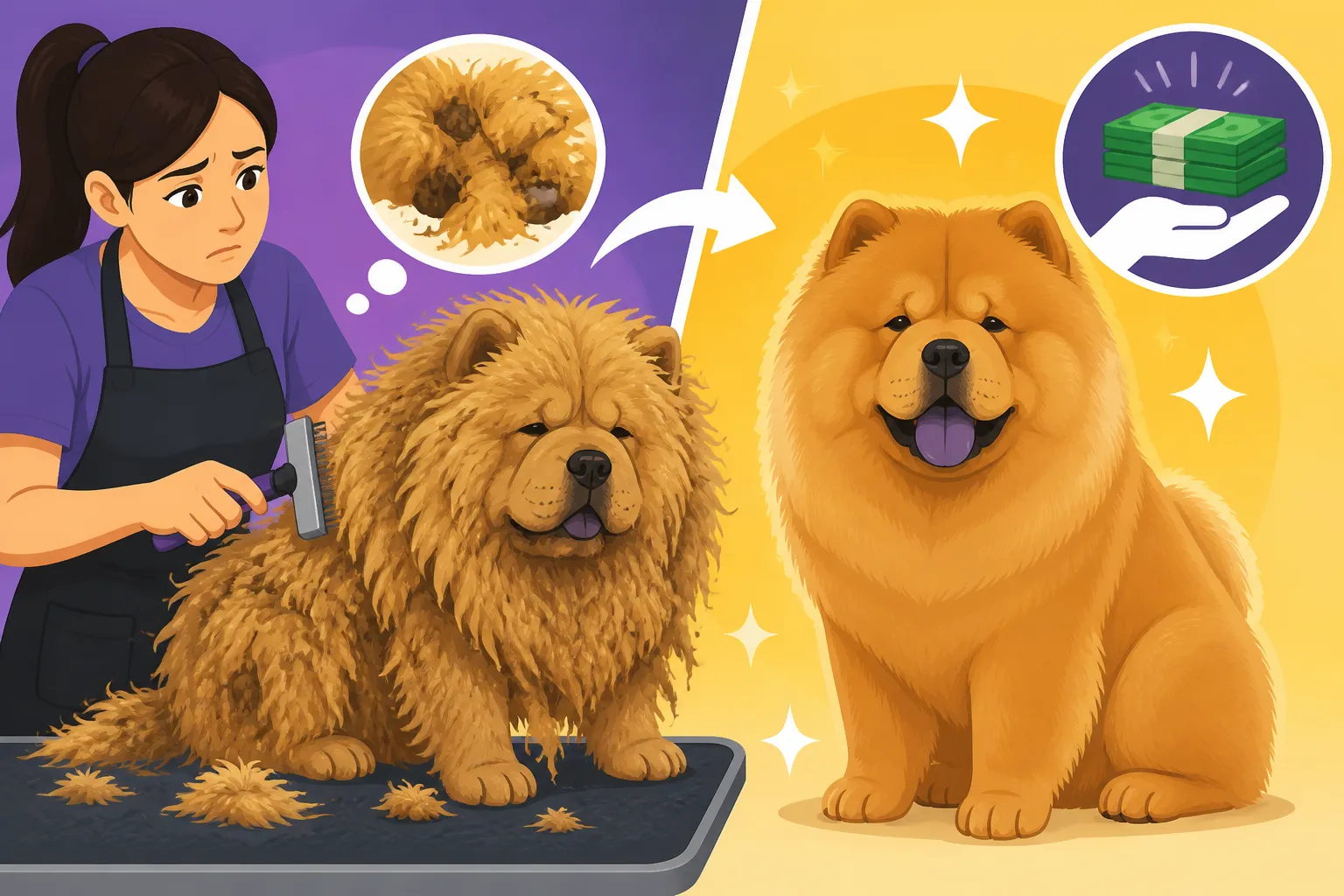
When a groomer sees a matted Chow Chow, they're not just seeing a messy dog; they're seeing a time-consuming, potentially painful, and risky situation for both the dog and themselves. The extra charges aren't arbitrary; they reflect these very real challenges.
Pain and Discomfort for the Dog
Mats are more than just cosmetic issues; they are physically uncomfortable and often painful. They pull on the skin with every movement, creating a constant, dull ache. Imagine having your hair tightly pulled all over your scalp for days or weeks on end – that's what a matted coat feels like to a Chow Chow.
If left untreated, mats can cause:
- Skin irritation and sores: Trapped moisture, dirt, and debris underneath the mats create a perfect breeding ground for bacteria and yeast, leading to hot spots, infections, and painful skin conditions. Whether Mats Hurt a Chow Chow is a question with a resounding "yes" from any groomer.
- Restricted movement: Severe matting can pull skin so tightly that it hinders the dog's ability to walk, run, or even lie down comfortably. This can exacerbate existing orthopedic issues like Elbow Dysplasia Ranks the Chow Chow Near the Top.
- Poor circulation: In extreme cases, very tight mats can restrict blood flow to the skin, causing tissue damage.
- Parasite infestations: Fleas, ticks, and other parasites can hide deep within mats, making them incredibly difficult to detect and treat.
A groomer's priority is the dog's well-being, and dematting a severely matted Chow Chow is often more cruel than kind, as it involves immense pain and stress.
Increased Time and Labor for the Groomer
This is where a significant portion of the extra cost comes in. Grooming a matted Chow Chow is not just "a little extra brushing."
- Specialized Techniques: Severely matted coats cannot simply be brushed out. Attempting to do so would cause extreme pain to the dog and damage their skin. Instead, groomers must carefully shave under the mats, using specialized blades and techniques to avoid cutting the delicate skin that is often pulled taut into the mat itself. This is a slow, meticulous process that requires immense skill and patience.
- Blade Wear and Tear: Mats are incredibly tough on grooming equipment. Blades dull quickly when cutting through felted hair, and this means more frequent sharpening or replacement, which is a significant cost for the groomer.
- Higher Risk of Injury: The groomer is at a higher risk of injury as well. A dog in pain might snap or bite, even if it's normally docile. Furthermore, the risk of nicking or cutting the dog's skin, which is often stretched thin or hidden within the mats, is significantly higher. This requires extreme caution and can lead to a longer grooming session, sometimes needing two groomers to manage the dog safely.
- Sedation (in extreme cases): For severely matted and distressed Chow Chows, a groomer might recommend or require veterinary sedation before they can safely remove the mats. This adds another layer of cost and coordination for the owner. Pet insurance providers like Healthy Paws can be a lifesaver if unexpected vet visits, like those potentially stemming from skin infections under mats or needing sedation for grooming, arise.
Health and Safety Concerns
The groomer also bears responsibility for the dog's overall health and safety during the process.
- Uncovering Hidden Issues: Mats can hide a multitude of problems. As the groomer shaves them away, they often uncover skin infections, lesions, warts, lumps, or even embedded foreign objects that were completely invisible beneath the dense coat. This requires the groomer to be vigilant and to inform the owner immediately. Why a Chow Chow's Dense Coat Hides Skin Disease is a real issue.
- Post-Clipping Alopecia: In some Chow Chows, especially those with very thick double coats that have been matted and then shaved down, the coat may not grow back properly, or it may grow back with a different texture. This is known as post-clipping alopecia. While not directly harmful, it's a concern for owners, and groomers must take extra care and communicate this possibility. What Post Clipping Alopecia Affects Chow Chows covers this in more detail.
- Temperature Regulation: Shaving a matted Chow Chow down to the skin drastically alters its ability to regulate its body temperature. The dense coat protects from both cold and heat. A shaved dog is more susceptible to sunburn and can get cold easily. Why Shaving Does Not Cool a Chow Chow explains this protective aspect of their coat. Groomers must counsel owners on aftercare.
Why the Price Tag Reflects More Than Just Time
When you see a higher bill for a matted Chow Chow, it's not simply an upcharge for a "dirty dog." It's a reflection of several critical factors that impact the groomer's business and the well-being of your pet.
Skill, Experience, and Risk
Grooming a matted Chow Chow demands a higher level of skill and experience than a routine tidy-up. It requires specialized knowledge of coat types, skin anatomy, and canine behavior, especially in a stressed animal. The risk of injury to both the dog and the groomer is elevated, and this expertise comes at a premium. A good groomer prioritizes safety and will take the necessary time to ensure the procedure is as humane as possible, which might mean a longer appointment slot blocking out other clients.
Equipment and Supplies
As mentioned, mats are tough on equipment. Blades need to be sharper and are replaced more frequently. Special dematting tools or conditioners might be used in less severe cases, all of which add to overhead costs. The wear and tear on clippers is considerable, and professional-grade equipment isn't cheap.
Waste Disposal and Cleanup
Dealing with large amounts of matted fur is also more involved. It clogs drains, creates more waste, and takes longer to clean up from the grooming station. It's not glamorous, but it's part of the process.
A Typical Cost Breakdown Comparison
To illustrate the difference, consider a basic comparison:
| Factor | Regular Grooming (Brushed Out Chow Chow) | Matted Grooming (Severely Matted Chow Chow) |
|---|---|---|
| Time | 2-3 hours for full bath, blow dry, brush out, trim | 3-6+ hours for careful shaving, bath, dry, health check |
| Equipment Wear | Standard blade wear, minimal | High blade wear, frequent sharpening/replacement, higher electricity usage |
| Skill Required | Standard breed grooming knowledge | Advanced skill, extreme caution, knowledge of skin issues under mats |
| Dog Comfort | Generally comfortable, positive experience | Often painful, highly stressful, requires calming techniques and patience |
| Risk of Injury | Low, primarily minor nicks if dog moves unexpectedly | High, risk of skin lacerations, hot spots, groomer bites |
| Post-Grooming Care | Minimal | Detailed instructions for skin, temperature, potential coat regrowth issues |
| Cleanup | Standard coat removal | Extensive cleanup of felted fur, potential medical waste if skin issues found |
| Additional Services | Nail trim, ear cleaning often included | Potential vet visit for sedation, treatment of skin conditions |
This table clearly shows why the labor, risk, and resources involved fundamentally shift when a Chow Chow comes in matted.
Preventing Matting: A Proactive Approach to Your Chow Chow's Coat
The best way to avoid those hefty matted-coat fees and, more importantly, to ensure your Chow Chow's comfort and health, is to be proactive with grooming at home. It truly makes all the difference.
Consistent Home Brushing Routine
This is the absolute cornerstone of preventing mats. Your Chow Chow needs to be thoroughly brushed at least 2-3 times a week, and daily during seasonal coat blows. "Thoroughly" means getting all the way down to the skin. Simply brushing the top layer isn't enough; the mats form underneath.
- Tools are Key: Invest in the right tools. A slicker brush and a long-toothed metal comb (often called a greyhound comb) are indispensable. The slicker brush helps loosen the undercoat, and the comb is crucial for checking that you've reached the skin and for working out any small tangles before they become big problems. Which Brush a Chow Chow Needs will guide you to the right choices.
- Line Brushing: Learn the technique of line brushing. This involves parting the coat and brushing in small sections, from the skin out, layer by layer. This ensures no mats are missed.
- Focus on Problem Areas: Pay extra attention to the areas most prone to matting: behind the ears, armpits, britches, and under the collar.
- Positive Reinforcement: Make brushing a positive experience from puppyhood with treats and praise. Brands like Chewy offer a wide range of grooming tools and high-value treats to make this easier.
Regular Professional Grooming Appointments
Even with diligent home care, regular professional grooming is highly recommended for Chow Chows. A professional groomer has high-velocity dryers that can blast out shedding undercoat more effectively than home tools, specialized shampoos, and the experience to spot potential issues.
- Frequency: Aim for a professional groom every 6-8 weeks, or at least quarterly, especially around coat blow seasons. How Often a Chow Chow Needs a Groomer depends on many factors, but consistency is key.
- Deshedding Treatments: Ask your groomer about deshedding treatments. These services are designed to remove excess undercoat, significantly reducing the likelihood of matting. Why a Deshedding Treatment Costs More on a Chow Chow but it's often cheaper than fixing a matted mess.
- Communication is Crucial: Be honest with your groomer about your home grooming routine. If you've missed a few sessions, tell them. They'd rather know upfront so they can prepare and advise you.
Proper Diet and Skin Health
A healthy coat starts from within. A balanced diet rich in essential fatty acids can promote healthy skin and a strong coat, making it less prone to dryness and breakage, which can contribute to matting. Consider high-quality dog foods, potentially with omega fatty acid supplements. Some premium brands, like Ollie, focus on fresh, human-grade ingredients that can contribute to overall canine health, including skin and coat condition. Hydration is also vital; ensure your Chow Chow always has access to fresh water.
Awareness During Bathing
Bathing a matted Chow Chow without first thoroughly brushing it out is a recipe for disaster. Water will cause existing tangles to tighten and felt even more severely, making them nearly impossible to remove without shaving. Always brush out your Chow Chow before bathing. After bathing, ensure the coat is completely dried to the skin using a high-velocity dryer if possible, as dampness can also contribute to matting and skin issues. How Long a Chow Chow Takes to Dry is considerable.
By understanding the unique challenges of the Chow Chow's coat and committing to a consistent grooming routine, you can keep your furry friend comfortable, healthy, and avoid those unexpected, higher grooming fees.
Disclaimer
This article is for general informational purposes only and does not constitute professional advice. Laws, prices and regulations vary by location and change over time. Consult a qualified professional for guidance on your specific situation.