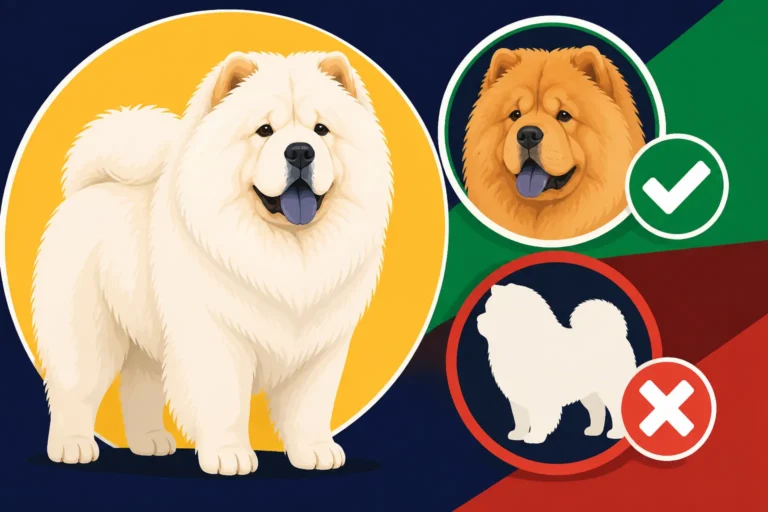
Whether a White Chow Chow Exists
A white-looking Chow Chow can prompt plenty of questions: Is it truly white, a very pale cream, or a mix with a different coat color? The answer depends on how the breed’s colors are described and judged. This guide explains what “white” usually means in a Chow Chow, how cream coats compare, and what to check when identifying a puppy.
Does a white Chow Chow exist
Why some Chow Chows look white
People do describe some Chow Chows as white, especially when a dog has a very pale coat that looks nearly ivory in bright daylight. In breed terminology, however, that appearance is generally associated with cream rather than with a separate, officially recognized white color. A cream Chow Chow can look almost white in photographs, particularly when the lighting is bright or the coat has been freshly groomed.
The difference is not always obvious at a glance. Cream coats can range from a light, pale shade to a warmer color with more visible shading around the ears, back, or tail. A dog may also have lighter furnishings around the neck and legs, which can make its overall coat look paler than it is.
That’s why the word “white” can be useful in everyday conversation but imprecise when you’re trying to identify a Chow Chow’s recognized color. If someone calls a dog white, it’s worth asking whether they mean a very pale cream coat, rather than assuming “white” is a distinct color category. For the broader color list, see Which Colors a Chow Chow Comes In.
How breed color descriptions work
The breed’s recognized color descriptions include red, black, blue, cinnamon, and cream. White is not generally listed as a separate standard color. That does not mean a pale-looking Chow Chow cannot be a purebred dog; it means the everyday label and the breed-standard label may differ. Which Five Colors the Chow Chow Standard Accepts gives more context on those color categories.
Color descriptions are not always neat, sharply separated boxes. One person may call a very pale cream dog “white,” while another describes the same coat as ivory or light cream. Grooming, lighting, and the color visible near the skin can all affect what people think they see.
If you’re evaluating a puppy or an adult dog, consider the whole coat rather than relying on a single photo or label. Ask how the breeder or rescue describes the dog’s color, and look at the coat in natural light if possible. A color name on a listing is a starting point for questions, not proof of a dog’s breed or background.
White versus cream in a Chow Chow
What cream can look like
A cream Chow Chow may have a pale body coat and slightly deeper shading in other areas. The exact appearance varies from dog to dog, and the coat may seem warmer or cooler depending on the light. That variation is one reason a cream dog can look white in a photograph but more ivory or pale gold when seen outdoors.
Cream coloring is also easy to confuse with a coat that has been lightened by overexposure in a photo. A bright background, strong sunlight, or phone-camera adjustments can flatten subtle shades and make the coat look nearly pure white. If color matters to you, ask for unfiltered pictures taken in ordinary daylight, ideally from several angles.
The coat’s color is only one part of the picture. A Chow Chow’s coat should be assessed alongside its build, features, temperament, and health history. If you’d like to compare the appearance of cream coloring with other shades, Five Colors and Nothing Else: the Chow Chow Palette covers the full palette.
Quick comparison of color terms
| Description | What it usually means | What to keep in mind |
|---|---|---|
| White | An everyday description for a very pale-looking coat | Not generally treated as a separate standard Chow Chow color |
| Cream | A recognized color category that can range from very pale to warmer ivory shades | A pale cream dog may look white in photographs |
| Ivory | A casual description of a light cream coat | It may describe appearance rather than a formal color category |
| Faded or sun-lightened coat | A coat that looks lighter in some areas | Lighting and coat condition can affect how color appears |
These terms are not a substitute for a breeder’s records or a knowledgeable assessment. If a dog’s color is important for showing or breeding, ask the relevant club or registry how that organization records it. For a pet owner choosing a companion, the distinction is usually less important than the dog’s health, temperament, and care needs.
How to identify a pale Chow Chow
Look beyond a single photograph
Photos can make a cream Chow Chow appear stark white, especially when the image is overexposed or taken against a dark background. Look at more than one image, and compare the dog’s coat in shade and natural daylight. If possible, see the dog in person and check whether the coat has a warm, ivory, or pale-gold cast.
It can also help to look at the coat in different areas. The neck ruff, body, tail, and feathering may not appear identical in shade. A pale coat with slightly darker shading can still fit a cream description; variation within the coat does not automatically mean the dog is a different color.
Puppies can add another layer of uncertainty. Their coats change as they mature, and the color seen when they are very young may not be the final adult appearance. A breeder can explain the puppy’s parents’ colors and describe how the litter’s coats are developing. For more on that transition, see When a Chow Chow Puppy's Coat Changes and Whether a Chow Chow's Color Changes as It Grows.
Ask practical questions when choosing a puppy
If a breeder advertises a “white Chow Chow,” ask what they mean by white and how the puppy’s color is recorded. A straightforward answer might be that the puppy is a very pale cream. Ask to see photos of the puppy’s parents and, if available, adult dogs from previous litters. Those details can give you a better sense of how coats from that line look as they mature.
A color label should never distract from questions about responsible breeding. Ask what health screening has been done, how the puppies are raised, and what support the breeder provides after placement. A seller who focuses heavily on a rare-sounding color while avoiding questions about health, temperament, or documentation deserves extra scrutiny.
If you’re adopting, the dog’s previous records may be incomplete. That’s common, and it does not make the dog less worthy of a home. A veterinarian or breed-experienced professional can help assess the dog’s overall condition, while a rescue can share what it knows about the dog’s history and care needs.
Caring for a pale Chow Chow coat
Keep color separate from coat health
A pale coat does not require an entirely different grooming routine simply because it looks white. Chow Chows have dense coats that need regular attention, including brushing down to the skin so loose undercoat and tangles do not build up. Areas behind the ears, beneath the collar, and around the legs can be easy to overlook.
Light fur may make dirt, tear staining, or food residue more visible to you, but that does not mean every mark is a problem. Wipe the face gently with a clean, damp cloth when needed, then dry the area. Avoid using harsh whitening products or human hair treatments; products that irritate the skin can create a bigger issue than a small stain.
For routine grooming, choose tools and pet-safe products suited to the coat rather than shopping by color alone. Retailers such as Chewy carry a range of grooming supplies, but check product directions and ask your veterinarian or groomer if your dog has sensitive skin. A comb and brush that reach through the coat are more useful than a product promising to make cream fur look brighter.
Watch for skin or coat changes
A Chow Chow’s dense fur can make it harder to spot changes in the skin. While grooming, take a moment to part the coat and check for redness, unusual odor, damp areas, sores, or persistent scratching. A coat that seems suddenly dull, thin, or discolored may also deserve a closer look, especially if your dog is uncomfortable or the change is spreading.
If a pale coat looks stained around the eyes or mouth, first consider ordinary causes such as moisture, food, or dirt. Persistent discharge, swelling, squinting, or irritated skin should not be treated as a cosmetic issue. Contact a veterinarian if you notice those signs or if a change is new and not improving.
For a calm grooming routine, work in short sessions and reward your dog for standing or sitting comfortably. If you need supplies for brushing or face cleaning, Chewy is one place owners may browse, but choose gentle products made for dogs and avoid putting anything near the eyes unless its label says it is safe for that use. The aim is a comfortable, healthy coat—not a particular shade of white.
A Chow Chow described as white is most often a very pale cream dog, since white is not generally recognized as a separate standard color for the breed. The label can be understandable in casual conversation, but it’s worth clarifying what the seller or caretaker means. Photos, coat changes, and lighting can all shift how pale cream appears, so use the dog’s records and overall health—not a color claim alone—to guide your decision. If you’re preparing for everyday coat care, Chewy may also be a convenient place to compare basic grooming products, alongside advice from a groomer familiar with dense double coats.
Disclaimer
This article is for general informational purposes only and does not constitute professional advice. Laws, prices and regulations vary by location and change over time. Consult a qualified professional for guidance on your specific situation.