Why a Chow Chow’s Gait Looks Stilted
A Chow Chow can look as if it is taking short, stiff steps, especially through the hindquarters, and that can make a normal breed trait hard to distinguish from soreness. This guide explains why the gait looks stilted, what healthy movement should look like, and which changes deserve a veterinary check rather than a wait-and-see approach.
Why a Chow Chow’s gait looks stilted
The breed’s rear-leg structure shapes its movement
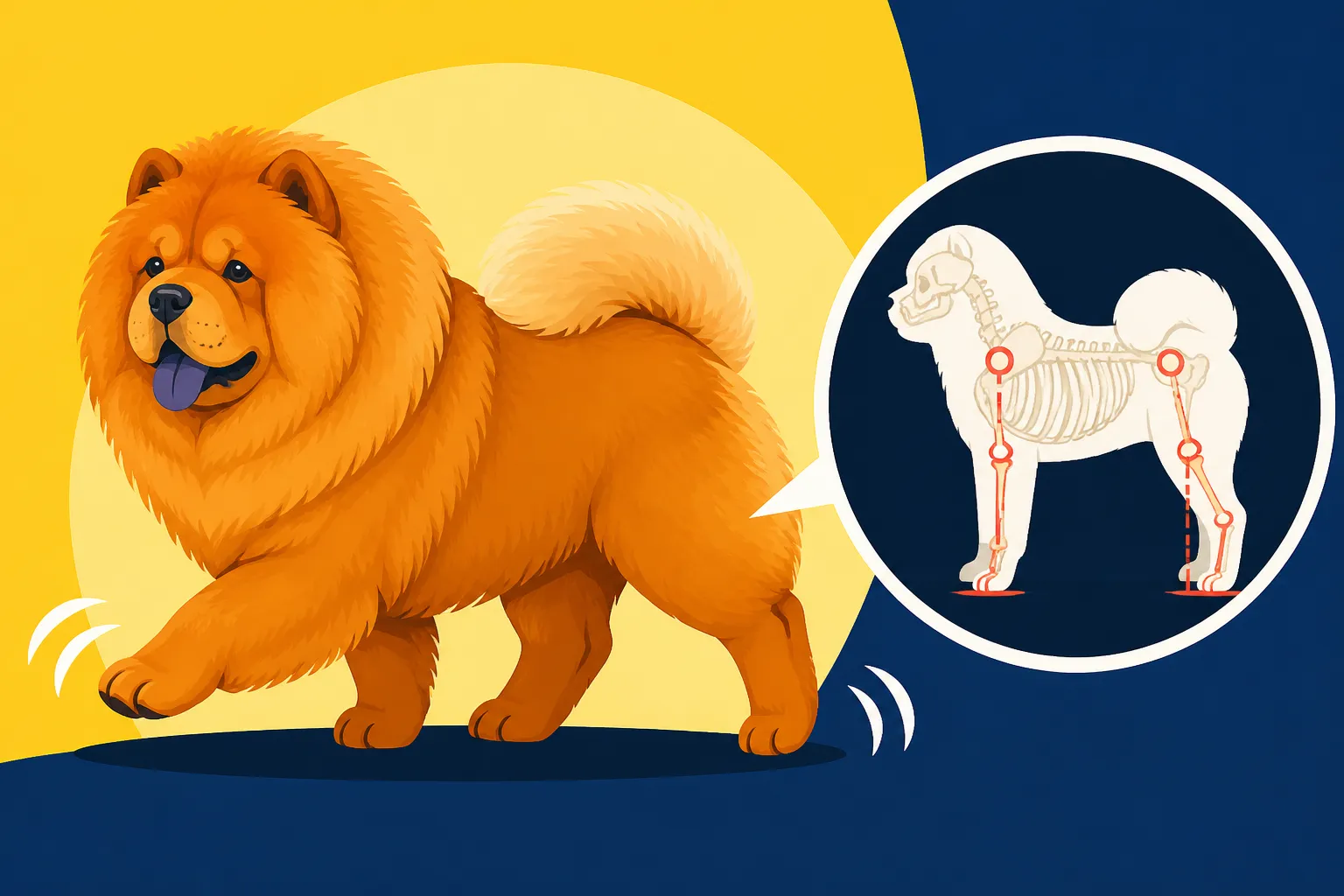
A Chow Chow’s characteristic movement is closely tied to its nearly straight rear legs. Many breeds bend their hind legs noticeably as they step forward; a Chow Chow’s hind legs have less visible angulation, so the movement can appear short, stiff, or almost mechanical. The dog may seem to move its legs from the hip with less flex and reach than you expect.
This is not necessarily a sign that the dog is hurting. A healthy Chow Chow can have a compact, deliberate stride that looks different from the springy movement of a retriever or the long, flowing steps of a sighthound. The breed’s outline and movement are closely connected, as explored in The Straight Rear Leg No Other Breed Has.
Watch the dog from the side and from behind while it walks at an easy pace on a level, nonslip surface. A typical Chow Chow gait may look restrained, but it should still be coordinated. The dog should place its feet steadily, carry its weight evenly, and move without repeatedly shortening one stride or favoring one side.
A breed trait is not the same as an individual problem
The key distinction is consistency. If your Chow Chow has always moved with a compact, somewhat stiff-looking stride and seems comfortable during walks, that may simply be its usual pattern. If the gait changes—especially suddenly—or becomes more uneven over time, take the change seriously even if the dog still wants to go outside.
It can be useful to compare short videos taken at the same pace and on similar surfaces. A thick coat can hide the movement of the hips, knees, and hocks, while an owner who sees the dog every day may not notice gradual changes right away. Video can help you describe what you saw to a veterinarian, but it cannot identify the cause on its own.
For a broader explanation of how the breed’s movement differs from a typical loose, flowing stride, see Why a Chow Chow Walks Stiffly. The important point is not whether the gait looks unusual to you; it is whether your dog’s movement is comfortable, balanced, and stable for that individual.
How to tell typical movement from a gait problem
Look for symmetry, comfort, and changes over time
A stilted-looking gait may be typical for the breed, but pain often leaves clues beyond the overall impression of stiffness. Look for a repeated head bob, a shorter step on one side, a leg that swings outward, toes that scuff the ground, or a pause before the dog sits, rises, or turns. These signs can be subtle, especially in a Chow Chow that is naturally reserved.
Pay attention to when the change happens. Is your dog stiff after sleeping, then more comfortable after moving around? Does it slow down on stairs, hesitate before jumping into the car, or stop on a route it used to enjoy? A pattern such as Why a Chow Chow Limps After Rest can help you recognize what to observe, but only an examination can determine whether a joint or another structure is responsible.
A small difference can matter more than an occasional awkward step. For instance, a dog that briefly trips on a loose rug is different from one that repeatedly drags the same toes on walks. Note the timing, which legs seem affected, and whether the signs are getting more frequent.
Use a practical comparison
These observations can help you decide what to do next. They are not a way to diagnose your dog at home.
| What you notice | What it may suggest | Helpful next step |
|---|---|---|
| Compact, even steps that have always looked similar | A breed-typical movement pattern may be involved | Mention it during routine veterinary visits |
| Stiffness that eases after a short warm-up | Joint or soft-tissue discomfort is possible | Record when it happens and arrange an exam if it persists |
| Repeated limping or favoring one leg | Pain or injury may be present | Contact your veterinarian for guidance |
| Sudden inability to bear weight, severe pain, or collapse | A potentially urgent problem | Seek prompt veterinary care |
| Gradual slowing, trouble rising, or reduced willingness to walk | A change in comfort or mobility needs investigation | Schedule a veterinary assessment |
Keep observations simple and specific. “She is stiff” is useful, but “she takes shorter steps with the left hind leg after getting up, then improves after a few minutes” gives your veterinarian more to work with. Avoid repeatedly walking, jogging, or manipulating a sore leg to test it; that can increase discomfort and make it harder to assess the original problem.
If you are tracking changes at home, a written note or a short video can be useful. Basic supplies such as a notebook, nonslip floor runners, or a supportive bed can be found through retailers such as Chewy, but home adjustments do not replace an examination when movement has changed. A second note or video a few days later may help show whether the pattern is consistent.
Possible causes of an abnormal Chow Chow gait
Joint and muscle conditions can resemble the breed’s normal stiffness
A Chow Chow’s movement can be affected by more than its characteristic rear-leg structure. Joint disease, injury, muscle soreness, and age-related changes may all make a dog walk more carefully. Elbow and hip problems can affect how the dog bears weight, while pain in a paw or nail can also alter the stride. The cause cannot be identified reliably from the appearance of the gait alone.
Elbow dysplasia is one condition owners may want to understand because it can cause lameness and discomfort. The signs are not always dramatic; a dog may simply shorten its stride, shift weight, or seem reluctant to move as freely. Learn more in Elbow Dysplasia in a Chow Chow and Signs a Chow Chow Puppy’s Elbows Hurt. Those topics can help you prepare questions, but they are not a substitute for veterinary assessment.
Hips, knees, back, and feet may also be involved. A Chow Chow that has trouble rising might have pain in more than one place, and a gait change does not automatically point to the hind legs just because the rear looks stiff. Your veterinarian may examine how the dog stands, walks, and flexes its joints, then recommend further tests if needed.
Age, weight, surfaces, and activity all affect movement
Aging can make a dog slower to get moving, but “getting older” should not be used to dismiss persistent pain. A senior Chow Chow that begins avoiding stairs or taking shorter walks deserves attention just as a young dog with a new limp does. Changes in daily habits may be easier to spot than a specific joint problem: sleeping more, struggling to turn, or avoiding a favorite activity can all be meaningful.
Body weight is another practical factor. Extra weight increases the load carried by joints, and the Chow Chow’s dense coat can make it harder to judge body condition by sight. Ask your veterinarian how to assess your dog’s weight and whether any activity or feeding changes are appropriate. Avoid starting supplements, pain medicines, or a new exercise plan without professional guidance.
The walking surface and pace matter too. Slippery floors can make a dog cautious, while long walks, repeated jumping, or vigorous play may be too much for a dog that is already sore. If you are arranging a more comfortable home setup, Chewy is one place owners may look for nonslip runners or supportive bedding. Choose products that fit the dog and the space, and remember that cushioning or traction can improve comfort without treating an underlying condition.
What to do if your Chow Chow’s gait changes
Arrange veterinary care when you notice persistent or worsening signs
Contact your veterinarian if your dog develops a repeated limp, appears painful, becomes reluctant to walk, or has trouble getting up. A sudden major change, inability to use a limb, severe distress, or collapse calls for prompt veterinary attention. If the change is mild but recurring, call the clinic and describe what you are seeing rather than waiting for the next routine appointment.
Before the visit, note when the problem began, whether it affects one or more limbs, and what makes it better or worse. Mention any recent falls, unusually strenuous activity, changes in appetite, or new difficulty with stairs. If safe to do so, record a brief video of the dog walking naturally on a level surface. Do not force a walk if your dog seems painful.
A veterinarian may examine the joints, muscles, paws, and spine and may recommend imaging or other tests based on the findings. If you are worried about a specific condition, you can ask whether Hip Dysplasia in a Chow Chow or another joint issue should be considered. The goal is to identify what is causing the change, not to assume that every stiff-looking Chow Chow has the same problem.
Make sensible adjustments while you wait for advice
Until your dog has been assessed, keep activity gentle and predictable. Short, controlled leash walks may be more comfortable than a long outing, but follow your veterinarian’s instructions if you have already received them. Avoid encouraging your dog to jump from furniture or race up and down stairs, and do not give human pain medication unless a veterinarian specifically directs you to do so.
At home, check whether slippery flooring is making your dog hesitate. A stable path between the bed, water bowl, and door can help reduce slips. If you shop through Chewy or another retailer, focus on practical fit and ease of cleaning rather than assuming a particular bed or brace will correct the gait. A brace or mobility aid should be selected with veterinary guidance.
Most importantly, keep observing without becoming alarmed by every short or stiff step. Chow Chows often have a distinctive way of moving, but a new limp, a clear loss of comfort, or worsening mobility is not simply a breed quirk. If your dog’s movement is changing, a veterinarian can help separate normal conformation from a problem that needs care. For related guidance on recognizing subtle discomfort, see How a Chow Chow Hides Pain and How a Chow Chow’s Gait Wears Its Joints.
Disclaimer
This article is for general informational purposes only and does not constitute professional advice. Laws, prices and regulations vary by location and change over time. Consult a qualified professional for guidance on your specific situation.