Whether the Chow Chow Came From Mongolia or China
It’s a natural question to ask about our Chow Chows: where exactly did these magnificent, lion-like dogs come from? Many of us hear "China" and nod, but then the whispers of "Mongolia" creep in, leaving us wondering if we truly understand their ancient roots. This article will dive deep into the historical, archaeological, and genetic evidence to clarify whether your beloved Chow Chow's ancestors truly hail from Mongolia or if their origins are firmly planted in the rich soil of ancient China.
The Deep Roots of the Chow Chow in China
When we talk about the Chow Chow, we're talking about a breed with a history so long it predates recorded history in many parts of the world. It’s not just a few centuries; we're looking at millennia. The evidence for the Chow Chow’s strong ties to China is extensive and multifaceted, painting a clear picture of their long-standing presence and importance in Chinese culture.
Archaeological and Artistic Evidence
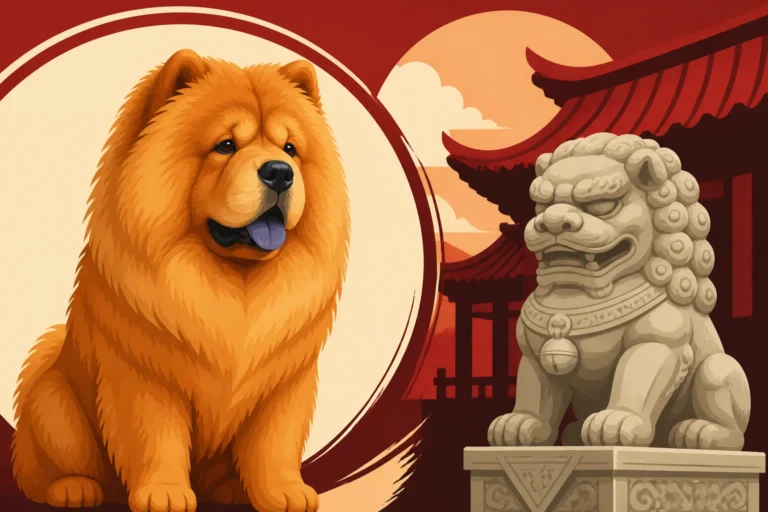
Imagine digging into ancient ruins and finding depictions of dogs that look uncannily like the Chows we cherish today. This isn't a fantasy; it's a reality for archaeologists studying Chinese history. Pottery and bas reliefs from the Han Dynasty (206 BCE – 220 CE) consistently show stout, sturdy dogs with dense coats, curled tails, and the distinctive "scowl" that Chow Chow enthusiasts recognize instantly. These aren't just generic dogs; the specific characteristics point strongly to an early form of the Chow Chow. This suggests that for at least two thousand years, and likely much longer, dogs with Chow-like features were an integral part of life in China.
Further research into the historical record, specifically exploring How Far Back the Chow Chow Is Recorded in China, reveals that this connection goes even deeper. The sheer volume of artistic representations from various periods within China suggests a continuous lineage and a deep cultural integration. These aren't scattered, isolated findings; they form a consistent pattern across different regions and eras, indicating a well-established presence rather than a transient one.
Historical Accounts and Roles in China
Beyond the visual evidence, historical texts and traditions from China also speak volumes about the Chow Chow's indigenous status. These dogs were not merely pets; they fulfilled crucial roles within Chinese society. They were known to be formidable hunting dogs, accompanying emperors and noblemen on expeditions. Picture an ancient Chinese hunting party, with the emperor's Chow Chows tracking large game through the rugged terrain, their strength and keen senses making them invaluable partners. For more on this, you might explore What a Chow Chow Hunted in China.
They also served as guardians of temples and homes, their naturally protective and somewhat aloof nature making them excellent sentinels. Their imposing presence and deep-set eyes, which give them that characteristic discerning gaze, would have been intimidating to intruders. Beyond these practical roles, they were also cherished companions, valued for their loyalty and quiet dignity. This long history of specific roles and cultural integration firmly establishes the Chow Chow as a breed developed and nurtured within the borders of China, deeply intertwined with its people and its history.
The Mongolian Connection: Nomadic Theories and Trade Routes
While the evidence for Chinese origins is strong, the idea of a Mongolian connection isn't entirely baseless. It often stems from broader theories about dog domestication and migration across Asia. Understanding this perspective helps us appreciate the complexity of ancient canine history.
The Migration Theory
One theory posits that the ancestors of many ancient Asian breeds, including the Chow Chow, originated in colder, more northern regions, possibly the steppes of Mongolia or Siberia. These dogs would have then migrated south with nomadic tribes, eventually making their way into China. The argument here is that the physical traits of the Chow Chow – its incredibly dense double coat, compact body, and sturdy build – are well-suited to harsh, cold climates, which aligns more with the environment of Mongolia than some of the warmer regions of China.
These nomadic groups, constantly on the move, would have brought their working dogs with them, and over centuries, these dogs would have adapted and diversified in different regions. So, while the breed might have been developed in China, its distant ancestors might have traveled there from elsewhere. This perspective highlights the dynamic movement of people and animals across the vast Asian continent long before modern borders were established. It speaks to the idea that Whether the Chow Chow Reached China With Nomads is a plausible scenario for its ancient lineage, even if its refinement as a distinct breed occurred in China.
Shared Traits with Northern Breeds
When you look at other dogs from northern climes, you often see some striking similarities to the Chow Chow. Breeds like the Samoyed, Siberian Husky, and Akita, for instance, all share the characteristic double coat, enabling them to withstand extreme cold. The Chow Chow’s dense coat is a hallmark of the breed, a topic explored in detail in What a Chow Chow's Double Coat Is Made Of. This shared feature suggests a common evolutionary pressure or at least a shared ancestral environment that favored such insulation.
Furthermore, some of these northern breeds also exhibit a more independent, dignified temperament, much like the Chow Chow. This temperament might be an adaptation to working alongside humans in vast, open landscapes, where a dog needed to be capable of making decisions on its own. While these shared traits don't definitively prove a Mongolian origin for the Chow Chow itself, they do underscore the possibility of a shared ancestral pool or at least significant historical interaction with dog populations from those northern regions. The migration of humans and their dogs was a continuous process across ancient Asia, meaning genetic exchange and the adoption of useful traits were common.
Genetic Insights and Modern Understanding
In recent decades, advancements in genetic science have allowed us to peer deeper into the evolutionary history of dog breeds than ever before. This scientific lens offers compelling perspectives on the Chow Chow's ancestry, largely affirming its ancient status and geographical ties.
DNA Evidence and Ancient Breeds
Genetic studies, specifically those focusing on canine DNA, have consistently placed the Chow Chow among the most ancient dog breeds, a group often referred to as "basal breeds" because their genetic makeup shows less divergence from wolves than most other modern breeds. This indicates a very early split from their wild ancestors and a long, independent evolutionary path. The article What DNA Says About the Chow Chow's Age goes into more detail about this fascinating aspect.
Many of these genetic studies point to East Asia, particularly China, as a crucial "cradle" for dog domestication and the development of several ancient breeds. The Chow Chow’s genetic signature strongly links it to this region, rather than solely to the steppes of Mongolia. While ancient dogs certainly moved around, the genetic evidence suggests that the specific lineage that became the Chow Chow was nurtured and developed within the Chinese geographical area. This doesn't mean no genetic material came from further north at some point, but rather that the distinct Chow Chow identity emerged in China. This firmly places the Chow Chow in the category of Whether the Chow Chow Is One of the Fourteen Ancient Breeds, most of which have strong Asian ties.
Why the Debate Continues
Despite the growing body of genetic evidence pointing towards a primary Chinese origin, the debate about Mongolia persists for a few reasons. Firstly, geographical boundaries in ancient times were fluid and often non-existent in the way we understand them today. The vast Eurasian steppe connects Mongolia directly to areas of China, and trade routes and nomadic movements meant constant interaction between different cultures and their animals. It's difficult to draw a hard line on a map and say "this exact spot" is where a breed originated, especially when we're talking about thousands of years of movement and intermingling.
Secondly, people often conflate the origin of all dogs in Asia with the origin of a specific breed. While dogs may have spread across Asia from a broad ancestral population, the process of selective breeding and the development of distinct types, like the Chow Chow, often occurred in more localized cultural contexts. So, while the Chow Chow shares ancient ancestry with dogs across Asia, its specific development as a breed appears to be a uniquely Chinese story. Understanding Which Breeds the Chow Chow Is Most Related To further clarifies this, as many of its closest genetic relatives are also deeply rooted in East Asian history.
Resolving the Question: The Predominant View
So, after sifting through the layers of history, art, and science, where does that leave us regarding the Chow Chow's true origin?
A Chinese Origin with Wider Influences
The overwhelming consensus, supported by the most robust evidence, is that the Chow Chow as a distinct breed originated and was developed in China. The continuous archaeological record, the historical accounts of their specific roles, and modern genetic analysis all converge on this conclusion. China provided the cultural context, the geographical environment, and the human intention for the Chow Chow to evolve into the unique animal we know today.
However, it's crucial to acknowledge that the ancestral dogs from which the Chow Chow descended likely had a much broader geographic spread. The movement of people and their canines across the vastness of Asia, including Mongolia, means there were undoubtedly influences and shared heritage. Think of it like a river with many tributaries: the main river, the Chow Chow, flows through China, but it was fed by countless smaller streams of ancient canine populations, some of which may have coursed through regions like Mongolia. This aligns with the broader understanding of The Chow Chow Is One of the Oldest Breeds in the World, highlighting its deep connection to a long and complex canine history across Asia.
What This Means for Chow Chow Owners
Understanding your Chow Chow's ancient Chinese lineage adds a fascinating layer to your appreciation of the breed. It helps explain many of their unique characteristics:
- Their Dignified Independence: For centuries, these dogs were expected to perform tasks with a certain self-reliance, whether hunting in the wilds or guarding estates. This isn't a dog bred for constant fawning affection, but for a deep, quiet loyalty to its chosen person. For a deeper dive into this, consider Whether the Chow Chow Is a One Person Dog for Life.
- Their Guarding Instincts: Having served as guardians for millennia, their inherent wariness of strangers and protective nature are deeply ingrained. It's not aggression for aggression's sake, but a historically honed instinct.
- Their Physical Endurance: The dense double coat and sturdy build speak to a history of surviving in varied, often challenging environments. This endurance and adaptability are part of their genetic heritage.
Knowing this history helps us approach our Chows with greater empathy and understanding. When your Chow Chow seems aloof, it's not a slight; it's a centuries-old trait. When they stand guard at the window, they are simply embodying a role they've played for countless generations. It's a connection to a deep, rich past that continues to shape these magnificent dogs today.
Here's a quick overview of the key arguments for each origin point:
| Aspect | Primary Chinese Origin | Possible Mongolian Influence (Ancestral/Broader) |
|---|---|---|
| Archaeological/Art | Han Dynasty pottery, bas reliefs, continuous depictions across millennia. | Less direct artistic evidence for distinct Chow Chow type. |
| Historical Records | Documented roles as hunters, guardians for emperors, integral to Chinese culture. | Focus on nomadic tribes' working dogs, less on specific breed development. |
| Genetic Evidence | Chow Chow is a basal breed with strong genetic ties to East Asia/China. | Broader ancestral population spread across Eurasia, including Mongolia. |
| Physical Traits | Developed in China for various roles, but retains cold-weather adaptation. | Double coat, sturdy build are adaptations to cold, steppe-like climates. |
| Cultural Context | Deep integration into Chinese society, consistent development within the region. | Emphasis on migration of early dog types with nomadic peoples. |
Disclaimer
This article is for general informational purposes only and does not constitute professional advice. Laws, prices and regulations vary by location and change over time. Consult a qualified professional for guidance on your specific situation.