What Queen Victoria’s Chow Chow Was Called
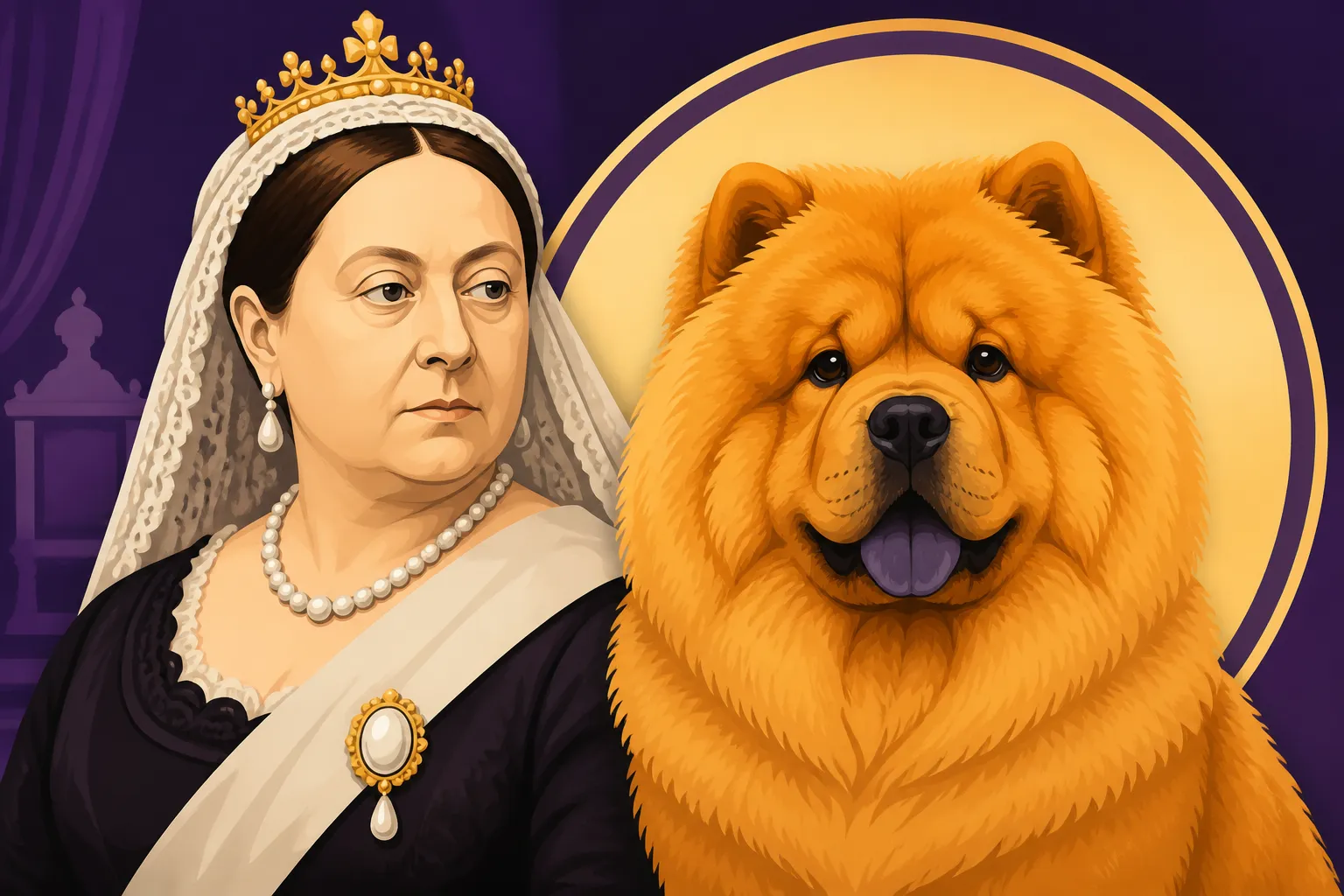
Queen Victoria’s Chow Chow is commonly identified as Chang, a dog reportedly presented to the queen in the nineteenth century. The story is easy to muddle with Looty, a different Chinese dog who also became famous in royal circles. Here’s what the name tells us, what remains uncertain about the historical record, and how the mix-up happened.
Queen Victoria’s Chow Chow was reportedly called Chang
Accounts of Queen Victoria’s connection to the breed commonly give her Chow Chow’s name as Chang. The story fits a period when British interest in Chinese dogs was growing, and dogs brought from China could attract attention simply because they were unfamiliar to the British public.
But there is a difference between a well-repeated breed-history detail and a name supported by a wealth of surviving documentation. Popular accounts often pass along the name without offering a clear explanation of where it first appeared. It is reasonable to describe Chang as the name associated with the queen’s Chow Chow, while being cautious about presenting every detail of the dog’s arrival or royal life as firmly established.
That distinction matters because famous-dog stories tend to grow tidier over time. A short anecdote can be repeated in breed histories, then summarized elsewhere until it sounds like a thoroughly documented event. The name Chang is useful to know, but it should not be confused with proof of a complete biography.
How to understand the name Chang
Chang is the name most often connected with Queen Victoria’s Chow Chow in breed-history accounts. If you encounter another telling that gives little detail, or simply says the queen owned a Chow Chow, that does not necessarily mean it describes a separate dog. It may be an abbreviated version of the same story.
Historical naming can also be complicated by spelling and transcription. A name recorded in one language or written down by someone unfamiliar with it might appear differently in another account. That makes it sensible to keep the central claim modest: Chang is the name traditionally associated with the dog, while the details around the story may be less consistently documented.
For a broader look at the monarch’s connection to the breed, see When Queen Victoria Got a Chow Chow. It helps place the Chang story within the wider period of growing British curiosity about dogs from China.
Why accounts of the dog can be brief
Many short histories focus on the memorable fact that Queen Victoria owned a Chow Chow, then move quickly to the breed’s later popularity. They may not describe who cared for the dog, how it behaved, or what its daily life was like. That gap can feel frustrating when you are trying to separate a real historical dog from a story polished for retelling.
It is also possible for an anecdote to survive better than its original paperwork. A name may be repeated in later accounts even when the source trail is not explained alongside it. Without a clear record to consult, details such as the exact circumstances of a gift or the dog’s time at court should not be embellished.
So, if you came looking for a single answer, Chang is the name to remember. If you are looking for a detailed, independently verifiable account of the dog’s life, the surviving story appears much thinner than the confident one-line versions can suggest.
The famous name is not Looty
The most common source of confusion is Looty, another Chinese dog associated with Queen Victoria. Looty is generally identified as a Pekingese, not the queen’s Chow Chow. Because both stories involve the queen and a dog from China, the names and breeds can become tangled in quick summaries.
Looty’s story is often linked to the Second Opium War and the British expedition to Beijing’s Summer Palace. The small dog was brought to Britain and presented to Queen Victoria, who named it Looty in reference to the circumstances in which it was taken. That history is distinct from the account of the Chow Chow named Chang.
Why the stories are easy to mix up
The overlap is almost tailor-made for a historical mix-up: the same monarch, dogs associated with China, and stories repeated in brief breed histories. If an article mentions only “Queen Victoria’s Chinese dog,” a reader may naturally assume it refers to one animal, even when the source is discussing another.
Breed names can add to the confusion. In older writing, descriptions of unfamiliar dogs were not always as consistent as modern breed labels. A reader moving between accounts may also see a dog described by its origin or appearance rather than by a precise breed name. That makes it especially important to check whether a story is about the Chow Chow or the Pekingese.
A simple distinction helps: Chang is the name associated with Queen Victoria’s Chow Chow; Looty is the Pekingese associated with the queen. They belong to separate stories, even though both became part of the broader history of Chinese dogs in Britain.
A quick comparison
| Name | Breed associated with the story | Connection to Queen Victoria |
|---|---|---|
| Chang | Chow Chow | The name commonly given for the queen’s Chow Chow |
| Looty | Pekingese | A separate dog presented to the queen after being brought from China |
When a source calls Looty a Chow Chow, or treats Chang and Looty as two names for one dog, it is likely blending the stories. Look for the breed named in the account and whether it discusses the royal gift connected with Looty. For more context about how Chinese dogs entered British public life, see How the Chow Chow Reached England.
The royal story sits within a wider history of the breed
Queen Victoria’s dog matters partly because it reflects the fascination that unfamiliar breeds could inspire in nineteenth-century Britain. The Chow Chow was not a familiar household dog to most British people. Its distinctive build, dense coat, small upright ears, and dark blue-black tongue made it stand out, and stories about royal ownership could make an already unusual breed more intriguing.
Still, one royal dog did not single-handedly create the breed’s popularity. The Chow Chow’s path into Britain involved travel, changing public interest, and the gradual development of organized breeding and showing. The queen’s association is a memorable piece of that larger story, rather than a complete explanation for it.
The breed’s arrival was not a single event
It is tempting to imagine a neat beginning: one dog arrives, catches the public eye, and the breed becomes fashionable. In reality, the movement of dogs between countries is rarely that simple. Different dogs could arrive at different times, and early descriptions might not match the precise categories used by breed clubs today.
The phrase “Chow Chow” itself has a history worth separating from the royal anecdote. If you are curious about how the name became attached to the breed, Where the Name Chow Chow Came From explores that question. The name and the dog’s movement into Britain are connected parts of the history, but they are not interchangeable details.
Public display also helped shape how British audiences encountered dogs from China. For related context, see Whether the London Zoo Displayed Chow Chows. Stories about exhibitions and imported animals help explain why a breed could become a subject of curiosity even before it was widely kept in private homes.
Royal attention helped make the breed memorable
Royal ownership can turn a pet into a lasting historical reference. When people hear that Queen Victoria kept a Chow Chow, they may picture the breed entering British life through a royal household. That image is memorable, even if the exact influence of one dog on public demand is difficult to measure.
A royal connection also encourages retellings. The story is short, easy to remember, and naturally appealing: a queen, an unusual dog, and a name that sounds distinctive. Over time, those qualities can make the anecdote more prominent than the less dramatic details of the breed’s wider history.
For that reason, it is best to treat the Chang story as one useful landmark, not the whole map. It points to British interest in the breed, while other accounts trace its travel, public visibility, and eventual organization among enthusiasts. When the First British Chow Chow Club Formed offers another point in that longer timeline.
What to remember when researching Queen Victoria’s dog
If you are checking a book, article, or breed-history page, keep the central distinction in view: Chang is the name commonly associated with Queen Victoria’s Chow Chow, while Looty was a Pekingese. This clears up the most frequent mix-up without requiring you to treat every detail in the Chang story as fully documented.
It also helps to separate three questions that short accounts sometimes blend together:
- What was the Chow Chow called? The name most commonly given is Chang.
- Was Looty the same dog? No. Looty is associated with a Pekingese.
- Does the name alone establish a detailed biography? No. Many retellings give the name but little supporting detail about the dog’s life.
How to assess a retelling
When an account gives the dog’s name, check whether it clearly identifies the breed. If it calls Looty a Chow Chow, or says that Chang and Looty were the same dog, it may be combining separate stories. Look for wording that distinguishes the queen’s Chow Chow from the Pekingese presented to her.
Pay attention to how confidently the source describes the event. A careful account will distinguish a traditional name from a detailed claim about exactly when the dog arrived, who presented it, and how it lived. If those extra details are not explained, there is no need to repeat them as certain.
You can also compare the royal anecdote with broader breed-history topics, such as What Chow Chow Meant on a Ship's Manifest. That wider context can make the period easier to understand without asking one famous dog’s story to answer every question about the breed’s arrival and popularity.
The short answer
Queen Victoria’s Chow Chow is commonly said to have been called Chang. The name is often repeated in accounts of the breed, but the story is less detailed than a simple factoid may imply. Looty, the better-known royal dog whose story is also connected with China, was a Pekingese—not the Chow Chow.
Keeping those two names and breeds separate gives you the clearest answer, and it avoids turning a memorable royal anecdote into a more certain or elaborate history than the available account supports.
Disclaimer
This article is for general informational purposes only and does not constitute professional advice. Laws, prices and regulations vary by location and change over time. Consult a qualified professional for guidance on your specific situation.