How Popular the Chow Chow Was in the 1920s
A question about Chow Chow popularity in the 1920s sounds like it should have a simple answer: a rank, a number, a tidy snapshot of how many families had one. The historical record is less neat. This guide explains what made the breed conspicuous in that decade, what “popular” can—and cannot—mean, and how to separate cultural visibility from actual ownership.
How popular the Chow Chow was in the 1920s
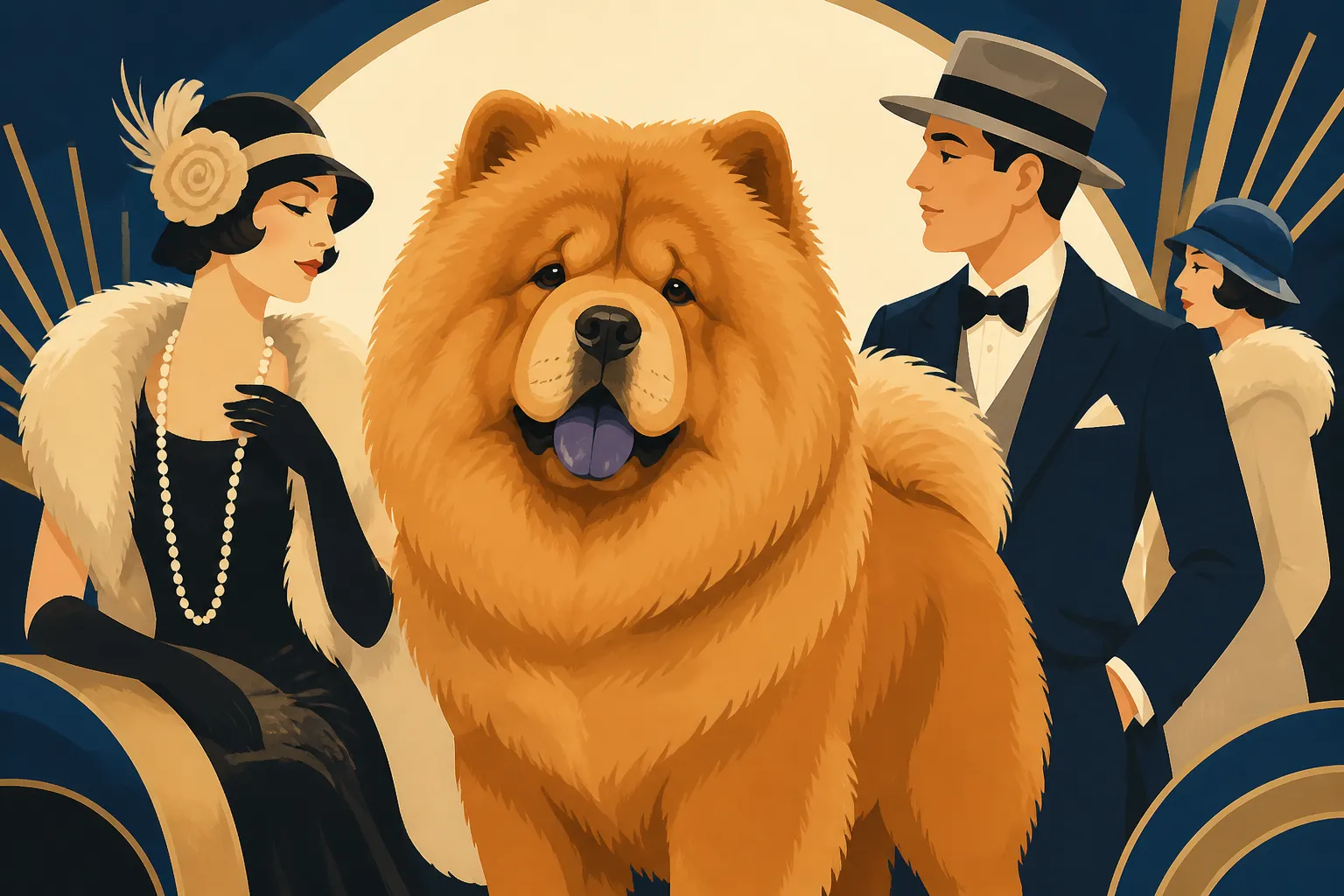
The Chow Chow was a well-known and fashionable purebred dog in the 1920s, especially in the United States. It was not an obscure breed that most people had never seen or heard of. Its distinctive appearance, its growing presence in American dog circles, and its association with prominent people helped give it a level of public attention that many breeds did not enjoy.
That does not mean a Chow Chow was an ordinary sight in every neighborhood. “Popular” is best understood as relative standing and visibility: the breed attracted interest, was recognized by dog fanciers, and appeared in public life. It is harder to turn that impression into a reliable count of how many households owned one.
Popular with whom
The breed’s appeal in the 1920s was strongest among people drawn to pedigree dogs and fashionable companions. A Chow Chow looked unlike the more familiar terriers, spaniels, and working dogs of the era. Its heavy coat, broad head, small upright ears, and curled tail made it memorable, while its reserved manner gave it an air of distinction.
That image mattered. In a decade when newspapers and magazines helped turn people, homes, and pets into public conversation, a recognizable dog could become a status symbol as well as a companion. The Chow Chow’s striking looks made it well suited to that attention. But public recognition did not necessarily translate into widespread ownership; a breed can be talked about often while still being less common than a popular family dog.
The path to that recognition had started earlier. Interest in the breed grew after it reached Britain and became a subject of public fascination, including through the London Zoo’s display of dogs described as Chow Chows. For more background, see How the Chow Chow Reached England and Whether the London Zoo Displayed Chow Chows. By the 1920s, the breed was building on an established reputation rather than appearing from nowhere.
A fashionable breed rather than a household default
A useful distinction is that the Chow Chow could be fashionable without being a mass-market dog. Its coat required regular care, and its independent temperament was not a natural fit for every home. For prospective owners, the breed’s appeal came with practical considerations that could make it a more deliberate choice than a dog selected chiefly for easy handling or broad sociability.
So, if you are imagining the 1920s as a time when every other family had a Chow Chow, that picture is likely too strong. A more realistic one is a breed with a high profile among dog enthusiasts and in popular culture, but one that remained distinctive partly because it was not everywhere. The growing interest in the breed was real; universal ownership is a different claim.
Why the Chow Chow attracted attention in the decade
The Chow Chow’s 1920s visibility came from a combination of factors. Its appearance was immediately recognizable, its reputation had been developing for decades, and prominent owners helped bring it into public view. Those elements reinforced each other: celebrity attention made the breed more familiar, and its unusual looks made it especially easy for people to remember.
The breed already had a fashionable image
Queen Victoria’s interest in Chow Chows helped establish the dog as an object of public curiosity in Britain before the 1920s. The breed’s image crossed the Atlantic with the wider spread of imported dogs, dog shows, and organized breeding. To trace that earlier shift, read When Queen Victoria Got a Chow Chow and Queen Victoria Made the Chow Chow Fashionable.
By the time the 1920s arrived, the Chow Chow could be presented as an elegant, unusual companion with a history behind it. That was a potent combination for a fashionable dog. People were not simply choosing a pet; in some cases, they were choosing a breed with a recognizable story and a look that set it apart.
The breed’s U.S. profile also developed through organized dog circles. Its arrival and early registration in America belong to a longer story about how imported breeds became established in the country. When the First Chow Chow Reached America and Which Chow Chow Was Registered First offer useful context for that timeline. Registration shows that a breed was being formally recorded and bred, although it does not reveal how many unregistered or privately owned dogs existed.
Public figures helped keep the Chow Chow in view
Calvin Coolidge’s association with Chow Chows added to the breed’s visibility during the decade. A dog connected with the White House naturally attracted interest, and a breed already known for its striking looks benefited from that attention. For readers interested in the presidential connection, Whether Calvin Coolidge Kept Chow Chows provides a related look at the story.
Celebrity ownership should be treated as evidence of notice, not proof of national household numbers. A prominent owner can put a breed in headlines and make it feel familiar to readers who have never met one in person. That kind of visibility can influence demand, but it cannot tell us how many dogs were actually living in homes across the country.
This is one reason the Chow Chow’s popularity can sound larger in cultural memory than it may have been in everyday life. The breed was visible enough to be talked about, photographed, and associated with well-known people. Those signals matter, but they measure attention—not the same thing as ownership totals.
What historical popularity records can tell us
When asking how popular a breed was, it helps to separate several kinds of evidence. Registration totals can show activity among recognized purebreds. Newspaper coverage can show public interest. Celebrity ownership can show cultural visibility. None of those alone provides a complete count of every Chow Chow in the country.
Registration is useful, but it is not a census
Kennel-club records are often the clearest way to compare recognized breeds over time. They can show whether breeders and buyers were registering Chow Chows and how the breed stood within a particular registry’s world. The American Kennel Club’s recognition of the breed also makes formal registration history relevant; When the AKC Recognized the Chow Chow explains that part of the story.
Still, registration figures leave gaps. A dog could be owned without being registered, and not every owner would have been involved in organized breeding or dog shows. Records also depend on the organization’s rules and the way its data were collected. As a result, registration rankings are indicators of organized purebred popularity, not a complete headcount of dogs in American homes.
The distinction matters when comparing the 1920s with the present. Modern pet ownership includes many mixed-breed dogs and dogs obtained outside formal breeding programs. A historical registry ranking and a present-day estimate of household ownership may be measuring different things. It is usually more accurate to say the Chow Chow was prominent in its era than to claim that a particular registration position proves it was among the most common dogs overall.
Cultural signals need careful reading
Newspaper stories, advertisements, show reports, and photographs can help explain why the breed caught people’s attention. They are especially useful for reconstructing reputation: whether the Chow Chow was treated as a novelty, a fashionable companion, or a breed familiar to dog lovers. But published material naturally favors stories that are unusual or visually appealing. A Chow Chow’s distinctive face might earn attention precisely because it was not an everyday dog.
Modern shopping sites are not a substitute for historical records either. For example, the selection of Chow Chow products or supplies on Chewy reflects modern retail decisions, not the breed’s 1920s rank. Chewy can show that products are marketed to today’s owners, but it cannot establish how many families kept Chow Chows a century ago. Even a large or small Chow-related assortment on Chewy would tell us little about historical popularity.
| Evidence | What it can suggest | What it cannot prove |
|---|---|---|
| Kennel-club registrations | Interest in registered purebred dogs and organized breeding | Total number of Chow Chows in households |
| Newspaper and magazine coverage | Public visibility and cultural interest | How common the breed was in daily life |
| Celebrity ownership | The breed had high-profile exposure | That most families could or did own one |
| Dog-show records | Participation and recognition among fanciers | Broad national household popularity |
| Modern retail listings, including Chewy | Present-day product availability | Popularity or ownership levels in the 1920s |
How to describe the Chow Chow’s 1920s popularity accurately
The most balanced description is that the Chow Chow was a fashionable, recognizable, and culturally visible breed in the 1920s, particularly in American purebred-dog circles. It had gained attention through its distinctive appearance and earlier history, and prominent owners helped keep it in the public eye. But the available kinds of evidence should not be stretched into claims about every household or an exact national headcount.
A careful answer to the question
If someone asks whether Chow Chows were popular in the 1920s, the answer is yes—with an important qualification. They were popular enough to be recognized and discussed, and the breed had meaningful visibility among people interested in pedigree dogs. That does not mean they were as common as familiar, widely kept companion breeds, or that most American families had one.
This nuanced answer is more useful than a bare ranking. It explains both why the Chow Chow seemed fashionable and why its prominence should not be mistaken for universal ownership. Historical dog popularity is not just a matter of counting registrations; it also involves the reach of the breed’s image and the audience that encountered it.
The breed’s later changes in standing are worth considering too. A dog can rise into public attention and then become less common, or remain recognizable while losing its place among the most widely owned breeds. Where the Chow Chow Ranks in AKC Registrations and Why the Chow Chow Fell Out of America's Top Ten provide context for how popularity can shift across different periods.
What the 1920s reputation says about the breed
The decade’s attention reflects a genuine appeal: the Chow Chow looked unusual, carried an established story, and suited an era fascinated by pedigree and fashionable pets. Its visibility also shows how much a breed’s public image can be shaped by people and institutions—show rings, newspapers, famous owners, and the organizations that recorded purebred dogs.
That image should not be confused with a promise about temperament or ease of ownership. A dog’s popularity in a particular decade does not mean it suits every modern household. Anyone considering a Chow Chow today should look beyond the breed’s historic glamour and learn about its grooming needs, health considerations, and reserved nature.
Taken together, the best conclusion is neither “the Chow Chow was everywhere” nor “the breed was a rarity.” It was a prominent and fashionable dog with meaningful public recognition, while still remaining distinctive enough to stand out. That is what “popular” most reasonably means for the Chow Chow in the 1920s.
Disclaimer
This article is for general informational purposes only and does not constitute professional advice. Laws, prices and regulations vary by location and change over time. Consult a qualified professional for guidance on your specific situation.