Whether Walt Disney Gave a Chow Chow as a Gift
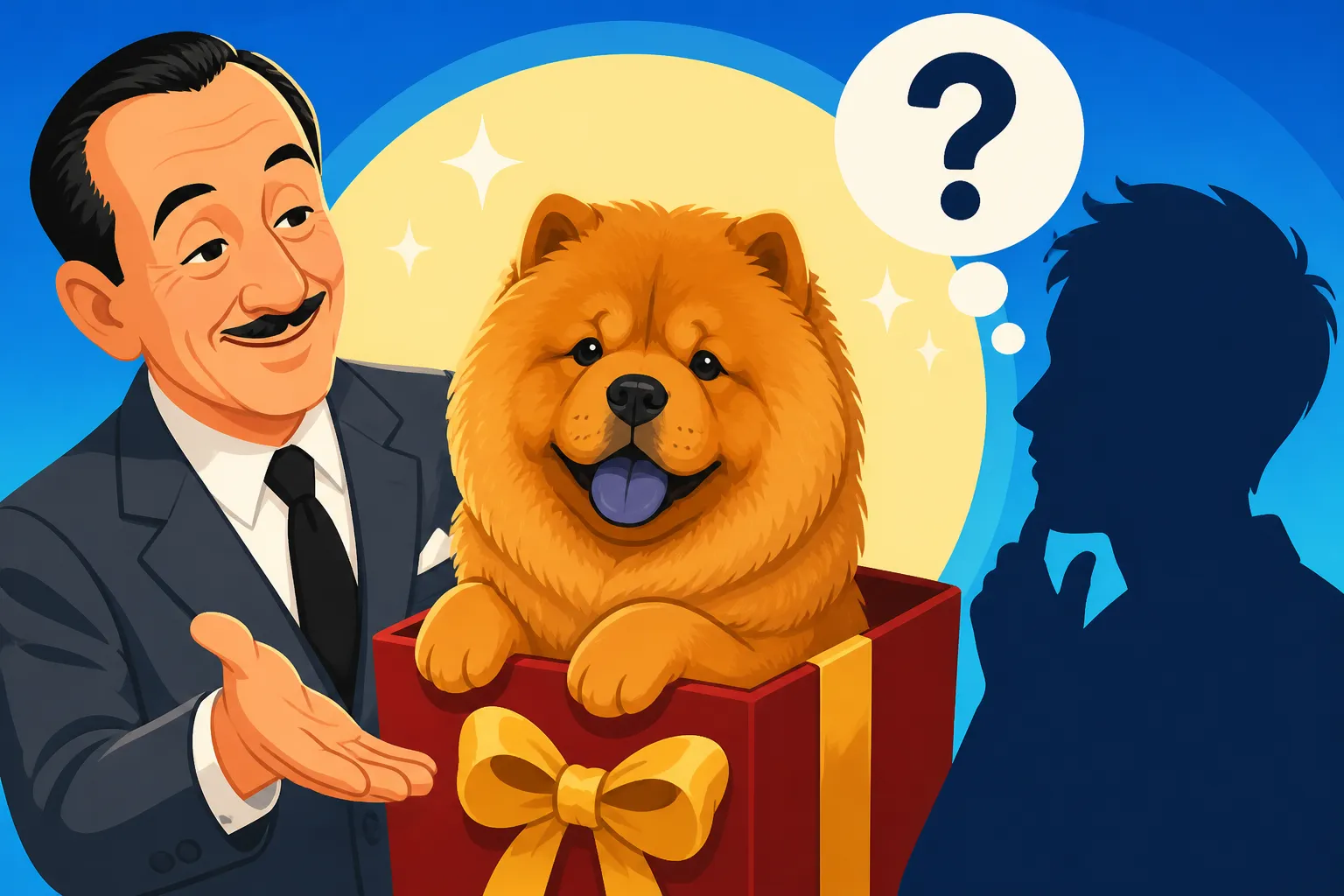
Walt Disney is widely said to have surprised his wife, Lillian, with a Chow Chow puppy hidden inside a hatbox. The dog was called Sunnee and became part of the couple’s family story. Here’s what the tale says, which details are commonly repeated, and what to keep in mind before connecting the puppy to Disney films or treating a dog as a gift.
The story of Walt Disney and the Chow Chow
The hatbox surprise
The best-known version says Walt Disney gave Lillian a Chow Chow puppy as a gift during their early married life. He reportedly concealed the puppy in a hatbox, letting Lillian believe she was receiving an ordinary present before the surprise revealed itself. The dog was named Sunnee.
It’s an appealing story partly because the setup feels so personal: a small, unexpected gift at home, rather than a grand public gesture. The image of a puppy tucked into a hatbox has been repeated in accounts of the Disneys’ life together, and Sunnee is remembered as a family pet—not as a dog Walt gave to a studio, a celebrity, or a friend.
The broad answer to the question is therefore yes: Walt Disney is commonly credited with giving Lillian a Chow Chow puppy. Some retellings differ in how they frame the occasion or describe the moment, so it’s safest to hold on to the central story rather than treating every extra detail as firmly established.
Who was Sunnee?
Sunnee was the Chow Chow at the center of the story. The dog is often mentioned in profiles and popular retellings of Walt and Lillian Disney’s relationship, but the story is not usually accompanied by a rich record of the dog’s daily life. That means some details—such as the exact date, the precise occasion, or what happened in the household immediately afterward—are less secure than the basic account of the gift.
It also helps to keep the scale of the claim in perspective. Sunnee is part of the personal history associated with Walt and Lillian; the puppy is not, by that fact alone, evidence of a major influence on Disney animation. A beloved pet can be important to a family without serving as the direct inspiration for a character or film.
Why the story sticks
A surprise puppy in a hatbox is easy to picture and easy to retell. It also combines two things people are curious about: the private life of a famous couple and the distinctive look of a Chow Chow. The breed’s thick coat, broad head, and upright ears make it memorable, even to people who have never owned one.
The story also offers a glimpse of a familiar truth about pets: they can become part of a family’s shared memories in ways that outlast the details of the original occasion. That is one reason a brief anecdote about Sunnee continues to draw interest, even though it doesn’t provide a full biography of the dog.
What the story does and does not tell us
Separating the core account from added detail
When a memorable anecdote is retold over many years, small details can shift. One version may emphasize the hatbox; another may focus on the puppy as a gift. The sound, spelling, or presentation of a dog’s name can also be handled differently in informal retellings. Unless a detail is consistently supported, it’s better not to build a larger claim on it.
A practical way to read the story is to separate its central points from its decorative ones:
| Part of the story | What can reasonably be said |
|---|---|
| The gift | Walt Disney is widely said to have given Lillian a Chow Chow puppy |
| The recipient | The gift was for his wife, Lillian Disney |
| The dog’s name | The Chow Chow is commonly identified as Sunnee |
| The hatbox | A hatbox is part of the best-known version of the surprise |
| A connection to a specific Disney character | The gift story alone does not establish that Sunnee inspired a particular character |
That distinction doesn’t make the story less charming. It simply keeps a family anecdote from turning into a stronger historical claim than it can support.
Was Sunnee the inspiration for a Disney character?
The fact that Walt had a Chow Chow does not, on its own, show that Sunnee inspired a character in a Disney film. People sometimes connect famous owners’ pets to familiar characters because the association feels intuitive. But a resemblance, a shared era, or an interesting personal story isn’t enough to prove a direct creative link.
It’s useful to ask what kind of claim is being made. “Walt Disney had a Chow Chow named Sunnee” is a claim about a family pet. “Sunnee inspired a named character” is a separate claim about creative history, and it would need its own supporting evidence. Without that distinction, a simple pet story can easily be transformed into an origin story that the account itself does not establish.
This is a common pattern in celebrity history. A real event becomes more memorable when it is tied to a famous work, so the connection gets repeated even when the original anecdote doesn’t actually make that connection. In Sunnee’s case, the careful answer is that the Chow Chow is associated with Walt and Lillian, but the gift story should not be treated as proof that Sunnee was a specific character’s model.
How the Chow Chow fits into the wider history
The story makes more sense as part of the breed’s long public presence than as an isolated curiosity. Chow Chows have a distinctive appearance and a history that reaches well beyond American celebrity culture. For background on the breed’s origins, see Where the Chow Chow Comes From and The Chow Chow Is One of the Oldest Breeds in the World.
The breed’s name has its own complicated history, too. If that’s what led you to this question, How the Chow Chow Got an English Name From a Ship's Manifest explains why the name is often discussed separately from the dog’s older roots. Later, the breed became fashionable in Britain, a development covered in Queen Victoria Made the Chow Chow Fashionable.
That context doesn’t tell us anything new about the details of Sunnee’s life. It does explain why a Chow Chow might stand out in a story from a time when the breed already had a recognizable public image. For related background, How Old the Chow Chow Breed Is explores the breed’s age and historical identity.
What to remember about the Disney gift story
A family anecdote, not a full pet biography
Sunnee’s story is best understood as a short personal anecdote: Walt is said to have surprised Lillian with a Chow Chow, reportedly hidden in a hatbox. It is not a detailed record of the dog’s health, temperament, training, or later life. If you’re looking for a complete account of Sunnee as an individual animal, the familiar story doesn’t provide that kind of information.
That limitation matters because people naturally fill in gaps. A dog in a famous family may be imagined as a constant companion, a studio fixture, or a direct influence on creative work. Those possibilities can sound plausible, but they are not established simply by knowing the dog was a gift.
So the most balanced retelling keeps to what the story is known for: a surprise puppy, a Chow Chow named Sunnee, and Lillian as the recipient. It preserves the warmth of the anecdote without adding unsupported claims about the dog’s role in Disney history.
Why this is not a good template for gifting a dog
The hatbox detail may be delightful as a story, but a live puppy should not be treated like a surprise object. A dog brings long-term daily responsibilities, and the recipient needs a genuine say in whether they are ready for them. Even someone who loves dogs may not have suitable housing, time, finances, or plans for a particular breed.
That’s especially important with a Chow Chow. The breed can be independent and reserved, and it benefits from thoughtful socialization, patient handling, and a household that understands its needs. A person considering one should learn about the breed’s temperament and care rather than choosing based on its striking appearance or a charming historical anecdote. How a Chow Chow Treats the Rest of the Family and Whether a Chow Chow Suits a First Time Owner offer useful context for that decision.
If someone wants to make a dog-related gift, safer options include offering to cover an agreed-upon adoption or breeder expense, buying supplies only after the household has chosen a dog, or giving a pet-store gift card. For practical basics, a recipient might use Chewy to compare food, bowls, grooming tools, and other supplies once they know what their dog needs. A Chewy gift card can leave those choices with the future owner instead of locking them into products that may not suit the dog.
The same principle applies if the recipient already has a pet. A gift certificate from Chewy can be more useful than guessing at a food or grooming product, especially when a dog has dietary sensitivities or the owner prefers a particular routine. The thoughtful part is making the offer without assuming the person wants a new animal—or that a surprise purchase is welcome.
The short answer
Yes. Walt Disney is widely said to have given his wife, Lillian, a Chow Chow puppy named Sunnee, with the well-known version describing the puppy hidden in a hatbox. The story is a sweet detail from the couple’s life, but it does not by itself prove that Sunnee inspired a particular Disney character. That distinction lets the anecdote stay charming while keeping the history grounded.
Disclaimer
This article is for general informational purposes only and does not constitute professional advice. Laws, prices and regulations vary by location and change over time. Consult a qualified professional for guidance on your specific situation.