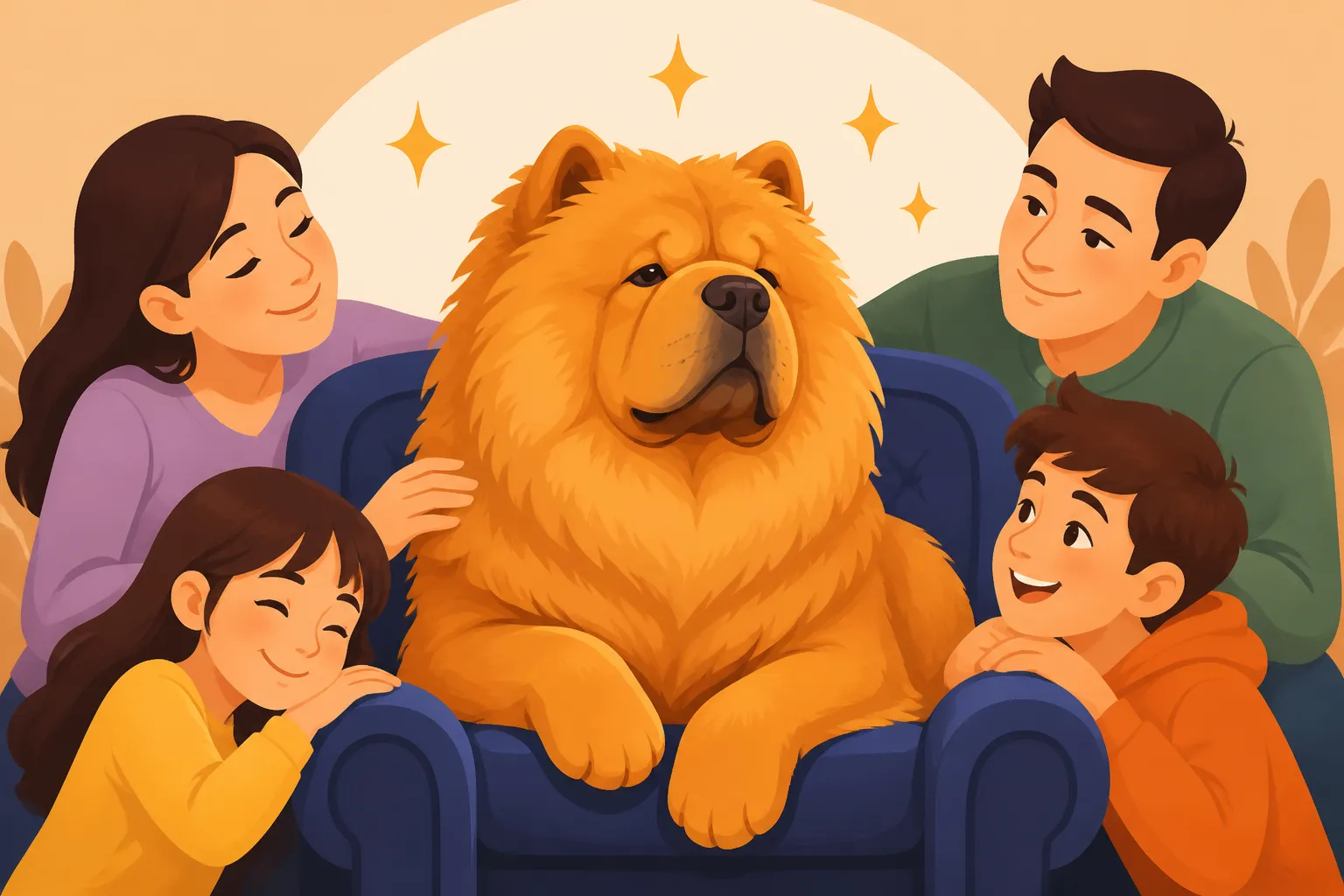
How a Chow Chow Treats the Rest of the Family
It’s a common and completely natural expectation for a dog to shower every member of the family with equal, boundless affection. We dream of our furry friend being everyone's best buddy, following each person from room to room with a wagging tail. But if you're a Chow Chow owner, or considering becoming one, you've probably already learned or heard that this breed often marches to the beat of its own drum. This guide will delve into the unique ways a Chow Chow interacts with the "rest of the family" – that is, everyone beyond their chosen primary person – offering insights into their behavior and practical advice for fostering harmonious relationships in your home.
The Chow Chow's Primary Devotion: A Unique Bond
The Chow Chow is renowned for being a "one-person dog." While this trait might sound charmingly loyal, it can be a source of bewilderment or even heartache for other family members who expected a more universally affectionate canine. Understanding this fundamental aspect of their nature is the first step in appreciating your Chow Chow for who they are, rather than wishing they were a golden retriever.
How a Chow Chow Chooses Its Person
It’s not always obvious, and it's certainly not about who fills the food bowl every time. A Chow Chow’s bond with its primary person is deep, unwavering, and often forms through a combination of consistent care, positive interactions, and perhaps an inexplicable, innate connection. This isn't to say other family members are irrelevant, but there's typically one individual who the Chow Chow views as their anchor. This person will often be the recipient of their rare, quiet moments of overt affection – a head resting on a lap, a gentle nudge for attention, or simply choosing to be in the same room. For more on this unique dynamic, you can read The Chow Chow Bonds to One Person and Tolerates the Rest.
It’s a subtle dance, often starting in puppyhood. The person who invests the most time in early training, socialization, and general care, establishing trust and respect, often becomes the chosen one. But sometimes, it seems almost arbitrary, a silent decision made by the dog itself. This chosen person will notice a distinct difference in how their Chow Chow responds to them versus others. It might be a slightly faster obedience response, a softer greeting, or a greater willingness to seek comfort during a thunderstorm.
Signs of Their Singular Attachment
While not overtly demonstrative like some breeds, a Chow Chow shows its bond in characteristic ways. For their chosen person, these signs might include seeking out their presence, following them quietly from room to room, or offering a rare, gentle lean. For everyone else, these signs are far less frequent or intense. They might tolerate petting from other family members, accept treats, and even engage in short bursts of play, but the deep, quiet devotion is reserved.
It’s important not to take this personally if you’re not the chosen one. It’s simply how the Chow Chow is wired. They are not being rude or intentionally dismissive; their capacity for emotional connection manifests differently. Think of it less as a snub and more as a highly selective honor. They might choose to lie near you, but not on you, or accept a belly rub from you when they'd seek out their person for a snuggle. These subtle differences, though small, speak volumes in the world of a Chow Chow.
Interactions with "Secondary" Family Members
So, if there's a primary person, what about everyone else in the household? The "rest of the family" typically falls into a category of accepted companions. A Chow Chow will recognize them as part of their pack and home, but their interactions will be marked by a certain level of reserved tolerance rather than effusive joy. This is where many common frustrations can arise if expectations aren't managed appropriately.
Greetings and Attention from the Chow Chow
When a non-primary family member enters the room or comes home, don't expect a boisterous welcome wagon. A Chow Chow might offer a calm glance, a slow tail wag (if you're lucky), or simply continue napping. They acknowledge your presence, but they don't necessarily celebrate it in the way a Labrador would. This lack of enthusiastic greeting can be disheartening for family members who yearn for more obvious signs of affection.
Similarly, a Chow Chow might accept attention from secondary family members but rarely solicit it. They won't typically jump up for pets, nudge your hand for a scratch behind the ears, or bring you a toy to play. If you initiate interaction, they might tolerate it for a short period before disengaging and finding a quiet spot. This is not a slight; it’s just their nature. They appreciate your presence, but they don't need constant physical reassurance or interaction. Learning How a Chow Chow Shows Affection can help family members recognize the subtler cues they do offer.
Responding to Cues and Discipline
Consistency in training is vital for any dog, and even more so for a Chow Chow. While they might readily respond to their primary person's commands, they can be surprisingly selective with others. A Chow Chow might "forget" a cue entirely if delivered by a secondary family member, or respond with a slow, deliberate obedience that suggests they are choosing to comply rather than instantly obeying. This can be incredibly frustrating, making non-primary family members feel ignored or disrespected.
When it comes to discipline, a Chow Chow respects a firm, consistent, and fair hand from all family members. However, if that secondary person lacks the established respect or calm authority the primary person has built, the Chow Chow might simply ignore them or, worse, become resistant. Harsh corrections or inconsistent rules from anyone in the household will backfire spectacularly, eroding trust and making them even less cooperative. It’s crucial that everyone in the family is on the same page with commands and expectations, otherwise, the Chow Chow will quickly learn who they can get away with ignoring.
The Pivotal Role of Early Socialization and Consistent Training
The way a Chow Chow treats the rest of the family isn't entirely predetermined. While their inherent nature leans towards a one-person bond, early and consistent efforts from everyone in the household can significantly shape their acceptance and positive interaction with secondary family members. This isn't about forcing affection, but rather about building a foundation of respect and comfort.
Socializing a Chow Chow Puppy with the Whole Family
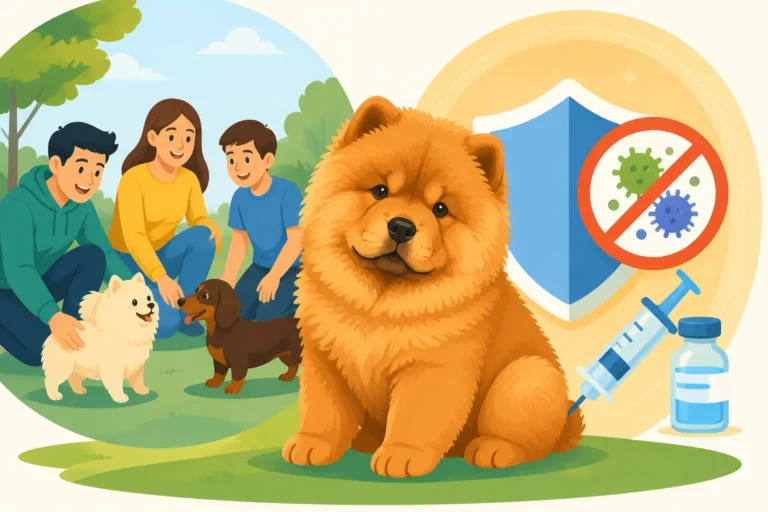
The socialization window for puppies is critical, and for a Chow Chow, it’s arguably even more important than for many other breeds. From the moment they arrive home, every family member, including respectful children, should be involved in positive, low-pressure interactions. This means gentle petting, offering treats, playing short games, and simply being a calm, predictable presence. The goal isn't to make them instantly love everyone, but to teach them that all family members are safe, friendly, and a source of good things.
Avoid overwhelming a Chow Chow puppy with too many people at once, especially unfamiliar faces. Gradual, positive introductions are key. For instance, the BAXTER & Bella online puppy school offers excellent resources that emphasize positive reinforcement and help guide families through effective socialization strategies that involve all members. It's about quality interactions, not just quantity. Reading How much socialization a Chow Chow puppy needs can offer further guidance on making this crucial period count.
Training for Multi-Person Respect
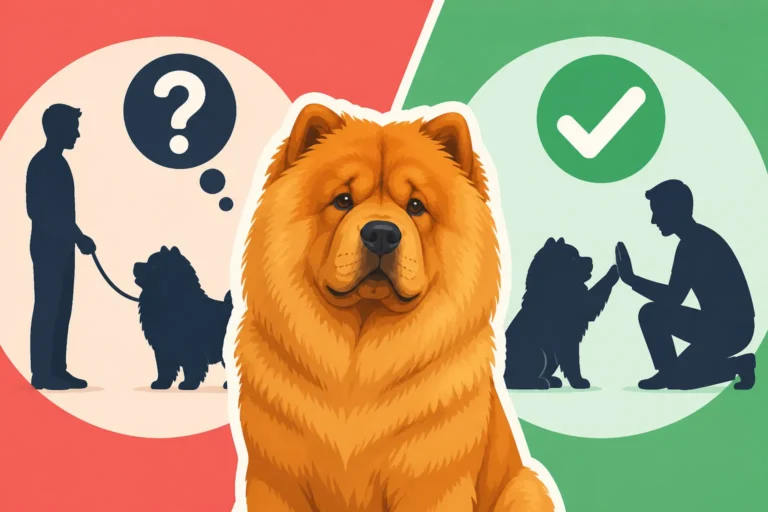
Training should not be solely the responsibility of the primary person. Every family member should actively participate in training sessions, even if it's just practicing basic cues like "sit" or "stay." This reinforces that commands come from multiple voices and that compliance is expected regardless of who is asking. When a Chow Chow ignores a cue from a secondary family member, it’s not necessarily defiance; it might be a test of authority or a learned habit if only one person consistently trains them.
Involving everyone also helps the Chow Chow generalize commands. If "sit" only means "sit for Mom," that's a problem. Short, frequent training sessions with different family members, using high-value treats (perhaps sourced from Amazon for variety), can make a huge difference. This shared responsibility builds a collective sense of leadership in the dog's eyes and helps prevent the Chow Chow from becoming overly selective in its obedience.
Managing Expectations and Fostering Harmony
Living with a Chow Chow means understanding their unique personality and adjusting your expectations accordingly. They are not golden retrievers in fluffy coats. Accepting their reserved nature, while still working to build positive relationships with all family members, is key to a happy home.
Communication and Consistency are Paramount
The biggest challenge in a multi-person Chow Chow household is often human inconsistency. One person might allow a behavior, while another reprimands it. This creates confusion for the Chow Chow and can exacerbate their tendency to pick and choose who they listen to. It is absolutely vital that all family members agree on house rules, training commands, and interaction protocols. A family meeting to discuss "Chow Chow rules" isn't an overreaction; it's a necessity.
For example, if the Chow Chow is not allowed on the couch, no one allows the Chow Chow on the couch. If visitors need to be ignored until settled, everyone follows that rule. A clear, united front from the human family translates to a more secure and predictable environment for your Chow Chow, which in turn fosters better behavior and respect for all. This is especially important when considering topics like How a Chow Chow treats the rest of the family or even How a Chow Chow behaves with children.
Creating Positive Shared Experiences
While a Chow Chow might not be keen on group hugs, they can certainly enjoy shared activities with multiple family members. Short, supervised play sessions, walks where different family members hold the leash, or even quiet presence in the same room can build positive associations.
Consider activities that encourage engagement without demanding intense physical affection:
- Training Games: Hide-and-seek with treats, or practicing "find it" commands with different family members giving the cue.
- Grooming: Even if one person does the main grooming, other family members can practice short brushing sessions or check ears and paws. This is also a critical part of Teaching a Chow Chow to accept being groomed.
- Puzzle Toys: Feeding meals from puzzle toys where different family members present the toy can be a subtle way to create positive interactions.
These low-pressure interactions, consistently reinforced, build a web of positive experiences around every family member.
Respecting Their Boundaries and Unique Personal Space
One of the most critical aspects of living harmoniously with a Chow Chow, especially for secondary family members, is learning to recognize and respect their boundaries. Chow Chows are not naturally cuddly in the same way many other breeds are. They value their personal space, and violating it can lead to unfortunate misunderstandings.
Reading the Subtle Cues of a Chow Chow
Chow Chows are not known for their effusive body language. Their deep-set eyes and natural scowl can make them hard to read for the uninitiated. A direct stare, a stiff body, or a slow lip lick can all be subtle signals that they are uncomfortable or feeling pressured. Unlike some dogs that give ample warning, a Chow Chow's tolerance might appear to vanish abruptly, leading to a snap or growl that seems to come out of nowhere to someone who hasn't learned to read their nuances. It’s important for every family member to understand Signs a Chow Chow is uncomfortable.
Here’s a simplified table to help understand potential Chow Chow body language:
| Body Language Sign | Possible Interpretation (Chow Chow) | What to Do |
|---|---|---|
| Direct, Hard Stare | Challenge, discomfort | Avert gaze, increase distance |
| Lip Lick, Yawn | Stress, appeasement | Stop interaction, give space |
| Stiff Body, Tail Tense | Feeling threatened, preparing to act | Disengage, move away slowly |
| Turning Head Away | Disinterest, avoidance | Do not force interaction |
| Low Growl, Muzzle Wrinkle | Clear warning, "back off" | Immediately cease interaction, retreat |
| Relaxed Body, Soft Eyes | Content, accepting | Continue gentle interaction |
Every family member, especially children, needs to be taught these subtle cues and understand that forcing interaction or invading their space when these signs are present is a recipe for trouble.
Establishing Safe Interaction Zones
Chow Chows often have areas they consider "theirs"—a favorite bed, a spot under a table, or even a particular corner of the yard. Respecting these zones is crucial. Teaching family members, particularly children, not to disturb a sleeping Chow Chow or approach them when they are in their safe space can prevent many incidents. This means no sudden approaches, no reaching over their heads, and no trying to pull them out of their chosen resting spot.
If a Chow Chow is guarding a resource – be it a toy, a chewie, or even a favorite person – it's vital to have protocols in place. Professional trainers can provide guidance on managing How territorial a Chow Chow is. For general family interactions, it's safer for secondary family members to avoid direct confrontation over resources. Instead, teach a "trade" command where the Chow Chow exchanges the guarded item for a high-value treat, always initiated by the primary person or a calm, trusted adult.
For children, understanding Why children misread a Chow Chow is key. Simple rules, like "pet me here" (pointing to a specific, safe spot like the shoulder, never the head or hindquarters), "only pet if I come to you," and "never disturb me when I'm eating or sleeping" are essential. Teaching them How to teach a child to approach a Chow Chow gently and respectfully can make a world of difference.
Disclaimer
This article is for general informational purposes only and does not constitute professional advice. Laws, prices and regulations vary by location and change over time. Consult a qualified professional for guidance on your specific situation.