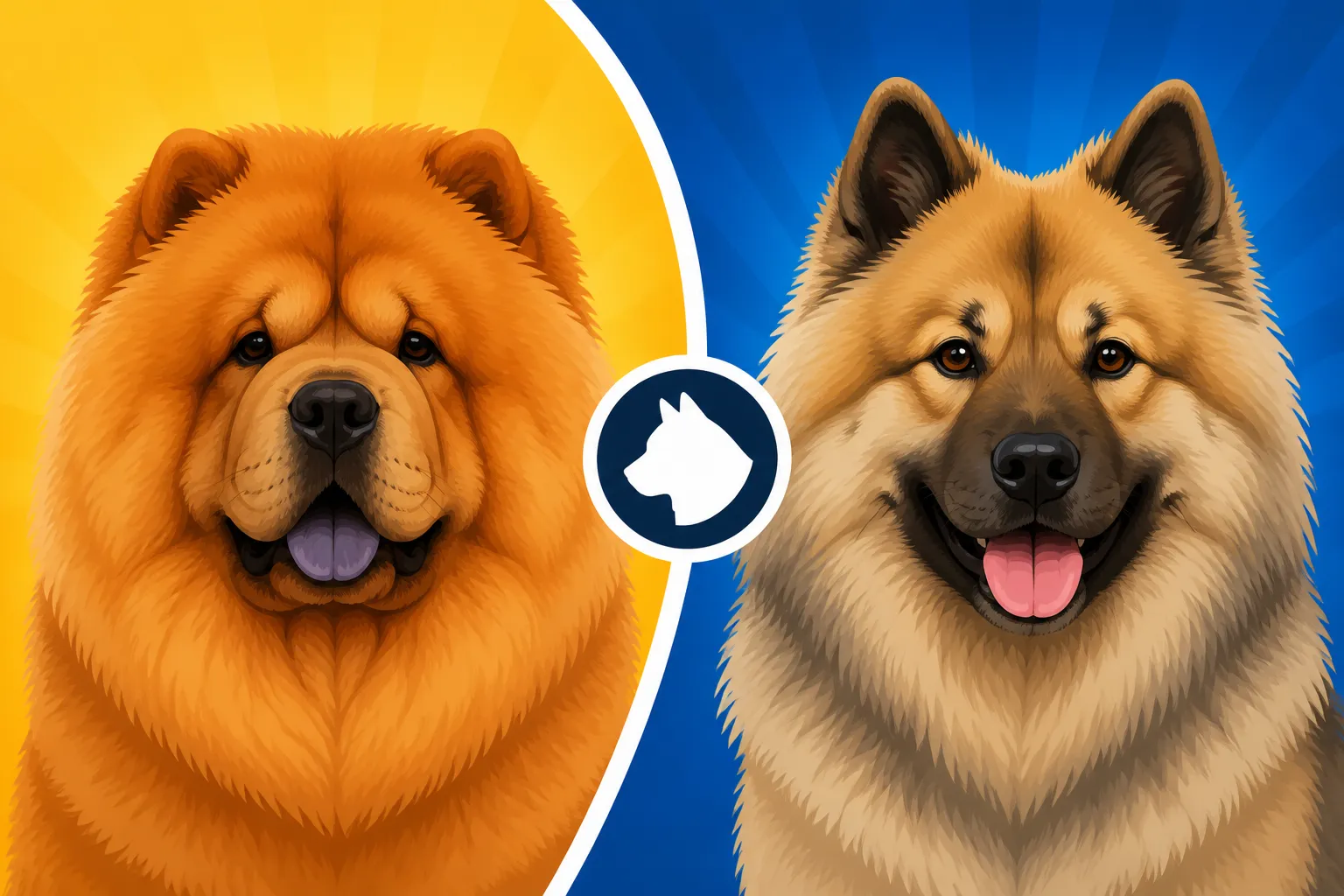
How a Chow Chow Differs From a Eurasier
Choosing between a Chow Chow and a Eurasier can be harder than it looks: both have thick coats, upright ears, curled tails, and a dignified spitz-dog presence. But daily life with them can feel quite different. This guide compares their history, appearance, temperament, grooming, exercise, and care needs so you can judge which breed is a better fit for your home.
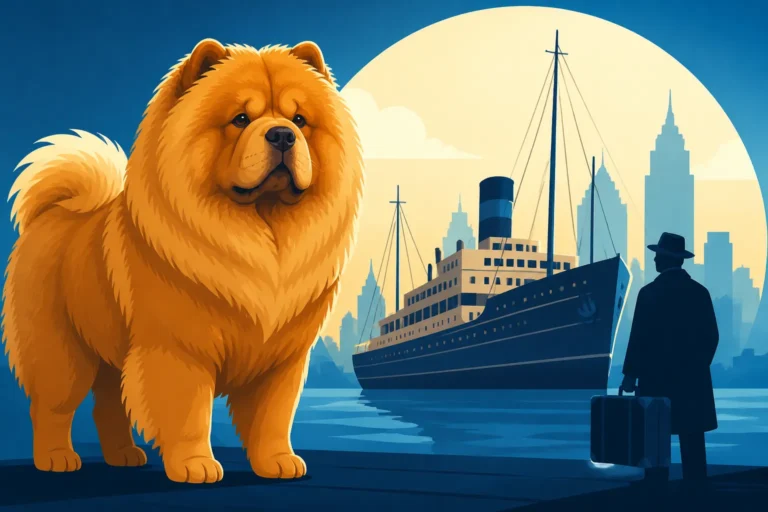
The Chow Chow and Eurasier have different origins
How the breeds developed
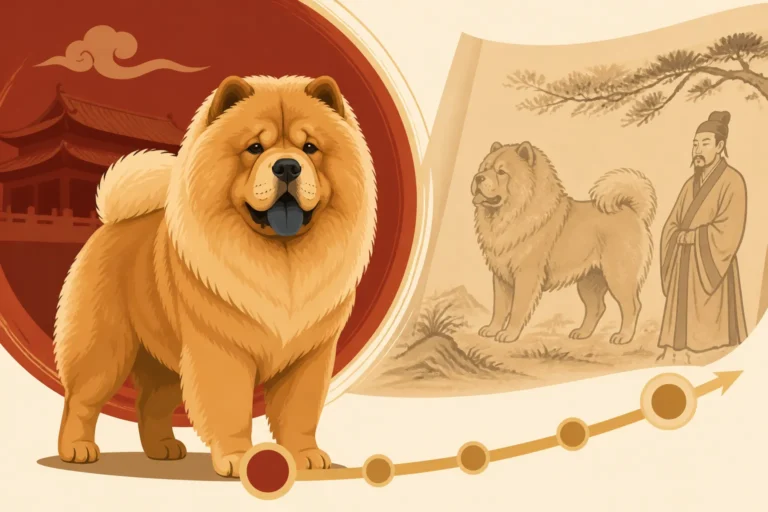
The Chow Chow is an ancient breed associated with China. Historically, Chow Chows served different roles, including guarding and hunting, and their independent nature reflects a dog developed to make decisions rather than constantly look to a person for direction. The breed’s history is much older than the Eurasier’s. For more on that background, see The Chow Chow Is One of the Oldest Breeds in the World.
The Eurasier, by contrast, was developed in Germany in the twentieth century as a companion dog. Its foundation included the Wolfspitz, also known as the Keeshond, and the Chow Chow; Samoyed was added later in the development of the breed. That combination helps explain why the Eurasier can share the Chow’s plush coat and spitz outline while tending toward a more family-focused temperament. Which Breeds Went Into the Eurasier gives more context on its ancestry.
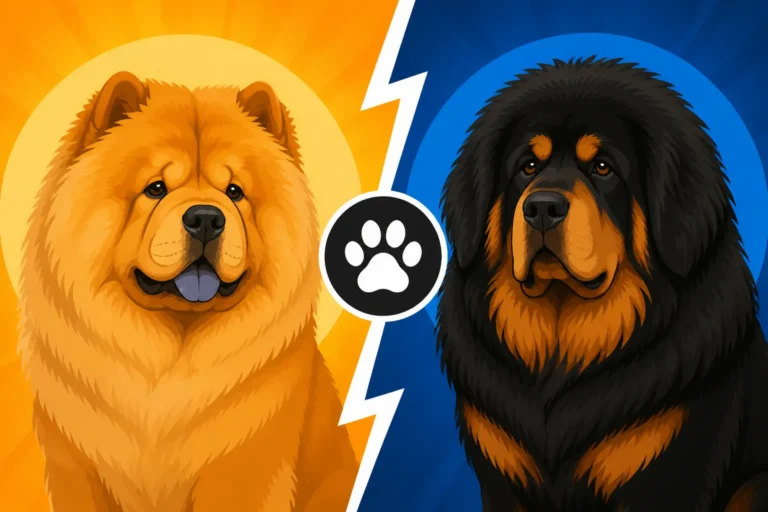
Because the Eurasier has Chow Chow ancestry, the two breeds can look related at a glance. That resemblance does not mean they have identical histories, temperaments, or everyday needs. A Eurasier was bred with companionship as a central goal, while the Chow Chow’s long development produced a more self-contained dog with a strong sense of its own space.
Their shared spitz features can be misleading
Both breeds have a dense double coat, erect ears, and a tail that curls over the back. Both can also be reserved with strangers, and neither should be expected to greet every visitor like an enthusiastic social butterfly. Those shared traits can make breed photos seem deceptively similar, especially when coat color and facial expression are alike.
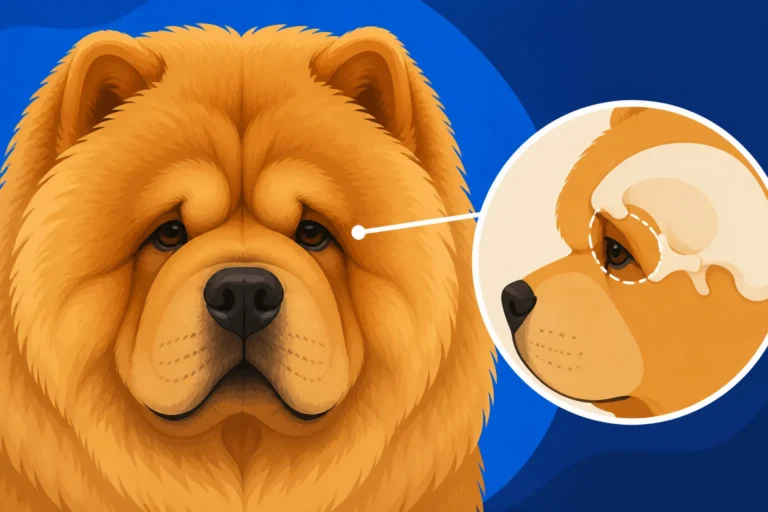
There are also important differences in their heads, bodies, and overall silhouette. A Chow Chow is compact and substantial, with a broad head and a characteristic scowl. A Eurasier generally has a more balanced, less heavy-looking outline and a softer expression. The Chow’s distinctive movement is often described as stilted, partly because of its relatively straight rear angulation; Why a Chow Chow Walks Stiffly explains that breed feature in more detail.
The Chow Chow is also especially known for its blue-black tongue, although puppies’ tongues may not be fully pigmented at first. A Eurasier’s tongue is typically pink, though dark pigment can sometimes appear. These are useful clues, but appearance alone is not a reliable way to identify a mixed or unfamiliar dog. A dog’s build and behavior can vary, and individual ancestry may not be obvious from a quick look.
Appearance, size, and coat differences
Build and expression
A Chow Chow tends to look sturdy and compact, with a broad skull, small triangular ears, deep-set eyes, and a profuse coat that can make the dog appear even more substantial. Its expression is often serious. The dense fur around the neck may form a noticeable ruff, especially in rough-coated dogs, while smooth-coated Chow Chows have a shorter, plush appearance. The breed’s accepted colors are varied but have defined limits; Which Five Colors the Chow Chow Standard Accepts covers the standard palette.
The Eurasier is also a medium-sized spitz-type dog, but its outline is generally less square and heavy. The coat is thick, and the tail is typically carried curled over the back, yet the overall impression is often more moderate than that of a full-coated Chow Chow. As with any breed, coat volume, age, sex, and conditioning can affect how large a particular dog appears.
| Feature | Chow Chow | Eurasier |
|---|---|---|
| Origin | Ancient breed associated with China | Developed in Germany in the twentieth century |
| Main purpose in breed development | Historically used in working roles, including guarding and hunting | Developed primarily as a companion |
| General build | Compact, sturdy, broad-headed | Medium-sized, balanced spitz build |
| Expression | Often serious, with a characteristic scowl | Generally softer-looking |
| Tongue | Blue-black pigmentation is a hallmark | Usually pink, though dark spots may occur |
| Coat | Dense double coat; rough and smooth varieties | Dense double coat |
| Social style | Often highly independent and selective | Usually family-oriented but may be reserved with strangers |
| Common care challenge | Coat maintenance, heat management, and careful handling | Coat maintenance and thoughtful socialization |
Breed standards describe ideal dogs, not every individual. If you are comparing two actual dogs, look at their health, comfort, and behavior rather than assuming that one will match every breed stereotype.
Coat care is substantial for both
Neither breed is a low-maintenance choice for someone who wants to avoid brushing. A double coat needs regular attention to prevent loose undercoat from collecting close to the skin and forming tangles. The Chow Chow’s thick mane, britches, and coat behind the ears can be easy to overlook, while a Eurasier’s full coat also needs thorough combing and inspection.
A useful routine is to work in sections and check down to the skin rather than brushing only the visible top layer. Pay particular attention to friction points such as behind the ears, beneath a collar, and around the legs. During heavy shedding, both breeds may leave a surprising amount of fur on furniture and clothing. For more on the Chow Chow’s coat structure, see What a Chow Chow's Double Coat Is Made Of.
Bathing also takes planning. Thick fur can hold moisture close to the skin, so rinsing and drying thoroughly matter as much as the bath itself. A dog that is left damp under a dense coat may become uncomfortable, and neglected tangles can become harder to remove. If you are gathering brushes, combs, or coat-care supplies, a retailer such as Chewy can be one place to compare product descriptions; choose tools suited to your dog’s coat and comfort rather than buying a large kit without a plan.
Temperament and life at home
Independence versus family orientation
The Chow Chow is often intensely loyal to its people but not necessarily eager to socialize with everyone. Many are content to rest nearby without following a person from room to room or seeking constant petting. Some dislike hugs or unfamiliar hands reaching over their heads. Respecting those preferences is not a failure of bonding; it is part of building trust with a dog that values control over close interactions.
A Eurasier is generally bred to be a close companion to its household. That does not mean every Eurasier is outgoing or comfortable with strangers. Many are reserved, and they still need calm introductions and positive experiences. The distinction is often that the Eurasier is expected to orient more toward family life, while a Chow Chow may be more self-directed and selective about when and how it engages.
Neither breed should be chosen on the assumption that a puppy will automatically become easygoing. Genetics, early experiences, health, and training all matter. A well-bred, carefully socialized dog may still have boundaries, and a dog that is repeatedly pushed into greetings it finds stressful may become more wary rather than more sociable. For background on the Chow Chow’s more reserved style, see How Aloof a Chow Chow Really Is.
Visitors, children, and other pets
A household with frequent visitors needs a thoughtful plan for either breed. Give the dog a quiet retreat, supervise introductions, and ask guests not to crowd, hug, or reach toward the dog. A Chow Chow may be particularly uncomfortable with people entering its space unexpectedly. A Eurasier may be more oriented toward its family, but it still deserves the chance to approach visitors at its own pace.
Children should be taught to leave a resting dog alone, avoid climbing on or hugging it, and listen when an adult says to give the dog space. This guidance applies even when a dog has lived peacefully with children. A dog’s tolerance can change when it is tired, sore, startled, or handling an unfamiliar situation. Adults should supervise interactions rather than expecting a child to interpret subtle signs of discomfort.
With other dogs and pets, early experiences and individual temperament matter more than a simple breed label. Introductions should be gradual and controlled, with enough space for each animal to disengage. If you already have a dog, consider the personalities and sex combination involved, and avoid assuming that two dogs will get along simply because they share a home. The Chow Chow’s need for careful social experiences is discussed further in Why Early Socialization Decides What a Chow Chow Becomes.
Exercise, training, and choosing between them
Training and daily activity
Both breeds benefit from regular walks, mental enrichment, and consistent household rules. Neither needs to be treated as an endurance athlete by default. A comfortable daily routine may include walks at cooler times of day, sniffing opportunities, short training sessions, and calm indoor activities. Adjust exercise to the individual dog’s age, health, fitness, and the weather.
Training may feel different with each breed. A Chow Chow can understand a cue and still decide that it does not see a reason to respond. Short sessions, clear rewards, and patient repetition usually work better than harsh correction or endless drilling. A Eurasier may be more motivated by partnership, but it still needs training that is rewarding and consistent. With either dog, teaching practical skills such as calmly accepting a leash, waiting at a door, and being examined can make everyday care easier.
Heat deserves special attention for both dogs because their dense coats can make warm conditions challenging. Avoid strenuous activity during the hottest part of the day, provide shade and fresh water, and watch closely for signs of overheating. For Chow Chow-specific heat concerns, see Heat Is the Chow Chow's Most Immediate Danger. Coat thickness is not a reason to shave a dog without veterinary or grooming guidance; the coat’s role and the risks of clipping deserve careful consideration.
Which breed may suit your household better
A Chow Chow may appeal to someone who appreciates a dignified, independent dog and is comfortable respecting clear personal boundaries. It can be a poor match for a home that expects a dog to enjoy constant handling, frequent greetings, or unstructured access by visitors. Its grooming, heat management, and need for carefully planned socialization should be part of the decision, not afterthoughts.
A Eurasier may suit someone looking for a closer companion who still has a reserved, thoughtful temperament. It is not automatically an easy or universally social dog, and it still needs grooming, training, and early positive exposure to people and everyday situations. Its companion-breed background may make it feel more connected to household routines, but no breed guarantees a particular personality.
Before choosing either, meet adult dogs if possible and ask responsible breeders or rescue organizations about the individual dog’s behavior, health, and care history. Consider your schedule, tolerance for shedding, visitors, children, other pets, and access to a groomer familiar with dense double coats. If you are assembling routine supplies, Chewy may help you browse grooming tools and everyday essentials, but a trusted groomer or veterinarian can help you decide what is appropriate for a particular dog. Whatever you choose, make the decision around the dog you can realistically care for—not only the striking silhouette that caught your eye.
Disclaimer
This article is for general informational purposes only and does not constitute professional advice. Laws, prices and regulations vary by location and change over time. Consult a qualified professional for guidance on your specific situation.