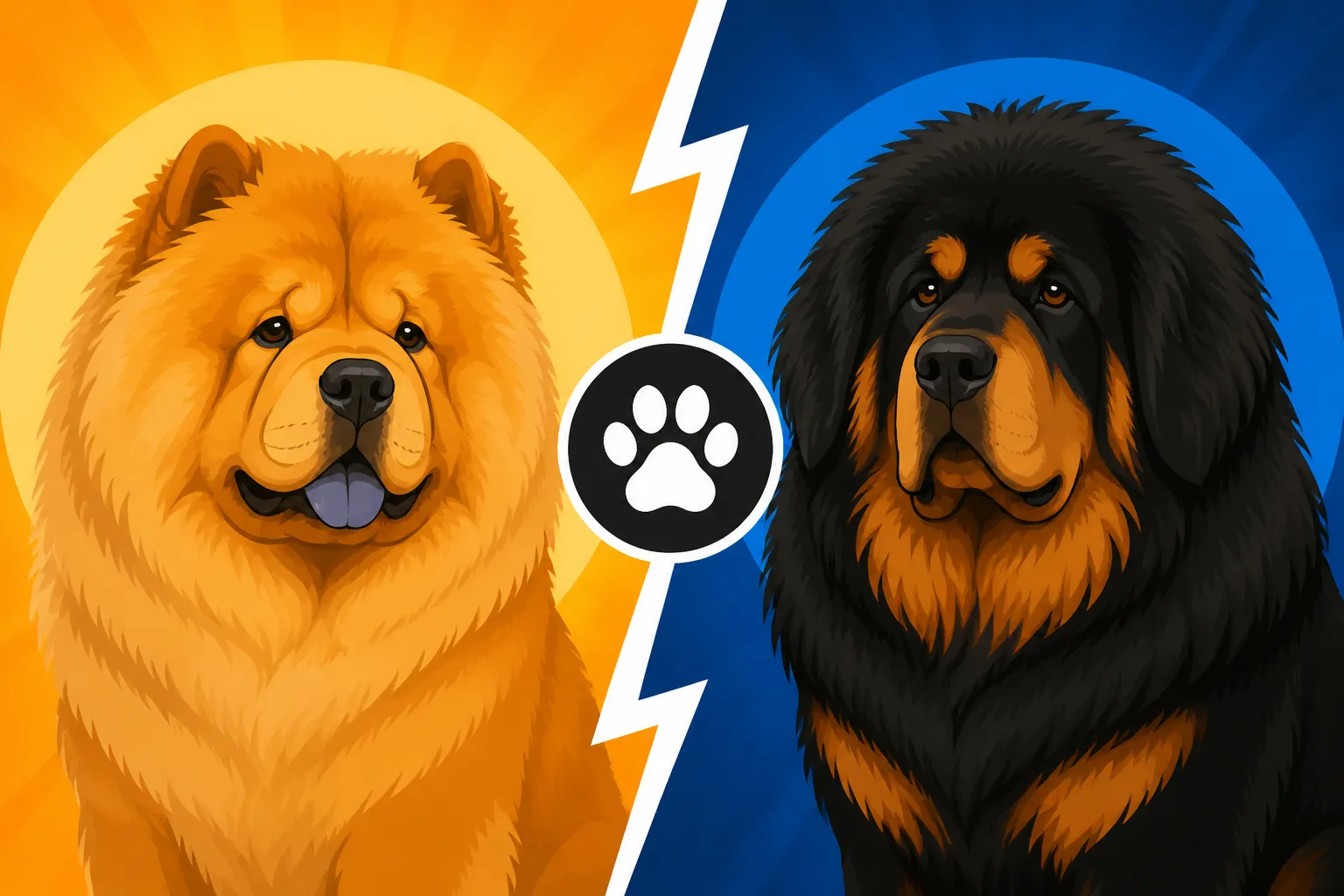
How a Chow Chow Differs From a Tibetan Mastiff
A Chow Chow and a Tibetan Mastiff can both look like formidable, heavily coated guardians, so it is easy to assume they need the same home and handling. They do not. This guide compares their size, temperament, grooming, exercise, and training needs so you can tell which breed is a better fit for your household and expectations.
Chow Chow vs Tibetan Mastiff at a glance
Size, build, and everyday presence
The most immediate difference is scale. A Chow Chow is a sturdy, medium-sized dog, usually around 17 to 20 inches tall at the shoulder. Tibetan Mastiffs are substantially larger; mature adults can stand roughly 24 inches or more, with considerable variation in weight and build. A giant-breed dog also takes up more room in a car, on a sofa, and in the practical routines of daily life.
A Chow Chow’s compact, square outline and straight rear legs give it a distinctive, somewhat stiff-looking gait. Its broad head, small upright ears, and thick ruff contribute to the familiar lion-like appearance. Tibetan Mastiffs are also powerfully built, but their size and abundant mane make them look more imposing overall. The mane is especially pronounced in some males, though coat length and density vary.
These differences matter beyond appearance. A much larger dog can be harder to lift during an emergency, fit into a small vehicle, or manage when it pulls toward something interesting. Neither breed should be chosen simply because it looks impressive. Consider your ability to provide secure handling, suitable space, and veterinary care for a dog of its adult size. For a closer look at the Chow Chow’s proportions, see What a Chow Chow Weighs and How Tall It Stands.
| Trait | Chow Chow | Tibetan Mastiff |
|---|---|---|
| Overall size | Medium and powerfully built | Large to giant, with a much taller, heavier frame |
| Typical impression | Compact, dignified, lion-like | Imposing, broad, heavily coated guardian |
| Coat | Rough or smooth double coat | Dense double coat, often with a pronounced mane |
| Usual temperament tendency | Reserved, independent, strongly attached to familiar people | Independent, protective, and watchful |
| Everyday management | Needs thoughtful socialization and coat care | Needs strong containment, space, and experienced management |
| Best fit depends on | Household routine, handling, grooming, and socialization | Large-dog experience, secure property, and guardian-breed needs |
These are broad tendencies, not guarantees. A dog’s health, individual temperament, upbringing, and breeding all influence what living with that particular dog will be like.
Different histories, different working instincts
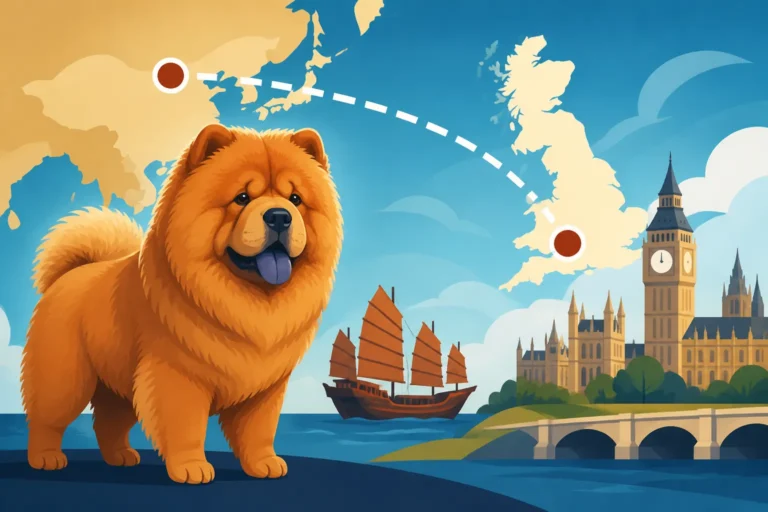
The Chow Chow developed in China and has been associated with a range of roles, including guarding and hunting. That background helps explain why many Chows are observant and self-possessed rather than eager to greet every stranger. The breed’s history is explored in Where the Chow Chow Comes From.
The Tibetan Mastiff’s heritage is tied to guarding livestock, property, and people in the Himalayan region. A dog bred to notice unfamiliar activity and make independent decisions may be less inclined to wait for a person to direct every response. That does not mean every Tibetan Mastiff will behave aggressively, or that every Chow Chow will be aloof. It does mean owners should take guarding tendencies seriously and plan for management rather than assuming friendliness will develop automatically.
Both breeds can be loyal without being universally outgoing. In practice, a dog may be relaxed with household members but cautious around visitors, tradespeople, or unfamiliar dogs. It is useful to think of both as breeds that benefit from calm, deliberate introductions—not dogs to push into constant contact. For an additional comparison with another ancient, independent breed, read How a Chow Chow Differs From an Akita.
Temperament, family life, and training
Independence is not the same as poor bonding
Chow Chows are often described as cat-like: many enjoy being near their people without seeking constant petting or following them from room to room. A Chow may choose a favorite person, remain watchful in a busy household, and prefer affection on its own terms. Families who expect an endlessly sociable dog may find this style surprising. The Chow Chow Bonds to One Person and Tolerates the Rest explains how those relationships can look in daily life.
Tibetan Mastiffs can also be independent, but their large size and strong guarding background make their behavior especially important to manage. Their vigilance may be more challenging in a home where visitors come and go frequently or where a front gate opens onto a busy street. A securely enclosed area, clear household routines, and controlled visitor introductions are essential considerations for either breed, but they become particularly important with a very large guardian dog.
Children and dogs should always be supervised together, regardless of breed. A dog should have a quiet place to retreat, and children should learn not to hug, climb on, disturb, or approach a resting dog. These breeds may tolerate familiar children while finding unpredictable handling or noisy interactions stressful. Read How a Chow Chow Behaves With Children for more on the Chow Chow’s family interactions.
Training and socialization need patience
Neither breed is best approached as a dog that will comply simply because a person repeats a command. A Chow Chow may understand a cue perfectly and still pause before deciding whether it is worth responding. A Tibetan Mastiff may also be inclined to assess a situation independently. Short, consistent training sessions, rewarding cooperation, and setting up the environment to prevent unwanted behavior are usually more useful than forceful corrections.
Early socialization should be thoughtful rather than overwhelming. The aim is not to make a puppy greet everyone or tolerate every situation; it is to help the dog experience different people, surfaces, sounds, and settings without being frightened or pressured. Forcing a wary dog to accept petting can make it less comfortable, not more. Let the puppy observe from a safe distance and reward calm attention to the handler. How Much Socialization a Chow Chow Puppy Needs offers practical guidance for building those experiences.
Management is part of training, particularly around guests and other dogs. A leash, baby gate, secure room, or well-fitted barrier can prevent a difficult greeting while the dog learns what is expected. If you are preparing a home for a Chow Chow, basic supplies such as a secure harness, a sturdy lead, and grooming tools are easier to plan for when you know your dog’s measurements and coat type. Retailers such as Chewy carry general pet-care supplies, but fit and suitability matter more than the retailer: ask your breeder, rescue, or veterinarian for guidance when a particular item affects safety.
Coat care, exercise, and the home environment
Dense coats need regular, hands-on care
Both breeds have heavy coats, but coat care varies with the individual dog and the season. Chow Chows come in rough and smooth coat varieties. A rough-coated Chow’s ruff, trousers, and dense undercoat can hide tangles close to the skin, especially behind the ears, under a collar, and around the rear legs. A smooth-coated Chow still has a double coat and needs routine brushing. Rough or Smooth: the Two Chow Chow Coats and What Each Needs explains the distinction.
Tibetan Mastiffs also have a dense double coat that can shed heavily during seasonal changes. Their size makes brushing a bigger undertaking: there is simply more dog to work over, and thick feathering or a mane may take patience to reach through properly. For both breeds, brushing only the visible surface can leave mats developing underneath. Work in manageable sections, use tools suited to the coat, and stop if the dog becomes uncomfortable rather than turning grooming into a wrestling match.
Both breeds need to be dried thoroughly after bathing, particularly down to the skin. A damp undercoat can be uncomfortable and may contribute to skin problems. Do not shave a double-coated dog just to make it seem cooler; the coat helps protect the skin and does not function like a simple removable winter jacket. For everyday grooming, Chewy is one place owners may find combs, brushes, and dog-safe shampoos, but the right tool depends on coat condition and the dog’s tolerance. A groomer familiar with double-coated breeds can demonstrate a safe routine.
Exercise needs are moderate but not interchangeable
A Chow Chow generally needs regular walks and opportunities to explore, but it is not usually a breed suited to sustained, high-intensity exercise—especially in hot weather. Its heavy coat and compact facial structure can make heat management important. Walk during cooler parts of the day, carry water when appropriate, and watch for signs of overheating. The guide How Much Exercise a Chow Chow Actually Needs can help owners think about activity in practical terms.
A Tibetan Mastiff also needs daily movement and mental engagement, but its exercise plan should reflect its size, age, health, and individual energy level. These dogs are not simply outdoor ornaments that can be left to patrol a yard. They need interaction and thoughtful routines, while their guardian instincts call for secure boundaries and supervision. A large fenced property may help with management, but it does not replace walks, training, or companionship.
For either breed, avoid strenuous exercise during hot parts of the day and adjust activity for puppies, older dogs, and dogs with health concerns. A puppy’s developing joints need sensible, age-appropriate activity rather than forced distance or repeated jumping. Adults can benefit from calm walks, scent-based games, and short training activities that use the mind as well as the body.
Choosing the breed that fits your household
Think about the daily realities, not only the look
A Chow Chow may suit someone who appreciates a reserved, independent companion and is prepared to invest in early socialization, regular grooming, and patient handling. It is not automatically an easy first dog simply because it is smaller than a Tibetan Mastiff. Its strong preferences around touch and unfamiliar people can catch an unprepared owner off guard. Consider Whether a Chow Chow Suits a First Time Owner if you are weighing your experience and expectations.
A Tibetan Mastiff generally presents a more demanding combination of very large size, protective instincts, and space requirements. The owner needs to be comfortable managing a powerful dog around visitors, other animals, and boundaries. If you live in a close-knit apartment setting with frequent hallway traffic, shared entrances, or a landlord’s restrictions, think carefully about whether that environment is fair and workable for a guardian breed.
Neither choice should rest on a promise that a puppy will “grow out of” wariness or guarding. Ask responsible breeders or rescues about the parents’ temperaments, the puppy’s behavior, health history, and the support available after placement. A breeder should be candid about challenges as well as appealing traits. For related questions about breed comparisons, see How a Chow Chow Differs From a Shar Pei.
A practical checklist before you decide
Before bringing either dog home, picture an ordinary Tuesday rather than an idealized weekend. Who will walk the dog? How will you handle a visitor arriving while the dog is in the home? Can you afford routine grooming and veterinary care? Is there a secure place for the dog to rest away from visitors and children? These questions often reveal more about fit than a breed description does.
Also consider the dog’s long-term needs. A large dog’s food, equipment, travel arrangements, and veterinary handling can be more complicated simply because of its size. A Chow Chow’s coat, eyes, and skin folds need regular observation, while a Tibetan Mastiff’s size and guarding tendencies call for consistent management. How Often a Chow Chow Needs a Wellness Exam is a helpful reminder that routine health care is part of responsible ownership, not an optional extra.
If you are choosing between the two, the best match is not necessarily the breed that looks most impressive or resembles the dog you imagined. It is the one whose everyday temperament, care demands, and physical needs you can meet consistently. Meet adult dogs where possible, ask specific questions, and give yourself permission to walk away if the household fit does not feel right.
Disclaimer
This article is for general informational purposes only and does not constitute professional advice. Laws, prices and regulations vary by location and change over time. Consult a qualified professional for guidance on your specific situation.