Why a Chow Chow’s Eyes Are Set So Deep
A Chow Chow’s small, deep-set eyes can make its expression look stern and can leave owners wondering whether the dog sees normally. The eye shape is part of the breed’s distinctive head, but it can affect how clearly you see the eyes and how your dog responds to movement nearby. This guide explains the anatomy, everyday implications, care, and signs that deserve veterinary attention.
Why a Chow Chow’s eyes are set so deep
The breed’s head shape is part of the explanation
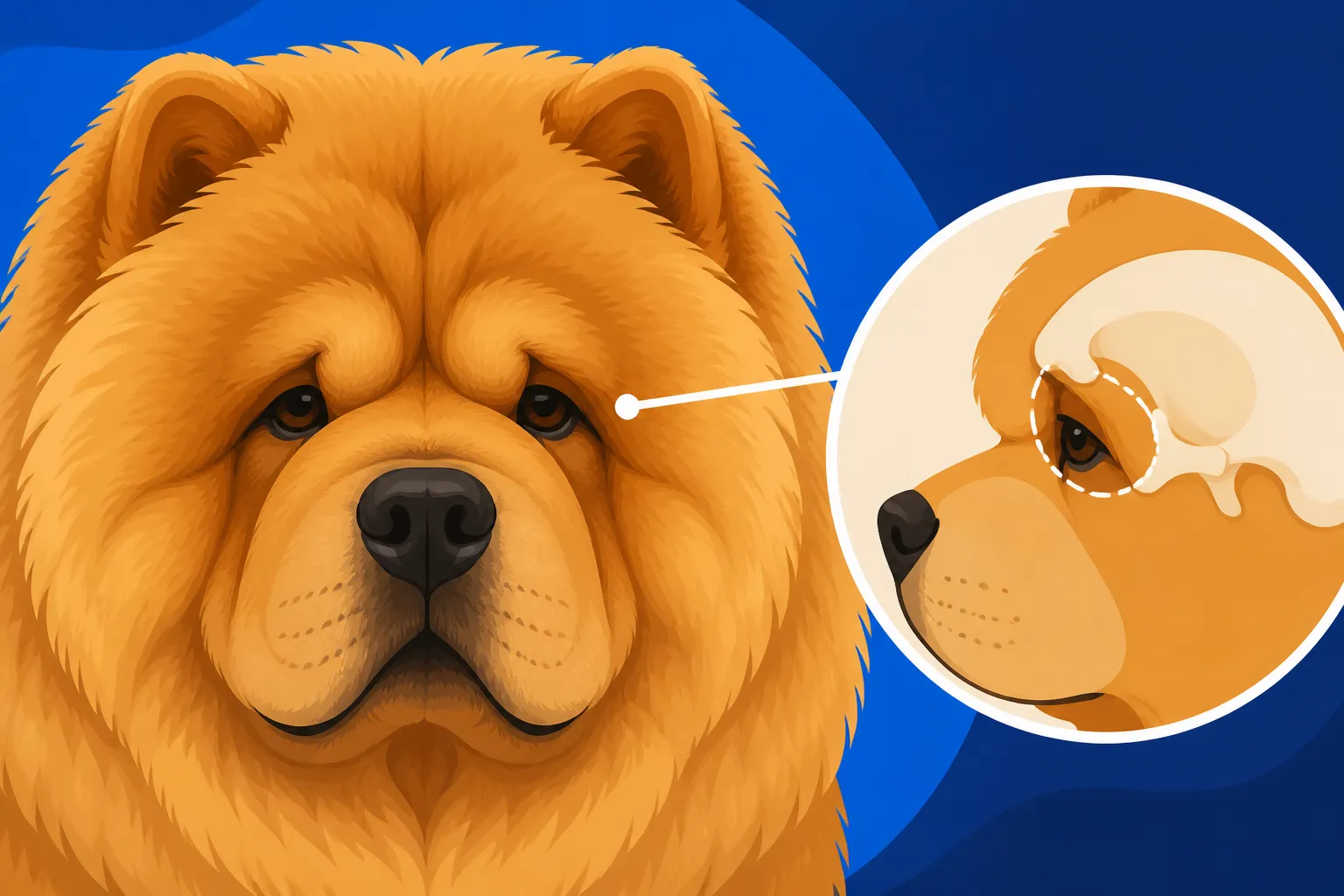
Chow Chows are known for small, dark, almond-shaped eyes set deep within a broad skull. The surrounding brow and facial structure can make the eyes look even more recessed. This is a characteristic of the breed’s appearance, not automatically a sign that something is wrong with an individual dog’s eyes.
The eye itself is not simply “buried” in the face. Its position reflects the shape of the skull and the tissues around the orbit. From the front, a Chow Chow’s eyes may appear less prominent than those of a dog with a longer, narrower head. That difference can make it harder for an owner to spot mild redness or discharge at a glance.
The breed’s expression can also be misleading. A Chow Chow may look serious or displeased even when relaxed, and its face may not show discomfort in the obvious way an owner expects. Learning what is normal for your dog—how open the eyes look, whether both sides match, and what the usual amount of discharge is—gives you a much better baseline than judging by expression alone. For a closer look at the breed’s facial anatomy, see Why a Chow Chow's Deep Set Eye Causes Trouble.
Deep-set eyes do not automatically mean poor vision
A recessed-looking eye does not, by itself, prove that a dog has limited sight. Vision depends on the health and function of several structures, including the cornea, lens, retina, optic nerve, and brain. A Chow Chow can have the breed’s typical eye placement and still navigate familiar surroundings comfortably.
That said, the shape of the head and the amount of eye opening can influence what a dog notices, particularly when something approaches from the side or behind. Owners may see their Chow Chow turn its whole head or body to look at an object rather than just shifting its gaze. This behavior can be part of how the dog takes in its surroundings, though it is not a diagnosis of impaired vision. More detail is available in How a Chow Chow's Deep Set Eye Limits Its Vision and Why a Chow Chow Turns Its Whole Body to Look.
It helps to watch behavior over time rather than test your dog with sudden hand movements near the face. A dog that hesitates on stairs, bumps into familiar objects, or seems newly startled may have a vision problem, but those signs can have other causes too. A veterinarian can assess the eyes and discuss whether a specialist exam is appropriate.
A typical appearance and a possible problem are not the same thing
A Chow Chow’s eyes may look small and deep-set while remaining comfortable and healthy. What matters is whether there has been a change: new squinting, persistent tearing, redness, cloudiness, swelling, or a difference between the two eyes. A sudden change is more meaningful than the breed’s usual appearance.
The eyelids deserve attention as well. Some Chow Chows develop entropion, in which an eyelid rolls inward and hair or lashes rub against the surface of the eye. Deep-set eyes alone do not establish that condition, and owners should not try to diagnose it by appearance. If your dog squints or seems bothered by light, Signs a Chow Chow Has Entropion explains symptoms worth discussing with a veterinarian.
| What you notice | What it may mean | A sensible next step |
|---|---|---|
| Small, recessed-looking eyes that have always looked the same | Typical breed appearance | Note the normal look of each eye and mention any concerns at routine visits |
| Mild, occasional tear marks without discomfort | Could be normal for the dog, but changes matter | Keep the area clean and dry, and ask your veterinarian if it persists or worsens |
| Squinting, rubbing, or holding an eye partly closed | Possible pain or irritation | Arrange prompt veterinary advice |
| Sudden cloudiness, marked redness, swelling, or a visibly enlarged eye | Potentially urgent eye problem | Contact a veterinarian or emergency clinic promptly |
| Bumping into things or newly hesitating in familiar places | Possible vision change or another health issue | Book an examination rather than assuming it is normal aging |
How deep-set eyes can affect everyday life
Your Chow Chow may need more time to notice an approach
A dog that does not immediately respond to someone entering its space may not be ignoring them. It may not have noticed the person clearly, especially if they come from behind or move into the dog’s space without warning. A Chow Chow that is startled when touched unexpectedly may be reacting to surprise, discomfort, or limited awareness of the approach—not necessarily being difficult.
This is one reason to approach calmly and make your presence known before reaching toward your dog’s head. Speak softly, come into view from the front or side, and give the dog room to turn toward you. That is especially important around children, visitors, and dogs who are resting. For practical guidance on interpreting the breed’s signals, see Why a Chow Chow Startles When Approached From Behind and How to Read a Chow Chow's Face.
At home, keep walkways predictable. Avoid leaving bags, stools, or toys in places where your dog usually walks, and be thoughtful about moving furniture around. If your Chow Chow seems less sure-footed in dim rooms, a nightlight or a clear route to its bed and water bowl may help reduce surprises. A pet-supply retailer such as Chewy may be one place owners look for basic home-safety items, but choose products that fit your dog and the space rather than relying on a product to solve a vision problem.
Eye contact and facial expression can be easy to misread
Because the eyes are small and recessed, it may be harder to see subtle changes in gaze or expression than it is with a more prominent-eyed dog. A still face does not necessarily mean a Chow Chow is relaxed, and a stern-looking expression does not necessarily mean the dog is upset. Look at the whole dog: posture, movement, ear position, willingness to approach, and whether it turns away or stiffens.
This matters during grooming and everyday handling. Before wiping near the eyes, let your dog see your hand and approach gradually. Use a soft, clean cloth dampened with water unless your veterinarian has recommended a particular product. Avoid pressing on the eyeball, pulling the eyelids open, or using human eye drops. If discharge is stuck to the fur or the dog resists because the area seems painful, stop and ask your veterinary team for advice.
Some owners keep a dedicated soft cloth or other grooming supplies with their dog’s regular care items. Chewy and local pet shops are examples of places people may check for general grooming supplies; for anything applied directly to the eye, follow veterinary guidance and read the product label carefully. A “natural” or “tear stain” product is not automatically suitable for an irritated eye.
Eye care and veterinary checks for a Chow Chow
Make simple observation part of routine care
Once or twice a week, when your dog is comfortable, take a brief look at both eyes in good light. You are not trying to perform a medical examination. You are learning what is usual for your dog: whether the eyes look equally open, whether the whites are usually visible, and whether there is a stable amount of tearing or crust around the corners.
Keep the surrounding fur clean and dry without rubbing the eye itself. If you notice a new change, take a clear photo if your dog will tolerate it; a picture can help you describe how quickly the appearance changed. Do not delay veterinary care to collect images if the eye looks painful or the change is sudden.
Routine wellness visits are a good time to raise questions about eye shape, discharge, or changes in your dog’s behavior. The veterinarian can look at the eyelids and eye surface, check for discomfort, and decide whether further testing is needed. The frequency of eye checks depends on the dog’s age, health, history, and exam findings. For more on routine screening, read Whether a Chow Chow Needs a Yearly Eye Exam.
Know which changes call for prompt attention
Squinting, frequent blinking, pawing at the face, rubbing the eye against furniture, or avoiding light can indicate discomfort. Persistent watering or discharge also deserves attention, particularly if it is different from your dog’s usual pattern. These signs do not tell you exactly what is wrong, but they are good reasons to contact a veterinary clinic.
Some eye problems can worsen quickly. A suddenly cloudy or bluish-looking eye, a pronounced change in eye size, severe redness, blood, or an eye that appears to be bulging should be treated as urgent. If your Chow Chow seems disoriented or cannot navigate normally, seek veterinary advice rather than assuming the change is simply due to the breed’s deep-set eyes.
Chow Chows are also associated with a risk of glaucoma related to the structure of the eye’s drainage angle. That risk is distinct from the fact that the eyes look recessed; one does not prove the other. A painful, red, cloudy eye or sudden vision change needs prompt assessment. Learn more in Why a Chow Chow Is a Closed Angle Glaucoma Breed. If you suspect an emergency, call a veterinary clinic or emergency hospital and describe what you are seeing.
Make handling less stressful without skipping care
Some Chow Chows dislike having their faces handled, and a painful eye can make even a normally tolerant dog pull away. Keep any home check brief and gentle. Reward calm behavior, let the dog move away, and avoid turning a routine look into a struggle. If you cannot safely examine the area, tell the veterinary team instead of forcing the dog to cooperate.
When you call for an appointment, explain what changed and when you first noticed it. Mention whether the dog is squinting, rubbing the eye, reacting to light, or having trouble moving around. If you have noticed a change in vision, describe specific examples, such as hesitating at a familiar doorway or bumping into furniture. These details can help the clinic decide how quickly the dog should be seen.
You can also ask your veterinary team how to make future handling easier. They may suggest a gradual, reward-based approach or demonstrate a safe way to clean around the eyes. If you are gathering basic supplies, Chewy or a nearby pet store may offer general grooming items, but medical products and eye treatments should be chosen with veterinary input.
Helping a Chow Chow feel confident around its surroundings
A Chow Chow’s deep-set eyes are part of its recognizable appearance, not a diagnosis. The key is to know your dog’s normal eye shape and behavior, make approaches predictable, and take new signs of discomfort or vision change seriously. Keep routine eye questions on the agenda at wellness visits, and seek prompt care for sudden or painful changes.
If your dog startles easily, give it a clear view of people before they come close, especially when it is sleeping or resting. A familiar layout, clear walking paths, and calm handling can make daily life easier whether or not your dog has a vision problem. A pet retailer such as Chewy may be useful when looking for general household or grooming supplies, but no accessory replaces an eye exam when symptoms appear.
Disclaimer
This article is for general informational purposes only and does not constitute professional advice. Laws, prices and regulations vary by location and change over time. Consult a qualified professional for guidance on your specific situation.