How Long Home Grooming a Chow Chow Takes Weekly
Ah, the majestic Chow Chow! You’ve probably seen those stunning, lion-like coats and thought, "Wow, that must take some serious grooming." And you wouldn't be wrong. Many new Chow Chow parents, myself included back in the day, underestimate just how much weekly dedicated time goes into keeping that glorious double coat healthy, mat-free, and comfortable for our furry companions. This guide is here to give you a real, no-fluff look at the weekly time commitment for home grooming your Chow Chow, helping you understand what to expect and how to tackle it efficiently.
Understanding the Chow Chow Coat: More Than Just Fluff
Before we even talk about brushes and bathtubs, we need to talk about that incredible coat. It’s truly one of the Chow Chow’s most distinctive features, but it’s also the source of much of the grooming challenge. Getting to grips with its unique structure is the first step in appreciating why weekly grooming isn't just an option, but a necessity.
The Double Coat Demands Attention
A Chow Chow's coat isn't just one layer; it's a magnificent double coat designed for insulation in harsh climates. There's the outer layer, made of coarser, straight guard hairs that protect against the elements, and then there's the truly dense, soft, woolly undercoat that provides warmth. These two layers work together, but they also have a propensity to become intertwined and form mats, especially if neglected. Imagine wearing a thick wool sweater over a finer knit one, then going for a run in the brambles – that's sort of what's happening on a Chow Chow's skin if brushing isn't regular.
This undercoat sheds constantly, but rather than falling out easily like a single-coated breed's hair, it tends to get caught within the guard hairs. This trapped hair, combined with daily activity, friction, and even just sleeping, quickly compacts and turns into mats. These aren't just cosmetic issues; mats pull on the skin, causing pain, irritation, and can even hide serious skin infections. Preventing them is paramount, and it's a battle won with consistent, patient effort. Unlike breeds with simpler coats that might only need a quick brush a few times a week, a Chow Chow's unique structure truly demands a more rigorous routine.
Rough vs. Smooth: A Difference in Weekly Time
Chow Chows come in two distinct coat types: rough and smooth. While the rough coat is the one most people picture – that abundant, stand-offish coat with a magnificent ruff around the head and neck, feathering on the legs, and a plumed tail – the smooth coat also exists and has its own grooming requirements. Many owners wonder Which Chow Chow Coat Is Easier to Keep.
The rough coat, with its sheer volume and length, undeniably demands more grooming time. Its longer guard hairs and denser undercoat mean there’s simply more hair to brush, more potential for matting, and longer drying times after a bath. You’ll spend more minutes meticulously working through sections, ensuring you reach all the way to the skin. For a rough-coated Chow, you can easily anticipate the brushing session alone eating up a significant chunk of your weekly grooming time.
The smooth coat, while shorter and often appearing less formidable, is still a double coat. It has that same dense undercoat that sheds and can mat, just perhaps not as visibly or as severely as a rough coat. It might not get the dramatic ruff mats Why a Chow Chow's Ruff Mats Behind the Ears, but it can still develop mats in friction areas like behind the ears, under the armpits, and in the britches. While "easier," it still requires regular, thorough brushing to remove dead undercoat and prevent compaction. So, while you might save some minutes compared to a rough coat, don't be fooled into thinking a smooth-coated Chow Chow is a wash-and-wear dog. It still requires a dedicated weekly time commitment.
Seasonal Changes and "Coat Blows"
While the core of this article focuses on weekly grooming, it’s impossible to discuss Chow Chow coat care without acknowledging the "coat blow." This isn't a weekly event, but it's a dramatic seasonal increase in grooming time that you need to be aware of. Twice a year, typically in spring and fall, Chow Chows "blow" their undercoat. This means they shed an incredible amount of hair – sometimes enough to knit a small sweater! During these periods, your daily and weekly grooming efforts will need to intensify significantly.
During a coat blow, what might normally be a 1-2 hour weekly session can easily stretch to several hours spread across multiple days, just to keep up with the sheer volume of shedding undercoat. Failing to manage a coat blow effectively can lead to severe matting, skin issues, and discomfort for your dog. So, while you're planning your regular weekly routine, always keep in the back of your mind that twice a year, that commitment is going to spike, demanding extra time and effort. It's a challenging but crucial part of Chow Chow ownership.
The Weekly Grooming Routine: Breaking Down the Tasks
Okay, so we know the coat is a big deal. Now, let’s get into the nitty-gritty of what a typical weekly home grooming session for your Chow Chow actually entails. This isn’t just about looking pretty; it's about health and comfort. Each task, no matter how small it seems, contributes to the overall well-being of your beloved companion.
Brushing: The Cornerstone of Chow Chow Care
This is where the majority of your weekly grooming time will be spent, and it's non-negotiable. Surface brushing, where you just skim the top coat, is utterly useless for a Chow Chow. All it does is make the top look neat while the undercoat underneath is silently matting against the skin. You need to line brush, meaning you systematically brush small sections of hair, parting the coat down to the skin and working your way through. This ensures you’re removing all the dead undercoat and preventing mats from forming. Learning How to Line Brush a Chow Chow properly is a game-changer for Chow Chow owners.
For a rough-coated Chow Chow, a thorough line brushing session can easily take anywhere from 1 to 2 hours, sometimes even more if they’ve been particularly active or if you’ve skipped a few days. You’ll need a good quality slicker brush, an undercoat rake (a must-have tool, especially during shedding seasons – Whether an Undercoat Rake Suits a Chow Chow), and a metal comb to check your work. Many owners find it easier to spread this time out, doing 30-45 minute sessions every other day rather than one marathon session. For a smooth-coated Chow, you might be looking at 45 minutes to an hour of dedicated brushing. Remember, the goal isn't just to make the dog look fluffy; it's to get down to the skin and remove all that loose undercoat. You’ll find excellent slicker brushes and undercoat rakes on sites like Chewy, making it easier to gather all your essentials in one go. Without this consistent effort, mats will form, leading to pain and potentially costly professional grooming or even vet visits to shave them down.
Eye, Ear, and Paw Maintenance
These are smaller, but equally important, tasks that often get overlooked but contribute significantly to your Chow Chow's comfort and hygiene. Their deep-set eyes and wrinkled faces mean they are prone to moisture and debris accumulation around their eyes. You'll need to gently wipe around their eyes daily or every other day, looking for any discharge or irritation. This might take just a few minutes, but it's crucial for preventing skin irritation and potential eye infections. Why a Chow Chow's Face Folds Need Wiping highlights the importance of keeping these areas clean.
Similarly, their ears need a quick check weekly. While Chows generally don't have floppy ears that trap a lot of moisture, their ear canals can still accumulate wax or debris. A quick visual inspection and a gentle wipe with a dog-specific ear cleaner (if recommended by your vet) can prevent infections. This usually adds another 5-10 minutes to your weekly routine. For their paws, particularly between the pads, hair can grow quite long, collecting dirt, debris, or even small mats. A quick trim of this hair and a check for any foreign objects or cracks in their paw pads are advisable. This can take another 10-15 minutes, depending on how cooperative your Chow is with having their feet handled.
Nail Trimming: A Non-Negotiable Necessity
This is one of those tasks that many dog owners dread, but it’s absolutely vital for your Chow Chow's long-term health and comfort. Overgrown nails can lead to splayed toes, discomfort when walking, and can even affect their gait and joint health. Given that Chow Chows already have a unique, often stiff, gait, keeping their nails at a proper length is even more critical. How Often a Chow Chow's Nails Need Trimming suggests that this is a task that shouldn't be skipped.
Trimming your Chow Chow's nails weekly or bi-weekly will prevent them from becoming too long, making the process quicker and less stressful each time. If allowed to grow long, the quick (the blood supply within the nail) also grows, making it impossible to trim them short without causing pain and bleeding. A typical nail trimming session, if done regularly, might take 10-15 minutes, including the time it takes to gather your tools (clippers or a Dremel) and get your Chow comfortable. However, if your Chow is particularly resistant to having their feet handled – which is quite common for the breed – this time can easily stretch, and you might need to incorporate desensitization training into your routine. Remember, patience and positive reinforcement are key here.
Factors Influencing Your Weekly Grooming Time
It's not just about the coat type; several other elements play a significant role in how long you'll actually spend grooming your Chow Chow each week. Understanding these can help you anticipate challenges and adjust your routine accordingly.
Puppyhood and Early Training
This cannot be stressed enough: early and consistent positive exposure to grooming is perhaps the single most important factor in determining how manageable your adult Chow Chow will be. A Chow Chow puppy needs to learn that grooming isn't scary, that being handled is okay, and that brushes and nail clippers aren't instruments of torture. This means starting as soon as you bring your puppy home. Small, frequent sessions where you simply touch their paws, ears, and gently brush them, paired with lots of praise and high-value treats, will pay dividends down the line.
If you skip this crucial socialization period or approach grooming with impatience or force, you’ll likely end up with an adult Chow Chow who actively resists grooming, making every session a struggle. A dog that fights you will inevitably make grooming take much, much longer. What could be a 1.5-hour session on a cooperative dog might become a frustrating 3-hour ordeal on a resistant one, requiring breaks, calming techniques, and perhaps even additional help. Remember, Teaching a Chow Chow to Accept Being Groomed starts young and with positive experiences. The time invested in gentle training during puppyhood is an investment that saves you countless hours and stress later.
Lifestyle and Environment
Your Chow Chow's daily life and surroundings can dramatically impact their coat's condition and, consequently, your grooming time. Dogs that spend a lot of time romping through brush, tall grass, or muddy areas are far more likely to pick up burrs, twigs, and dirt that can quickly embed themselves in their dense undercoat, leading to mats. If your Chow loves to roll in the mud, you’ll be spending more time detangling and cleaning.
Similarly, environmental factors like humidity can affect how quickly mats form. A damp coat, especially if not dried thoroughly (and Chows take ages to dry), is prime territory for matting. Their living conditions also play a role; an indoor Chow Chow might shed more consistently year-round due to artificial heating and cooling, meaning regular maintenance is always on the agenda. Even diet can have an impact; a healthy, shiny coat is often a reflection of good nutrition. A healthy diet, perhaps one tailored like those from Ollie, can also contribute to a healthier coat, reducing dryness and breakage that might lead to more matting.
Your Chow Chow's Temperament
While socialization plays a huge part, individual personality traits can also influence how your Chow Chow handles grooming. Some Chows are naturally more tolerant and placid, accepting grooming with quiet resignation or even enjoyment. Others, even with the best early training, might retain a certain independent streak or wariness that makes them less enthusiastic about the process. A Chow Chow is known for being discerning and not always keen on extensive handling, particularly from strangers, so building trust is everything.
A dog that wiggles, tries to nip, or constantly attempts to escape will slow down the grooming process considerably. You might need to take more frequent breaks, use more reinforcement, or even enlist a second person to help hold them steady. This isn’t a reflection on your skill, but simply the reality of working with an animal that isn't always thrilled about being fussed over. Patience and understanding of your Chow's unique temperament are vital here. Learning How to Read a Chow Chow's Face for signs of discomfort can help you adjust your approach and keep sessions positive.
Tools and Techniques
Having the right tools and knowing how to use them effectively can make a substantial difference in the efficiency of your grooming sessions. Trying to groom a Chow Chow with a flimsy brush or without an undercoat rake is like trying to build a house with a spoon – it's possible, but it will take forever and probably won't be very effective. Investing in good quality equipment is worth every penny.
A powerful high-velocity dryer, for instance, not only helps thoroughly dry the coat after a bath (which is critical to prevent matting and skin issues) but can also be used to "blow out" loose undercoat, significantly reducing brushing time. Learning proper line brushing techniques, as mentioned earlier, ensures you're doing the job right the first time, preventing the need for repeat work due to missed sections. Efficient tools and practiced techniques won't eliminate the time commitment, but they will certainly make it more productive and less physically demanding for both you and your Chow.
Realistic Time Commitments and How to Manage Them
So, after all that, what does the actual clock-watching look like? It's important to be realistic about the time investment. Owning a Chow Chow means embracing the groom, and understanding the commitment helps you prepare for it.
The "Actual" Weekly Average
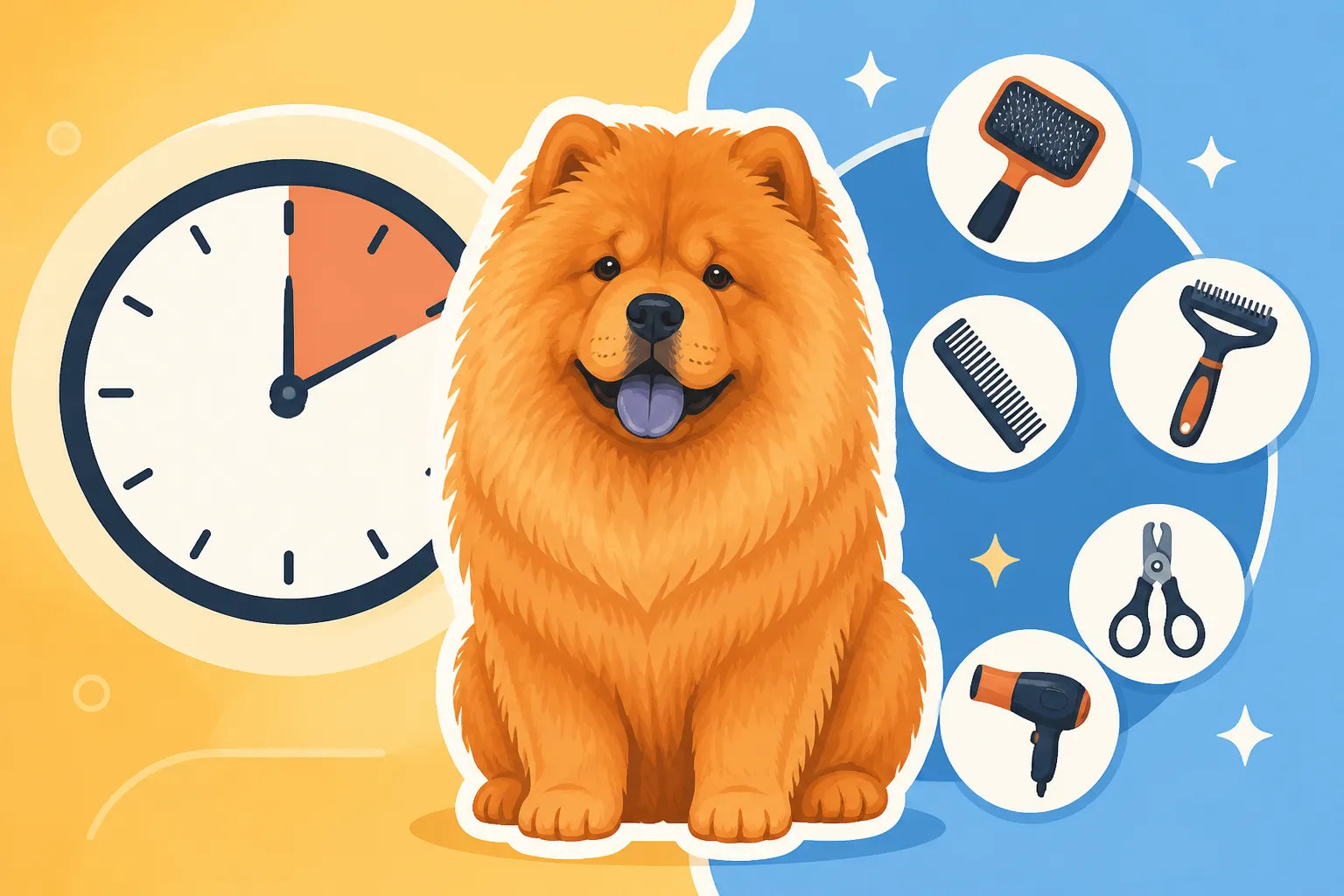
Many people get a Chow Chow and imagine a quick 20-minute brush once or twice a week will suffice. The reality is far more demanding. For a rough-coated Chow Chow, you should anticipate spending at least 1.5 to 3 hours per week on grooming tasks. This often breaks down into one longer, thorough brushing session (e.g., 60-90 minutes) and several shorter spot-brushing, eye-wiping, and nail-checking sessions spread throughout the week (e.g., 15-30 minutes each). For a smooth-coated Chow Chow, you might be closer to 1 to 2 hours per week, but again, this needs to be consistent and thorough, not just superficial.
This doesn't include bath time, which can be an epic event in itself, easily adding several hours when you factor in wetting, shampooing, rinsing, and the incredibly long drying process needed to get their dense coat completely dry to the skin. Luckily, baths are usually only needed every 4-8 weeks, depending on activity and cleanliness. But on a weekly basis, you are looking at a significant chunk of time dedicated to maintaining that beautiful coat. And while prevention is key, accidents or severe skin issues from neglected mats might require vet visits, so considering pet insurance from providers like Healthy Paws is always a smart move.
Breaking It Down: Daily vs. Weekly Sessions
Trying to squeeze all the grooming into one massive session on a Sunday afternoon can be overwhelming for both you and your Chow Chow. A more manageable approach for most owners is to break down the tasks throughout the week. This not only makes the commitment less daunting but also helps catch potential issues (like forming mats) before they become major problems.
Here’s a potential breakdown:
- Daily (5-10 minutes): A quick once-over, especially on high-friction areas like behind the ears, under the armpits, and around the collar. Wipe eyes if needed. This is also a great time for positive reinforcement for handling.
- Mid-week (30-45 minutes): A more thorough brush-out of one or two sections of the body, rotating through the full coat over the course of the week.
- Weekly (60-90 minutes): The main event. A full body line brush, nail trim, ear check, and paw pad trim. This is where you ensure you've reached every part of the undercoat.
This approach means you're not trying to do everything at once, making it more pleasant for your Chow and easier to fit into your busy schedule. Consistency, even in small doses, is far more effective than sporadic, marathon sessions.
When to Seek Professional Help
Even the most dedicated home groomers sometimes need a little help, and there's absolutely no shame in that! Professional groomers, especially those experienced with double-coated breeds like Chow Chows, have the tools, expertise, and often the patience to tackle jobs that might be too much for an owner at home.
You might consider professional help for:
- During a major coat blow: When the undercoat is shedding furiously, a professional groomer with high-velocity dryers can often de-shed a Chow Chow much more efficiently than you can at home, saving you hours.
- Severe matting: If mats have formed that you can't safely remove yourself, a professional groomer can often work wonders. Trying to cut out severe mats at home can be dangerous for both you and your dog.
- Regular maintenance: If your schedule simply doesn't allow for the consistent weekly commitment, incorporating professional grooming every 4-6 weeks can be a lifesaver. They can manage the bulk of the undercoat and mat prevention, allowing you to focus on lighter maintenance at home.
- Nail trims: If your Chow is particularly resistant to nail trims, a professional groomer or vet tech can often get the job done quickly and safely. What a Groomer Charges for a Rough Coated Chow Chow and How Often a Chow Chow Needs a Groomer are good resources to consider if you're thinking of professional help.
Here's a quick overview of estimated weekly grooming times:
| Task | Rough Coat (Estimated Weekly Time) | Smooth Coat (Estimated Weekly Time) | Notes |
|---|---|---|---|
| Full Body Brushing | 60-120 minutes | 45-75 minutes | Best broken into several sessions; includes line brushing with rake/slicker/comb. |
| Eye & Face Fold Wipe | 5-10 minutes | 5-10 minutes | Daily or every other day is ideal. |
| Ear Check & Clean | 5 minutes | 5 minutes | Quick visual check and gentle wipe. |
| Nail Trim | 10-15 minutes | 10-15 minutes | Can be done weekly or bi-weekly; critical for joint health. |
| Paw Pad Trim | 5-10 minutes | 5-10 minutes | Trim hair between pads to prevent debris collection and slipping. |
| Total Weekly | ~1.5 – 3 hours | ~1 – 2 hours | Does NOT include baths, which are much longer and less frequent. |
Home grooming a Chow Chow is a significant time investment, but it’s a rewarding one. It’s an act of love that keeps your dog comfortable, healthy, and looking their best. By understanding the demands of their unique coat, breaking down tasks, and being patient and consistent, you can master the art of Chow Chow grooming right in your own home.
Disclaimer
This article is for general informational purposes only and does not constitute professional advice. Laws, prices and regulations vary by location and change over time. Consult a qualified professional for guidance on your specific situation.