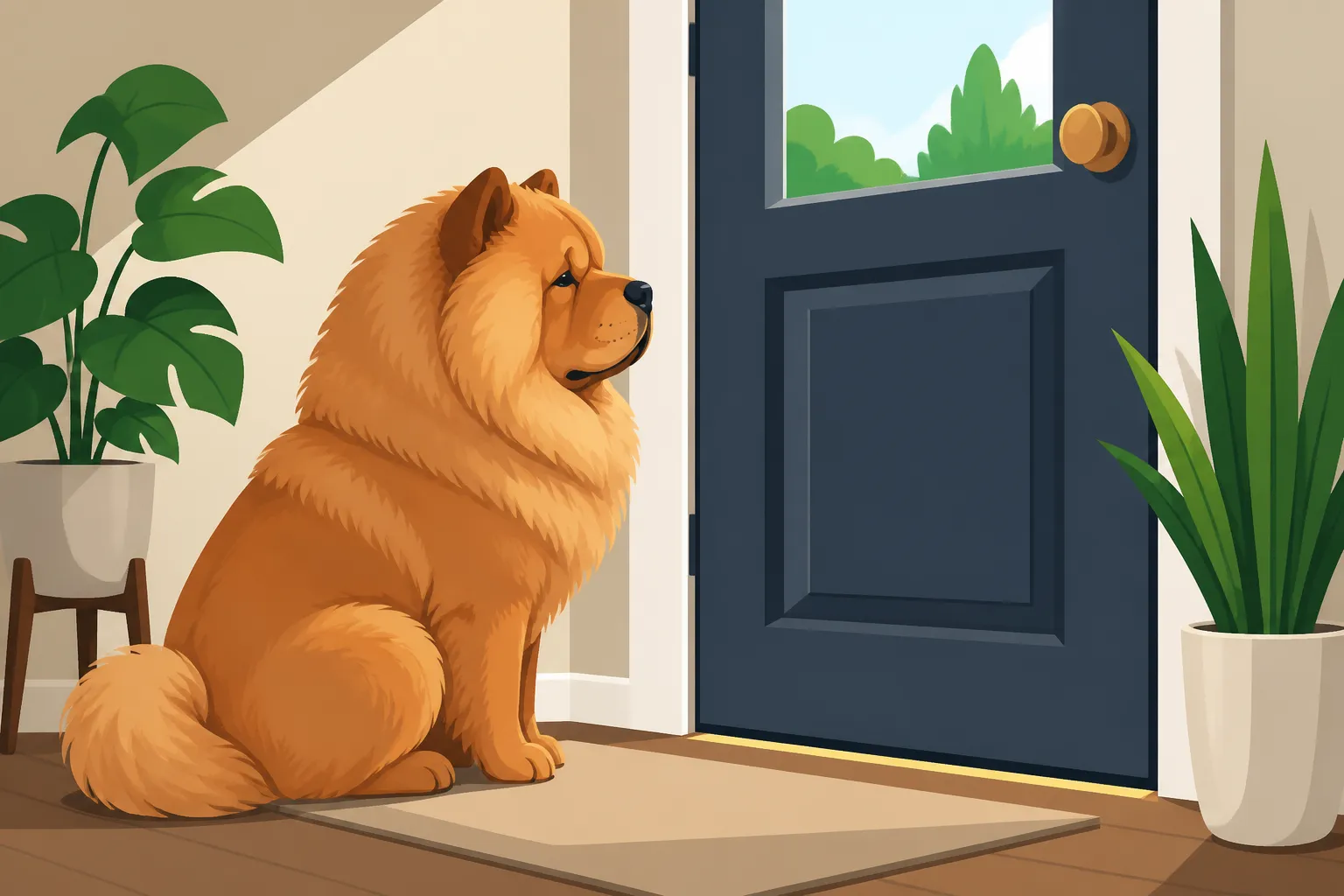
Teaching a Chow Chow to Wait at a Door
One of the most hair-raising moments for any Chow Chow owner is that split second when the front door opens. Whether it's to greet a guest, grab a package, or just step outside for a breath of fresh air, the urge for a Chow to bolt past you can be incredibly strong, leading to dangerous situations like dashing into traffic or running off. This guide is all about teaching your Chow Chow the crucial skill of waiting politely at the door, ensuring their safety and your peace of mind with practical, empathetic training techniques that respect their unique temperament.
Why Door Manners Are So Important for a Chow Chow
The impulse to rush out the door isn't just an inconvenience; for a Chow Chow, it can be a serious safety hazard. Our Chows are sturdy, independent dogs with a deep-seated instinct to patrol and explore, and their thick coats can make them especially susceptible to overheating if they get loose and start running. Beyond the physical dangers, teaching good door manners reinforces your role as the calm, consistent leader, which is vital for this intelligent but often strong-willed breed.
Preventing Escapes and Accidents
Imagine the mail carrier arrives, and before you can even get a grip on their collar, your Chow Chow barrels past your legs and out onto the sidewalk. In a quiet suburban neighborhood, this might only lead to a frantic game of chase. But if you live near a busy street, a moment like that could have devastating consequences. Chows are known for their aloofness and can be incredibly difficult to recall once their attention is fixed on something new and exciting outside. They aren't always looking to please their owner in the same way some other breeds might be, which means that split-second dash can turn into a prolonged search. How Far a Chow Chow Can Be Trusted Off Leash delves into this more, highlighting just how crucial a reliable "wait" command is for their safety.
Reinforcing Leadership and Boundaries
Chow Chows thrive on clear boundaries and consistent expectations, even if they sometimes test them with their independent streak. When you teach your Chow to wait patiently at an open door, you're not just preventing an escape; you're establishing yourself as the decision-maker for when and how they interact with the outside world. This isn't about being dominant; it's about being a reliable guide. A Chow Chow respects a calm, fair leader, and this kind of structured interaction builds trust and mutual understanding. If the rules around the door are wishy-washy, they'll quickly learn that sometimes they can just push through, making the behavior harder to correct later.
Managing Territorial Tendencies
Our Chows are natural guardians, often quite protective of their home and family. When someone approaches the door, whether it's a delivery person or a friend, your Chow's initial reaction might be to investigate, bark, or even challenge the newcomer. Bolting out the door can escalate these territorial instincts, turning a simple greeting into a perceived confrontation. A controlled "wait" allows you to manage the interaction, ensuring that your Chow remains calm and under control, which is essential for both your guests' comfort and your dog's appropriate socialization. How Territorial a Chow Chow Is further explains these protective instincts and how best to manage them.
Understanding Your Chow Chow's Door Dash Motivation
Before you can effectively teach your Chow Chow to wait, it helps to understand why they might be so eager to rush out the door in the first place. Is it pure excitement? A strong prey drive? Or perhaps a deep-seated desire to guard their territory? Identifying the root cause can help you tailor your training approach and anticipate their reactions.
Excitement and Curiosity
For many Chows, the outside world is an endless source of interesting smells, sights, and sounds. The moment the door begins to crack open, it signals an adventure! They might be excited about a walk, curious about a squirrel that just ran up the tree, or eager to sniff the patch of grass where another dog recently passed. This sheer anticipation can override any polite manners they might otherwise possess. Think about it: they spend a good portion of their lives indoors, and that door represents freedom and novelty. For a breed that enjoys its routine but also has an underlying adventurous spirit, that threshold can be a huge draw.
Prey Drive and Environmental Stimuli
Chow Chows, despite their plush appearance, often retain a decent prey drive. That rabbit hopping across the yard, the cat sunbathing on the neighbor's fence, or even a leaf blowing in the wind can become an irresistible target. If your Chow sees or smells something that triggers this instinct just as the door opens, their focus will tunnel onto that object, and all prior training can vanish in a puff of fur. It's not about being disobedient; it's about primal instinct taking over. Understanding this means you need to be extra vigilant and manage the environment as much as possible, especially during initial training.
Guarding and Investigative Instincts
As natural guardians, Chows are keenly aware of their surroundings. Any activity outside—a person walking by, a car pulling up, or even an unfamiliar sound—can trigger their protective or investigative instincts. Rushing the door might be their way of "checking out" the perceived intrusion or ensuring everything is safe. They might feel it's their job to greet (or deter) anyone approaching their home. This drive is particularly strong for a breed like the Chow Chow, which often bonds intensely with one person and remains quite reserved with strangers. How a Chow Chow Greets Visitors highlights their typical reserve, and how this can manifest at the door.
Step-by-Step Training: Teaching the "Wait" Command
Now that we understand the motivations, let's get down to the practical steps for teaching your Chow Chow to wait patiently at the door. Consistency is your best friend here, and patience is absolutely key with a Chow. Remember, A Chow Chow Trains by Agreement, Not Obedience, so make it a positive experience where they choose to cooperate.
Foundation: "Wait" with Low Distraction
Start simple, in a low-distraction environment, like an interior doorway. Have your Chow Chow on a leash – a regular 6-foot leash works perfectly for this, giving you control without too much slack. Stand with them near an inner door (like a bedroom door, not the front door yet). Hold the leash firmly.
- Give the "Wait" Command: Say "Wait" in a calm, clear voice. As you say it, take a step towards the door. If your Chow moves to follow or tries to nose the door, stop immediately. Do not open the door further.
- Reward for Stillness: The moment they stop and remain still, even for a second, praise them enthusiastically ("Good wait!") and give them a high-value treat. Repeat this several times, gradually increasing the duration they have to "wait" before getting the reward.
- Practice Door Threshold: Once they understand "wait" when you approach the door, try placing them in a "sit-stay" a few feet back from the doorway. Give the "wait" command and then, without opening the door, step across the threshold yourself. If they stay, rush back and reward. This teaches them that you going through the door isn't an automatic invitation for them to follow.
Gradually Introducing the Open Door
Once your Chow is reliably waiting at an unopened interior door, it's time to add the element of the open door, still in a controlled setting.
- Leashed Practice at the Door: Move to the actual exterior door you want them to wait at, still with the leash on. Ask for a "sit" or "down" a few feet back from the door. Give the "Wait" command.
- Open the Door Slightly: Slowly reach for the doorknob. If your Chow even shifts to get up, stop immediately, take your hand off the knob, and wait for them to settle back into their "sit" or "down." Only resume when they are calm. Once they hold their position, slowly open the door just a crack. If they hold, reward generously. If they try to push through, immediately close the door (gently, without making a big deal of it) and go back to step 1.
- Increasing Duration and Opening: Gradually increase how wide you open the door and for how long. The goal is for them to remain perfectly still, even with the door wide open. Don't let them walk through until you give a release cue like "Okay!" or "Free!" and step through first.
Adding Real-Life Scenarios and Distractions
This is where the training truly solidifies. Life isn't always quiet and predictable, and your Chow needs to learn to wait amidst distractions.
- Practice with Family Members: Have another family member walk through the door while your Chow is waiting. If they hold, huge reward! If they break, the family member should immediately step back inside, and you should reset the exercise. This teaches them that people going through the door don't mean they get to.
- "Simulated" Guests: Pretend someone is at the door. Have a family member knock, ring the doorbell, or even just stand on the other side. Practice getting your Chow to wait while you answer. You can use a verbal cue like "Just a moment!" to acknowledge your Chow's presence while still expecting them to hold their wait. For truly challenging Chows, a simple baby gate from Amazon placed a few feet in front of the door can create a physical barrier to help them understand the boundary initially, giving you an extra layer of safety.
- Introducing Outside Elements: Open the door to a secure, fenced yard. Have your Chow wait while you step out, look around, and then call them to join you. This helps them understand that "wait" isn't a permanent denial, but a pause before a permitted activity. Remember, Whether a Chow Chow Needs a Fenced Yard is a critical consideration for safety and exercise.
Using Tools and Resources Effectively
Sometimes, we need a little help. There are some excellent tools and resources that can make training more effective for your Chow.
- Long Line: For outdoor practice in a secure, but larger, area (like a park at off-peak hours), a long line can be invaluable. It gives your Chow the illusion of freedom while you maintain a safety connection, allowing you to practice door manners from a distance without the risk of them truly bolting.
- High-Value Treats: Chow Chows aren't always highly food-motivated, but finding that one treat they absolutely adore can make a huge difference in training. Experiment with different types of soft, smelly treats like bits of cheese, cooked chicken, or commercial training treats. Which Treat a Chow Chow Will Work Hardest For is a good read if you're struggling to find the right motivator.
- Online Training Programs: For those times when in-person classes might be challenging due to your Chow's reserved nature or your schedule, online positive reinforcement programs can provide structured guidance. Resources like BAXTER & Bella offer virtual training courses that can be done at home, allowing you to work at your Chow's pace in a comfortable environment. These often include video demonstrations and personalized support, which can be fantastic for consistent training.
Troubleshooting Common Door-Waiting Challenges
Even with the best intentions, you might run into bumps in the road. Chows are smart, and they'll try to find loopholes. Don't get discouraged! Persistence and understanding their motivations will help you overcome these hurdles.
The "Slipping Through" Maneuver
Your Chow has learned to wait, but the moment you open the door just enough for you to squeeze through, they try to dart through the gap. This is a common tactic!
- Solution: Go back to basics. Practice only opening the door a few inches at a time, making sure your Chow stays put. If they even lean into the gap, immediately close the door. They need to understand that any forward movement when the door opens means the door closes. Increase the reward for holding their position even when the opening is small and tempting. You might also want to physically block the lower portion of the opening with your leg or foot while giving the "wait" command, gradually removing this barrier as they improve.
Ignoring the "Wait" Command When Excited
Sometimes, all the training goes out the window when a particularly high-value distraction appears – a squirrel, another dog, or a person they really want to see (or investigate).
- Solution: You need to gradually introduce these distractions into your training. Start with very low-level distractions, like a family member walking quietly outside the window while you're at the door, rewarding heavily for holding the "wait." Slowly increase the intensity: a squeaky toy, someone jingling keys, a distant dog bark. If they break, go back to a less distracting scenario where they can succeed. This is also where a long line can be a lifesaver, giving you a safety net during higher-distraction practice in a secure area. Remember, Why Repetition Bores a Chow Chow, so keep these sessions short and engaging.
Door-Related Anxiety or Reactivity
Some Chows might not be trying to escape but might be reacting with barking, growling, or lunging at the door due to anxiety or territorial aggression. This is more than just enthusiasm; it's a deeper behavioral issue.
- Solution: This requires a more nuanced approach. Instead of just "wait," you might need to teach a "settle" command a distance away from the door. Use positive reinforcement to create a positive association with the doorbell or knocks – every time the bell rings, they get a treat if they remain calm. If the behavior is severe, especially involving aggression, consulting with a professional positive reinforcement trainer or a veterinary behaviorist is highly recommended. They can help identify the root cause of the anxiety or reactivity and develop a personalized plan. How to Introduce a Chow Chow to a Stranger provides further insights into managing their interactions.
Inconsistency Among Family Members
Training is a team effort. If one person lets the Chow out without a "wait" and another enforces it strictly, your Chow will become confused and inconsistent.
- Solution: Hold a family meeting! Ensure everyone who interacts with your Chow at the door understands the "wait" command, the release cue, and the consequences for breaking the wait. It's helpful to have a visual cue near the door as a reminder, or even a chart to track who has practiced with the Chow that day. Consistent expectations from everyone are critical for your Chow to truly understand and respect the boundary. A gate, like those you can find on Amazon, can also be a good temporary measure to ensure no one accidentally lets the dog out before they're ready.
Disclaimer
This article is for general informational purposes only and does not constitute professional advice. Laws, prices and regulations vary by location and change over time. Consult a qualified professional for guidance on your specific situation.