What the Standard Means by a Chow Chow’s Scowl
A Chow Chow’s “scowl” can make a relaxed dog look stern, which often leaves owners wondering whether the breed standard describes a facial expression or a temperament. It describes a recognizable look—not anger, suspicion, or a promise to guard. Here’s what creates that expression, how to read it alongside the rest of a dog’s body language, and when an eye or skin concern deserves attention.
What the Chow Chow standard means by a scowl
A facial expression, not a personality test
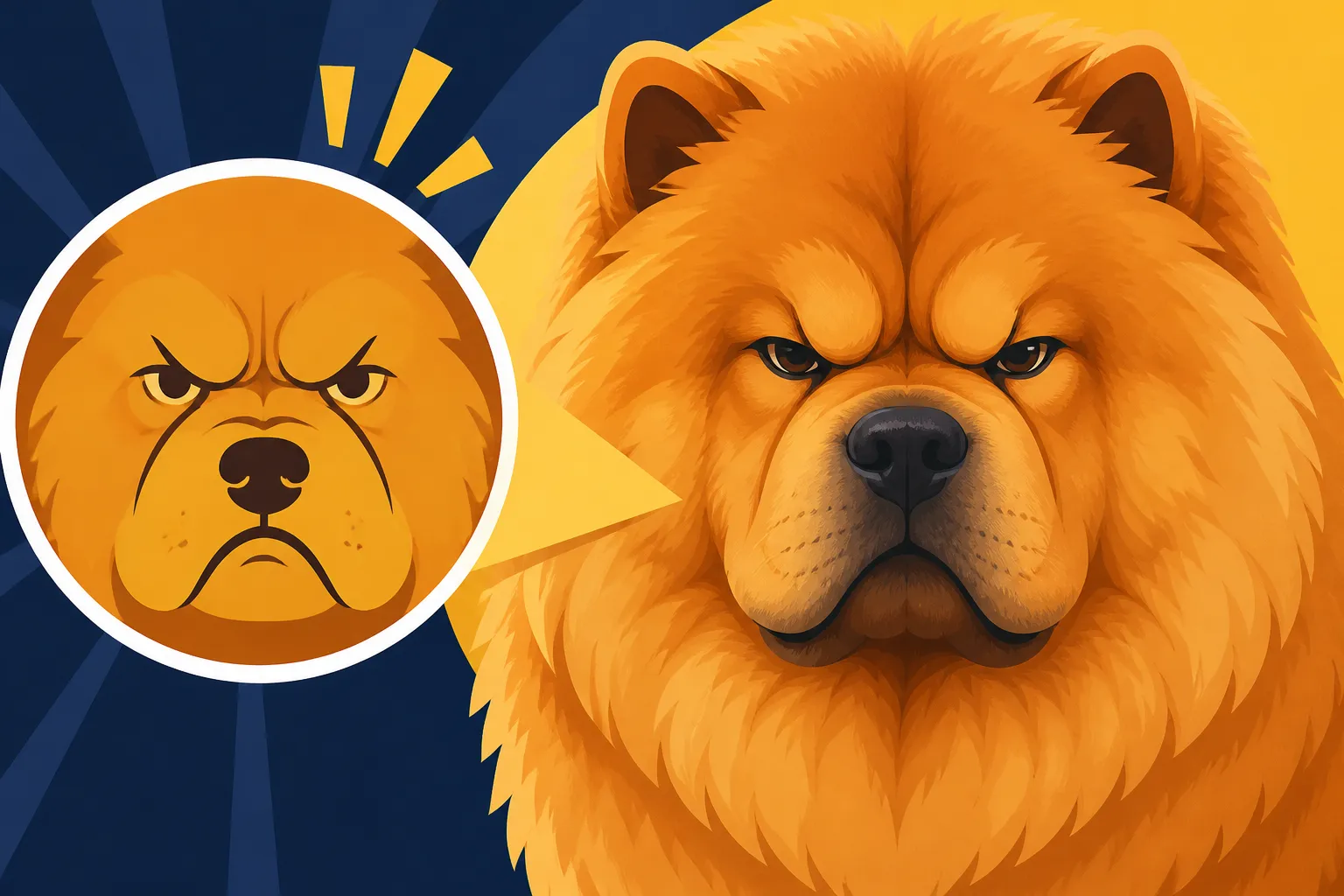
When the breed standard refers to a Chow Chow’s scowl, it means the dog’s characteristic serious-looking expression. The word describes appearance. It does not mean that a Chow Chow should look hostile, be constantly frowning, or behave aggressively.
That distinction matters in everyday life. A Chow Chow sitting quietly on the living-room floor may appear displeased in a photograph simply because of the shape and placement of its features. Meanwhile, a dog with that same expression may be comfortable and relaxed. The face alone cannot tell you how the dog feels.
The scowl is part of the breed’s overall expression, alongside its broad head, small upright ears, and deep-set, almond-shaped eyes. It should be understood as one feature of a recognizable breed type, not as a behavior owners need to encourage or correct. For a closer look at the anatomy involved, see What Gives a Chow Chow Its Scowl.
What the standard is—and is not—asking for
A breed standard is a written description used to assess how closely a dog’s structure and appearance fit the breed’s established type. It gives judges and breeders a shared vocabulary. When it describes a scowling expression, it is not asking handlers to make a dog uncomfortable or to train it to glare.
Nor does the description mean that every Chow Chow will look precisely alike. Individual dogs differ in head shape, coat length, age, and expression. A puppy’s face can look different as its head and coat mature, and a dog’s expression can change with its posture, the direction of its gaze, and the way the light falls across its face.
In practical terms, the standard helps explain why a Chow Chow may look stern even when nothing is wrong. It does not override the dog’s welfare. A dog with persistent squinting, redness, discharge, or obvious discomfort should not be dismissed as simply having a breed-typical scowl.
The features that create the serious-looking expression
Deep-set eyes and the brow
The Chow Chow’s eyes are described as deep-set and almond-shaped. Their position, together with the brow and surrounding facial structure, contributes to the breed’s characteristic serious look. The eyes may appear smaller or more shaded than those of a dog with a more open, prominent-eyed face.
This can also affect how a Chow Chow appears to look at people. From one angle, the dog may seem to be staring or frowning; from another, its face may look softer. A thick coat around the head can add to that impression, especially when fur frames the eyes. The appearance is about the overall arrangement of features, not a single crease that means the dog is upset.
Deep-set eyes are also relevant to practical care, because appearance should never make it difficult to notice a change in eye health. Compare what you see with your dog’s usual expression. Why a Chow Chow's Eyes Are Set So Deep explains the feature in more detail, while How a Chow Chow's Deep Set Eye Limits Its Vision discusses why facial structure can affect what the dog sees around it.
Coat, face shape, and individual variation
A Chow Chow’s coat can change the way its face reads at a glance. A full rough coat may create a pronounced mane around the head and neck, while a smooth-coated dog has a shorter, closer-fitting coat. Neither coat type by itself tells you whether the dog is happy, wary, or uncomfortable.
The facial expression also isn’t frozen. A dog may look more solemn when it is watching something intently, holding its head still, or facing a camera. Relaxed posture, a loose body, and easy movement can provide more useful clues than a still image of the face.
When comparing dogs, avoid treating a photograph or show-ring pose as a complete picture of temperament. The standard describes a physical impression; it does not guarantee that all Chow Chows will react the same way to strangers, handling, or other dogs. To understand the expression in context, How to Read a Chow Chow's Face is a helpful companion topic.
How to tell a normal scowl from discomfort
Read the whole dog, not just the brow
A familiar Chow Chow can have a naturally stern-looking face while resting comfortably. To judge how the dog is feeling, look beyond the eyes and consider the whole body: posture, muscle tension, movement, ears, mouth, and whether the dog is choosing to approach or move away.
A relaxed dog may lie down with its body loose, shift positions easily, and respond normally to familiar people. A worried or uncomfortable dog may become stiff, turn its head away, retreat, repeatedly lick its lips, or resist being touched. None of these signs should be interpreted in isolation, but a cluster of changes is more meaningful than a fixed-looking expression.
This is especially important when a person unfamiliar with the breed approaches. A Chow Chow’s face may be misread as a warning, or a person may assume the dog is safe to touch because it is standing still. Give the dog space, let it choose whether to engage, and pay attention to changes in its body language. Signs a Chow Chow Is Uncomfortable covers cues worth noticing before reaching toward the dog.
| What you notice | What it may mean | A sensible response |
|---|---|---|
| A familiar serious-looking face with a loose body | Often the dog’s normal expression | Observe the dog’s usual behavior and give it space |
| New or repeated squinting | Possible irritation, pain, or an eye problem | Contact a veterinarian, especially if it persists |
| Redness, heavy discharge, or a cloudy-looking eye | A possible health concern rather than a breed expression | Arrange veterinary advice promptly |
| A stiff body, turning away, or retreating | The dog may be uncomfortable or asking for distance | Stop approaching and allow the dog room |
| Sudden change in expression or behavior | Could reflect discomfort or another change in health | Note when it began and seek professional guidance |
When eye signs need attention
A scowl is a stable feature of appearance; eye discomfort is a change in the dog’s condition. Watch for squinting, repeated pawing at the face, excessive tearing, redness, unusual discharge, or an eye that looks different from its usual baseline. If a dog suddenly keeps an eye partly closed or seems painful, contact a veterinarian rather than assuming the expression is normal for the breed.
Some eye conditions can be difficult to recognize beneath facial hair or in a dog whose eyes are naturally deep-set. Gentle, routine observation helps: notice whether both eyes look as they usually do, whether the dog opens them comfortably, and whether discharge or redness is new. Don’t press on the eyelids or try to treat an eye problem with products intended for people.
If you keep basic grooming supplies at home, choose items intended for dogs and use them only as directed. Chewy is one place owners may look for grooming basics such as a soft cloth or dog-safe wipes, but a wipe is not a treatment for eye disease. When symptoms involve the eye itself, veterinary guidance is the safer next step. More on one specific concern is available in Entropion Is the Chow Chow's Signature Problem.
Caring for the face without changing the expression
Keep the area clean and dry
The goal of face care is comfort and cleanliness—not changing the Chow Chow’s natural expression. If fur, food, or ordinary debris collects around the muzzle or face, use a soft, damp cloth and wipe gently. Avoid rubbing the eyeball, tugging at the eyelids, or using fragranced household wipes near the face.
After wiping, dry the area carefully so moisture does not remain trapped in the coat or skin folds. Watch for new odor, redness, soreness, or persistent dampness. A dog that suddenly resists a familiar touch may be uncomfortable, so pause rather than holding its head still and forcing the cleaning.
A simple grooming kit can make routine care easier. Chewy is one possible source for a soft grooming cloth or a comb suited to the coat, but the important part is choosing something gentle and using it calmly. If a product causes irritation, discontinue it and ask your veterinarian what is appropriate for your dog.
Make handling calm and predictable
Many dogs tolerate face care better when it happens in small, predictable steps. Start when the dog is settled, let it see and sniff the cloth, and briefly touch an area it already accepts. Reward calm participation, then stop before the dog becomes tense. Over time, you can build toward a quick wipe rather than turning every grooming session into a struggle.
Avoid surprising the dog by reaching over its head or grabbing its muzzle. Approach where the dog can see you, move slowly, and give it opportunities to turn away. If it backs off, stiffens, or repeatedly tries to leave, take a break and try a smaller step another time. A cooperative routine is safer and more useful than forcing a thorough clean in one sitting.
Owners looking for basic grooming tools at Chewy should still check that a product is suitable for dogs and for use near the face. Don’t put cleaners, medicated products, or eye drops into or around the eye unless a veterinarian has advised you to do so. If the dog’s eyes look sore or the face is becoming difficult to handle, ask a veterinary professional to assess the problem rather than relying on grooming changes.
A Chow Chow’s scowl is best understood as a breed-typical expression shaped by its facial features. It doesn’t tell you, by itself, whether the dog is angry, friendly, or in pain. Learn what your own dog looks like when comfortable, pay attention to the rest of its body language, and treat new eye symptoms as a health question—not simply part of the breed’s appearance.
Disclaimer
This article is for general informational purposes only and does not constitute professional advice. Laws, prices and regulations vary by location and change over time. Consult a qualified professional for guidance on your specific situation.