Whether a Clicker Suits a Chow Chow
Many Chow Chow owners find themselves in a unique position when it comes to training. What works for the average Golden Retriever or Labrador often falls flat with these proud, independent dogs, leaving owners frustrated and questioning their approach. This guide will delve into whether clicker training, a widely recognized positive reinforcement method, is a suitable and effective tool for teaching your discerning Chow Chow.
The Unique Training Philosophy of a Chow Chow
If you've ever owned a Chow Chow, you know they march to the beat of their own drum. They aren't dogs that live to please; they are partners who, if respected and understood, might consider cooperating. This fundamental difference is why many traditional obedience methods, relying on constant repetition and physical corrections, often fail and can even damage the bond with a Chow Chow. They aren't being "stubborn" to spite you; they simply don't see the point, or they feel pressured, which they intensely dislike.
Why Traditional Obedience Often Fails with Chows
The core issue is that many training methods were developed for breeds eager to work with their handler, breeds that thrive on constant interaction and approval. A Chow Chow, on the other hand, is generally quite self-sufficient. They possess an ancient, independent spirit, and forcing them into submission or endlessly repeating a command they've already "learned" once or twice can lead to disengagement, distrust, or even a hardened refusal. Imagine being told to do the same trivial task repeatedly when you already know how – it would bore you, right? It's similar for a Chow. They don't respond well to heavy-handed tactics; instead, they often shut down or become resistant. Why Repetition Bores a Chow Chow highlights this exact point; once they understand something, further drilling often feels pointless to them.
Their "Agreement" Mindset Versus Rote "Obedience"
A successful relationship with a Chow Chow is built on mutual respect and "agreement," rather than strict, unquestioning obedience. They aren't typically dogs that crave constant praise or perform elaborate tricks just for a pat on the head, though they certainly appreciate genuine affection. When a Chow Chow complies, it's often because they've weighed the options and decided that cooperation is in their best interest, or because they genuinely respect and trust you. This means you need to be highly skilled at motivating them and making tasks seem appealing, rather than simply commanding them. They are intelligent and capable of learning a great deal, but they require a training approach that caters to their thoughtful and discerning nature. Understanding How Far Praise Gets You With a Chow Chow can be eye-opening for new owners, revealing that while praise is important, it needs to be genuine and coupled with other motivators.
The Importance of Building Trust and Motivation
Given their independent streak, trust is the bedrock of any successful training endeavor with a Chow Chow. If they don't trust you, if they feel unfairly treated or constantly coerced, they will simply disengage. This trust is built through fair, consistent, and positive interactions. Your Chow Chow needs to see you as a benevolent leader, not a dictator. Once that trust is established, your focus shifts to finding what truly motivates them. For some, it might be a specific high-value treat, for others, a favorite toy, or even a brief, enthusiastic game. Without a strong motivator, a Chow Chow often won't bother with behaviors they deem unnecessary. This quest for motivation makes clicker training an intriguing option because it focuses so heavily on positive reinforcement and clear communication, which can foster that essential trust.
Does a Clicker Actually Work for a Chow Chow?
The short answer is yes, a clicker can absolutely work for a Chow Chow, and in many ways, it's an ideal tool for their personality. Clicker training is a science-based method rooted in positive reinforcement, which is precisely what these sensitive and intelligent dogs often respond to best. It removes ambiguity and pressure, allowing your Chow to figure things out at their own pace and feel rewarded for their efforts.
Explaining Clicker Training Basics: The Marker Signal, the Reward
At its heart, clicker training uses a small device that makes a distinct, consistent "click" sound. This sound acts as a "marker" – it precisely pinpoints the exact moment your dog performs the desired behavior. Think of it like a camera shutter sound, capturing that perfect moment. Immediately after the click, a reward is delivered, typically a tiny, high-value treat. The beauty of the clicker is its consistency and precision. Your voice can vary in tone and enthusiasm, but a click is always the same. This clarity is crucial for a Chow Chow, who might otherwise get confused or simply tune out inconsistent verbal praise. It tells them: "That exact thing you just did? That's what earned you this treat!"
How It Aligns with Positive Reinforcement, Which Chows Prefer
Chow Chows, like many intelligent and strong-willed breeds, learn best when they are not feeling pressured or corrected. Positive reinforcement, which clicker training embodies, focuses entirely on rewarding desired behaviors rather than punishing unwanted ones. This approach fosters a positive association with learning and with you, their handler. Why Harsh Correction Backfires on a Chow Chow explains how negative methods can damage their trust and willingness to learn. Instead of being afraid to make a mistake, a Chow Chow learns that experimenting with behaviors can lead to good things (the click and the treat!). This builds their confidence and encourages them to offer behaviors rather than waiting for direction, which aligns perfectly with their independent problem-solving nature.
The Precision of the Click: Why It's Beneficial for an Intelligent, Sensitive Dog
The precision of the clicker is its superpower when training a Chow Chow. Because the click can mark a behavior with split-second accuracy, it allows you to communicate exactly what you want, even for complex or subtle actions. For instance, if you're teaching "sit," the click happens the instant their rear touches the ground, not a second later after they've already started to stand up. This clarity prevents confusion and frustration, both of which can quickly lead a Chow Chow to disengage. Their deep-set eyes and thick ruff can sometimes make their body language subtle, and their independent nature means they won't put up with unclear signals for long. The unambiguous click helps bridge that communication gap, making the learning process smoother for a dog that values clear boundaries and understandable expectations.
Addressing the "Stubborn" Stereotype: It's Often a Lack of Motivation or Understanding
The "stubborn" label is often unfairly attached to Chow Chows. In reality, it's frequently a misinterpretation of their independence, intelligence, and sensitivity. If a Chow Chow isn't performing a behavior, it's usually for one of a few reasons: they don't understand what's being asked, they don't see the value in performing it (i.e., the motivation isn't strong enough), or they feel uncomfortable or pressured. Clicker training helps address all these points. It provides clear understanding through the marker, it relies on high-value rewards to create strong motivation, and it operates without pressure, making the dog a willing participant in the learning process. It shifts the blame from the "stubborn dog" to the "unclear communication," empowering the owner to find a more effective approach.
Pros and Cons of Clicker Training for Chow Chows
Let's look at a quick comparison to understand why clicker training can be such a good fit for these unique dogs.
| Feature | Clicker Training for Chow Chows | Traditional Correction for Chow Chows |
|---|---|---|
| Communication | Clear, precise marker; removes ambiguity. | Can be inconsistent; relies on verbal tone and physical cues. |
| Motivation | Builds strong positive associations; dog works for rewards. | Often relies on avoiding punishment; can create fear or resentment. |
| Engagement | Encourages active problem-solving and offers behaviors. | Can lead to passive compliance or complete disengagement. |
| Bonding | Strengthens trust and positive relationship with handler. | Can erode trust and create a strained handler-dog relationship. |
| Learning Speed | Can be very efficient due to clarity and motivation. | Slower, as dog tries to avoid punishment or is confused. |
| Long-Term Impact | More confident, willing learner; behavior is often robust. | Can lead to suppression of behavior, anxiety, or aggression. |
| Suitability for CC | Highly suitable due to independence and aversion to pressure. | Generally not recommended; can backfire severely. Why a Chow Chow Shuts Down Under Pressure is a must-read on this. |
Implementing Clicker Training Successfully with Your Chow Chow
Adopting clicker training for your Chow Chow isn't just about clicking and treating; it's about understanding the nuances of how they learn and tailoring your approach. It requires patience, consistency, and a keen eye for what truly motivates your individual dog.
"Charging" the Clicker: Making It Meaningful
Before you teach any specific behavior, you need to "charge" the clicker, meaning you create a strong, positive association with the sound itself. This is simple: just click, then immediately give a high-value treat. Repeat this about 10-20 times in short sessions over a day or two, without asking for any behavior. Your Chow Chow will quickly learn that "click equals treat!" Once they reliably look at you expectantly after a click, you've successfully charged it. This foundational step is crucial because it makes the click a powerful predictor of good things, establishing its value as a clear communication tool. You can find excellent quality clickers and high-value training treats easily on platforms like Amazon.
Keeping Sessions Short and Engaging
Chow Chows have a notorious reputation for boredom with repetitive tasks. Their attention span, especially for something they don't immediately perceive as highly rewarding, can be quite short. Therefore, keep your clicker training sessions brief – think 2-5 minutes, max. End on a high note, even if it means finishing a session with an easy behavior your Chow Chow already knows. This keeps them eager for the next session. Multiple short sessions throughout the day are far more effective than one long, tedious one. Consider How Long a Chow Chow's Training Session Should Be for more insights on managing their attention.
Finding the Right Motivators (Treats, Toys, Praise)
While the clicker is the marker, the reward is the engine of clicker training. For a Chow Chow, you need to discover what truly gets their tail (even if it's tightly curled) wagging. Small, soft, high-value treats are usually the go-to. Think bits of cooked chicken, cheese, or specialized training treats. Experiment to find what your individual Chow considers irresistible. Some Chows might also work for a favorite squeaky toy or a quick game of tug, but this is less common for initial learning. While praise is always good, for a Chow, it often serves more as encouragement than a primary motivator. Remember, the value of the reward needs to outweigh their natural inclination to do nothing! Look for options with limited ingredients if your Chow Chow has a sensitive stomach. Which Treat a Chow Chow Will Work Hardest For offers great advice on this.
Breaking Down Complex Behaviors into Tiny Steps
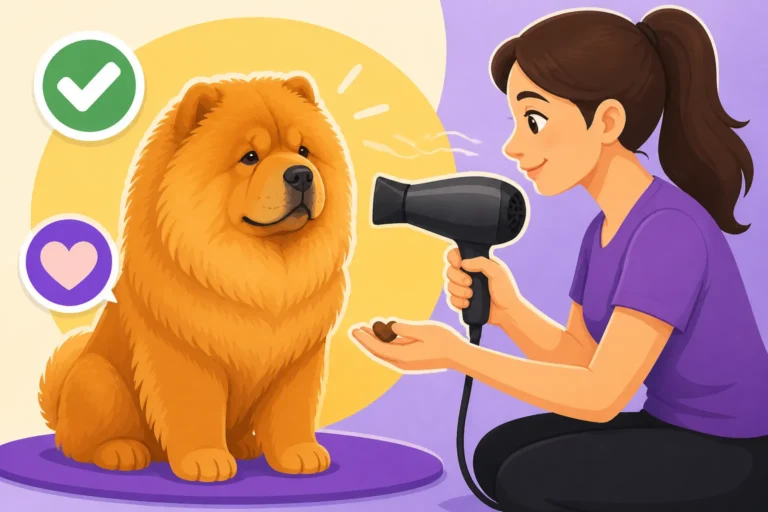
Chow Chows are intelligent, but they won't automatically grasp complex commands. Clicker training excels at breaking down desired behaviors into very small, achievable steps, then clicking and treating each successful micro-step. This is called "shaping." For example, if you want your Chow to "go to their mat," you might first click for looking at the mat, then for taking a step towards it, then for putting one paw on it, then two, and so on, until they are lying down comfortably on the mat. This incremental approach prevents frustration and builds their confidence as they repeatedly succeed. This method is fantastic for tasks like teaching them to accept grooming; rather than tackling a full brush-out, you can click for simply tolerating the brush near them, then touching them, then one stroke, gradually building up. How to Start Brushing a Chow Chow Puppy is a great example of applying this step-by-step approach.
Using Resources Like BAXTER & Bella for Guidance
When you're first starting with clicker training, especially with a breed as unique as the Chow Chow, having clear guidance can make all the difference. Many online programs and resources are built around positive reinforcement and can help you structure your sessions. For instance, programs like BAXTER & Bella offer comprehensive online puppy training that often incorporates clicker training, providing structured lessons and support. These kinds of resources can be invaluable for understanding the mechanics and timing, which are critical for success. They often provide video demonstrations that can help you visualize how to shape behaviors and maintain engagement, even with a discerning student like a Chow Chow.
Common Pitfalls and When to Seek Professional Help
Even with the best intentions and the right tools, clicker training a Chow Chow can present challenges. It's important to be aware of common pitfalls and know when it's time to bring in the big guns – a professional trainer.
Recognizing When You Are the Problem, Not the Clicker or the Dog
This might sound harsh, but it's often true: if clicker training isn't working for your Chow Chow, the issue usually lies with the human end of the leash. Are you being consistent with your timing? Is the reward truly high-value enough? Are your sessions too long, leading to boredom? Are you getting frustrated, which your sensitive Chow will pick up on immediately? A common mistake is clicking too late or delivering the treat too slowly, which confuses the dog. Another is asking for too much too soon. Reflecting honestly on your own technique and patience can often reveal the solution. Why a Chow Chow Shuts Down Under Pressure reminds us of the profound impact our demeanor has on them.
The Importance of Patience and Consistency
Patience is not just a virtue, it's a necessity when training a Chow Chow. They may not learn as quickly as a Border Collie, and they certainly won't rush to perform just because you asked. They need time to process, to decide if it's worth their while, and to build trust in the system. Consistency across all family members is also paramount. If one person uses the clicker correctly and another just yells commands, your Chow Chow will become confused and training will falter. Everyone interacting with the dog should be on the same page regarding cues, rewards, and the use of the clicker. This uniform approach helps solidify learning and reinforces the positive experience for your Chow.
When a Clicker Might Not Be Enough: Deeply Ingrained Behaviors or Reactivity
While clicker training is powerful, it's not a magic bullet for every behavior. If your Chow Chow has deeply ingrained problematic behaviors, such as significant reactivity towards other dogs or people, or severe resource guarding, a clicker alone might not be sufficient. These issues often require a more comprehensive behavior modification plan, which might integrate clicker training but will also involve environmental management, counter-conditioning, and desensitization protocols. The clicker can be a tool within that larger plan, but it's crucial to recognize its limits as a standalone solution for complex behavioral problems.
Seeking a Trainer Experienced in Independent Breeds
If you find yourself stuck, frustrated, or dealing with behavioral challenges that feel beyond your capabilities, don't hesitate to seek professional help. However, be incredibly selective. Look for a trainer who specializes in positive reinforcement and has experience with independent, guardian breeds like the Chow Chow. A trainer who understands their unique psychology, rather than trying to fit them into a generic training mold, will be invaluable. They can observe your interactions, fine-tune your clicker timing, help you identify the best motivators, and develop a tailored plan for your specific dog. Investing in a qualified trainer early can prevent many headaches down the line and strengthen your bond. Consider researching whether a professional trainer suits a Chow Chow to help you make this decision. For an adult rescue Chow Chow, particularly one with an unknown past, a trainer's expertise can be critical in helping them adjust and learn new ways of interacting; Whether an Adult Rescue Chow Chow Can Change delves into this. Lastly, always be mindful of How Long a Chow Chow Remembers a Bad Session, as negative experiences can set back training significantly.
Disclaimer
This article is for general informational purposes only and does not constitute professional advice. Laws, prices and regulations vary by location and change over time. Consult a qualified professional for guidance on your specific situation.