Why a Deshedding Treatment Costs More on a Chow Chow
If you've ever owned a Chow Chow, you'll know that their majestic, dense coats are truly a sight to behold – until shedding season hits. Then, your home transforms into a blizzard of fur, and the thought of tackling it yourself can be utterly overwhelming. When you finally decide to invest in a professional deshedding treatment, the price tag might make your jaw drop, leaving you wondering why this particular service costs so much more for your fluffy companion. This guide will meticulously break down the unique characteristics of the Chow Chow's coat, the challenges it poses, and why professional deshedding comes with a premium price, helping you understand every penny you spend on keeping your Chow comfortable and your home fur-free.
The Unique Challenges of the Chow Chow Coat
The Chow Chow's striking appearance is largely defined by its incredible coat, a marvel of nature designed for colder climates. However, this beautiful coat comes with its own set of care requirements that significantly impact the cost of professional grooming, especially when it comes to deshedding. It's not just a little loose hair; it's an entire ecosystem of fluff.
The Double Coat and Its Density
Unlike many breeds, the Chow Chow boasts a luxuriant double coat. This isn't just a fancy term; it means two distinct layers of hair with different purposes and textures. There's a soft, woolly, incredibly dense undercoat that acts as insulation, keeping them warm in winter and surprisingly helping to regulate their temperature in summer. Over this lies a coarser, straighter outer coat (or "guard hairs") that protects the undercoat from the elements.
This double layer is exceptionally thick, particularly in the rough-coated variety, giving them their characteristic lion-like mane and fluffy "britches" around their rear legs. Imagine trying to comb through a very thick wool blanket that's also attached to a dog who might not be thrilled about the process! Groomers often liken it to working with several coats piled on top of each other. Each strand of that undercoat is incredibly fine and easily interlocks with its neighbors, forming a tight, felt-like layer if not properly maintained. What a Chow Chow's Double Coat Is Made Of delves deeper into this unique structure. This density means more hair to remove, more time to get through it, and a higher demand on the groomer's tools and patience.
The Coat Blow Phenomenon
If you live with a Chow Chow, you're intimately familiar with the "coat blow." This isn't just regular shedding; it's an event, typically occurring twice a year, usually in spring and fall, where your Chow sheds massive amounts of its undercoat to prepare for the change in seasons. During a coat blow, it can feel like you could build another Chow Chow out of the sheer volume of fur coming off your dog. It's a natural process, but it's also a deeply frustrating one for owners who find themselves constantly battling fur tumbleweeds.
This intense shedding phase means that a groomer isn't just doing a routine tidying; they're undertaking a significant hair removal project. The amount of dead, loose undercoat present during a coat blow is staggering, and simply brushing the surface won't touch it. It requires deep, thorough work to extract all that insulating fluff. When a Chow Chow Blows Its Coat and How Long a Chow Chow's Coat Blow Lasts further illustrate the scale and duration of this furry phenomenon. This period demands a much more extensive and time-consuming deshedding treatment than you'd expect for a dog of similar size but with a simpler coat.
Matting and Undercoat Impaction
One of the biggest culprits behind high deshedding costs is matting, especially undercoat impaction. Because the Chow Chow's undercoat is so dense and fine, it's incredibly prone to matting if not brushed regularly and thoroughly down to the skin. During a coat blow, if the dead undercoat isn't removed, it can quickly become compacted, trapping moisture and debris, leading to painful mats. These mats often form in high-friction areas like behind the ears, under the armpits, on the belly, and in the "britches."
Once a mat forms, it's not just a cosmetic issue; it pulls on the dog's skin, causing discomfort and potentially leading to skin infections. A groomer cannot effectively deshed a matted coat. Mats must be carefully worked out, which is a slow, tedious, and often uncomfortable process for the dog. In severe cases, mats might be too tight to brush out and may require shaving the affected areas, which then adds to the groomer's time and effort. Why a Groomer Charges More for a Matted Chow Chow explains in detail how this situation escalates costs. Preventing mats with consistent home grooming is key, but when they do happen, they instantly elevate the complexity and cost of a professional deshedding service.
Why Deshedding a Chow Chow is Labor-Intensive
Understanding the unique characteristics of the Chow Chow's coat helps explain what needs to be done, but it's equally important to grasp why that work is so labor-intensive for a professional groomer. It's far more than just a quick brush-through; it's a multi-step process demanding specialized skills and equipment.
Time and Technique Required
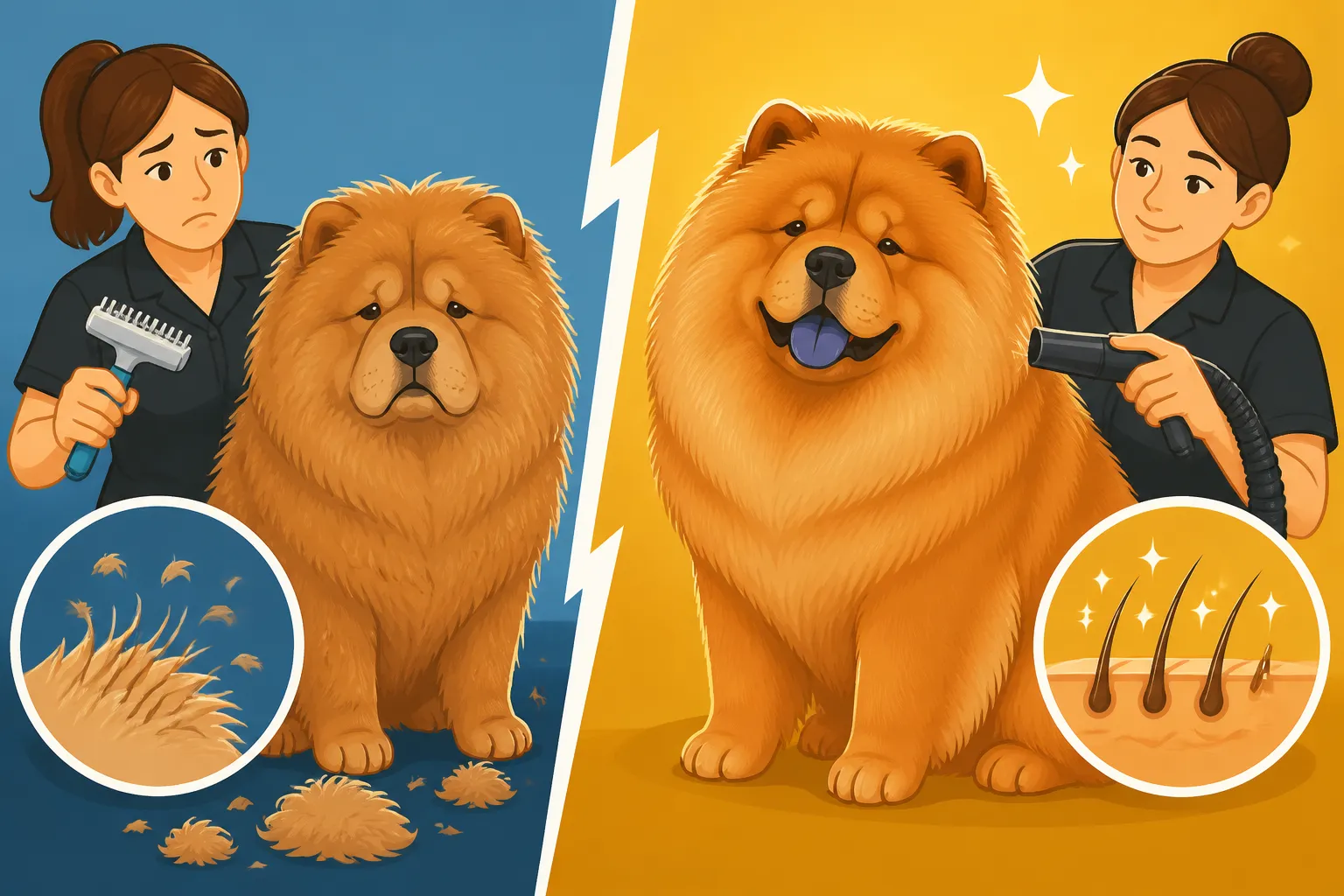
Deshedding a Chow Chow is a significant time commitment. It's not a 30-minute job. A thorough deshedding treatment can easily take a professional groomer several hours, sometimes even longer for particularly dense or impacted coats. This extended duration is due to the specific techniques required. A groomer must meticulously "line brush" the coat, section by section, starting from the skin and working outwards. This ensures every layer of that dense undercoat is reached and the dead hair is systematically removed. How to Line Brush a Chow Chow provides insights into this technique.
Furthermore, a high-velocity force dryer is indispensable. After bathing, the groomer will use this powerful dryer to literally "blow" the dead undercoat out of the dog's fur. This process is noisy, messy, and requires significant skill to ensure the dog is comfortable and the coat is dried thoroughly down to the skin to prevent skin issues. It's a physically demanding task for the groomer, requiring them to stand for extended periods, manipulating the coat and dryer. The sheer volume of hair that comes off during this stage can be astonishing, creating a small dust storm of Chow fur.
Specialized Equipment and Products
To effectively deshed a Chow Chow, groomers need more than just a standard brush. They invest in specialized tools designed to penetrate dense double coats without damaging the skin or the guard hairs. This includes sturdy undercoat rakes, wide-toothed combs, and high-quality slicker brushes. These tools are often more expensive than those used for single-coated breeds and need regular replacement or sharpening. Whether an Undercoat Rake Suits a Chow Chow outlines the effectiveness of such tools.
Beyond the tools, professional-grade shampoos and conditioners formulated for dense coats are used to help loosen dead hair and ensure proper skin health. These products are concentrated and designed for deep cleaning and conditioning, and they come at a higher cost than everyday pet shampoos. The groomer's facility also needs specialized ventilation and cleaning systems to handle the immense amount of shedding that occurs during a Chow Chow deshedding session. You can find many excellent grooming tools and high-quality pet products, including those suitable for Chows, on platforms like Chewy, making home maintenance a bit easier.
Groomer Expertise and Handling
Perhaps one of the most significant factors influencing the cost is the expertise and handling skills required. Chow Chows are renowned for their independent and sometimes aloof nature. While they are loyal to their families, they can be wary of strangers and may not always enjoy being handled by someone new, especially for an invasive procedure like a thorough deshedding. This means a groomer working with a Chow Chow needs exceptional patience, a deep understanding of canine body language, and specific techniques to build trust and ensure a positive (or at least tolerable) experience.
Not all groomers are equipped or willing to work with Chows, precisely because of their temperament and the complexity of their coats. Those who do are often highly experienced professionals who have honed their skills specifically with challenging or dense-coated breeds. They know how to read a Chow's signals, minimize stress, and safely and effectively perform the grooming tasks. This specialized skill set commands a higher fee, as it should. If your Chow has a history of being difficult at the groomer, or if their deep-set eyes make it hard for them to see approaches from the side, adding to their wariness, the groomer might need even more time and careful handling, which will naturally be reflected in the price.
The Cost Breakdown: What You're Paying For
When you look at the bill for a Chow Chow deshedding treatment, it's not just a random number. It's a reflection of the accumulated factors discussed above: the time, the skill, the tools, and the sheer volume of work involved. Let's break down where those costs generally come from.
Hourly Rates and Service Complexity
Most professional groomers operate on an hourly rate, or they price services based on breed, coat condition, and time estimated. For a Chow Chow, the sheer amount of time needed for a full deshedding — which includes bathing, conditioning, meticulous high-velocity drying, and thorough brushing — means the hourly meter runs significantly longer. A standard bath and brush for a short-haired dog might take an hour; for a Chow Chow, you're often looking at two to four hours, or even more, depending on the coat's condition.
This extended time also reflects the physical toll on the groomer. It's not light work; it involves strenuous brushing, operating powerful dryers, and constantly moving around the dog to reach every part of that dense coat. You're paying for their expertise, their physical labor, and the dedicated slot in their schedule that could have been filled by multiple shorter appointments. This complexity is why the baseline cost for a Chow Chow deshedding is almost always higher than for most other breeds.
Additional Fees for Matting or Behavior
If your Chow Chow arrives at the salon with significant matting or undercoat impaction, expect additional fees. As mentioned earlier, mats are painful and time-consuming to remove. Groomers must carefully and gently work through them, often using special detangling sprays and tools. This process adds considerable time to the appointment. In severe cases, where mats are too tight or extensive, the safest and most humane option is often to carefully shave the dog underneath the mats, which requires a completely different approach and skill set, incurring a higher charge. Why a Groomer Charges More for a Matted Chow Chow further details how matting drives up costs.
Similarly, if your Chow Chow is particularly anxious, fearful, or reactive during grooming, requiring extra staff, specialized handling techniques, or even sedatives administered by a vet (which is a separate cost you'd arrange with your vet), these factors contribute to increased costs. A groomer's priority is the safety and well-being of the dog and themselves, so extra time and resources spent managing difficult behavior will be factored into the final price.
Comparing Professional vs. Home Grooming Costs
It's tempting to think that home grooming could save a fortune, and it certainly can reduce the frequency of professional visits. However, it's important to understand the investment required for effective home deshedding for a Chow Chow.
| Aspect | Home Grooming | Professional Deshedding |
|---|---|---|
| Initial Cost | High (high-velocity dryer, quality brushes, rake) | None (groomer covers equipment) |
| Ongoing Cost | Shampoos, conditioners, replacement brushes, towels | Per session fee (higher) |
| Time Investment | Significant (hours weekly, even more during blow) | Significant (hours per session, less frequent) |
| Effort | High (physical, messy, requires learning technique) | Moderate for owner (drop off/pick up) |
| Skill Required | High (must learn proper line brushing, drying, mat removal) | High (groomer's expertise) |
| Results | Good, if done consistently and correctly | Excellent, thorough, professional finish |
| Stress for Dog | Potentially less if accustomed to owner | Variable, depends on dog's temperament and groomer |
While the upfront cost of a good What a High Velocity Dryer Costs a Chow Chow Owner and quality brushes can be substantial, consistent home grooming can indeed reduce your professional grooming bills significantly. Platforms like Chewy offer a wide range of these tools, making them accessible. However, it requires a serious time commitment; How Long Home Grooming a Chow Chow Takes Weekly can easily be several hours. Many owners opt for a hybrid approach: regular maintenance at home, with professional deshedding treatments scheduled during intense coat blows or when mats start to become unmanageable.
How to Manage Deshedding Costs for Your Chow Chow
While the cost of deshedding a Chow Chow is undeniably higher than for many other breeds, there are proactive steps you can take to manage these expenses and ensure your furry friend remains comfortable and healthy. It's all about consistency and prevention.
Regular Home Maintenance
The single most effective way to reduce your professional deshedding bills is consistent and thorough home grooming. This isn't just a suggestion; it's a necessity for a Chow Chow. Aim for at least 2-3 brushing sessions per week, and increase this to daily during a coat blow. You must brush down to the skin, not just over the top layer, using an undercoat rake and a slicker brush. How Often a Rough Coated Chow Chow Needs Brushing is a good guideline to follow. If you don't reach the undercoat, you're not preventing mats.
Invest in a good quality high-velocity dryer if you bathe your Chow at home. This tool is invaluable for quickly and thoroughly drying the dense coat, preventing dampness-related skin issues, and, crucially, helping to blow out dead undercoat. It’s a worthwhile investment that pays for itself by reducing professional drying time or preventing major matting. Consider using a de-shedding shampoo and conditioner during home baths to help loosen dead fur. While a deshedding treatment isn't typically covered by pet insurance, maintaining overall health and addressing skin issues proactively, which might be supported by a plan from Healthy Paws, can indirectly impact grooming ease and cost. A healthy coat is easier to groom.
Choosing the Right Groomer
Finding a groomer who is experienced and comfortable with Chow Chows is paramount, even if it means paying a bit more initially. Don't just go for the cheapest option; look for a professional with a proven track record with double-coated, independent breeds. Ask for recommendations, check reviews, and don't hesitate to ask specific questions about their experience with Chows, their deshedding process, and their handling techniques.
A good groomer will also be transparent about their pricing structure and any potential extra fees. They should be able to give you an estimate based on your Chow's size, coat condition, and temperament. Building a relationship with a single groomer who understands your dog can lead to a more comfortable experience for your Chow and potentially more predictable pricing for you over time. They might even offer package deals for regular deshedding appointments, which can be cost-effective in the long run.
Proactive Care and Nutrition
A healthy coat begins from within. Feeding your Chow Chow a high-quality, balanced diet can significantly contribute to coat health, reducing excessive shedding and improving overall skin condition. Look for foods rich in omega fatty acids, which are beneficial for skin and coat. Perhaps explore fresh food options, like the carefully formulated meals offered by Ollie, which can contribute to a lustrous coat. A healthy coat is less prone to excessive shedding and matting.
Beyond diet, ensure your Chow Chow has a comfortable environment, especially during warmer months. Overheating can sometimes lead to increased shedding as the body tries to regulate temperature. Providing adequate hydration and a cool living space helps maintain skin and coat health. Regular veterinary check-ups are also crucial to rule out any underlying health issues, such as thyroid problems or allergies, that might be contributing to poor coat condition or excessive shedding. Addressing these issues promptly can make a big difference in how manageable your Chow's coat becomes, and thus, how much you spend at the groomer.
Disclaimer
This article is for general informational purposes only and does not constitute professional advice. Laws, prices and regulations vary by location and change over time. Consult a qualified professional for guidance on your specific situation.