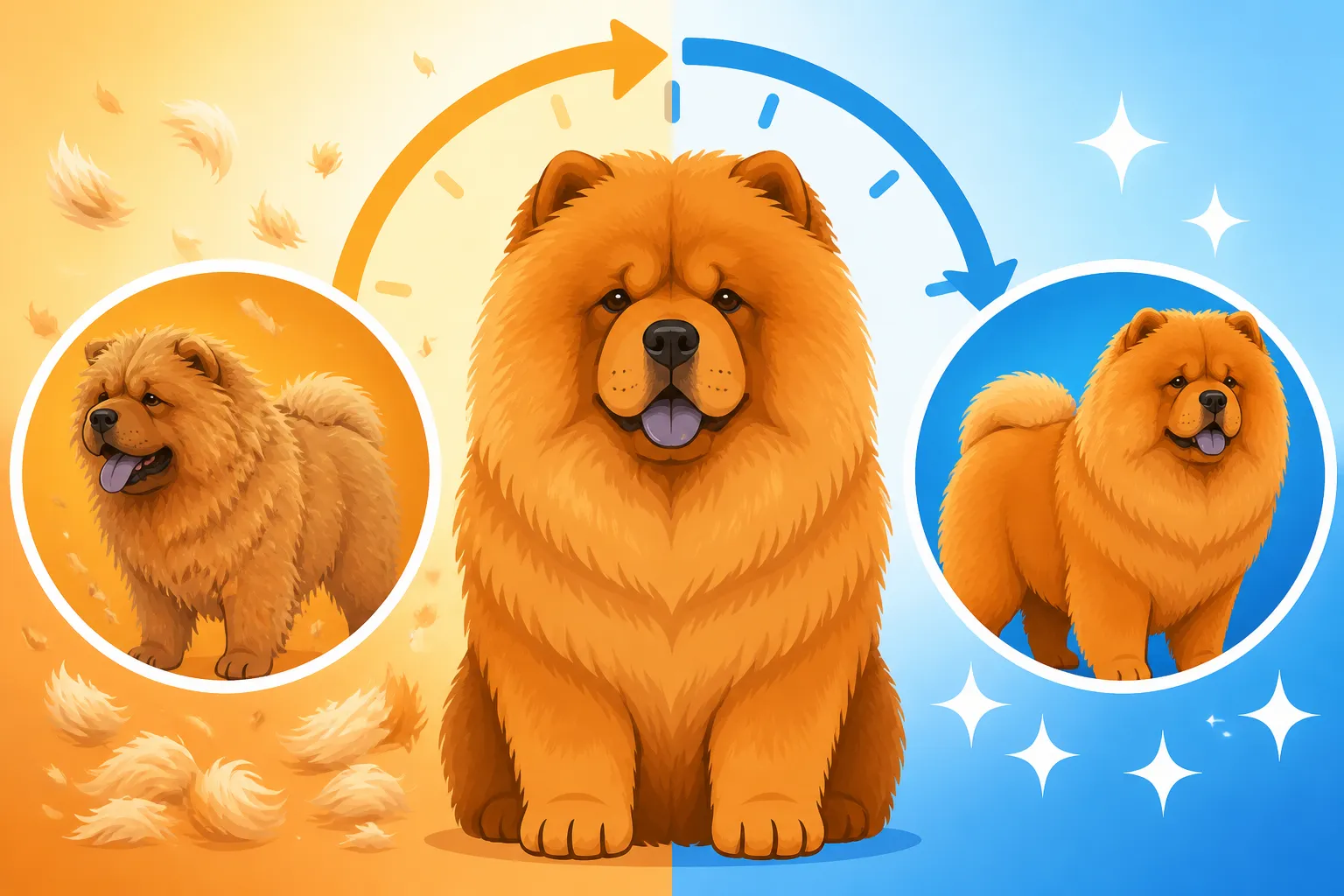
How Long a Chow Chow’s Coat Blow Lasts
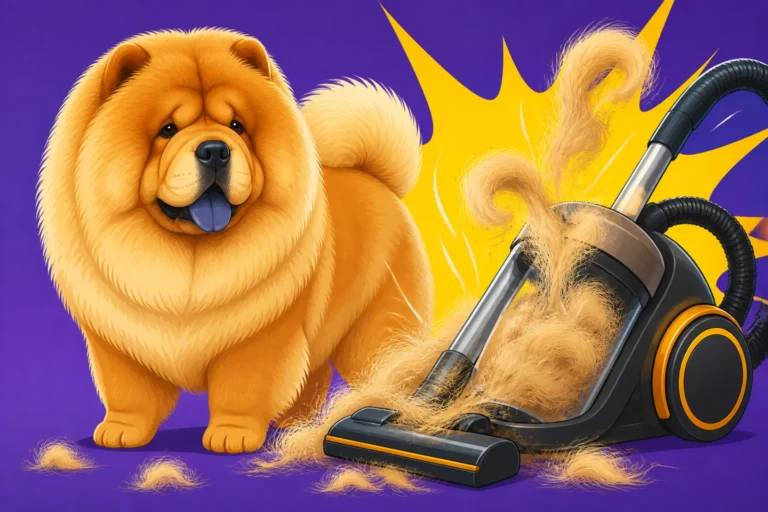
One of the most common frustrations for Chow Chow owners, especially those new to the breed, is the sheer volume of fur that seems to erupt from their beloved companion during what's known as a "coat blow." It feels like an endless snowstorm of fluff, leaving you wondering if your beautiful, fluffy friend will ever stop shedding. This guide will walk you through the specifics of a Chow Chow's coat blow, explaining how long you can expect it to last, what triggers it, and most importantly, how to manage it effectively without losing your sanity (or your vacuum cleaner).
Understanding the Chow Chow's Magnificent Double Coat
Before we dive into the nitty-gritty of coat blows, it’s crucial to appreciate the Chow Chow's unique coat structure. This isn't just a thick layer of fur; it's a sophisticated, ancient marvel designed for survival in harsh climates. Understanding its components helps explain why the shedding process is so intense.
What Makes Up a Chow Chow's Coat?
Your Chow Chow isn't just sporting one layer of fur, but two distinct types, working in tandem to protect them from the elements. This is their famous double coat, a characteristic that defines much of their care needs. The outer layer, often called the guard coat, consists of longer, coarser, and somewhat stiffer hairs. These hairs are remarkably durable and water-resistant, acting like a natural shield against rain, snow, and even the abrasive elements of the wilderness their ancestors once roamed. This is the part of the coat that gives the Chow Chow its iconic "lion's mane" appearance, especially around the neck and shoulders.
Beneath this protective outer layer lies the second, arguably more critical, component: the undercoat. This is where all that legendary Chow Chow fluff truly originates. The undercoat is a dense, soft, woolly layer of fine hair that serves as insulation. In cold weather, it traps warm air close to the body, keeping your Chow toasty. In warmer weather, it actually helps regulate body temperature by preventing excessive heat from penetrating to the skin, acting as a natural buffer. This is a common misconception – many people think more fur means hotter, but a healthy undercoat is key to staying cool. When we talk about a "coat blow," it's primarily this insulating undercoat that is being shed, making way for new growth or simply lightening the load for the warmer months. You can learn more about the structure in What a Chow Chow's Double Coat Is Made Of.
The Difference Between Rough and Smooth Coats
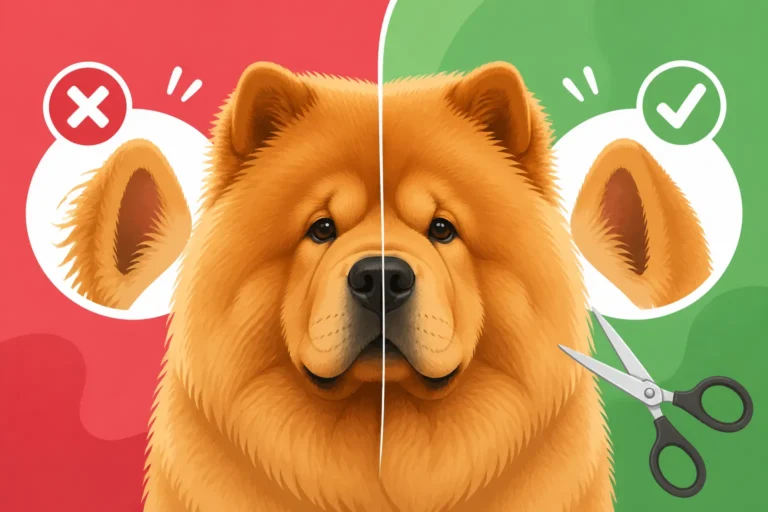
While both rough and smooth-coated Chows possess that essential double coat, their appearance and the management of their coat blows can differ significantly. The rough coat is what most people picture: long, abundant, and dense, forming a prominent ruff around the head and neck, feathering on the legs, and a heavily plumed tail. When a rough-coated Chow experiences a coat blow, it's a truly spectacular event. The amount of fur that comes out can be astonishing, often filling multiple grocery bags over the shedding period. Mats can form quickly and deeply if not managed diligently, especially in the areas where the fur is longest and thickest, like behind the ears, under the armpits, and in the "britches" on their hind legs.
In contrast, the smooth-coated Chow Chow has a shorter, denser outer coat with no significant ruff or feathering. While they still have a substantial undercoat and will absolutely "blow" it, the shedding might appear less dramatic to the untrained eye simply because the hairs are shorter. However, don't let the shorter length fool you; a smooth coat still sheds profusely, and the dense undercoat can still pack together if neglected. The smooth coat might feel a little easier to brush on a daily basis, but the underlying shedding dynamic during a coat blow remains largely the same. Both types require commitment to grooming, especially during these periods of intense shedding.
The Phenomenon of the Coat Blow
A coat blow isn't just regular shedding; it's an accelerated, often dramatic shedding cycle where your Chow Chow expels a significant portion of its undercoat. It's a natural, healthy process, but it can certainly test an owner's patience and vacuum cleaner's limits!
What Triggers a Coat Blow?
The primary trigger for a Chow Chow's coat blow is seasonal change. As the days lengthen and temperatures rise in spring, Chows typically begin to shed their heavy winter undercoat to prepare for warmer weather. This allows their bodies to cool more efficiently. Conversely, in the autumn, as temperatures drop and daylight hours shorten, they'll often shed out old undercoat to make way for a fresh, thicker winter coat that will provide maximum insulation against the cold. It’s their body’s natural thermostat at work.
Beyond the seasons, hormones play a significant role. Intact females, for example, often experience a massive coat blow after a heat cycle or after weaning a litter of puppies. The hormonal fluctuations associated with reproduction can cause a sudden and dramatic release of undercoat, sometimes turning a beautiful, fluffy girl into a rather sparse-looking creature almost overnight. While less common, male Chows can also have hormonal influences on their coat cycles, though typically not as pronounced as in females. Even changes in diet, stress levels, or underlying health issues can sometimes trigger or prolong shedding, so it's always wise to keep an eye on any sudden, atypical changes in coat condition.
Signs Your Chow Chow Is Entering a Coat Blow
You'll know when your Chow Chow is entering a coat blow. Trust me, you won't be able to miss it! The most obvious sign is a significant increase in the amount of fur you find around your home. What might have been a few tumbleweeds of fur will transform into entire drifts, collecting in corners, under furniture, and clinging to every surface imaginable. You'll brush your dog, and instead of a handful of hair, you'll pull off what feels like enough to stuff a pillow.
Visually, the coat might start to look a bit "loose" or "fluffy" rather than sleek and compact. If you gently pull at the fur, especially the undercoat, it will come out easily in large tufts, almost as if it's detaching from the skin. Sometimes, you might even see patches where the undercoat appears thinner or has completely detached from the skin, leaving the coarser guard hairs more prominent. Your Chow might also become a bit itchy as the shedding hair irritates their skin. They may start scratching or rubbing against furniture more often. This is a crucial time to increase your grooming efforts, not just for your sanity, but for your dog's comfort and skin health. Ignoring these signs can lead to painful matting and skin issues underneath the dense fur. You can tell How Much a Chow Chow Sheds by the volume you'll find around your house.
How Long Does a Coat Blow Typically Last?
This is the million-dollar question for many Chow Chow owners. The honest answer is that it varies, but understanding the typical duration and the factors that influence it can help manage expectations.
Average Duration and Variability
For most Chow Chows, a full, noticeable coat blow typically lasts anywhere from 2 to 4 weeks. During this period, you'll be actively removing large quantities of undercoat. However, it's important to understand that this is an average, and there's considerable variability. Some Chows might power through it in closer to two weeks, especially if they are meticulously groomed daily. Others, particularly those with exceptionally dense coats or certain hormonal triggers, might shed heavily for closer to a month, or even longer in milder, less distinct seasonal climates where their bodies don't get a clear signal for a dramatic change.
Factors like your specific climate play a huge role. A Chow living in a region with distinct, strong seasons (e.g., very cold winters and hot summers) might have two very pronounced coat blows a year. One in the spring to shed the winter coat, and a lesser one in the fall to prepare for new winter growth. Chows in more temperate climates, or those who spend a lot of time indoors in climate-controlled environments, might have a more continuous, lighter shedding year-round, punctuated by a couple of slightly heavier periods that aren't quite as dramatic as a full "blow." Individual genetics and overall health also influence the duration and intensity. A healthy Chow with a good diet will generally have a more efficient and predictable shedding cycle than one with underlying health issues affecting skin and coat.
The "Never-Ending" Coat Blow
Sometimes, it can feel like your Chow Chow is always shedding, and the coat blow simply never ends. While a continuous, heavy blow is unlikely, there are several reasons why it might feel that way, and why some Chows do shed more consistently.
Firstly, even outside of a full coat blow, Chow Chows are moderate to heavy shedders year-round. Their double coat means there's always some level of hair turnover. If you're not brushing regularly (say, 2-3 times a week), even this baseline shedding can accumulate and make it seem like a constant state of coat blow. Secondly, if your Chow lives primarily indoors, especially in a home with consistent heating and air conditioning, their body might not get the strong seasonal cues that trigger a distinct, short, intense blow. Instead, they might shed a moderate amount of undercoat continuously throughout the year, without the dramatic "dumping" that outdoor Chows or those in more natural environments experience. This can lead to a feeling of perpetual shedding. You can read more about When a Chow Chow Blows Its Coat to understand the typical timing.
Lastly, inadequate grooming can make any shedding seem worse. If the dead undercoat isn't being regularly removed with proper tools, it sits trapped in the coat, only to release in bigger clumps when disturbed, making the problem seem more severe than it is. It's a bit like a dam building up: if you don't release a little water consistently, you'll have a flood when it finally breaks.
Managing Your Chow Chow Through a Coat Blow
Successfully navigating a Chow Chow's coat blow requires commitment, the right tools, and a bit of patience. But with a solid routine, you can minimize the mess and keep your Chow comfortable.
Essential Grooming Tools and Techniques
The cornerstone of managing a coat blow is consistent, thorough grooming. You can't just lightly brush the top coat; you need to get down to the skin to remove that dense, shedding undercoat.
Here's what you'll need:
- Slicker Brush: A good quality slicker brush is excellent for working through the outer coat and starting to lift the loose undercoat. It helps to separate hairs and get a superficial layer of dead fur out.
- Undercoat Rake: This is arguably the most crucial tool during a coat blow. An undercoat rake has long, sturdy teeth designed to penetrate the dense guard coat and pull out the loose, woolly undercoat without cutting the healthy outer hairs. Brands like Furminator, though often debated, or simpler, high-quality rakes found on Chewy or Amazon, are essential. Use it carefully, ensuring you're not dragging it across the skin.
- Pin Brush: Useful for longer areas like the ruff and feathering, and for general detangling.
- Metal Comb: A coarse-to-fine metal comb is perfect for checking your work and finding any small tangles or mats that the brushes might have missed, especially behind the ears and in the britches.
Techniques: The key is "line brushing." This involves parting the coat horizontally, layer by layer, and brushing upward from the skin out. You start at the bottom (e.g., the belly or hind leg) and work your way up the body, ensuring you brush every section down to the skin. This systematic approach ensures no loose undercoat is left behind to mat. For a rough-coated Chow, this can take a significant amount of time, sometimes an hour or more for a thorough session during a peak blow. How Long Brushing a Rough Chow Chow Takes is not a quick process, but a necessary one.
During a coat blow, you should aim to brush your Chow Chow daily, or at least every other day. Outside of a blow, How Often a Rough Coated Chow Chow Needs Brushing is typically 2-3 times a week. The goal isn't just to collect the fur, but to stimulate the skin, distribute natural oils, and prevent matting, which can lead to painful skin infections.
Bathing Strategies During a Coat Blow
Bathing can actually be a very effective way to accelerate the removal of loose undercoat during a blow, but it must be done correctly. Simply bathing without proper preparation can make things worse.
- Pre-Bath Brushing: Never bathe a Chow Chow that has mats or heavily tangled undercoat. Water will tighten mats like concrete, making them nearly impossible to remove without shaving. Thoroughly brush your Chow before bathing to remove as much loose hair and as many tangles as possible.
- Deshedding Shampoo and Conditioner: There are specialized deshedding shampoos and conditioners available, often containing ingredients that help loosen dead hair. These can be helpful in the bath. Lather up well, making sure the water and shampoo penetrate all the way to the skin.
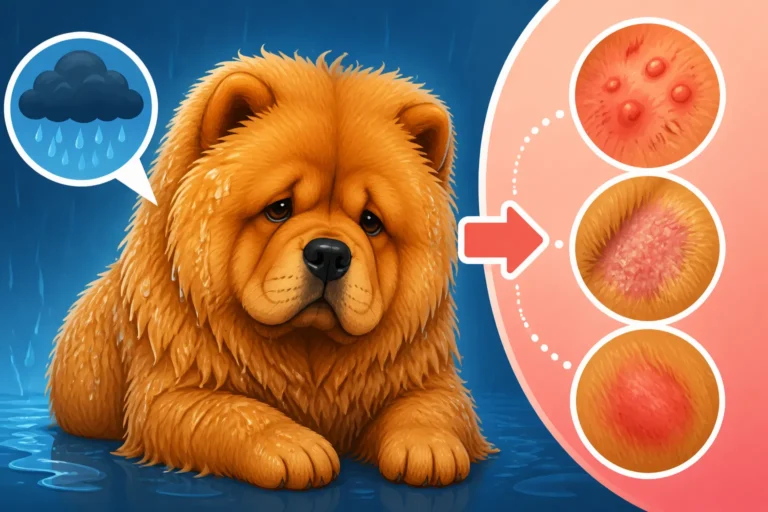
- Rinsing and Drying are Key: Rinse, rinse, and rinse again. Any shampoo residue left behind can irritate the skin. But the most critical step after the bath is drying. A Chow Chow's dense double coat must be dried completely, right down to the skin. This isn't just about preventing mildew smell; it's about preventing skin infections (hot spots) that thrive in damp, warm environments hidden beneath their thick fur. A high-velocity dog dryer is an absolute game-changer here. It literally blasts water out of the coat and helps to "blow out" even more loose undercoat, significantly speeding up the shedding process. Without one, drying can take hours, and air-drying is simply not an option for a Chow. Learn Whether a High Velocity Dryer Helps a Chow Chow Shed and consider investing in one; you won't regret it.
Nutritional Support for Coat Health
While good grooming is paramount, a healthy coat also starts from within. What you feed your Chow Chow can significantly impact the health, strength, and resilience of their fur, potentially making coat blows a little less arduous.
- High-Quality Diet: Ensure your Chow Chow is eating a high-quality, balanced diet rich in protein and healthy fats. Look for dog foods that list real meat as the first ingredient. Brands like Ollie, known for fresh, human-grade dog food, can provide excellent nutrition that supports overall health, including skin and coat. A diet lacking in essential nutrients can result in a dull, brittle coat that sheds excessively and doesn't regenerate well.
- Omega Fatty Acids: Omega-3 and Omega-6 fatty acids are particularly beneficial for skin and coat health. These can be found in fish oil supplements or in diets formulated with ingredients like salmon or flaxseed. They help keep the skin hydrated and the hair follicles strong, leading to a healthier, shinier coat and potentially reducing excessive or dry shedding. Whether a Chow Chow Needs Fish Oil for Its Coat is a common question, and for many, it can make a noticeable difference.
- Hydration: Always ensure your Chow has access to fresh, clean water. Good hydration is vital for skin health, and a healthy skin barrier contributes to a healthy coat.
By focusing on internal health through nutrition, you're giving your Chow Chow the best possible foundation for a robust coat that sheds efficiently and without undue complications.
Common Misconceptions and What to Avoid
When dealing with a Chow Chow's coat blow, there are some common pitfalls that new and even experienced owners can fall into. Understanding these can save you a lot of grief and prevent harm to your dog.
The Shaving Myth
This is perhaps the most persistent and damaging misconception regarding a Chow Chow's coat. Many owners, overwhelmed by the sheer volume of shedding during a coat blow or worried about heat, consider shaving their Chow. The belief is that it will make them cooler or stop the shedding. This is a myth, and it's actually detrimental to your Chow Chow's health and coat.
Here's why you should never shave a Chow Chow:
- Loss of Insulation: The double coat provides both warmth in winter and crucial insulation against heat in summer. Shaving removes this natural barrier, exposing their delicate skin directly to the sun's harsh UV rays, which can lead to sunburn and increased risk of skin cancer. It also makes it harder for them to regulate their body temperature, actually making them hotter in direct sunlight.
- Coat Damage: The Chow Chow's coat is designed to grow in a specific cycle, with the guard hairs protecting the undercoat. Shaving can disrupt this cycle, often leading to a condition called "post-clipping alopecia," where the undercoat grows back softer, duller, and sometimes in patchy sections, or the guard hairs may not grow back at all, leaving a permanently altered and less functional coat. Why a Chow Chow Must Never Be Shaved is a crucial piece of knowledge for any owner.
- Increased Shedding (Paradoxically): When the coat grows back, it can often be a messy, unruly mix of guard hairs and undercoat, which can mat more easily and shed more frequently as the body tries to re-establish a healthy coat structure.
- Skin Issues: The exposed skin is more prone to nicks, irritation, and allergic reactions from environmental factors. The coarse guard hairs are necessary for protection.
Instead of shaving, focus on rigorous brushing, bathing, and using a high-velocity dryer to remove the dead undercoat, which is the actual source of their cooling mechanism.
Ignoring the Shed
Another mistake owners can make is to simply try to ignore the shedding, hoping it will resolve itself. This is particularly problematic with a breed like the Chow Chow, and it comes with several negative consequences:
- Painful Matting: The dead undercoat, if not removed, will quickly tangle with the live hair, forming dense, painful mats. These mats pull on the skin, causing discomfort and pain, and can restrict movement. They are often impossible to brush out once they form and may require professional grooming to shave them off, which can be an uncomfortable and expensive process for your dog.
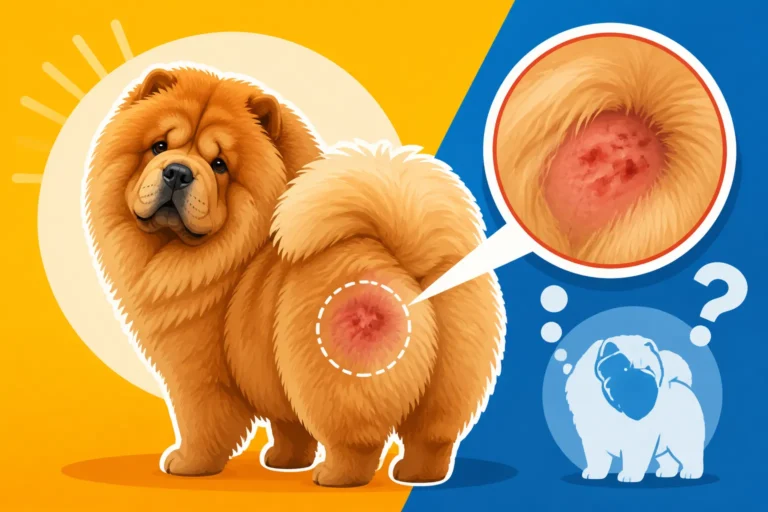
- Skin Infections (Hot Spots): Mats trap moisture, dirt, and parasites close to the skin. This creates a perfect breeding ground for bacteria and yeast, leading to hot spots, skin infections, and other dermatological issues. Remember, Why a Chow Chow's Dense Coat Hides Skin Disease makes these problems harder to spot early.
- Overheating: A coat full of dead, trapped undercoat acts like a heavy blanket, making it much harder for your Chow to regulate their body temperature, especially in warm weather. This increases their risk of overheating.
- Unsanitary Conditions: Loose hair everywhere is not only aesthetically unpleasing but can become unsanitary. It collects dirt and allergens, both for your dog and for your home environment.
Effective management means embracing the process. While it can be a lot of work, it's an essential part of responsible Chow Chow ownership. The more proactive you are with grooming during a coat blow, the less severe the problems will be, and the more comfortable your furry friend will remain. Consider the cost of an undercoat rake for a Chow Chow as an essential investment.
Seasonal Coat Blow Management at a Glance
To give you a quick overview, here's a table summarizing the typical shedding patterns and management strategies for a Chow Chow's coat blow.
| Season | Primary Trigger | Main Shed Type | Duration (Typical) | Key Management Strategies |
|---|---|---|---|---|
| Spring | Rising Temps, Longer Days | Heavy Undercoat Shed (Winter coat) | 2-4 Weeks | Daily line brushing with undercoat rake, deshedding bath + HV dryer, increase vacuuming. |
| Summer | Maintaining Cool | Lighter, continuous shedding | Ongoing | Regular (2-3x/week) brushing, keep cool, check for hot spots. |
| Autumn | Dropping Temps, Shorter Days | Moderate Undercoat Shed (Summer coat) | 1-3 Weeks | Regular line brushing, prepare for winter growth, nutritional support. |
| Winter | Maintaining Warmth | Minimal shedding (unless indoors consistently heated) | Sporadic | Weekly brushing to prevent mats, monitor skin in dry air. |
Remember, these are general guidelines, and individual Chows may vary based on genetics, lifestyle, and environment. A Chow Chow’s overall coat changes What Changes in an Aging Chow Chow's Coat, which can also impact shedding patterns. Consistency is key! To help get How to Get a Chow Chow Through a Coat Blow Faster, be diligent with your grooming routine.
The coat blow is a challenging but temporary phase of Chow Chow ownership. With the right tools, knowledge, and consistent effort, you can keep your Chow comfortable, healthy, and looking magnificent, even when the fur seems to be flying everywhere. It’s all part of the unique joy and responsibility of sharing your life with this incredible breed.
Disclaimer
This article is for general informational purposes only and does not constitute professional advice. Laws, prices and regulations vary by location and change over time. Consult a qualified professional for guidance on your specific situation.