Why a Chow Chow’s Rear Nails Wear Unevenly
It can be quite perplexing, can't it? You might be diligently keeping up with your Chow Chow's grooming, trimming those impressive nails regularly, only to notice that the rear claws, particularly on one side, seem to wear down differently or grow at odd angles. This guide is here to shed light on why your Chow Chow's rear nails might be showing uneven wear, diving into the unique characteristics of the breed that contribute to this common observation, and offering practical advice to help you manage it.
The Distinctive Chow Chow Gait and Its Effect on Paws
Chow Chows are a truly unique breed, not just in their fluffy appearance and independent spirit, but also in how they move through the world. Their distinctive anatomy plays a huge role in everything from their exercise needs to, yes, even how their nails wear down.
The "Stilted" Movement and Weight Bearing
If you've ever watched a Chow Chow walk, you've probably noticed something a bit different about their stride – it often appears rather stiff or "stilted." This isn't usually a sign of pain or discomfort, but rather a characteristic feature of the breed's conformation. Their straight rear angulation, which we'll discuss more in a moment, results in less flexion and extension in their hocks and stifles compared to most other breeds. Instead of the long, ground-covering strides you might see in a German Shepherd or a Setter, a Chow Chow tends to take shorter, more deliberate steps.
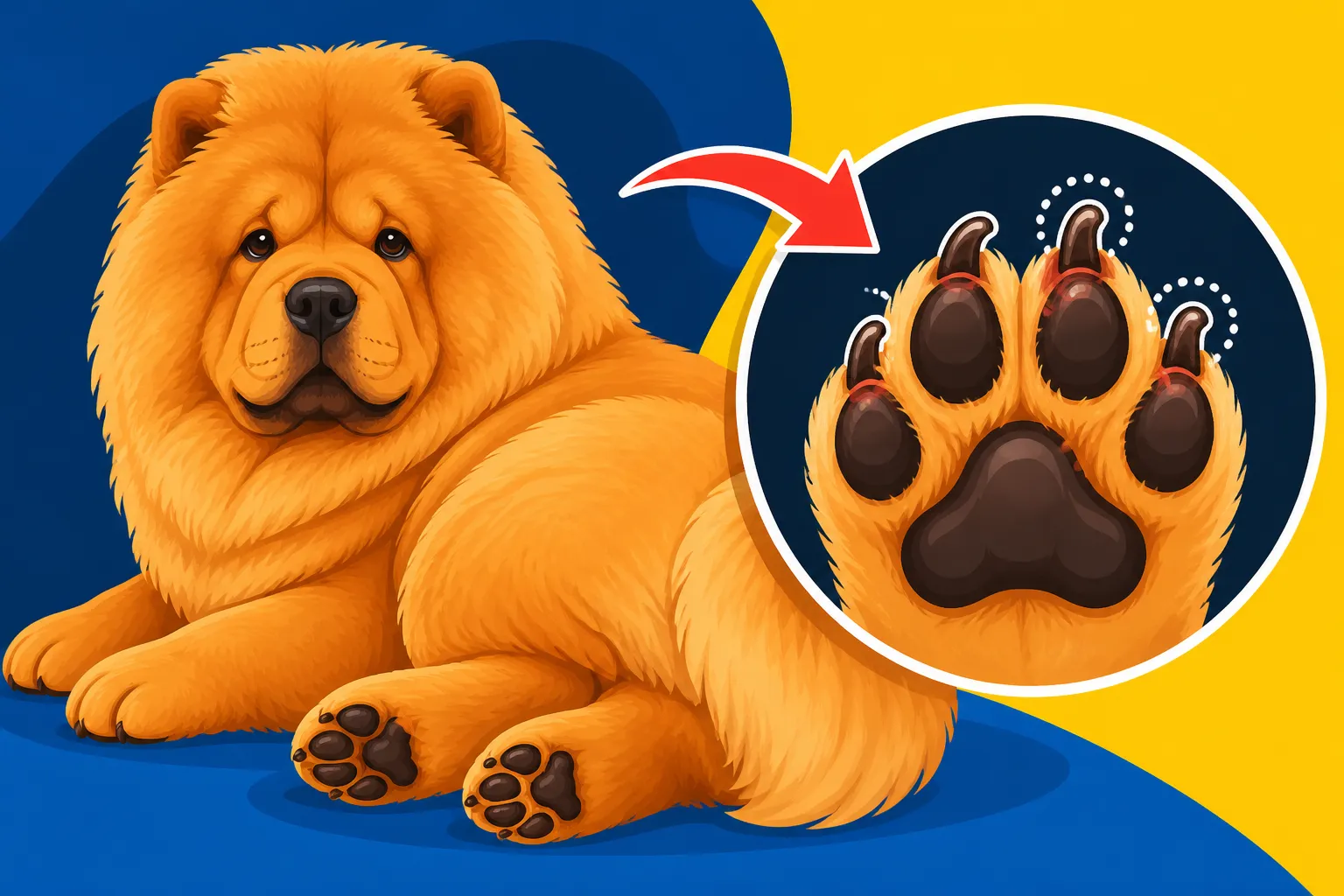
This stilted movement directly impacts how their paws interact with the ground. When a dog with more angulation pushes off, there's a rolling motion from the pad to the tips of the toes, distributing pressure fairly evenly. For a Chow Chow, that dynamic is altered. The straighter rear assembly means less spring in their step, and consequently, the weight might not be distributed across the entire nail surface in the same way. One side of the nail might consistently hit the ground with more force, or at a slightly different angle, leading to preferential wear on that specific area. Over time, this can result in some nails appearing shorter or more filed down on one side, while others remain longer or develop sharper points. It's a subtle difference, but it accumulates.
Straight Rear Angulation's Role
The cornerstone of the Chow Chow's distinctive movement is its straight rear angulation. This anatomical feature means that the bones in their hind legs—the femur, tibia, and fibula—form a less acute angle at the knee (stifle) and hock joints than is typical for many dog breeds. Imagine a human leg: most people have a natural bend at the knee. A Chow Chow's leg is more like a very straight, strong pillar. This specific conformation provides tremendous strength and endurance, historically useful for their original roles in China, but it comes with certain trade-offs in terms of agility and gait.
Because there's less "give" or spring in the rear legs, the impact of each step isn't absorbed and redistributed in the same manner. This can mean that certain toes, and therefore certain nails, bear more of the initial impact or scraping action as the dog moves. If your Chow Chow is pushing off predominantly from one side of their paw, or if one digit is consistently hitting the ground slightly before its neighbors due to this straight structure, those nails will naturally experience more friction and wear. It's not unlike how an uneven tread on your shoes can lead to one part of the sole wearing out faster. This intrinsic part of their design is a primary reason why you might observe Why a Chow Chow's Rear Nails Wear Unevenly compared to other breeds, or even to their own front nails which are structured differently.
How Conformation Influences Nail Health
Beyond just the gait itself, the overall physical structure of a Chow Chow, known as its conformation, profoundly influences the health and wear patterns of its nails. It’s all interconnected, from the very tips of their toes right up to their hips and elbows.
Paw Structure and Ground Contact
Chow Chows possess what is often described as "cat-like" feet. These are typically round, compact, and well-knuckled, with thick pads. This type of paw is fantastic for stability and can offer good traction on various surfaces. However, even within this sturdy structure, there are nuances that affect nail wear. The way these compact toes are held together and the angle at which they meet the ground can mean that certain nails bear more weight or friction than others during movement.
Think about it: if the two middle toes are slightly longer or bear more weight, their nails will grind down faster. Or, if your Chow Chow naturally lands with a slight rotation of their paw due to their gait, the nails on the outer edge might scrape more. This isn't necessarily a flaw, but simply a result of their unique biomechanics. The deep, heavy coat around their feet can also sometimes interfere, subtly altering how the paw is placed or even pushing certain nails into contact with the ground more than others. Keeping the fur trimmed between their paw pads and around their nails can help mitigate this, ensuring that nothing is obstructing natural contact and wear.
The Impact of Potential Joint Issues
While uneven nail wear can be a completely normal consequence of a Chow Chow's unique anatomy, it's also incredibly important to consider if there might be an underlying health issue at play. Dogs are masters at hiding pain, and a subtle limp or change in gait might be imperceptible to us until it manifests in more obvious ways, like uneven nail wear. Conditions like Hip Dysplasia in a Chow Chow or Elbow Dysplasia Ranks the Chow Chow Near the Top are unfortunately not uncommon in the breed. When a dog experiences discomfort in a joint, they will naturally shift their weight to compensate, trying to alleviate pressure on the painful area.
This compensatory gait can lead to significant unevenness in how their nails wear. For instance, if one hip is causing pain, your Chow Chow might place more weight on the opposite rear leg, or they might adjust the angle of their footfall to minimize strain. This consistent, altered weight distribution can cause the nails on the 'favored' paw to wear down differently, or even to grow longer on the painful side because the dog is hesitant to put full pressure on it. As Chows age, conditions like The Age a Chow Chow Gets Arthritis can also set in, making movements stiffer and potentially exacerbating any pre-existing gait quirks. It’s crucial to monitor your Chow Chow for any other signs of discomfort, lameness, or changes in their willingness to move, especially if the uneven nail wear seems sudden or severe. Regular vet check-ups are key to catching these issues early.
Daily Life and Environmental Factors
Our Chow Chows' daily routines and the environments they navigate also play a significant role in how their nails wear. It's not just about their internal mechanics; it's about the world around them too.
Surface Types and Activity Levels
The type of surfaces your Chow Chow walks on is a massive factor in how much their nails naturally wear down. Dogs that spend most of their time on soft surfaces like carpet, grass, or dirt will experience minimal natural abrasion on their nails. Conversely, a Chow Chow that regularly walks on hard, abrasive surfaces such as concrete, asphalt, or rough pavement will have their nails naturally filed down more effectively.
However, even on hard surfaces, the unique Chow Chow gait comes into play. Because of their stilted movement and straight rear angulation, their paws may not scuff or drag in the same way a dog with more typical angulation might. This means that while some nails might get a good natural filing, others might not. If your Chow Chow tends to pivot or shift weight in a specific way on hard surfaces, you might see accelerated wear on the nails involved in that motion, while others remain relatively untouched. How Far a Chow Chow Should Walk Daily is less about distance and more about the quality of the walk and the surfaces encountered. A consistent routine on varied terrain can help promote more even wear, but it won't entirely counteract the breed's natural gait.
Moreover, the type of activity matters. A Chow Chow that enjoys brisk, regular walks is more likely to wear its nails down than one whose exercise consists mostly of pottering around a soft backyard. Even then, you might observe that the rear nails, due to the different mechanics of propulsion versus braking, might wear differently from the front nails. For active Chows, checking their nails frequently, perhaps weekly, becomes even more important to monitor for any imbalances.
The Overlooked Effect of Resting Posture
It might sound surprising, but even how your Chow Chow rests can contribute to uneven nail wear, or at least how quickly certain nails grow. Many dogs have preferred sleeping or lounging positions. For instance, some Chows might consistently lie with one rear leg tucked under them in a specific way, or habitually stretch out one leg more than the other.
While this won't wear the nails down, it can affect blood circulation and pressure on the paws, which in turn can influence nail growth rates. A nail that is constantly pressed against a hard surface or is restricted in some way might grow slightly differently or be more prone to splitting if the dog shifts suddenly. More importantly, if your Chow Chow is consistently adopting an unusual resting posture, especially one that seems to favor or protect a limb, this could be a subtle indicator of underlying discomfort or pain. For example, a dog with How an Aging Chow Chow Stiffens might seek positions that alleviate pressure on sore joints, which could, over time, indirectly affect nail presentation. It's a less direct cause of uneven wear than gait, but it's part of the holistic picture of a Chow Chow's daily life that influences their physical presentation, right down to their nails.
Practical Steps to Manage Uneven Nail Wear
Noticing uneven nail wear can be a bit of a head-scratcher, but the good news is there are plenty of proactive steps you can take to manage it and keep your Chow Chow comfortable and healthy. It's all about consistent care and attention to detail.
Regular Grooming and Proper Tools
The most effective way to manage uneven nail wear is through diligent and regular nail grooming. Since their unique gait might not provide uniform natural abrasion, you, the owner, become the primary tool for keeping those nails in check. This isn't just about aesthetics; overgrown nails can lead to pain, alter your Chow Chow's gait further, and even cause serious health problems. They can splay the toes, put pressure on the nail beds, and increase the risk of injury.
Aim for a schedule where you trim your Chow Chow's nails every 2-4 weeks. For some, it might even be weekly, depending on how fast their nails grow and their activity levels. The key is to keep them short enough that they don't click on the floor when your Chow Chow walks.
When it comes to tools, you have a few options:
- Guillotine or Scissor-style Clippers: These are traditional and effective. Brands like Safari or Millers Forge offer good quality clippers available on Amazon. The key is sharp blades to make a clean cut without crushing the nail.
- Dremel or Nail Grinder: Many Chow Chow owners find a Dremel-style rotary tool invaluable, especially for the rear nails. This allows you to gradually grind the nail down, giving you more control over the length and shape, and helping to smooth out any sharp edges caused by uneven wear. It's particularly useful for getting those nails that are tough to clip or for dogs with black nails where the quick is hard to see. Learning Whether a Dremel Suits a Chow Chow's Nails can be a game-changer for regular maintenance. Chewy offers a wide selection of dremels and replacement bits.
Start slowly, especially if your Chow Chow isn't used to nail trims. Positive reinforcement, patience, and making it a routine from puppyhood are crucial. If you're unsure, ask your vet or a professional groomer for a demonstration. Consistent, short trims are far better than infrequent, drastic ones.
| Grooming Tool | Pros | Cons | Best For |
|---|---|---|---|
| Guillotine/Scissor Clippers | Quick, relatively inexpensive, good for thicker nails. | Can be intimidating, risk of cutting the quick, doesn't smooth edges. | Fast trims on cooperative dogs, regular maintenance. |
| Dremel/Nail Grinder | Gradual removal, smoother finish, less risk of quicking (if careful), good for black nails. | Can be noisy/vibrating (requires desensitization), takes longer, needs practice. | Dogs wary of clippers, smoothing uneven wear, preventing sharp edges. |
Addressing Underlying Health Concerns
If you've noticed a sudden change in nail wear, or if the unevenness is accompanied by other subtle signs like a reluctance to jump, a slight limp after rest, or a general decrease in activity, it's time for a vet visit. As mentioned earlier, conditions such as arthritis, hip dysplasia, or even subtle muscle strains can cause your Chow Chow to compensate in their gait, leading to uneven pressure on their paws and thus uneven nail wear.
Your veterinarian can conduct a thorough examination to pinpoint any discomfort or underlying orthopedic issues. They might perform a physical manipulation of joints, observe your Chow Chow's gait, or recommend imaging like X-rays to assess joint health. If an underlying issue is found, addressing it will be paramount, not just for their nails but for their overall comfort and quality of life. Treatment might involve pain management, anti-inflammatory medications, physical therapy, or even dietary supplements. Brands like Ollie, known for fresh, whole-food dog meals, often have options that support joint health with ingredients like omega fatty acids, which can be a beneficial part of a holistic approach to care.
Regular wellness exams, as discussed in How Often a Chow Chow Needs a Wellness Exam, become even more critical as your Chow Chow ages, allowing your vet to catch and manage conditions like arthritis before they significantly impact mobility. Remember, your Chow Chow is an expert at How a Chow Chow Hides Pain, so slight changes in their gait or how their nails wear can be one of the few clues they offer that something isn't quite right. Always trust your instincts as an owner—you know your Chow Chow best.
Disclaimer
This article is for general informational purposes only and does not constitute professional advice. Laws, prices and regulations vary by location and change over time. Consult a qualified professional for guidance on your specific situation.