Whether the Chow Chow Is One of the Fourteen Ancient Breeds
Many Chow Chow owners, or those simply fascinated by this magnificent breed, often hear whispers about its ancient origins, sometimes specifically phrased as being one of the "fourteen ancient breeds." It's a point of pride and curiosity, yet the exact meaning and implications of such a claim can be hazy, leaving many to wonder if it's merely lore or a scientifically supported fact. This guide will delve into what "ancient breed" truly signifies in the canine world, explore the compelling evidence linking the Chow Chow to a lineage stretching back millennia, and clarify its esteemed place among the oldest dog breeds on the planet.
Understanding the Concept of "Ancient Breeds"
When we talk about "ancient breeds," we're not just referring to dogs that have been around for a while. We're talking about a select group whose genetic blueprint shows a direct, undiluted link to the very earliest domesticated dogs, often predating most modern breeds by thousands of years. It’s a fascinating dive into canine archaeology and genetics.
What Defines an Ancient Breed?
The definition of an "ancient breed" primarily hinges on genetic studies. Scientists look at the DNA sequences of various dog breeds and compare them to those of wolves and other wild canids. Breeds that show the fewest genetic divergences from wolves, indicating they branched off very early in the domestication process, are considered ancient. These dogs haven't undergone as much selective breeding for specific tasks or aesthetics as many newer breeds, meaning their genetic makeup more closely resembles that of the earliest dogs to live alongside humans. They are often referred to as "basal breeds" because they sit at the base of the canine family tree.
Think of it this way: most modern dog breeds, like the Golden Retriever or the French Bulldog, are like distant cousins, having been selectively bred and crossbred over hundreds of years for very specific traits. The ancient breeds, however, are more like grand-aunts and uncles, their lineage remaining remarkably pure and close to the ancestral wolf. This genetic closeness often manifests in a certain resilience, independence, and a set of characteristics that are less "man-made" and more "natural" in their development. Their histories are often tied to specific geographic regions where domestication first occurred, such as Asia or the Middle East.
How DNA Evidence Shapes Our Understanding
Before the advent of widespread DNA analysis, the classification of dog breeds as "ancient" was largely based on historical records, archaeological findings, and breed standards that described their physical characteristics. While these methods provided valuable clues, they were often incomplete or open to interpretation. The modern era of genetic sequencing has revolutionized this understanding, allowing scientists to create detailed phylogenetic trees that map out the relationships between different breeds and their common ancestors.
DNA analysis provides concrete scientific evidence. Researchers compare genetic markers across thousands of dogs from different breeds. By observing the patterns of genetic variation and similarity, they can estimate how long ago different breeds diverged from a common ancestor. This work has confirmed some long-held beliefs about ancient breeds and, in some cases, challenged others. It’s through this rigorous scientific process that breeds like the Chow Chow, Akita, Shiba Inu, Basenji, and Alaskan Malamute have been identified as having extremely old lineages. The ability to peer into a dog's genetic code offers an unparalleled window into its deep past, moving beyond anecdotes and into verifiable science. This has truly allowed us to understand What DNA Says About the Chow Chow's Age and its profound significance.
The Chow Chow's Deep Roots in History
The Chow Chow isn't just an old breed; it's a living relic, a testament to centuries of canine history. Its presence in ancient artifacts and texts paints a vivid picture of its long-standing relationship with humanity, particularly in its homeland.
Tracing the Chow Chow Back to Ancient China
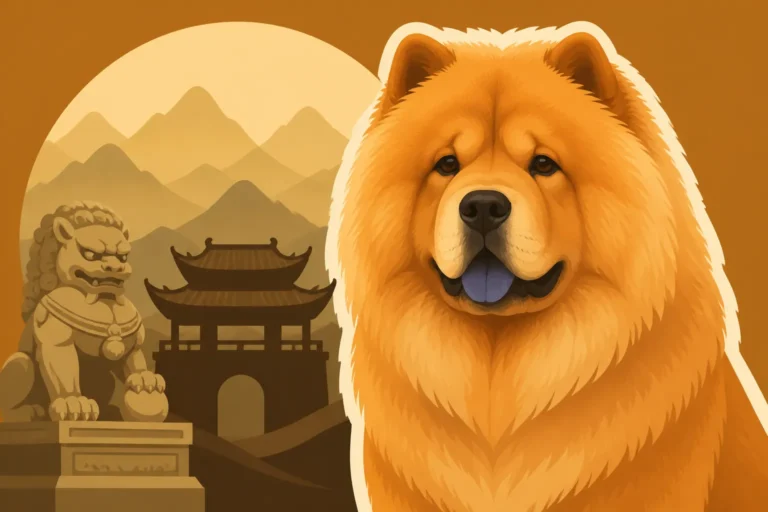
The journey to understand the Chow Chow's origins takes us deep into the heart of ancient China. Historical records and archaeological discoveries consistently point to the breed's development in this region thousands of years ago. It’s widely believed that the Chow Chow originated in the harsh, cold climates of Mongolia and northern China, where it served a multitude of purposes. These dogs were not merely pets; they were integral working animals, essential for the survival and daily lives of the people.
Their historical roles included guarding temples, acting as hunting companions, pulling sleds, and even serving as a food source during times of famine. This versatility speaks to their hardy nature and intelligence. The breed's distinct appearance, particularly its thick double coat, certainly points to an ancestry in colder climes, an adaptation necessary for survival. The very name "Chow Chow" is an intriguing piece of its history, believed to have originated from a pidgin-English term used by British merchants to describe various curiosities brought back from the East, with the dogs simply being another "chow-chow" on the cargo manifest. This highlights how little was known about them in the West, even as they flourished for millennia in Asia. If you're curious about their nomenclature, you might find more insight in Which Chinese Names the Chow Chow Has Carried.
Archaeological and Historical Evidence
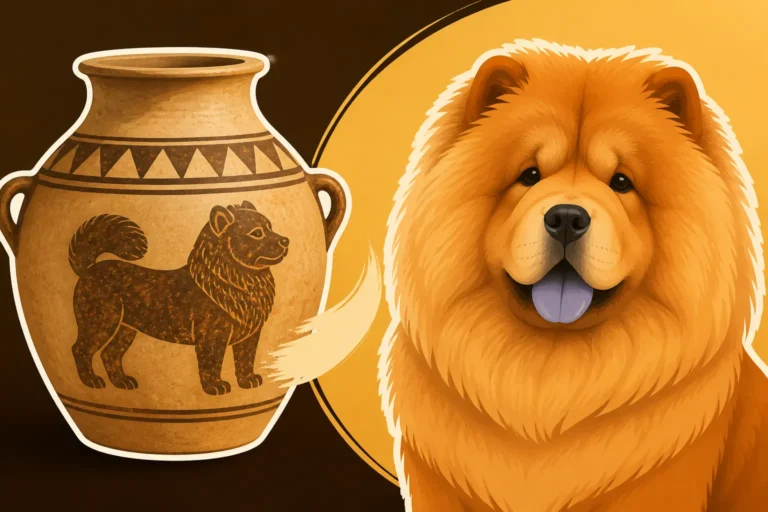
The historical record for the Chow Chow is remarkably rich. Evidence of dogs resembling the Chow Chow dates back to the Han Dynasty (206 BCE – 220 CE), with pottery and sculptures depicting dogs with striking similarities to the modern breed's unique lion-like mane, scowling expression, and curled tail. This artistic representation isn't just decorative; it suggests these dogs were significant enough to be immortalized in art, reflecting their importance in society. You can see how Han Dynasty Pottery Shows a Dog That Looks Like a Chow Chow serves as crucial visual evidence.
Beyond artwork, historical texts from various dynasties describe dogs with physical traits and temperaments consistent with the Chow Chow. These accounts often detail their use in hunting expeditions, accompanying nobles and even emperors. For example, some records speak of large hunting parties where these powerful dogs would assist in tracking and bringing down large game. The breed's distinctive blue-black tongue, a trait shared by only a few other breeds (like the Shar Pei, which also hails from China and shares an ancient lineage), is another unique marker that has been noted throughout history. This distinct physical trait helps solidify its ancient identity. This breadth of evidence strongly supports the assertion that The Chow Chow Is One of the Oldest Breeds in the World.
The "Fourteen Ancient Breeds" List and the Chow Chow's Place
The idea of "fourteen ancient breeds" is a common phrase that often comes up in discussions about canine ancestry. Let's unpick this particular classification and see where our magnificent Chow Chow fits in.
Debunking the Myth or Confirming the Fact?
The concept of "the fourteen ancient breeds" isn't a universally recognized scientific classification, but rather a popular simplification of complex genetic research. What is true is that genetic studies have identified a group of breeds whose DNA shows them to be among the oldest, having diverged early from the wolf. The exact number "fourteen" isn't fixed or universally agreed upon by all geneticists, as the science of canine genomics is always evolving and different studies might include or exclude breeds based on their specific criteria or data sets. However, the idea that there is a distinct, ancient lineage of dogs is very much a scientific fact.
The Chow Chow is consistently identified by geneticists as one of these deeply ancient breeds, often appearing on lists of the earliest dog breeds alongside others like the Akita, Alaskan Malamute, Basenji, Saluki, Siberian Husky, Samoyed, and Shar Pei. So, while the "fourteen" might be a slight oversimplification of a more fluid scientific understanding, the Chow Chow's status as a bona fide ancient breed is thoroughly confirmed by DNA evidence. It truly belongs to that elite group of dogs whose origins stretch back further than almost any other.
Why This Classification Matters
Understanding the Chow Chow's ancient classification goes beyond mere trivia; it offers profound insights into its temperament, health, and needs. These dogs developed over millennia with minimal human interference in their basic instincts and physical form. For instance, their renowned aloofness and independent nature aren't behavioral flaws, but rather reflections of their ancient role as guardians and hunters who needed to think for themselves, not constantly seek human direction. The Chow Chow Bonds to One Person and Tolerates the Rest is a perfect example of this deep-seated ancient trait.
Knowing this history also helps us appreciate their unique characteristics, like their blue-black tongue or their somewhat stilted gait due to their straight rear hocks – a feature also linked to their ancient working roles. When considering care, understanding its ancient heritage can also inform choices, for instance, regarding nutrition. Some owners, like those browsing the options on Chewy, might look for foods designed for ancient breeds or those with fewer processed ingredients, believing it aligns better with their evolutionary history. This ancient status isn't just a badge of honor; it's a key to unlocking a deeper understanding of the Chow Chow as a whole, guiding owners to provide care that respects its inherent nature.
Common Misconceptions and Clarifications
With so much information floating around about dog breeds, it's easy for misunderstandings to arise, especially concerning something as complex as ancient lineage. Let's clear up some common points of confusion.
Other Breeds Often Confused with Ancient Status
It's common for people to mistake breeds that look "primitive" or have a long recorded history for truly ancient breeds. For example, some might assume breeds like German Shepherds or Rottweilers are ancient because they are old, established breeds with distinct working histories. However, while these breeds certainly have rich histories spanning centuries, their genetic divergence from the wolf is much more recent than that of the truly ancient breeds. They were developed through more intense selective breeding programs to achieve specific traits for herding, guarding, or military work, which occurred later in canine history.
Similarly, other breeds from Asia that share some physical resemblance to the Chow Chow, like the Akita or Shiba Inu, are indeed ancient. But not every breed with a heavy coat or a curly tail falls into the ancient category. The key differentiator is always the genetic evidence. Without a close genetic link to the earliest domesticated dogs, a breed, no matter how old its written history or distinct its appearance, doesn't qualify as "ancient" in the scientific sense. This is why What DNA Says About the Chow Chow's Age is so critical for accurate classification.
The Importance of Responsible Breeding and Pedigree
The Chow Chow's ancient lineage comes with a responsibility for breeders and owners. Because these breeds have such deep roots, their unique genetic makeup should be preserved. This means responsible breeding practices are paramount. A reputable breeder will prioritize health, temperament, and genetic diversity within their lines, ensuring that the ancient characteristics are maintained, and hereditary health issues are minimized. For example, a good breeder will be upfront about the health testing they conduct, such as for Elbow Dysplasia Ranks the Chow Chow Near the Top or eye conditions like entropion.
Pedigree, in this context, isn't just about showing off fancy papers; it's about tracing a dog's lineage to ensure healthy, well-adjusted offspring. When you look at a Chow Chow's pedigree, you're not just seeing names; you're seeing a direct link to a history stretching back thousands of years. This commitment to maintaining the integrity of the breed is what keeps the Chow Chow true to its ancient heritage, ensuring future generations can continue to experience these remarkable dogs. When seeking a puppy, asking a breeder about their health testing protocols is crucial; understanding What a Chow Chow Breeder Should Have Tested provides excellent guidance on this front.
The Enduring Legacy of the Chow Chow
The Chow Chow's ancient status isn't just a historical footnote; it's a living legacy that continues to influence the breed's role and perception in the modern world.
Cultural Significance Throughout History
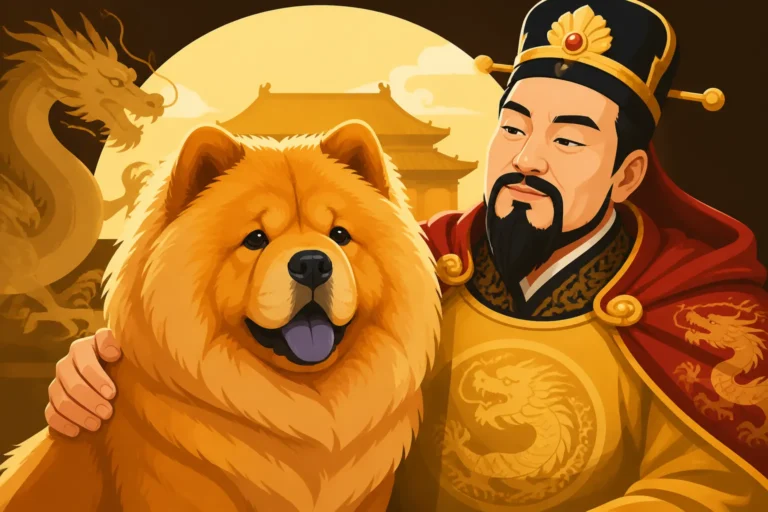
In its native China, the Chow Chow held significant cultural importance. More than just a working dog, it was often revered, depicted in art, and associated with nobility and power. During the Tang Dynasty, for example, it's said that a Tang emperor maintained a kennel of thousands of these dogs for hunting. This association with power and prestige speaks volumes about how highly these dogs were regarded. They were seen as majestic, formidable animals, capable of both fierce protection and loyal companionship.
Even today, in many parts of the world, the Chow Chow carries an air of mystique and exoticism, partly due to its ancient and unique appearance. The lion-like mane, the deep-set eyes, and the distinct blue-black tongue all contribute to its enigmatic charm. This cultural legacy, built over millennia, means that owning a Chow Chow isn't just owning a dog; it's connecting with a profound piece of history, an unbroken chain stretching back to the earliest days of human-canine partnership. This deep history explains What the Chow Chow Did for a Chinese Emperor and how it became interwoven with Chinese society.
What Its Ancient Status Means for Today's Owners
For today's Chow Chow owners, understanding the breed's ancient status offers a unique perspective on their furry companion. It means recognizing that many of their dog's quirks and characteristics are not just individual traits, but echoes of a primeval past. Their independence, their discerning loyalty, and their sometimes "cat-like" demeanor aren't signs of disobedience or aloofness; they are manifestations of a genetic history that valued self-reliance and keen observation over eager-to-please obedience. How Aloof a Chow Chow Really Is or Why a Chow Chow Picks One Person are direct results of this ancient wiring.
This understanding fosters greater empathy and patience, encouraging owners to work with their Chow Chow's inherent nature rather than against it. It means appreciating their quiet dignity and understanding that their affection, when given, is deeply meaningful because it is earned, not simply doled out. It reminds us that these dogs are living historical artifacts, and caring for them is a privilege that comes with the responsibility of honoring their ancient legacy. It also explains why they often need specialized training approaches, as described in A Chow Chow Trains by Agreement, Not Obedience. Many owners find resources on Chewy helpful for finding unique toys or training aids that cater to the Chow Chow's independent spirit.
The Chow Chow's Unique Characteristics Reflecting Its Past
Beyond their genetic code, the Chow Chow exhibits several physical and behavioral traits that serve as strong, visible links to its ancient origins. These characteristics are not random; they are evolutionary adaptations that helped the breed thrive in its ancestral environment and fulfill its ancient roles.
Physical Traits Linked to Ancient Origins
One of the most striking physical characteristics of the Chow Chow is its dense double coat, which comes in two varieties: rough (long-haired) and smooth (short-haired). This plush insulation was absolutely vital for survival in the frigid climates of northern China and Mongolia, protecting them from extreme cold and harsh weather. It's a clear indicator of their origins in a challenging environment. This thick coat also meant they needed specific grooming techniques, which owners learn to navigate, often finding brushes and grooming tools on platforms like Chewy to manage the immense shedding during coat blows. Understanding What a Chow Chow's Double Coat Is Made Of helps explain its function.
Then there's the famous blue-black tongue. While its exact evolutionary purpose isn't fully understood, it's a rare trait that links the Chow Chow to other ancient Asian breeds like the Shar Pei. It's a distinguishing feature that has been present in the breed for thousands of years, almost like a genetic stamp of its ancient heritage. Their deep-set eyes, which contribute to their characteristic "scowl," also have practical implications for their vision, creating a tunnel vision effect that, again, links back to their roles as vigilant guardians who scanned horizons rather than needing wide peripheral vision for, say, retrieving. This peculiar vision contributes to Why a Chow Chow Snaps at Someone It Did Not See.
Finally, the Chow Chow's almost straight rear hocks give it a unique, somewhat stilted gait. Unlike many modern breeds bred for speed or agility, this straight leg structure suggests an adaptation for endurance and stability over varied, often difficult terrain, rather than bursts of speed. This gait is unique enough that The Straight Rear Leg No Other Breed Has is a common point of discussion. These aren't just breed standards; they're functional remnants of a bygone era.
Behavioral Quirks and Their Historical Basis
The Chow Chow's temperament is perhaps the most profound reflection of its ancient past. They are renowned for their independence and reserved nature. This isn't a flaw; it's a testament to their history as self-sufficient working dogs. They weren't bred to be eager-to-please companions in the same way a Labrador Retriever might be. Instead, they were entrusted with significant responsibilities, such as guarding property or hunting, which required them to make decisions independently rather than constantly deferring to human commands. This self-reliance made them exceptional guardians, but it also translates into a dog that often prefers quiet observation to boisterous interaction.
Their intense loyalty, typically directed towards one or two primary individuals, also stems from their historical role. In ancient times, a guard dog or a hunter might form a very strong, singular bond with its handler, relying on that partnership for survival. This doesn't mean they don't love their whole family, but their primary devotion often focuses on a chosen person. Their natural wariness of strangers and protective instincts are likewise deeply ingrained, inherited from generations of guarding temples and homes. These traits, while challenging for some modern owners, are authentic echoes of What a Chow Chow Guards and Why and contribute to the breed's unique, ancient character. Understanding these historical roots can transform how owners perceive and manage their Chow Chow's behavior, leading to a more harmonious relationship based on mutual respect rather than frustration.
| Trait Category | Ancient Breed Characteristic | Modern Interpretation/Impact for Owners |
|---|---|---|
| Physical | Dense Double Coat | Requires extensive grooming, tolerates cold well. |
| Blue-Black Tongue | Unique breed marker, no known health impact. | |
| Deep-Set Eyes | Contributes to "scowl," can limit peripheral vision. | |
| Straight Rear Hocks | "Stilted" gait, built for endurance/stability. | |
| Behavioral | Reserved/Independent | Not overtly demonstrative, requires patient training. |
| Singular Loyalty | Deep bond with primary person, tolerant of others. | |
| Guarding Instincts | Naturally protective, needs early socialization. | |
| Low Prey Drive (Historically) | Can coexist with cats if raised together, but still needs supervision with small animals. |
Disclaimer
This article is for general informational purposes only and does not constitute professional advice. Laws, prices and regulations vary by location and change over time. Consult a qualified professional for guidance on your specific situation.