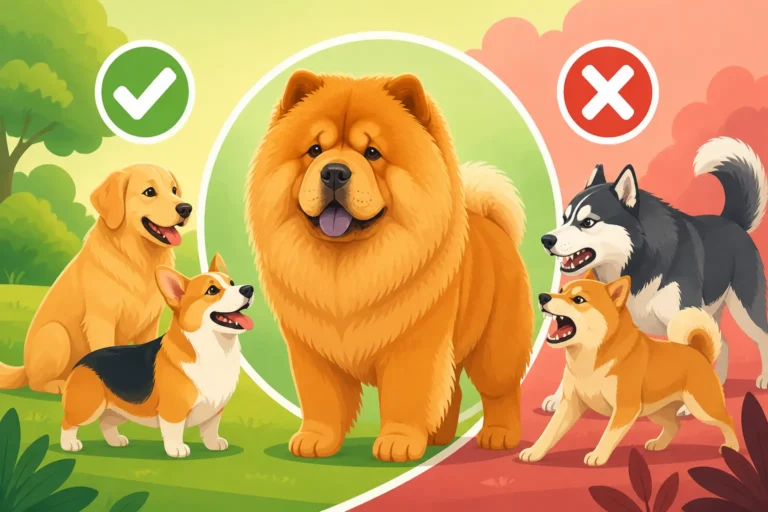
What a Chow Chow Guards and Why
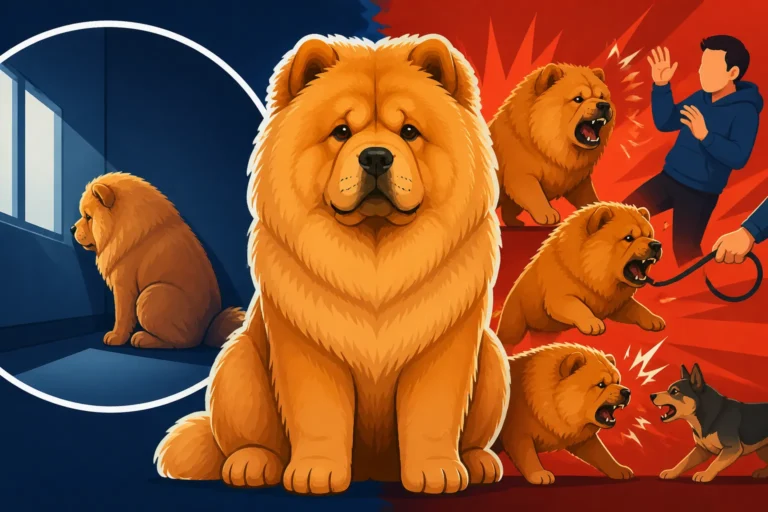
It's incredibly frustrating when your beloved Chow Chow, a dog you've welcomed into your home and heart, starts acting possessive over certain items, spaces, or even you. Many new Chow owners find themselves utterly bewildered when their usually calm companion suddenly stiffens, growls, or even snaps when someone approaches their food bowl, a favorite toy, or tries to sit too close to their person. This guide is here to shed light on why Chow Chows exhibit resource guarding, what triggers it, and most importantly, how to understand and manage this deeply ingrained behavior safely and effectively for a harmonious home.
Understanding the Chow Chow's Instincts: A Deep Dive into Guardian Nature
The Chow Chow isn't just any dog; they're an ancient breed with a rich history rooted in protection and guardianship. Their inherent aloofness and discerning nature often get misinterpreted as aggression, but it’s crucial to understand that these behaviors stem from their breed legacy, not necessarily malice. They are inherently wired to observe, assess, and, if necessary, protect what they deem valuable.
The Ancient Roots of the Chow Chow's Protective Traits
To truly grasp why your Chow Chow guards, you have to look back thousands of years. Originating in China, these dogs served multiple roles: hunting, herding, pulling carts, and most importantly, guarding. They were companions to nobility and guardians of temples, estates, and even the family's livestock. This isn't a breed that was developed to be a universally friendly, tail-wagging greeter. Instead, they were bred for independence, loyalty to a select few, and a keen sense of observation paired with a strong protective instinct.
Imagine a Chow Chow standing sentinel over a remote temple in ancient China. Their survival, and the safety of their charge, depended on their ability to be vigilant, to identify threats quickly, and to act decisively. This deep-seated instinct for protection and territoriality has been passed down through generations. It's not something that can be entirely trained out; rather, it needs to be understood, channeled, and managed with respect for their historical purpose.
"One-Person Dog" Mentality and Its Impact on Guarding
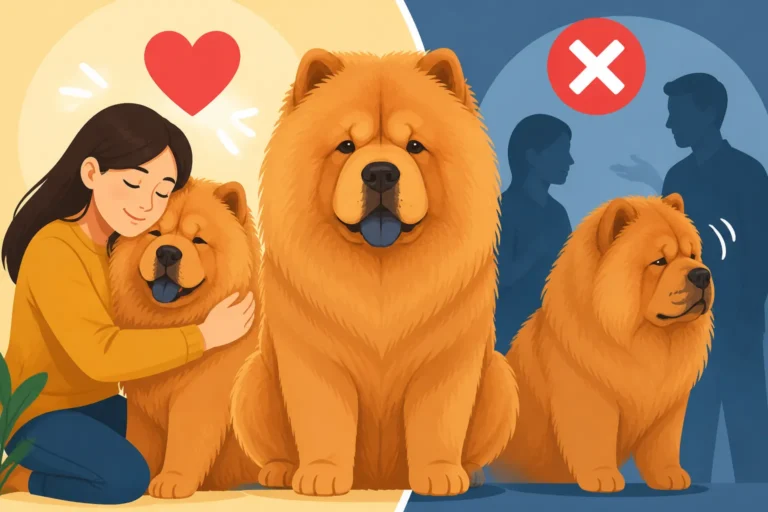
One of the most defining traits of the Chow Chow is their tendency to bond very closely with one primary person, often referred to as their "one-person dog" mentality. While they can and do love their entire family, there's usually a specific individual they consider their anchor, their primary focus. This intense bond can significantly influence their guarding behavior, especially when it comes to their chosen person. They see you as part of their inner circle, their most prized possession, and will often take it upon themselves to protect you from perceived threats.
This can manifest as guarding you from other family members, visitors, or even other pets. For instance, if you're relaxing on the couch and another family member approaches, your Chow might shift its body, give a low growl, or even place a paw on you as a subtle warning sign. This isn't an act of aggression towards the other person as much as it is a clear declaration of "This is my person." Understanding Why a Chow Chow Picks One Person is key to appreciating this dynamic. It's their way of showing devotion, albeit sometimes in a way that creates friction in a modern household.
Why They're Not "Aggressive," But Rather Highly Discerning
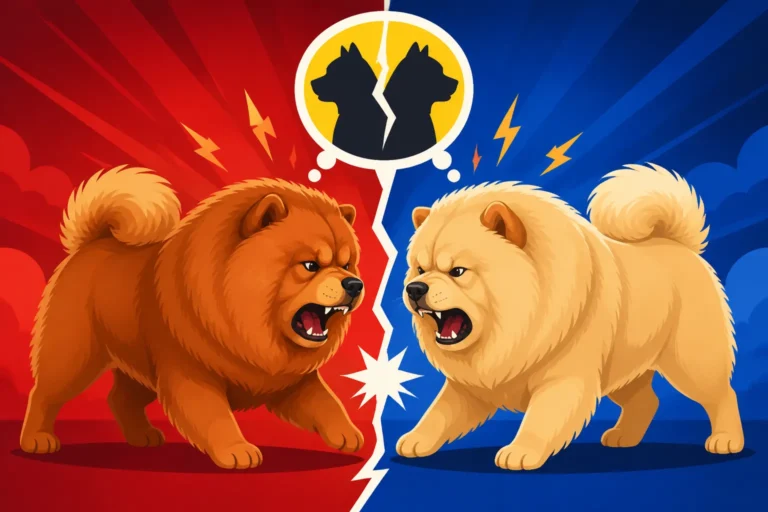
It’s easy to label a guarding Chow Chow as "aggressive," but that often misses the nuance of their behavior. Chows are typically not looking for a fight; they are, by nature, discerning and prefer to avoid conflict if possible. Their guarding is usually a proactive measure, a warning shot fired before things escalate. They are trying to communicate their discomfort or their perceived need to protect. An "aggressive" dog might launch into an unprovoked attack, whereas a guarding Chow Chow gives many subtle signals before resorting to a snap or bite.
Their stoic expressions and deep-set eyes can make these signals harder for humans to read, which is why early understanding is so vital. They are assessing, observing, and making decisions based on their instincts. If they perceive a threat to their resources – be it their food, their space, or their person – they will act to deter that threat. This discernment is what made them such effective guardians historically; they didn't waste energy on false alarms but were formidable when a real threat emerged. This distinction is crucial for developing appropriate management strategies rather than resorting to punitive measures that can often backfire with this sensitive breed.
What a Chow Chow Considers "Theirs": Common Guarded Resources
Resource guarding isn't always about aggression; it's about ownership, plain and simple, from a dog's perspective. For a Chow Chow, almost anything can become a "resource" worthy of protection, especially given their independent and possessive nature. Understanding what they guard is the first step in managing it effectively.
Guarding Their People: The Ultimate Priority
Without a doubt, for many Chow Chows, their person (or chosen few) is the ultimate resource to guard. This isn't unique to Chows, but it's often more pronounced due to their strong, singular bonds and natural protectiveness. Your Chow might express this by blocking access to you, placing their body between you and another person, or becoming agitated if someone approaches you too quickly or loudly.
Imagine you're sitting on the sofa, and your Chow Chow is curled up beside you, perhaps even with its head resting on your lap. When your spouse or a child comes to sit down next to you, your Chow might emit a low growl, stiffen its body, or even subtly push against you. This isn't personal; it’s your Chow saying, "This human is my comfort, my source of security, and I'm not sharing." They might not overtly challenge the other person, but the message is clear. It's a testament to their deep affection and loyalty, even if it presents challenges within a busy household. Understanding How a Chow Chow Shows Affection can help interpret these actions.
Food and Bowls: A Primitive Instinct
Food guarding is a common behavior across many breeds, but with a Chow Chow, whose instincts are deeply rooted in survival, it can be particularly strong. For them, a meal is a valuable, finite resource, and protecting it is an innate drive. This can extend beyond just their dinner bowl to include treats, chews, or even discarded scraps found on the floor.
A typical scenario might involve your Chow enjoying a meal. If you or a child inadvertently walk too close to their bowl, you might be met with a sudden growl or a quick snap. They're not being rude; they're reacting to a perceived threat to their sustenance. This instinct harks back to a time when survival meant defending your meal from scavengers or rival animals. To them, your approach, however innocent, might be seen as an attempt to take their food. It’s vital to manage this carefully, always giving them space while they eat, and teaching children to do the same. This doesn't mean you can never approach their food, but that you must do so in a way that reduces their perceived need to guard.
Toys and Personal Items: More Than Just Playthings
For a Chow Chow, toys are rarely just toys. They can become prized possessions, especially if they are high-value items like a favorite chew bone, a special squeaky toy, or even something as innocuous as a dropped sock. These items become part of their personal cache, and they may guard them with the same intensity as their food or even their people.
Consider your Chow lying contentedly with a new rawhide chew. If another pet or a person tries to take it or even just moves too close, your Chow might exhibit a range of guarding behaviors: a low rumble in the chest, a stiffened posture, or even a sudden lunge to cover the item with its body. They’re communicating, "This is mine, hands off." This behavior can be particularly problematic with children who might not understand the subtle warnings. It's important to remember that for the Chow, these items have intrinsic value, not just entertainment value.
Their Territory: Home, Yard, and Even the Car
The Chow Chow's territorial instincts are legendary. Their home, yard, and even your vehicle are all part of their perceived domain, and they will guard these spaces diligently. This is a direct callback to their historical role as guardians of property. They have a strong sense of what belongs to them and where their boundaries lie.
This guarding can manifest in various ways. For example, when a delivery person approaches your front door, your Chow might launch into a furious barking spree, positioning itself between the door and your family. In the yard, they might patrol the fence line, barking at passersby or neighboring dogs. Even in the car, which they consider an extension of their secure space, they might react defensively to people approaching the vehicle at a stoplight or in a parking lot. This is their way of alerting you to perceived intruders and signaling their readiness to protect their domain. How Territorial a Chow Chow Is is a crucial aspect of their temperament that owners need to anticipate and manage.
Recognizing the Signs: How a Chow Chow Communicates Guarding Behavior
Chow Chows, despite their stoic appearance, are constantly communicating. The trick is learning to read their signals, which can be much more subtle than in some other breeds. Missing these early cues can lead to misunderstandings and, potentially, escalate guarding behavior.
Subtle Cues Before the Growl
Before a Chow Chow resorts to a growl, bark, or snap, they usually offer a series of quieter, less obvious signals. These are their first attempts to communicate discomfort or a warning. Recognizing these early signs is paramount to preventing escalation. Look for changes in their posture: a slight stiffening of the body, a lowering of the head, or a tense tail (even if it's still curled over their back, the carriage might become rigid). Their eyes, though deep-set, might show a hard stare, or they might avert their gaze completely as a sign of stress.
You might also notice a subtle shift in their weight, preparing to brace themselves, or a slight lip curl that doesn't fully expose teeth but suggests tension around the muzzle. Some Chows might freeze entirely, becoming motionless and silent, a clear indicator that they are uncomfortable and assessing the situation. For instance, if your Chow is lying with a chew toy and you reach toward it, they might stop chewing, freeze, and give you a hard side-eye. This isn't just them being quiet; it’s a direct message: "Don't come closer." Learning How to Read a Chow Chow's Face can be incredibly helpful in picking up these nuanced expressions.
The Escalation Ladder: From Stiffening to Snapping
If the subtle cues are ignored, a Chow Chow will typically escalate their warnings. They don't jump straight to biting; there's usually a clear progression. The stiffening might turn into a low, rumbling growl – often more felt than heard at first. Their hackles might raise slightly, particularly over the neck and shoulders, making their already dense coat appear even larger. Their body language will become more overt: a direct stare, a snarl showing teeth, or a more pronounced lift of the lip.
If the perceived threat continues, they might then resort to a bark, a lunge, or a quick air snap – a warning shot designed to startle and deter without making contact. A bite is usually the last resort, only happening if all prior warnings have been ignored and they feel truly cornered or threatened. Understanding this "ladder of aggression" is crucial for knowing when to back off and give your Chow space. It’s important to remember that Why a Chow Chow Gives Little Warning often comes down to humans missing these initial, less obvious signs.
Why Their Deep-Set Eyes Make It Harder to Read
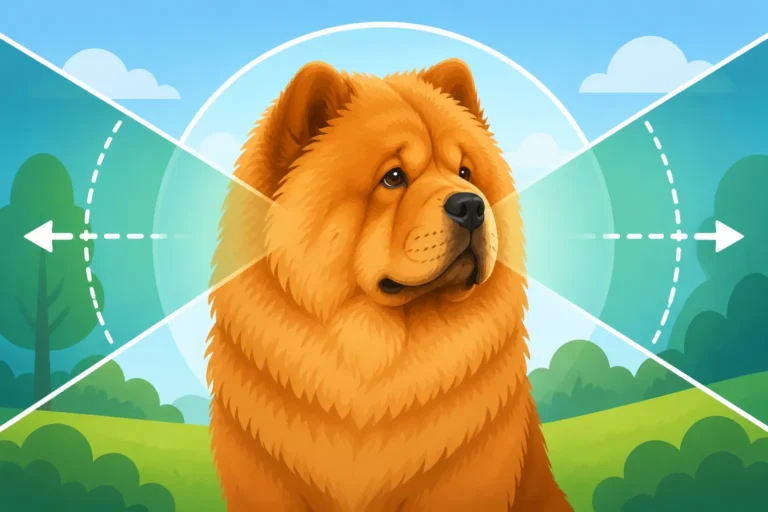
One of the unique challenges of interpreting a Chow Chow's body language lies in their distinctive facial structure, particularly their deep-set eyes. Many breeds communicate a great deal through their eyes – the widening, the softening, the direct gaze. However, with a Chow Chow, their heavy brows and deep-set eyes can obscure these visual cues, making it harder for humans to gauge their emotional state accurately.
This facial structure, while part of their charm, can make them appear perpetually scowling or aloof, masking subtle signs of anxiety, fear, or irritation that might be obvious in a dog with more open facial features. A quick glance might not reveal the "whale eye" (the whites of the eyes showing), or a subtle dilation of the pupils that signals stress. This means owners must be even more attentive to the other body language cues – the posture, tail, ear position, and mouth tension – to truly understand what their Chow is trying to convey. It requires a keen eye and a commitment to learning their individual communication style.
The "Why" Behind the Guarding: Triggers and Underlying Causes
Resource guarding in Chow Chows isn't random; it stems from a combination of genetic predispositions, environmental factors, and learned behaviors. Pinpointing the root causes is essential for developing effective management and training strategies.
Lack of Early Socialization: A Critical Missed Opportunity
One of the most significant contributors to guarding behaviors in Chow Chows, especially towards strangers or other animals, is a lack of adequate early socialization. The critical socialization window for puppies closes remarkably early, typically between 8 and 16 weeks of age. During this time, puppies are most open to new experiences and form lasting impressions about the world around them.
A Chow Chow puppy who isn't exposed to a wide variety of people (different ages, genders, appearances), sounds, environments, and other well-behaved dogs during this crucial period is more likely to grow up wary, fearful, and therefore, more prone to guarding. Without positive experiences, everything new can be perceived as a potential threat. Imagine a young Chow Chow puppy growing up in isolation, never meeting new faces or experiencing new places. When suddenly confronted with a friendly stranger reaching out a hand, that puppy, now an adult, might view the hand not as a gesture of affection but as an invasion of personal space, triggering a guarding response. This highlights When a Chow Chow's Socialization Window Closes and the profound impact of those early weeks.
Fear and Insecurity: When Protection Becomes Self-Preservation
Often, guarding behavior is rooted in fear or insecurity rather than outright dominance or aggression. A Chow Chow who feels vulnerable or unsure of a situation will naturally try to control their environment and protect what they perceive as theirs. This can be especially true for Chows who haven't had consistent, positive experiences or who have been handled harshly in the past.
Think of a Chow Chow who growls when a child approaches its toy. This isn't necessarily because the Chow wants to "dominate" the child, but because it feels anxious about losing its treasured item. The growl is a defensive mechanism, an attempt to create distance and prevent the feared loss. This fear can be subtle – a slight discomfort with being touched unexpectedly, a wariness of loud noises, or an apprehension around unfamiliar people. When a dog feels insecure, guarding is a way of saying, "Stay away, I need to keep this safe." Understanding this underlying fear is key to addressing the behavior compassionately and effectively.
Genetic Predisposition: It's in Their DNA
While environment and experience play a huge role, we can't ignore the genetic component. As we discussed, Chow Chows were bred for guarding and protection. These traits are hardwired into their genetic makeup. Some individual Chow Chows will naturally have a stronger propensity for resource guarding than others, even with excellent socialization and training. It’s part of what makes them Chows.
This genetic predisposition means that even in the best environments, some Chows will require more dedicated, consistent management of guarding behaviors. It's not a flaw in their character; it's an inherent part of their breed. Just as a retriever is predisposed to retrieve, a Chow Chow is predisposed to guard. A responsible breeder will be aware of these tendencies in their lines and select for stable temperaments, but the instinct will always be present to some degree. When choosing a puppy, inquiring about the temperament of the parents and their guarding tendencies is a valid question for a prospective owner. What a Chow Chow Breeder Should Have Tested often focuses on physical health, but temperament is equally vital.
Past Experiences: Rescue Chows and Prior Trauma
For Chow Chows adopted from rescue organizations, their past experiences can be a profound source of guarding behavior. A dog that has been neglected, starved, or had its possessions constantly taken away might develop severe resource guarding as a survival mechanism. They learn that they must protect what little they have to survive.
Consider a rescue Chow who was constantly in competition for food with other dogs, or who had its bowl kicked away. When brought into a loving home, it might display intense guarding over its food bowl, even if it's never been threatened in its new environment. The memory of past scarcity or mistreatment triggers an instinctive, powerful need to protect. These dogs require immense patience, understanding, and specialized training to overcome their past trauma. Building trust is paramount, and it often involves showing them consistently, over a long period, that their resources are safe and will not be taken away. This can be a challenging but incredibly rewarding journey.
Proactive Strategies: Preventing Resource Guarding from Taking Root
The best defense against problematic resource guarding is a strong offense rooted in early prevention. By setting your Chow Chow up for success from puppyhood, you can minimize the likelihood of severe guarding behaviors developing.
Early, Diverse Socialization: The Foundation of a Balanced Chow
The importance of early and consistent socialization for a Chow Chow cannot be overstated. It's not just about meeting other dogs; it's about positive exposure to a huge variety of people, places, sounds, and objects. The more positive experiences your Chow puppy has during its critical developmental window (8-16 weeks), the more confident and less likely to guard out of fear it will become.
Take your puppy to safe, controlled environments. Introduce them to friends of all ages and appearances, ensuring these interactions are always positive and supervised. Visit different types of places – quiet parks, bustling (but not overwhelming) street corners, pet-friendly stores. Allow them to hear various sounds, from vacuum cleaners to passing trucks. Enroll them in a well-run puppy class, even if it's just for exposure to other puppies and people in a structured setting. Resources like BAXTER & Bella offer online puppy programs that can guide you through structured socialization activities, offering tips and strategies for controlled exposure right from your home, before your puppy is fully vaccinated for public outings. Remember, these experiences should always be positive, never overwhelming, and allow your puppy to retreat if they feel uncomfortable. How Much Socialization a Chow Chow Puppy Needs is a topic every Chow owner should dive into.
Positive Reinforcement Training: Building Trust, Not Dominance
For a breed as independent and sensitive as the Chow Chow, positive reinforcement training is not just a preference; it's a necessity. Traditional, dominance-based training methods that rely on harsh corrections or intimidation will almost certainly backfire, eroding trust and potentially exacerbating guarding behaviors. Instead, focus on building a strong, trusting relationship where your Chow sees you as a source of good things, not a threat.
This means rewarding desired behaviors with high-value treats, praise, or affection. If you want your Chow to voluntarily give up a toy, don't snatch it; instead, offer an even more appealing treat in exchange, praising them when they release the toy. This teaches them that giving things up leads to better outcomes, rather than loss. This also applies to food: teach them that your approach to their bowl means a bonus treat, not a theft. Always ensure you have irresistible treats on hand, perhaps a small bag of freeze-dried liver or cheese bits from Amazon, to facilitate these positive exchanges. This strategy creates a positive association with your presence around their resources.
Managing the Environment: Setting Everyone Up for Success
Environmental management is a crucial, often overlooked, aspect of preventing resource guarding. It's about proactively structuring your Chow Chow's environment to minimize opportunities for guarding to arise. This means being smart about how and where they access their resources.
For example, feed your Chow Chow in a quiet, undisturbed area where they can eat without interruption. If you have multiple pets, feed them in separate rooms. When your Chow has a high-value chew, ensure they are in a safe, secluded space where no one will bother them – a crate, a designated bed in a quiet room, or outdoors away from foot traffic. Teach children from a very young age never to approach a dog while it's eating or chewing. If your Chow tends to guard specific toys, rotate them, or only offer them when you can closely supervise. Consider using enrichment toys that dispense food slowly, like Kongs, which can be enjoyed in a crate without feeling threatened. This proactive approach removes triggers and reduces the Chow's perceived need to guard.
Managing Established Guarding: Practical Steps for a Safer Home
If your Chow Chow has already developed resource guarding behaviors, it's important to approach the situation with caution, consistency, and a clear plan. The goal isn't to "punish" the guarding, but to change your dog's emotional response to perceived threats.
Desensitization and Counter-Conditioning for Food and Toys
For Chows that guard food bowls or toys, desensitization and counter-conditioning are powerful tools. This involves gradually exposing your Chow to the trigger (e.g., your presence near their food) while simultaneously creating a positive association (e.g., delicious treats). The key is to work below their "threshold" – the point at which they start to growl or show signs of guarding.
Start by approaching their food bowl (or toy) just to the point where they notice you but don't react negatively. Toss a high-value treat (something truly irresistible, not just kibble) into their bowl, then calmly walk away. Repeat this many times over several days, gradually decreasing the distance you approach. Your Chow learns that your approach means good things happen, not that their food is being taken. For toys, practice "trading": offer an amazing treat in exchange for the toy, praise them for letting go, and then give the toy back immediately after. This teaches them that giving up a toy doesn't mean it's gone forever, but rather that it can lead to something better. Never force them to give up an item, as this will only intensify their guarding.
Safe Introductions to Strangers and New Experiences
If your Chow Chow guards you or your home from visitors, careful management and positive introductions are crucial. This is particularly challenging given their natural wariness and deep-set eyes which can make them hard to read. Never force interactions. Instead, control the environment to ensure everyone's safety and comfort.
When guests arrive, your Chow might initially be crated in another room with a long-lasting chew or puzzle toy to keep them occupied and happy. Once your guests are settled, and the environment is calm, you can slowly introduce your Chow, always on a leash. Have your guests ignore your Chow initially. Once your Chow is calm, have guests gently toss high-value treats (never hand-feed directly to avoid guarding hands) in their direction, without making direct eye contact or trying to pet them. Keep initial interactions short and positive. Using a tether when guests are around can also be helpful, allowing your Chow to be present but preventing them from "policing" the room. For dogs reactive to new people, a positive online training program like BAXTER & Bella can offer structured guidance on gradual introductions and desensitization exercises. This helps your Chow associate visitors with positive experiences, reducing their perceived need to guard.
Professional Help: When to Call in the Experts
While many mild guarding behaviors can be managed with consistent home training, some Chow Chows require professional intervention. If your Chow Chow's guarding is severe, involves bites or near-bites, or makes you feel unsafe in your own home, it's time to consult a certified professional dog trainer or a veterinary behaviorist.
These experts have the knowledge and experience to accurately assess your Chow's behavior, identify underlying causes (such as fear or anxiety that might require medication), and develop a tailored behavior modification plan. They can teach you advanced techniques, help you read your Chow's subtle signals more effectively, and provide hands-on guidance to ensure safety for everyone. Attempting to address severe guarding on your own can be dangerous and may inadvertently worsen the problem. Don't feel ashamed to ask for help; it's a responsible step towards ensuring a safe and happy life for both you and your Chow Chow.
Living Safely and Happily: Coexisting with a Guarding Chow Chow
Having a Chow Chow with guarding tendencies means making certain lifestyle adjustments. It’s not about curing them entirely, but about respectful coexistence, where everyone understands boundaries and potential triggers.
Establishing Clear Boundaries and Routines
Chow Chows thrive on predictability and clear boundaries. A consistent routine helps them feel secure, reducing anxiety that can sometimes fuel guarding behaviors. They need to know what to expect and what is expected of them. This means consistent feeding times, walk schedules, and designated spaces for eating, sleeping, and playing with toys.
Establish clear rules for interactions around their resources. For instance, always use a verbal cue like "leave it" or "trade" before approaching their food or toys. If they drop an item, reward them generously. Designate specific "safe zones" in your home where your Chow can retreat with a high-value chew without being disturbed. This might be their crate, a bed in a quiet corner, or a specific mat. Consistently enforcing these boundaries teaches your Chow that you are reliable and that their possessions are safe under your care. This reduces their need to be constantly vigilant and guard.
Teaching Children to Respect a Chow Chow's Space
One of the most critical aspects of living with a guarding Chow Chow is teaching children how to interact safely and respectfully. Children, with their unpredictable movements and natural curiosity, can inadvertently trigger a guarding response. They often don't understand canine body language and can misinterpret a dog's warnings.
It is absolutely vital to educate children from a very young age about a Chow Chow's personal space and signals. Teach them never to disturb a Chow Chow while it's eating, sleeping, or chewing on a toy. Show them how to approach calmly, and never to grab at toys or food. Emphasize that a stiff body, a growl, or a stare means "stop." Supervise all interactions between children and your Chow Chow closely, even if you trust your dog implicitly. Consider a physical barrier like a baby gate to create separation when supervision isn't possible, especially during mealtimes or when your Chow has a special chew. This proactive teaching and supervision can prevent potentially dangerous situations. How to Teach a Child to Approach a Chow Chow is a skill every parent with a Chow should master.
The Importance of a Secure Environment
For a territorial breed like the Chow Chow, a secure environment isn't just a convenience; it's a necessity. Their guarding instincts mean they will often perceive anything or anyone outside their perceived territory as a potential threat. A secure yard, a safe indoor space, and appropriate management during walks are all part of responsible Chow ownership.
Ensure your yard has a sturdy, escape-proof fence that your Chow cannot dig under or jump over. When walking, always use a strong leash and harness, as their territorial impulses can lead to sudden lunges or reactions towards other dogs or people. Avoid dog parks, which can be overwhelming and trigger guarding behaviors around space or even you. Inside the home, consider dog-proofing certain areas or using crates to provide a safe haven where your Chow can feel secure and undisturbed. A secure environment allows your Chow to relax, knowing that its territory is well-defined and protected, reducing the constant stress of vigilance and thus, the impulse to guard.
Comparison of Guarded Resources and Management Strategies
| Resource Guarded | Common Triggers | Early Warning Signs | Management Strategies |
|---|---|---|---|
| People (You) | Others approaching you, sudden movements, hugging | Stiff body, subtle lean/block, low growl, hard stare | Desensitize to touch from others. Reward calm behavior when people approach. Control introductions with visitors. Create designated "no-dog" zones for quiet time. |
| Food & Bowls | People/pets approaching during mealtime, reaching for bowl | Freezing, stiffening, growling, quick head turn, eating faster | Feed in quiet, separate area. Practice "toss and retreat" with treats. Never take food away without trading. Use designated feeding times. |
| Toys & Chews | Someone trying to take or touch their item, other pets too close | Covering item with body, growling, stiff posture, lip curl | Implement "trade-up" system (high-value treat for toy). Teach "drop it" cue. Provide high-value chews in safe, undisturbed areas (e.g., crate). |
| Space (Home/Yard) | Strangers at door, people/dogs passing by outside | Alert barking, patrolling, stiffening, charging fence line | Use management tools like privacy film on windows, solid fences. Manage door greetings with leashes/crates. Provide mental enrichment to reduce boredom guarding. |
Debunking Myths: What Guarding Is Not
There are many misconceptions about resource guarding, particularly in breeds like the Chow Chow. Dispelling these myths is crucial for effective and humane management, as misunderstanding can lead to punitive measures that exacerbate the problem.
Guarding vs. Dominance: A Common Misconception
One of the most persistent myths is that resource guarding is a display of "dominance." This outdated concept of dogs constantly vying for pack leader status has been largely debunked by modern canine behavior science. Guarding is not about your Chow Chow trying to be "alpha" over you; it's about perceived insecurity, fear of loss, or an instinctive drive to protect valuable resources.
When your Chow growls over its food bowl, it's not saying, "I'm the boss, you can't have this." It's more likely saying, "I'm worried you're going to take my food, and I need to keep it safe." Framing it as dominance often leads to confrontation, where owners try to "show the dog who's boss" by forcefully taking items away, which only intensifies the dog's fear and validates their belief that they must guard. Instead, recognizing it as a defensive behavior allows for training based on building trust and positive associations, rather than an unnecessary power struggle. This distinction is vital for understanding Whether a Chow Chow Needs a Professional Trainer Early and the kind of training approach that will be most effective.
Guarding Is Not a Sign of Malice
It’s easy to feel personally offended when your Chow Chow growls at you or a family member over a toy. It can feel like an act of betrayal or malice. However, it's important to remember that resource guarding is rarely an act of ill will. Your Chow Chow isn't trying to be "mean" or spiteful. They are simply acting on deeply ingrained instincts and their current emotional state, which is often rooted in anxiety, fear, or a strong sense of ownership.
Imagine if someone tried to snatch your wallet or phone out of your hand. Your immediate reaction would likely be defensive, not malicious. You'd be protecting your property. For a Chow Chow, their food, their person, or their favorite spot is just as valuable, if not more so. Understanding that their guarding comes from a place of self-preservation or possessiveness, rather than intentional aggression, helps owners respond with empathy and effective training, rather than anger or punishment. It's a behavior, not a judgment on their character.
It's Not About "Breaking" Their Spirit
Some traditional training methods advocate for "breaking" a dog of resource guarding by repeatedly challenging them and forcing them to relinquish items. This approach is not only dangerous but also deeply detrimental to a Chow Chow's spirit and trust. A Chow Chow is an intelligent, sensitive, and independent breed. Trying to "break" them will likely break their trust in you, leading to an anxious, fearful dog who might resort to biting without warning, having learned that its warnings are ignored.
The goal with a Chow Chow exhibiting guarding behaviors is not to eliminate their natural instincts entirely – that's impossible and unfair. Instead, it's about teaching them that they don't need to guard, because their resources are safe and respected. It’s about building confidence and trust, not instilling fear. This means patient, consistent, positive reinforcement methods that teach them to feel secure, rather than constantly on edge. A well-managed Chow Chow with guarding tendencies can still be a wonderful, loving companion, but it requires an owner who understands and respects their inherent nature.
Disclaimer
This article is for general informational purposes only and does not constitute professional advice. Laws, prices and regulations vary by location and change over time. Consult a qualified professional for guidance on your specific situation.