What DNA Says About the Chow Chow’s Age
For anyone who's ever looked into the soulful, often-serious eyes of a Chow Chow, there's an immediate sense of looking into history. These magnificent dogs carry an air of ancient dignity, but it’s not just a feeling; modern science, particularly DNA analysis, confirms that the Chow Chow is indeed one of the most ancient dog breeds, offering incredible insights into its deep past and how it fits into the broader story of canine evolution.
Unraveling Ancient History Through Modern Science
The mystery of our dogs' origins has fascinated humans for centuries. We look at a tiny Chihuahua and a massive Great Dane and wonder how they could possibly be related, let alone descended from wolves. DNA science has been a game-changer, peeling back layers of history that written records and oral traditions simply couldn't touch. For breeds like the Chow Chow, these genetic insights have affirmed what many enthusiasts suspected: their roots stretch back further than almost any other breed.
The Chow Chow's Deep Evolutionary Roots
When scientists talk about "ancient breeds," they're not just using a poetic term; they're referring to a specific genetic classification. These are dog breeds whose DNA shows they diverged from the wolf lineage much earlier than most other modern breeds. Imagine a huge family tree, with the wolf at the very bottom. Most dog breeds branched off relatively recently, in evolutionary terms, forming a dense cluster of twigs. The Chow Chow, however, has a branch that splits off much, much closer to the main trunk, alongside breeds like the Akita, Siberian Husky, and Alaskan Malamute. This means their genetic blueprint carries a stronger echo of their wild ancestors. They haven't undergone the same intensive, relatively recent selective breeding that created many of the specialized breeds we know today.
What this translates to for Chow Chow owners is often a dog with distinct, sometimes more primitive, instincts and behaviors. Their independence, their discerning affection, and their formidable protective nature aren't just quirks; they're deeply ingrained traits forged over millennia. Understanding this genetic heritage helps us appreciate why a Chow Chow might operate on a different wavelength than, say, a Labrador Retriever, which comes from a much more recent branch of the canine family tree.
What Genetic Markers Reveal
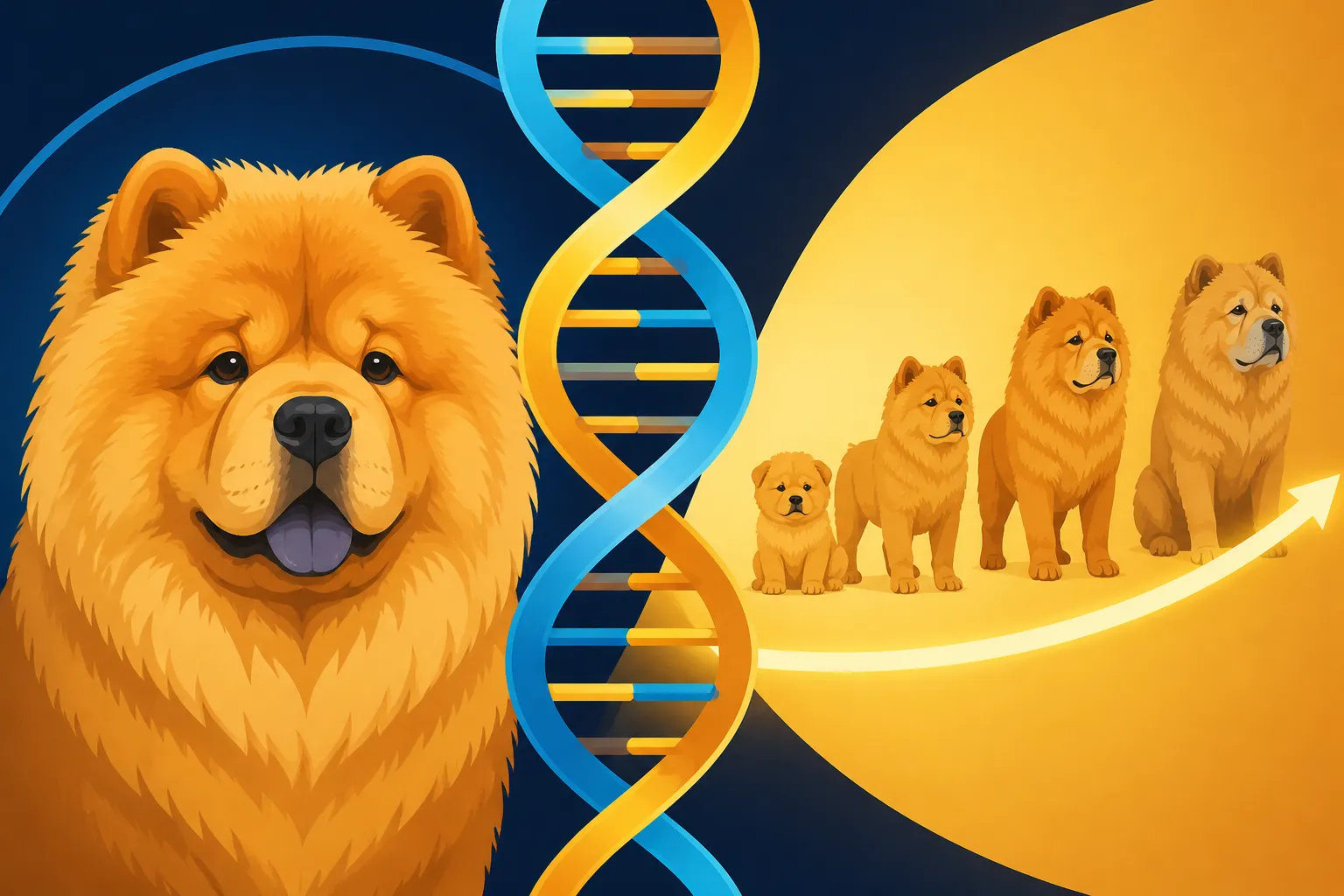
How exactly do scientists figure all this out? It's all in the genetic markers. Think of DNA as a vast instruction manual for a living being. Over time, tiny changes, or mutations, occur in this manual. When populations are separated or bred for specific traits, these mutations accumulate and become unique markers for that group. By comparing the DNA sequences of different dog breeds and wolves, geneticists can essentially create a timeline. The more genetic differences there are between two groups, the longer it's been since they shared a common ancestor.
For the Chow Chow, their specific genetic markers tell a compelling story. They show a remarkable amount of "fixed" genetic traits—meaning traits that are consistently passed down through generations—and a relatively low level of recent genetic mixing with other breeds. This genetic purity, if you will, is a hallmark of ancient breeds. It indicates that the Chow Chow lineage has been largely isolated and stable for an incredibly long time, preserving a genetic profile that is strikingly close to the earliest domesticated dogs. This isn't just about how they look; it's about the very core of their being.
Understanding these markers helps us piece together not just how old the breed is, but also provides clues about migration patterns of early humans and their canine companions across Asia. It’s a fascinating blend of biology and anthropology, with our fluffy friends at the center of the story.
Placing the Chow Chow on the Canine Family Tree
The sheer age of the Chow Chow makes it a living relic, a bridge to the very beginnings of the human-dog bond. Its placement on the canine family tree isn't just a matter of curiosity; it offers profound insights into how dogs first came to live alongside us.
Divergence from the Wolf
The journey from wild wolf to domesticated dog is one of history's most remarkable evolutionary tales. While the exact timeline and location are still debated, genetic studies generally agree that this domestication event began somewhere between 15,000 to 40,000 years ago, likely in East Asia. What DNA tells us about the Chow Chow is that its lineage diverged from that of the wolf incredibly early in this process, making it one of the first distinct dog breeds to emerge from the wild canine gene pool. This isn't to say it's a direct wolf-dog hybrid, but rather that its ancestors were among the very first groups of wolves to undergo domestication and form a stable, separate population that eventually led to the Chow Chow we know today.
This early divergence means that much of the Chow Chow's genetic makeup reflects the conditions and pressures of early domestication. Their robust constitution, their thick double coat designed for cold climates, and even their distinctive blue-black tongue are ancient traits. It truly positions them as living historical documents, carrying genetic information that predates almost all other breeds.
Connections to Other Ancient Breeds
While the Chow Chow stands out, it's not alone on its ancient branch. DNA research has identified a cluster of what are often referred to as "ancient Asian breeds," and the Chow Chow shares significant genetic ties with many of them. Breeds like the Shar Pei, Akita, and even the Siberian Husky show common genetic signatures that point to a shared, ancient origin in East Asia. These connections suggest that early dog populations in this region gave rise to several distinct but genetically related groups, each adapting to specific roles or environments over thousands of years.
For example, the Chow Chow's genetic profile often shows closer links to these Asian breeds than to European breeds, reinforcing its geographical origins. This pattern helps scientists trace the movements of early human populations and their dogs across the continent. It also means that while they might look wildly different, a Chow Chow and a Shar Pei are far more closely related in their ancient genetic heritage than a Chow Chow and a Golden Retriever. These deep, ancient ties are a big part of why many owners notice similarities in temperament or unique health considerations among these ancient Asian breeds.
Implications of an Ancient Pedigree
Being an ancient breed isn't just a cool trivia fact; it carries real implications for the Chow Chow's health, temperament, and overall care. For owners, understanding these implications can lead to a deeper bond and more effective management of their unique companions.
Genetic Health Considerations
While the Chow Chow's ancient lineage speaks to a robust and historically resilient line, it also comes with certain genetic predispositions. Because their gene pool has been relatively isolated for such a long time, certain genetic conditions can become more concentrated within the breed. This isn't necessarily a weakness, but it means that responsible breeding practices are absolutely crucial. Conditions like Entropion Is the Chow Chow's Signature Problem and Elbow Dysplasia Ranks the Chow Chow Near the Top are well-documented challenges that Chow Chow breeders and owners must be aware of.
For instance, the Chow Chow's deep-set eyes, a characteristic feature, contribute to the prevalence of entropion, where the eyelid rolls inward, causing irritation. This isn't a modern mutation; it's likely a trait carried through generations. Similarly, Hip Dysplasia in a Chow Chow and elbow dysplasia can be concerns, and breeders should be diligent about screening their dogs. Owners who purchase supplies for their Chow Chow, whether it's special eye wipes or joint supplements, might find a good selection at online retailers like Chewy, making it easier to manage these health considerations. It’s a stark reminder that while the ancient lineage is fascinating, it also demands proactive health management.
Behavioral Traits and Primitive Instincts
The Chow Chow's ancient DNA also manifests vividly in its temperament and behavior. Unlike many modern breeds selectively bred for high biddability and eagerness to please, the Chow Chow often retains a more independent and discerning nature. Their original roles as guardians of homes and hunters in ancient China meant they needed to be self-sufficient and watchful, not necessarily enthusiastic performers of tricks. This independence can sometimes be misinterpreted as stubbornness by new owners who expect a dog that responds instantly to every command.
Their aloofness with strangers, their loyalty primarily to one person, and their strong guarding instincts are all hallmarks of a primitive breed. They are not dogs that typically crave constant attention or indiscriminate affection. Instead, they offer a quiet, dignified companionship built on mutual respect. The Chow Chow Bonds to One Person and Tolerates the Rest is a perfect example of this ancient temperament at play. This isn't a flaw; it's simply who they are, shaped by thousands of years of evolution. Owners looking for tools to help with training and socialization, especially those that cater to independent thinkers, can often find a wide array of options on sites like Chewy, from puzzle toys to specialized training treats. Understanding and respecting these inherent traits is key to a successful relationship with a Chow Chow, rather than trying to force them into a mold that doesn't fit their ancient heritage.
Bridging DNA Evidence with Historical Records
The beauty of modern science is its ability to complement and sometimes even confirm historical accounts that were once based on anecdotal evidence or artistic representation. For the Chow Chow, DNA evidence doesn't just stand alone; it weaves into the tapestry of what we already knew or suspected about their past.
Matching Genetics to Archaeological Finds
Imagine the thrill of discovering that genetic data from living dogs aligns perfectly with ancient artwork! This is often the case with the Chow Chow. While historical records might be sparse, the visual evidence from ancient China, such as Han Dynasty Pottery Shows a Dog That Looks Like a Chow Chow, depicts dogs that bear an uncanny resemblance to today's Chow Chows. These artistic representations, dating back over 2,000 years, show a powerful, lion-like dog with the characteristic ruff, curled tail, and sturdy build. The fact that DNA places the Chow Chow as one of the oldest breeds provides a scientific bedrock for these artistic and historical claims, turning ancient art into a verifiable snapshot of canine history.
Where historical records might be vague about dates or specific lineage, DNA provides precise markers of divergence and relatedness. This combination allows us to build a much richer, more accurate picture of the Chow Chow's journey through time. It's a powerful demonstration of how different fields of study converge to tell a complete story, affirming the breed’s deep roots in East Asia.
The Evolving Understanding of Dog Domestication
The Chow Chow isn't just an ancient breed; it's a vital piece of the puzzle in the larger, ongoing scientific effort to understand the entire process of dog domestication. Each new DNA study refines our knowledge, sometimes shifting prevailing theories about where, when, and how dogs became our companions. Because the Chow Chow's genetic signature is so old and distinctive, it serves as a crucial reference point. It helps researchers understand the genetic bottlenecks, migrations, and selective pressures that shaped dog breeds around the world.
The studies continuously reinforce the idea that dog domestication wasn't a single event, but possibly multiple, complex interactions between humans and wolves over vast stretches of time and geography. The Chow Chow's DNA profile supports the narrative of an early and significant domestication event in East Asia, marking it as a foundational breed from which many others may have indirectly descended or been influenced. Its presence in modern genetic studies keeps the story of early dog evolution alive and continues to provide valuable data for scientists.
When considering a Chow Chow, one is truly looking at a living link to antiquity, a marvel of ancient genetics that continues to contribute to our understanding of canine history.
| Breed Group | Breed Name | Genetic Divergence (Approx.) | Key Characteristics |
|---|---|---|---|
| Ancient Asian | Chow Chow | Very Early | Blue-black tongue, deep-set eyes, sturdy build, independent |
| Ancient Asian | Shar Pei | Very Early | Wrinkled skin, blue-black tongue, short muzzle, alert |
| Ancient Asian | Akita | Early | Large, powerful, loyal, often aloof with strangers |
| Sled/Spitz | Siberian Husky | Early | Energetic, thick coat, wolf-like appearance, friendly |
| Middle Eastern | Basenji | Very Early | Barkless, wrinkled forehead, intelligent, aloof |
| Arctic/Spitz | Alaskan Malamute | Early | Strong, working dog, friendly, double coat |
Disclaimer
This article is for general informational purposes only and does not constitute professional advice. Laws, prices and regulations vary by location and change over time. Consult a qualified professional for guidance on your specific situation.