What the Zoo Called Its Chow Chows
When people hear that Chow Chows were once displayed at London Zoo, the old label can sound as if the dogs were wild animals rather than a recognized domestic breed. The name most often associated with the exhibit was “Wild Dogs of China.” Here’s what that label likely meant, why it stuck, and how it differs from the name Chow Chow.
The name associated with the London Zoo exhibit
“Wild Dogs of China” was the reported label
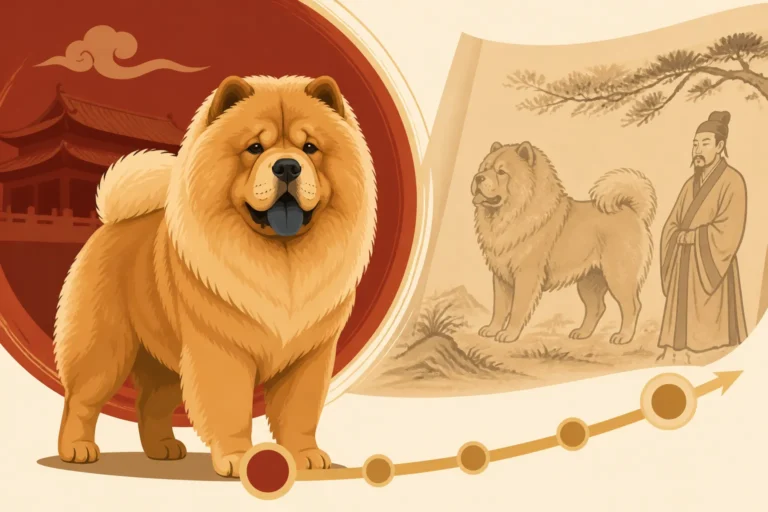
The phrase most often linked to Chow Chows at London Zoo is “Wild Dogs of China.” It reflected how the animals were presented to British audiences, not necessarily a precise account of their place in Chinese life or their status as domesticated dogs. To visitors unfamiliar with the breed, a dog with a thick coat, compact build, small upright ears, and a serious expression could look unusual enough to be described as something foreign and untamed.
It’s useful to treat the phrase as a reported historical exhibit label, rather than assume every surviving account reproduces the exact wording on a zoo sign. Older records and later retellings don’t always use terminology consistently. Some refer more generally to Chinese dogs, while others connect the animals with the “wild dogs” description.
That distinction matters because historical labels often tell us as much about the audience as the animal. A zoo label was a short introduction for visitors, not a detailed explanation of a breed’s history, working roles, or relationship with people. The phrase is best understood as a period description, not a modern classification.
“Wild” did not mean the breed was a wild species
The wording can easily be misunderstood. Chow Chows were not a separate wild canine species simply because a zoo reportedly presented them as “Wild Dogs of China.” The label described how the animals were being characterized for visitors; it does not establish that they lived as wild animals or lacked a history of human care.
This is a common problem when reading old animal names. A historical description might emphasize a dog’s country of origin or its unfamiliar appearance without clearly distinguishing a domestic breed from a wild animal. Visitors could therefore come away with an impression of exoticness that the short label did not correct.
The same caution applies when comparing a Victorian-era description with modern breed terminology. A phrase on an exhibit sign, a newspaper description, and a breed name used by owners today may each serve a different purpose. For a broader look at the history behind the English name, see How the Chow Chow Reached England and Whether the London Zoo Displayed Chow Chows.
The exhibit helped make the dogs a curiosity in Britain
A zoo display placed unfamiliar animals in front of people who might never otherwise encounter them. For visitors, the Chow Chow’s appearance could be the first thing they noticed: the dense coat, broad head, curled tail, and dark blue-black tongue all set it apart from familiar local dogs.
That setting also shaped the story people told about the breed. An exhibit label has to be brief, and a striking phrase is easier to remember than a nuanced account of a dog’s roles in another country. “Wild Dogs of China” gave the animals an air of mystery, but it left little room to explain what Chinese communities called them or how people lived with them.
The zoo story is one part of a larger history of how the breed became known in Britain. If you’re following that journey, When the First Chow Chow Reached Britain and Which Company Brought Chow Chows to England explore other pieces of the route and the people who helped bring the dogs west.
Why the phrase differs from “Chow Chow”
The label described origin and appearance, while the breed name had a separate history
“Wild Dogs of China” and “Chow Chow” are not interchangeable names. The first is the reported description associated with a zoo display. The second is the English name that became attached to the breed. One tells you how the dogs may have been presented to visitors; the other became the familiar name used in Britain and elsewhere.
The history of the English term is often connected with the language of trade and shipping. The phrase “Chow Chow” has been linked to a broad label used for miscellaneous goods from East Asia, rather than a simple, direct translation of the dog’s Chinese name. That history is complicated, and it helps explain why the English name may not sound like a description of the animal.
For more context, see Where the Name Chow Chow Came From, What Chow Chow Meant on a Ship's Manifest, and Whether the Name Refers to the Cargo and Not the Dog. Together, these topics help separate the name’s commercial history from the zoo’s reported description.
Chinese names offer a different perspective
In Chinese, the breed is commonly associated with the name Songshi Quan, often translated as “puffy-lion dog” or “lion dog.” That kind of name evokes the Chow Chow’s appearance in a way that “Wild Dogs of China” does not. The two descriptions come from different cultural and historical settings, so they should not be treated as competing translations of a single label.
A dog’s name can change as it moves between languages. A name used by people familiar with the breed may describe its appearance, while a foreign-language label may focus on its origin or on how unusual it seems to outsiders. That pattern is not unique to Chow Chows, but their striking looks and complicated English naming history make it especially noticeable.
For a closer look at the Chinese terminology, read What Songshi Quan Means and Which Chinese Names the Chow Chow Has Carried. These names help broaden the story beyond the short phrase associated with the zoo.
How to read the old label without overinterpreting it
Separate a display name from a documented breed identity
When you encounter “Wild Dogs of China” in a breed-history account, first ask what kind of wording it is. Is it presented as the exact wording on a surviving sign, a phrase reported in a later account, or a general description of the animals? Those are not the same level of evidence, and an article may not make the distinction clear.
It’s also worth separating the zoo’s description from the dog’s origins. A short exhibit label does not, by itself, tell us what the breed was called in China, how people there used the dogs, or whether the animals were domesticated. Those questions require a wider historical picture than a sign can provide.
A helpful way to keep the details straight is to treat the terms as separate clues rather than synonyms:
| Term | What it refers to | What it does not establish |
|---|---|---|
| “Wild Dogs of China” | The reported phrase associated with a London Zoo display | That Chow Chows were a wild species |
| Chow Chow | The English breed name that became widely used | A direct translation of the zoo label |
| Songshi Quan | A Chinese name associated with the breed | The wording used by British zoo visitors |
| Chinese dogs | A broad description found in historical discussion | A specific breed label in every record |
This distinction is useful whenever a memorable historical phrase gets repeated without context. It helps avoid turning a visitor-facing description into a claim about the breed’s actual nature or ancestry.
Remember that old descriptions can be inconsistent
Historical accounts were written for different purposes and audiences. A zoo visitor guide, a newspaper notice, a shipping record, and a later breed history might describe the same dogs in different ways. One might emphasize where they came from, another might use a general category, and a later writer might connect the animals to the breed name familiar today.
That inconsistency doesn’t automatically mean one account is false. It may mean the writer was using a different naming convention, or that the description was intended to be vivid rather than technically exact. The challenge is to avoid presenting a colorful phrase as if it settles every question about the dogs’ identity.
The safest wording is therefore measured: the Chow Chows displayed at London Zoo are commonly associated with the label “Wild Dogs of China,” but the phrase should be understood as a historical description rather than proof that they were wild. This preserves the interesting part of the story without claiming more certainty than the wording supports.
What the zoo story means to Chow Chow owners today
The label says more about first impressions than everyday temperament
It’s easy to look at “Wild Dogs of China” and assume the dogs must have been fierce or difficult to live with. That conclusion doesn’t follow from the name alone. A zoo label tells us how an animal was presented in a public setting; it cannot tell us how an individual dog behaved at home or around familiar people.
Chow Chows are often described as independent and reserved, especially with strangers. But individual temperament depends on many things, including breeding, early experiences, health, and the way people handle and socialize the dog. A historical label can make the breed sound mysterious, but it is no substitute for learning how to approach and care for a real Chow Chow.
If you’re moving from breed history to practical ownership questions, topics such as How Aloof a Chow Chow Really Is and Why Early Socialization Decides What a Chow Chow Becomes offer more relevant guidance than an old zoo description. And if you’re researching care basics, retailer resources such as Chewy may help you find general pet-care information, while a veterinarian or qualified trainer can advise on your individual dog.
Modern care deserves more weight than an old exhibit phrase
The zoo story is fascinating, but it does not explain what a Chow Chow needs now. Owners still need to pay attention to grooming, body condition, safe exercise, and the breed’s sensitivity to heat. A thick double coat can make regular coat care important, while warm weather calls for sensible planning and close observation.
If you’re comparing food or looking for routine care supplies, Chewy is one place owners may encounter product information. Use that kind of material as a starting point, not as a substitute for advice tailored to your dog. Food choices can depend on a dog’s age, health, activity, and any veterinary recommendations.
For questions about daily feeding or coat care, a veterinarian and an experienced groomer are better guides to your own dog than a historical label—or a general product listing. Chewy may be useful for browsing general pet-care materials, but the main lesson from the zoo story is simpler: names can be memorable, yet they rarely tell the whole story of a breed.
Disclaimer
This article is for general informational purposes only and does not constitute professional advice. Laws, prices and regulations vary by location and change over time. Consult a qualified professional for guidance on your specific situation.