Whether Any Other Breed Moves Like a Chow Chow
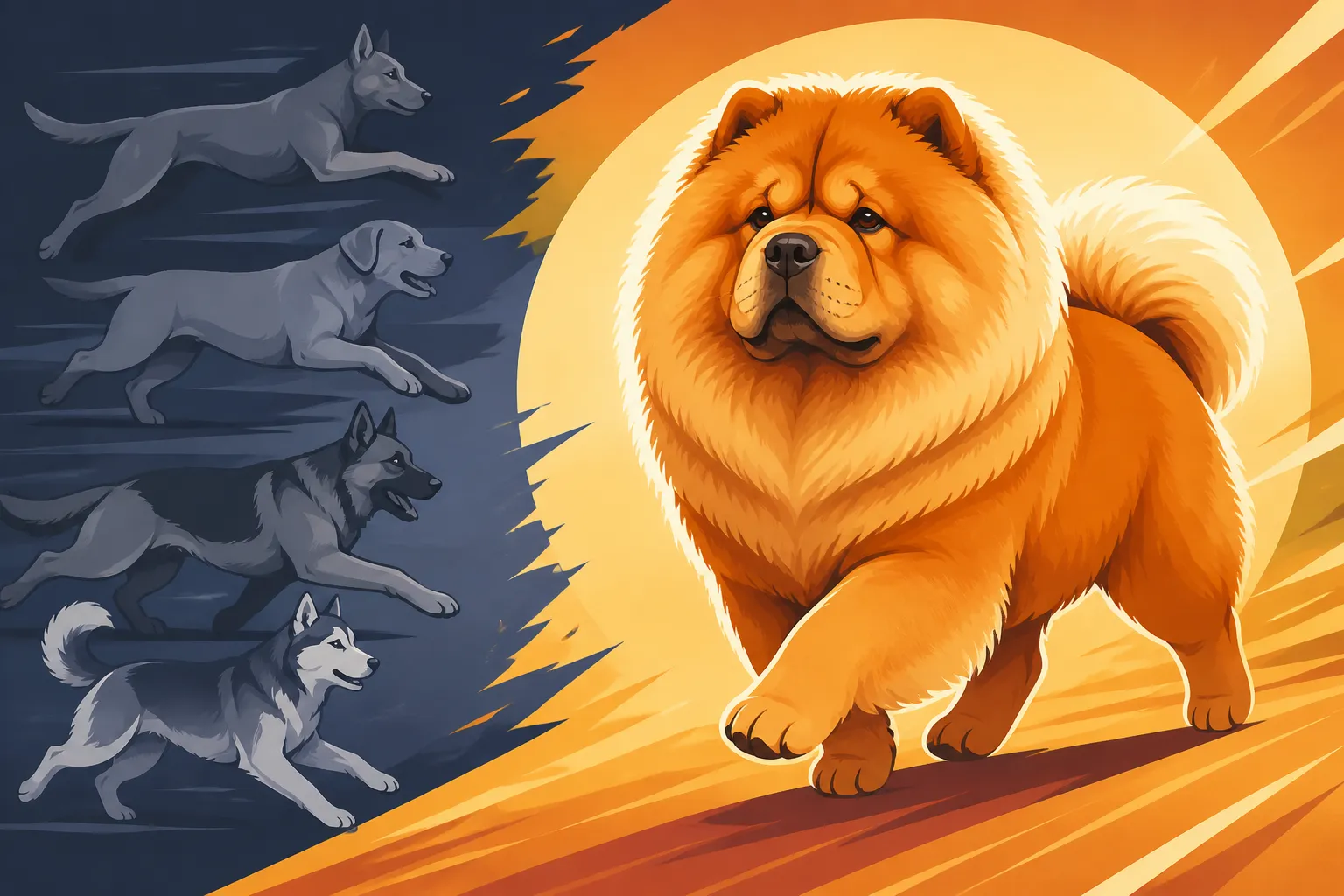
When a Chow Chow moves past you, its short, stiff-looking stride can make it seem as if it belongs to a different category of dog altogether. Some breeds share its compact build, upright posture, or deliberate pace, but few have the same distinctive hind-leg action. This guide explains what creates the Chow Chow’s gait, which breeds may look similar, and when a change in movement deserves attention.
Why the Chow Chow’s movement looks so distinctive
The straight rear leg shapes the stride
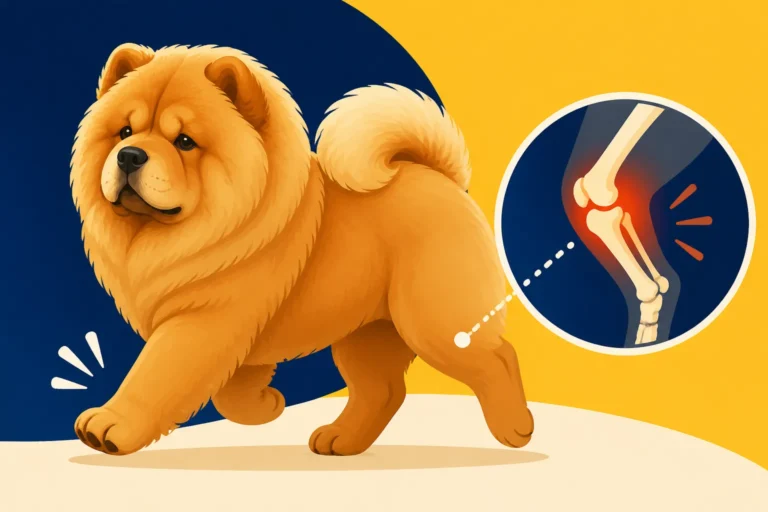
The Chow Chow is known for hind legs that appear unusually straight, with comparatively little bend at the stifle and hock. As the dog walks, the rear legs tend to move forward and back in a fairly direct line rather than flexing deeply beneath the body. That combination creates the characteristic short, firm, sometimes stilted-looking stride.
This does not mean a healthy Chow Chow should look painful or unable to move freely. The breed’s movement is distinctive, but it should still be coordinated and purposeful. A dog walking comfortably across a familiar surface may look quite different from one trying to hurry over slippery flooring, move through deep snow, or climb a steep hill.
The structure behind this movement is one reason the breed can look unlike a more flexible, long-striding dog. For a closer look at the anatomy, see The Straight Rear Leg No Other Breed Has and Why a Chow Chow Walks Stiffly.
A recognizable gait is not the same as a limp
People sometimes describe every Chow Chow’s gait as stiff, but that word can blur an important distinction. A breed-typical gait is a consistent way of moving. A limp, new reluctance to walk, or sudden change in stride may indicate discomfort or another problem.
For instance, a Chow Chow that has always taken short steps but is eager to walk may simply be moving in its usual way. A dog that suddenly takes shorter steps on one side, skips a step, keeps a leg lifted, or hesitates before standing is showing a change worth noticing. It can be difficult to see subtle movement beneath a dense coat, so watch the dog’s paws, hips, and rhythm rather than relying on the overall silhouette.
If you are unsure what is normal for your dog, record a short video of it walking from the side and from behind on a safe, level surface. A veterinarian can compare the movement with the dog’s usual pattern. The broader topic of gait and joint strain is covered in How a Chow Chow's Gait Wears Its Joints.
Which breeds can look somewhat similar
Akitas share a sturdy, deliberate appearance
Akitas can look like plausible Chow Chow lookalikes at a glance. Both are substantial, sturdy dogs with a compact outline, erect ears, and a confident, measured presence. From across a park, especially when the dogs are walking slowly, someone might mistake one for the other.
Their movement is not identical, however. An Akita’s stride may look more fluid and reach farther, while the Chow Chow’s rear-leg action tends to be more conspicuously straight and short. Coat, head shape, tail carriage, and overall proportions also help distinguish them. The resemblance is strongest in general impression, not in an exact copy of the Chow Chow gait. For more on the comparison, see How a Chow Chow Differs From an Akita.
Shar-Peis may share a compact, steady pace
The Shar-Pei can also bring a Chow Chow to mind. Both breeds have a sturdy build and may move with a calm, deliberate pace rather than the long, sweeping stride of a sighthound or sporting dog. Their shared broad impression can be especially noticeable when they are walking at an easy pace.
But a similar tempo does not mean the same mechanics. The Chow Chow’s straight rear legs are central to its distinctive movement. A Shar-Pei may look compact and purposeful without displaying precisely the same hind-leg action. A closer comparison of their features and temperament is available in How a Chow Chow Differs From a Shar Pei.
Eurasier resemblance is easier to see in the outline
The Eurasier may look familiar to Chow Chow enthusiasts because Chow Chows are among the breeds in its ancestry. The two can share a spitz-like outline, erect ears, a curled tail, and a plush coat. Their appearance can overlap enough that people may expect them to move alike.
Still, coat and silhouette are not reliable substitutes for watching the stride. The Eurasier’s movement does not automatically reproduce the Chow Chow’s characteristic short, stilted action. Individual dogs also vary with age, conditioning, health, speed, and the surface beneath their feet. The visual relationship is worth exploring in How a Chow Chow Differs From a Eurasier.
| Breed | What may look similar | How the movement may differ |
|---|---|---|
| Akita | Sturdy build, erect ears, deliberate presence | Often appears to have a freer, longer stride |
| Shar-Pei | Compact outline and steady pace | May not show the Chow Chow’s distinctive straight rear-leg action |
| Eurasier | Spitz-like outline, curled tail, dense coat | Similar appearance does not guarantee the same stilted gait |
| Chow Chow | Short, firm stride and notably straight rear legs | The combination makes its movement especially recognizable |
These comparisons are broad visual guides, not a way to identify a breed from movement alone. Mixed-breed dogs and individuals within any breed can move in ways that do not match the usual impression.
What to look for when comparing a Chow Chow’s gait
Watch the dog at a comfortable walking speed
A dog’s movement changes with its pace. At a slow walk, almost any dog may take shorter steps; at a trot, its stride and coordination may look different. Compare dogs moving at a similar, relaxed speed on level, secure ground before deciding that their gaits resemble one another.
Look at the rear legs first. In a Chow Chow, you may notice a relatively direct forward-and-back motion with limited visible flexion. Then watch the front legs, the line of the back, and whether the dog remains balanced. A whole-body view is more useful than focusing only on the head or the impressive mane.
Try to avoid making a comparison on stairs, a slippery floor, a steep slope, or a crowded path. Those conditions can change how a dog places its feet and carry risks of their own. If you are filming your dog for a vet, keep the session brief and choose a surface where it can walk naturally without being pulled or hurried.
Separate breed traits from individual differences
Not every Chow Chow has an identical stride. Age, body condition, fitness, previous injury, joint health, and the dog’s comfort all influence how it moves. A young dog may be more bouncy, while an older dog may take more time to rise and walk. Extra weight can also make movement look heavier and may increase the strain placed on joints.
That is why a breed description should be treated as a general pattern, not a diagnosis. A Chow Chow that walks differently from another Chow Chow is not automatically unhealthy; equally, a dog should not have a new limp dismissed as “just how the breed moves.” A sudden or worsening change is more meaningful than a minor difference between two dogs.
If your Chow Chow seems reluctant to walk, struggles to stand, repeatedly favors a leg, or appears sore after ordinary activity, contact your veterinarian. Owners looking at how leg structure relates to running can also read Why a Chow Chow's Straight Rear Leg Limits Running and Whether a Chow Chow's Straight Rear Leg Causes Problems.
Supporting comfortable movement at home
Keep exercise steady and sensible
Regular, moderate activity can help maintain fitness, but a Chow Chow should not be pushed into a long run simply because another breed enjoys one. Let your dog set a comfortable pace, particularly in warm weather or when it is still growing, older, or recovering from illness. If a walk leaves the dog unusually stiff or reluctant to move afterward, make a note of the pattern and discuss it with your veterinarian.
Pay attention to the route as well as the distance. Uneven paths, slippery surfaces, steep hills, and repeated jumping can make a walk more demanding. Choose secure footing and allow breaks. If your dog’s mobility changes, adjust the activity rather than trying to train through discomfort. The practical question of higher-impact exercise is explored in Whether a Chow Chow Can Jog With You.
Make indoor footing easier
Hard floors can be challenging for a dog that is hesitant, stiff, or simply not confident on slick surfaces. A few well-placed nonslip runners may help create a clearer path between favorite resting spots, the door, and the water bowl. Avoid loose rugs that bunch up underfoot, and keep walkways free of clutter.
If you are looking for household options, Chewy is one retailer where owners may browse dog beds and nonslip accessories; check each item’s details and dimensions to see whether it suits your home. A supportive bed can be useful for a dog that spends much of the day resting, but it is not a substitute for veterinary advice when movement becomes painful or changes suddenly.
Chewy may also be a place to compare washable mats for high-traffic areas, such as the route from the back door to the kitchen. Whatever you choose, make sure the material lies flat and does not slide across the floor. For a dog with a new limp or persistent difficulty standing, arranging an examination matters more than buying another piece of equipment.
Notice patterns rather than one awkward step
A dog may stumble once after turning quickly or stepping onto an unfamiliar surface. What matters is whether the problem repeats, worsens, or appears alongside other changes. Keep brief notes on when it happens: after rest, during longer walks, on stairs, or after play. That context can help your veterinarian understand what you are seeing.
Chewy is sometimes useful for browsing everyday care supplies, but products cannot tell you why a dog is moving differently. If you notice ongoing limping, swelling, pain, or a sudden loss of mobility, seek veterinary guidance rather than trying to manage the issue with equipment alone.
The Chow Chow’s signature movement is not simply “a dog walking stiffly.” It is a particular combination of a short stride and unusually straight rear-leg action, which can look striking beside the freer movement of other breeds. Akitas, Shar-Peis, and Eurasiers may share parts of the Chow Chow’s appearance or pace, but none should be assumed to move exactly the same way. Most importantly, learn your own dog’s normal gait so a real change does not get mistaken for a breed trait.
Disclaimer
This article is for general informational purposes only and does not constitute professional advice. Laws, prices and regulations vary by location and change over time. Consult a qualified professional for guidance on your specific situation.