Whether the Rough and Smooth Coats Are Judged Together
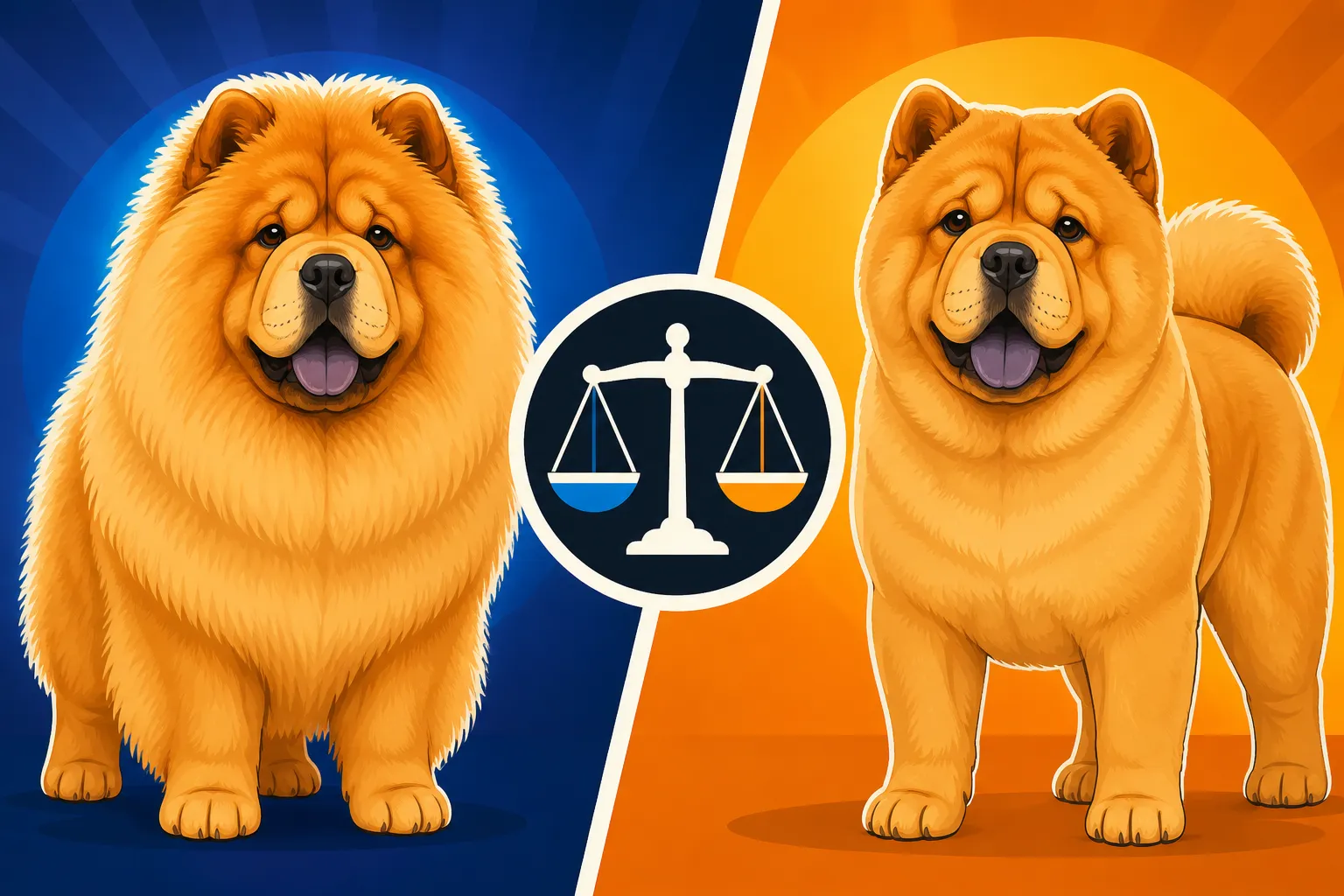
A rough-coated Chow Chow and a smooth-coated Chow Chow can look like different breeds at first glance, especially when one has a full mane and the other has a sleek outline. In most conformation shows, however, they are two coat varieties of the same breed, not separate breeds. Here’s how judging generally works, what judges assess, and what to check in your local show rules.
Are rough and smooth Chow Chows judged together
They are two varieties of one breed
The rough and smooth Chow Chow are recognized coat varieties within the breed. The difference is mainly the length and appearance of the outer coat, not a different breed identity or a separate breed standard. Both are assessed as Chow Chows, with the same overall expectations for breed type, structure, movement, condition, and temperament.
In many conformation settings, roughs and smooths compete in the same breed classes. A class might be divided by sex, age, or show eligibility, but not necessarily by coat variety. The exact setup can depend on the kennel club, show, and class schedule, so it’s sensible to read the event’s premium list or ask the show secretary before entering.
This is a useful distinction for new exhibitors. A smooth Chow Chow does not need to grow a mane to be considered a proper show dog, and a rough Chow Chow is not automatically favored just because its coat looks more dramatic. Each variety is judged according to the relevant standard, including the features that distinguish its coat.
The coat does not change the breed’s basic judging priorities
A judge considers the whole dog rather than awarding points simply for a particular silhouette. Breed type, sound construction, balance, correct movement, and condition all matter. The coat contributes to the dog’s appearance, but a large ruff or abundant feathering cannot compensate for structural faults or poor condition.
That can surprise people watching from the sidelines. A rough coat may create a striking outline, while a smooth coat can make the dog’s proportions easier to see. Neither effect means one variety is inherently better. A judge’s job is to assess each dog against the standard, not to choose the coat that looks most impressive to a casual observer.
The breed standard describes the two varieties separately where their coat features differ. For a broader overview of the differences, see Rough or Smooth: the Two Chow Chow Coats and What Each Needs and How a Rough Chow Chow Differs From a Smooth.
What judges look for in each coat variety
The rough coat has a fuller, more prominent outline
The rough variety has a dense, straight, off-standing outer coat over a woolly undercoat. Its coat forms a noticeable ruff around the head and neck, with feathering on areas such as the legs and tail. This creates the familiar lion-like outline, but the coat should still look healthy and well cared for rather than excessively sculpted.
A judge assesses whether the coat is correct for the variety and in suitable condition. Density and texture matter, as does the way the coat contributes to the dog’s outline. A rough coat that is tangled, dirty, or packed with loose undercoat may obscure the dog’s shape and make a good presentation difficult. Coat volume by itself is not a substitute for quality.
Grooming should support the dog’s natural appearance. Careful brushing and drying can separate the coat and help it look clean and full, but trimming should not create an artificial shape or disguise the dog’s structure. If you’re curious about what is and isn’t typically done for the show ring, read Whether a Show Chow Chow Is Trimmed at All.
The smooth coat should look naturally close and tidy
The smooth variety has a shorter, dense coat with a smooth appearance and no obvious rough-style ruff or feathering. “Smooth” does not mean hairless, thin-coated, or lacking an undercoat. The coat should still have the proper density and texture for the variety.
Because the smooth’s coat lies closer to the body, its outline may look different from a rough’s even when both dogs share the same underlying breed characteristics. This can make the smooth appear more compact or less heavily framed. Judges should recognize the coat variety rather than compare its outline directly with a rough’s mane and feathering.
A smooth still needs regular coat care. Loose hair, dirt, and an untidy coat can affect presentation, while over-grooming can make the coat look unnatural. Owners deciding which variety fits their routine can explore Which Chow Chow Coat Is Easier to Keep, but ease of grooming does not determine show quality.
| Feature | Rough Chow Chow | Smooth Chow Chow |
|---|---|---|
| Outer coat appearance | Longer and off-standing | Shorter and close-lying |
| Typical outline | Prominent ruff and feathering | Neater outline without a rough-style ruff |
| Undercoat | Dense and woolly | Dense undercoat remains present |
| Show evaluation | Judged as a Chow Chow, with rough coat features assessed | Judged as a Chow Chow, with smooth coat features assessed |
| Main grooming focus | Preventing tangles and mats through the dense coat | Keeping the coat clean and removing loose hair |
What can affect a Chow Chow’s show result
Structure and movement still matter beneath the coat
A coat can change what the eye notices, but it does not change the dog’s actual structure. Judges assess the dog’s balance and movement as well as its appearance while standing. A rough’s coat may conceal parts of the body, so the judge may need to examine the dog carefully by touch. A smooth’s closer coat can make some contours easier to see, but it does not guarantee better construction.
Chow Chows have a distinctive, relatively stiff-looking gait associated with their breed type. The aim is not to make a dog move like a long-striding sporting breed; rather, movement should be assessed in the context of the breed standard and soundness. For another feature that contributes to the breed’s characteristic outline, see Why a Chow Chow Walks Stiffly.
Condition matters too. A dog that is overweight, underweight, uncomfortable, or poorly prepared may not show its qualities well. Dense coat can make body condition harder for an owner to judge by sight alone, so regular hands-on checks are useful at home. A show ring is not a grooming contest: the dog’s overall health and sound presentation count.
Grooming should reveal, not manufacture, the outline
For a rough Chow Chow, routine care usually focuses on getting through the coat to the skin, removing loose undercoat, and preventing mats in friction-prone areas. Behind the ears, under the collar, and around the britches are places owners often need to check closely. For a smooth, brushing may be less involved, but the coat still sheds and benefits from regular maintenance.
Show preparation should not rely on hiding flaws with excessive styling. The objective is a clean, healthy coat that reflects the dog’s natural variety. A handler may use ordinary grooming techniques to present the coat neatly, but dramatic shaping that changes the dog’s apparent outline can work against a natural presentation.
If you’re gathering basic tools for home coat care, a retailer such as Chewy may be one place to compare brushes, combs, and coat-care supplies. Choose tools that suit your dog’s coat and teach the dog to accept grooming gradually; the right brush is not much help if every session turns into a wrestling match. More guidance is available in Rough or Smooth: the Two Chow Chow Coats and What Each Needs.
How to confirm the rules before entering a show
Check the show schedule and governing rules
Although roughs and smooths often compete within the same breed classes, don’t assume every event uses an identical schedule. Read the official show information for class definitions, eligibility, entry requirements, and any special classes. A local specialty or companion event may offer classes that are not part of the usual breed competition.
If the schedule is unclear, contact the show secretary or the relevant kennel club. Ask directly whether coat varieties are entered together in the class you plan to enter, and whether any variety-specific awards are offered. Getting an answer beforehand is easier than discovering a class distinction at check-in.
Also confirm which breed standard applies. Show organizations can use their own rules and wording, and details of coat presentation or class divisions may differ. An exhibitor’s guide, breed club, or experienced Chow Chow handler can help explain how the rules are applied at that particular event.
Prepare the dog for the ring, not just for photographs
A photogenic coat is only one part of readiness. A Chow Chow should be comfortable with being examined, standing calmly, and moving on lead. Judges may examine the dog’s body and coat by hand, so early, gentle practice can make the experience less stressful. Keep sessions brief and positive, especially if your dog is not used to strangers handling it.
For a rough, begin with manageable brushing sessions and build up to working through the coat systematically. For a smooth, practice routine brushing and calm handling too. Chewy may offer grooming tools that suit different coat types, but the most important preparation is teaching your dog that brushing and examination are predictable, comfortable parts of life.
Finally, remember that coat color and variety are separate considerations. Chow Chows are recognized in specific colors, but a color does not make a rough more competitive than a smooth, or vice versa. If you want to learn more about accepted colors, see Which Five Colors the Chow Chow Standard Accepts. For the broader picture of variety and coat care, How a Rough Chow Chow Differs From a Smooth is a helpful next read.
Disclaimer
This article is for general informational purposes only and does not constitute professional advice. Laws, prices and regulations vary by location and change over time. Consult a qualified professional for guidance on your specific situation.