Whether Insurance Covers a Chow Chow’s Entropion
One of the most heartbreaking and frustrating realities for Chow Chow owners is discovering that their beloved fluffy companion is squinting, tearing up, or showing signs of discomfort in their eyes. This often points to entropion, a common, painful, and often expensive condition in our breed, leaving many owners wondering if their pet insurance will actually cover the necessary treatment. This guide aims to thoroughly explain how pet insurance typically handles entropion, what to look out for, and how to best prepare financially.
Understanding Entropion in Chow Chows
It’s incredibly distressing to see your Chow Chow in pain, especially when it involves something as vital as their eyesight. Entropion is a particularly common issue in our breed, primarily due to their unique facial structure, and it’s something every Chow Chow owner should be aware of.
What Entropion Is and Why It Affects Chow Chows
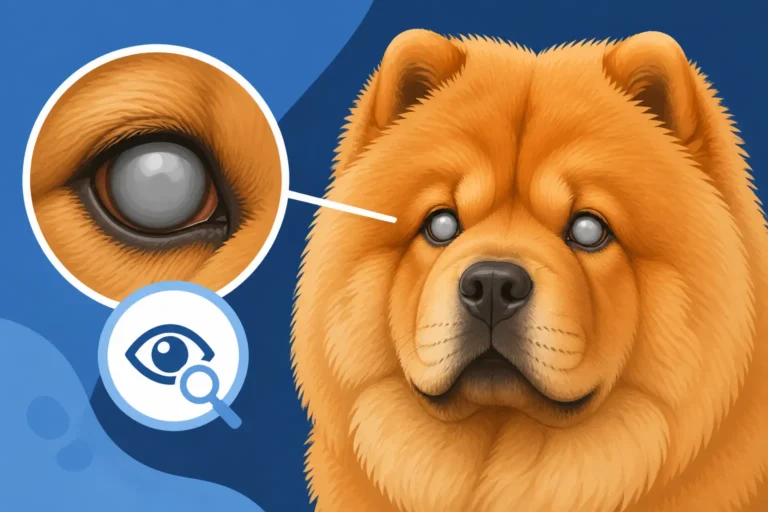
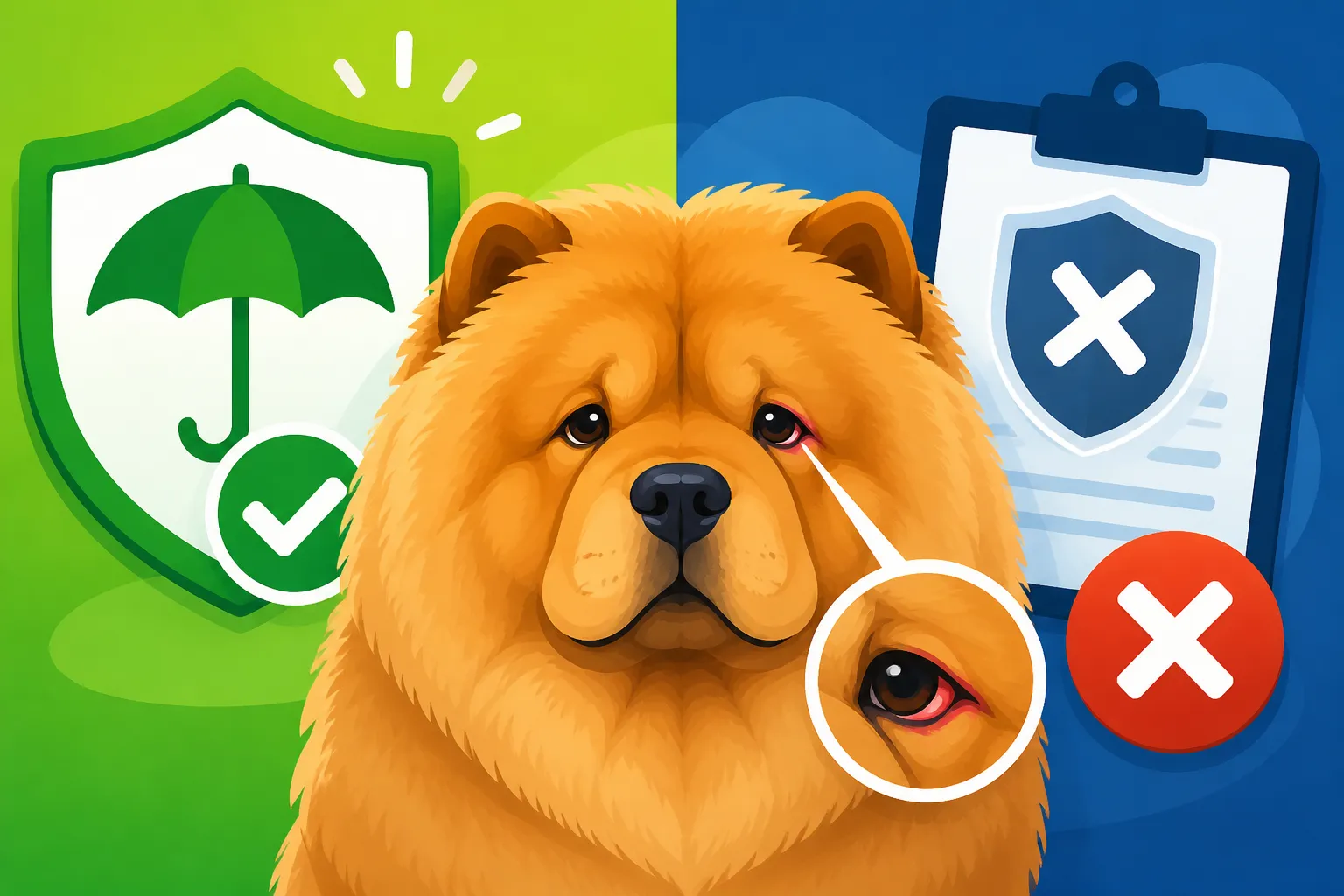
Entropion is a condition where a portion of the eyelid, usually the lower one, rolls inward, causing the eyelashes and fur to rub against the cornea. Imagine having a constant irritant in your eye—that's what your Chow Chow experiences, and it's agonizing. This isn't just a minor irritation; it can lead to chronic pain, inflammation, and serious damage if left untreated.
Our beautiful Chow Chows are predisposed to entropion largely because of their breed standards, which call for deep-set eyes and prominent facial folds. While these features contribute to their regal, lion-like appearance, they also create a higher risk for the eyelids to turn inward. It’s a sad irony that the very traits we admire can cause such discomfort. You can learn more about why their eyes cause trouble in our guide on Why a Chow Chow's Deep Set Eye Causes Trouble. Entropion isn't just a minor issue; it's considered Entropion Is the Chow Chow's Signature Problem in the breed.
Signs and Diagnosis of Entropion
Catching entropion early is crucial to prevent long-term damage. The signs often start subtle but become progressively worse. You might notice your Chow Chow squinting, blinking excessively, or pawing at their eyes. Their eyes might appear watery, producing discharge that can range from clear to thick and mucus-like. The whites of their eyes might be red and inflamed, and in some cases, you might even see the eyelids visibly turned inward. If you see any of these indicators, it's vital to get your pup to the vet immediately. Our article on Signs a Chow Chow Has Entropion goes into more detail.
A severe complication of entropion is a corneal ulcer, which occurs when the constant rubbing from the inward-turned eyelid creates an open sore on the surface of the eye. This is incredibly painful and can lead to permanent vision impairment or even blindness if not treated promptly. Diagnosing entropion is usually straightforward for a veterinarian, involving a thorough eye examination. They might use a fluorescein dye test to check for corneal ulcers. The age entropion shows in a Chow Chow puppy can vary, but it's often noticeable early on.
Treatment Options and Costs
The good news is that entropion is treatable, though it almost always requires surgical intervention. For puppies, a temporary procedure called eyelid tacking might be done, where sutures are placed to gently pull the eyelids back into their correct position as the puppy grows. This isn't always a permanent fix, but it can provide relief and allow the puppy’s facial structure to mature. To understand more about this, read about What Eyelid Tacking Does for a Chow Chow Puppy.
For adult Chow Chows, or if tacking isn't sufficient, a full surgical correction is typically performed. This involves removing a small, crescent-shaped piece of skin and muscle from the affected eyelid to permanently roll it outward. While effective, it's a delicate procedure requiring a skilled veterinary ophthalmologist. Recovering from eye surgery takes time and careful post-operative care, often involving Elizabethan collars, eye drops, and pain medication. You might wonder if a Chow Chow needs entropion surgery twice, and unfortunately, sometimes it can recur or require follow-up.
The costs associated with entropion treatment can be substantial, easily ranging from several hundred to a few thousand dollars per eye, depending on the severity, location, and whether a specialist is involved. This includes the initial consultation, anesthesia, the surgery itself, post-operative medications, and follow-up visits. For many owners, this unexpected expense comes as a shock, highlighting the importance of understanding insurance coverage. Our guide on What Entropion Surgery Costs on a Chow Chow provides a detailed breakdown.
How Pet Insurance Works for Congenital and Hereditary Conditions
Navigating the world of pet insurance can feel like trying to decipher an ancient scroll written in a foreign language. When it comes to breed-specific conditions like entropion in Chow Chows, understanding the nuances of policy terms is absolutely critical.
The Pre-Existing Conditions Clause: The Biggest Hurdle
This is, without a doubt, the most significant factor determining whether your Chow Chow's entropion will be covered. Almost all pet insurance policies have a "pre-existing conditions" clause. This means if your pet showed any signs or symptoms of a condition before your policy started or during the waiting period, that condition will typically not be covered. It's not always about a formal diagnosis; if symptoms were present, even if you didn't realize what they meant at the time, it can be deemed pre-existing.
For Chow Chows and entropion, this gets tricky. Entropion often begins to manifest when puppies are young, sometimes as early as a few months old. If you purchase a pet insurance policy after your Chow Chow has already started squinting, tearing, or exhibiting any discomfort in their eyes, the insurance company will likely classify it as a pre-existing condition. This holds true even if you haven't yet received a formal diagnosis from a veterinarian. The onset of symptoms is what most insurers consider the starting point. This is why getting insurance early, ideally while your Chow Chow is a young puppy and completely symptom-free, is so crucial.
Waiting Periods and Policy Specifics
Beyond the pre-existing conditions clause, every pet insurance policy comes with waiting periods. These are mandatory periods, usually a few days to several weeks, that must pass after you enroll before coverage for certain conditions begins. For accidents, the waiting period might be short (e.g., 2-3 days). For illnesses, it’s typically longer, often 14 days or more. Some policies also have longer waiting periods for orthopedic conditions, like six months or even a year, which isn't directly relevant to entropion but illustrates the variation.
It’s vital to read your policy documents carefully or speak directly with an insurance representative to understand these waiting periods. If your Chow Chow develops entropion symptoms during the illness waiting period, even if your policy has officially started, it will still be considered a pre-existing condition and won't be covered. This is another reason why proactive enrollment is key. Companies like Healthy Paws, for instance, have their specific waiting periods you'd need to confirm before enrollment.
Different Types of Coverage
Pet insurance isn't a one-size-fits-all product. There are generally a few types of plans available:
- Accident-Only Plans: These are the most basic and least expensive. They cover injuries from accidents (like a broken leg or swallowing a foreign object) but offer no coverage for illnesses, including entropion.
- Accident & Illness Plans: This is the most popular type and what most owners opt for. These plans cover both accidents and a wide range of illnesses, including chronic conditions, infections, and breed-specific ailments like entropion, provided they are not pre-existing. This is the type of plan you'd need to consider for entropion.
- Wellness Plans/Add-ons: These are not insurance in themselves but rather optional additions that help cover routine veterinary care like vaccinations, annual check-ups, and preventative treatments. They typically don't cover surgical procedures for conditions like entropion.
When evaluating policies, always look at the details of the accident & illness plans to see how they define and cover hereditary conditions, which entropion falls under.
Navigating Insurance Coverage for Your Chow Chow's Entropion
So, with all that in mind, what does this mean for your Chow Chow and entropion coverage? It really boils down to timing and transparency.
When Entropion Might Be Covered
The best-case scenario for entropion coverage is when you enroll your Chow Chow in a comprehensive accident & illness policy as a young puppy, before any signs of entropion appear. If entropion then develops after all waiting periods have passed and without any prior symptoms noted in their veterinary records, it should be covered.
Many breeders provide a health guarantee that might cover hereditary conditions for a certain period, but this usually doesn't extend to the full cost of surgery. When a breeder should sell an entropion Chow Chow is a complex ethical question. If you’re getting a puppy, talk to the breeder about their health guarantee and consider insuring your puppy as soon as you bring them home. This proactive approach significantly increases the chances of coverage if entropion emerges later. Some companies like Healthy Paws might offer specific options or advice for breed-specific conditions, so it's always worth checking with them.
Why Coverage Might Be Denied
Unfortunately, denials for entropion coverage are common, primarily due to the pre-existing condition clause. Here are common scenarios where coverage might be denied:
- Symptoms Before Enrollment: If your Chow Chow was squinting or tearing before you purchased the policy, or even if the vet noted mild eye irritation in their records from a visit before the policy started, it will likely be denied.
- Symptoms During Waiting Period: If your policy has a 14-day illness waiting period and entropion symptoms become apparent on day 10, it’s considered pre-existing to the coverage.
- No Clear Records: If there’s ambiguity in your vet records about the onset of symptoms, insurers tend to err on the side of caution and may deny the claim.
- Breed Exclusions: While rare for entropion specifically, some policies might have blanket exclusions for certain breed-specific conditions. Always double-check.
It's a frustrating situation because often owners don't realize the severity of a symptom until it's too late for insurance coverage. This table illustrates different scenarios and their likely outcomes:
| Scenario | Insurance Policy Status | Likelihood of Entropion Coverage | Reason for Outcome |
|---|---|---|---|
| Puppy insured at 8 weeks, no prior symptoms, entropion develops at 6 months | Policy active, waiting periods passed | High | Entropion developed after policy enrollment and waiting periods, no pre-existing conditions. |
| Puppy has mild tearing at 10 weeks, insured at 12 weeks, entropion diagnosis at 14 weeks | Policy active, waiting periods passed | Low | Symptoms (tearing) observed before policy enrollment, likely deemed a pre-existing condition. |
| Adult Chow Chow insured, vet records show chronic eye irritation from prior years | Policy active | Very Low | Clear history of symptoms in medical records prior to policy, definitely a pre-existing condition. |
| Puppy insured, then develops entropion during 14-day illness waiting period | Policy active, waiting period ongoing | Very Low | Condition manifested within the waiting period, rendering it pre-existing to full coverage. |
| Chow Chow adopted from rescue with diagnosed entropion | Policy purchased post-adoption | None | Clearly a pre-existing condition already diagnosed and present. |
Choosing the Right Policy
Given the Chow Chow's predisposition to entropion, choosing the right pet insurance policy requires careful consideration. Here’s what to look for:
- Enroll Early: This is by far the most important advice. Insure your Chow Chow puppy as soon as possible, ideally before their first vet visit if symptoms aren't already present.
- Comprehensive Accident & Illness Coverage: Ensure the plan covers hereditary and congenital conditions. Most reputable plans do, but it’s always worth confirming.
- Reputation and Reviews: Research different providers. Look for companies known for fair claim processing and good customer service. Some popular providers include Healthy Paws, Embrace, and Lemonade.
- Read the Fine Print: Pay close attention to definitions of "pre-existing conditions," waiting periods, deductibles, reimbursement percentages, and annual limits. Don't be afraid to call and ask questions if anything is unclear.
- Vet Record Review: Understand that insurers will request your Chow Chow's full veterinary history when you file a claim. Ensure your vet records are accurate and complete.
For many, the initial cost of premiums feels like an extra burden, but it offers invaluable peace of mind when unexpected (and expensive) health issues like entropion arise. For instance, comparing the benefits and costs of providers like Healthy Paws against others can give you a clear picture of value.
Financial Planning Beyond Insurance
Even with the best pet insurance, it’s wise to have a financial backup plan. Pet insurance isn’t designed to cover 100% of costs, and entropion can still be a significant out-of-pocket expense.
Budgeting for Potential Entropion Costs
Most pet insurance policies come with a deductible, which is the amount you pay out of pocket before your insurance starts to reimburse you. They also have a reimbursement percentage (e.g., 70%, 80%, or 90%), meaning you’ll still be responsible for a portion of the vet bill even after meeting your deductible. For example, if your Chow Chow's entropion surgery costs $2,000, and you have a $250 deductible and 80% reimbursement, you would pay the $250 deductible, and then 20% of the remaining $1,750 ($350). Your total out-of-pocket cost would be $600. Our article on The Entropion Surgery Every Chow Chow Owner Should Budget For dives into this in more detail.
It's a good idea to set aside an emergency fund specifically for your pet's health. This could be a separate savings account, or even a credit card used only for pet emergencies. This fund can cover deductibles, co-pays, or even unexpected costs if a condition is deemed pre-existing.
Alternative Financial Support
If you find yourself facing an entropion diagnosis without insurance coverage or with significant out-of-pocket expenses, there are still options to explore:
- Veterinary Payment Plans: Many veterinary clinics understand the financial burden of large procedures and offer in-house payment plans or work with third-party financing options like CareCredit.
- Breed-Specific Rescues: Chow Chow rescues sometimes have funds available to help owners with urgent medical needs. While this isn't guaranteed, it's worth reaching out to local or national Chow Chow rescue organizations.
- Crowdfunding: Platforms like GoFundMe can sometimes provide support from a wider community, especially if your Chow Chow's story tugs at heartstrings.
- Non-Profit Organizations: A few non-profit organizations exist to assist pet owners with vet bills, though these often have strict eligibility requirements and limited funds.
Ultimately, the best approach is to be proactive. Insuring your Chow Chow early with a reputable provider, such as Healthy Paws, and maintaining an emergency fund can make all the difference in ensuring your beloved companion receives the care they need without putting an undue strain on your finances. The question of whether a health guarantee covers Chow Chow entropion is also an important one to clarify with your breeder upfront.
Disclaimer
This article is for general informational purposes only and does not constitute professional advice. Laws, prices and regulations vary by location and change over time. Consult a qualified professional for guidance on your specific situation.