Whether a Chow Chow Needs a Fenced Yard
One of the most common worries for new Chow Chow owners, or those considering bringing one into their lives, is whether this independent and sometimes aloof breed absolutely requires a securely fenced yard. It's not just about convenience; it's about safety, peace of mind, and understanding the unique instincts of this ancient breed. This guide will dive deep into the specific reasons why a fenced area is often considered essential for a Chow Chow, explore potential alternatives, and discuss what makes a good containment system for these magnificent dogs.
The Chow Chow's Instincts and the Need for Containment
Chow Chows are not your typical "follow you around everywhere" dog. They possess a strong sense of independence and a history rooted in guarding and hunting, which significantly influences their behavior, especially when it comes to open spaces. Understanding these inherent traits is key to providing them with a safe and appropriate environment.
The Independent Roamer
Unlike some breeds that are intensely handler-focused and eager to please, the Chow Chow often has a mind of its own. They were bred for a variety of tasks in ancient China, from guarding temples to hunting. This background instilled in them a self-sufficient nature and a desire to patrol their chosen territory. When given unsupervised access to an unfenced area, a Chow Chow is more likely to embark on an independent exploration rather than sticking close to you. They might decide to wander off to investigate an interesting scent, survey a new part of the neighborhood, or simply enjoy a solitary stroll. This isn't usually an act of defiance, but rather an expression of their ancient instincts. They don't always perceive boundaries in the same way more biddable breeds do, making consistent containment crucial.
It's easy to assume that if you're out there with them, they'll stay. But a Chow Chow's attention can be fleeting when something more interesting captures their focus. They might be completely engaged in a sniffari by the rose bush, only to suddenly catch the scent of a squirrel or another dog half a block away. Their response time to your calls might not be immediate, or they might simply choose to evaluate whether coming back is truly worth it at that moment. This independence means you can't rely solely on their desire to remain near you, particularly if something more compelling beckons them.
This roaming tendency can lead to significant problems. A Chow Chow that frequently escapes an unfenced yard can quickly become lost, injured, or even impounded. The worry and stress for an owner when their beloved companion is out alone, navigating traffic or unknown dangers, can be immense. Furthermore, a Chow Chow who is perceived as "loose" in a neighborhood, even if it's just exploring, can cause alarm for neighbors who may not understand the breed's temperament or calm demeanor.
Prey Drive and Distractions
While not typically known as high-prey-drive hunters in the same way as a sighthound or terrier, Chow Chows do possess a natural instinct to chase small animals. A rabbit hopping across the yard, a squirrel scampering up a tree, or even a neighborhood cat sauntering past can trigger this innate response. When that prey drive kicks in, it often overrides any training or desire to stay within an invisible boundary.
Imagine your Chow Chow, calmly enjoying the sun in your unfenced front yard. Suddenly, a cat darts across the street. In an instant, your dog transforms from a placid companion into a focused hunter. The chase impulse can be incredibly powerful, leading them to ignore your commands, cross busy roads, or venture into unfamiliar territory without a second thought. This isn't a sign of a "bad" dog; it's simply a strong instinct at play.
This phenomenon isn't limited to wildlife. Other dogs walking by, children playing, or even the sound of a distant ice cream truck can become powerful distractions. For a breed that tends to be reserved and watchful, these external stimuli can easily pull their attention away from you and towards the perceived "intruder" or interesting event. A physical barrier provides a layer of safety, preventing these impulses from leading your Chow Chow into dangerous situations or unwanted encounters. How a Chow Chow Gets Along With Other Dogs explains more about their typical interactions.
Territorial Nature
Chow Chows are historically guardians. This means they often have a strong sense of territory and can be protective of their home and family. While this trait makes them excellent watchdogs, it also means they might not welcome every stranger or passing dog with open paws. An unfenced yard can exacerbate this territoriality, turning every delivery person or jogger into a perceived threat that needs to be "managed."
When a Chow Chow is in an unfenced space, they feel compelled to patrol and protect it. This can lead to excessive barking at passersby, lunging at the end of a leash if they feel challenged, or even attempting to chase off anything they deem an intruder. This behavior, while natural for the breed, can be unsettling for neighbors and dangerous for the dog if they manage to escape the property during a territorial display. They need clear boundaries to understand what they are expected to protect and where those protective duties end.
A secure fence provides a crucial buffer. It allows your Chow Chow to fulfill some of their natural guarding instincts within a safe perimeter, without actually being able to physically engage with every perceived threat. This distance can reduce their stress levels, as they don't feel the constant need to police the entire street. It also helps manage their reputation in the neighborhood, ensuring they are seen as a well-contained family member rather than a potential nuisance or danger.
Safety Concerns Beyond the Yard
While a fenced yard offers a contained space for your Chow Chow, it's also important to consider the dangers they might face if they do get out, or if you attempt to manage them without a fence. The world outside your property can be a risky place for an independent dog.
Road Hazards and Leash Training Limits
The most immediate and terrifying risk for an unfenced Chow Chow is traffic. Cars, bicycles, and other vehicles pose a severe threat, and a Chow Chow, with its independent nature and potential prey drive, may not hesitate to dart into the street if something catches its eye. Relying solely on voice commands in a moment of high distraction is a gamble no responsible owner should take.
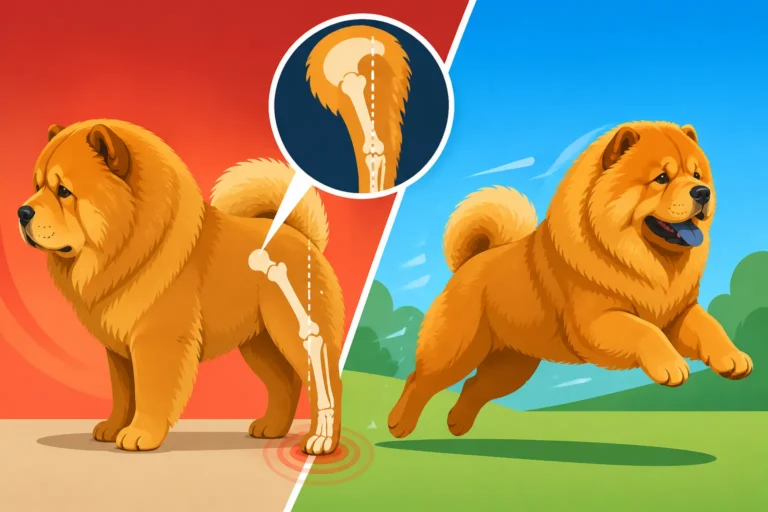
Even if you consider your Chow Chow perfectly leash-trained, there's always the human factor. A dropped leash, a fumbled clip, or an unexpected tug can all lead to a momentary lapse in control. For a strong, dense dog like a Chow Chow, a quick escape from a compromised leash or harness is entirely possible. Once loose, their characteristic Why a Chow Chow Moves With a Stilted Gait might seem deliberate, but they can still move surprisingly fast when motivated, making them hard to catch.
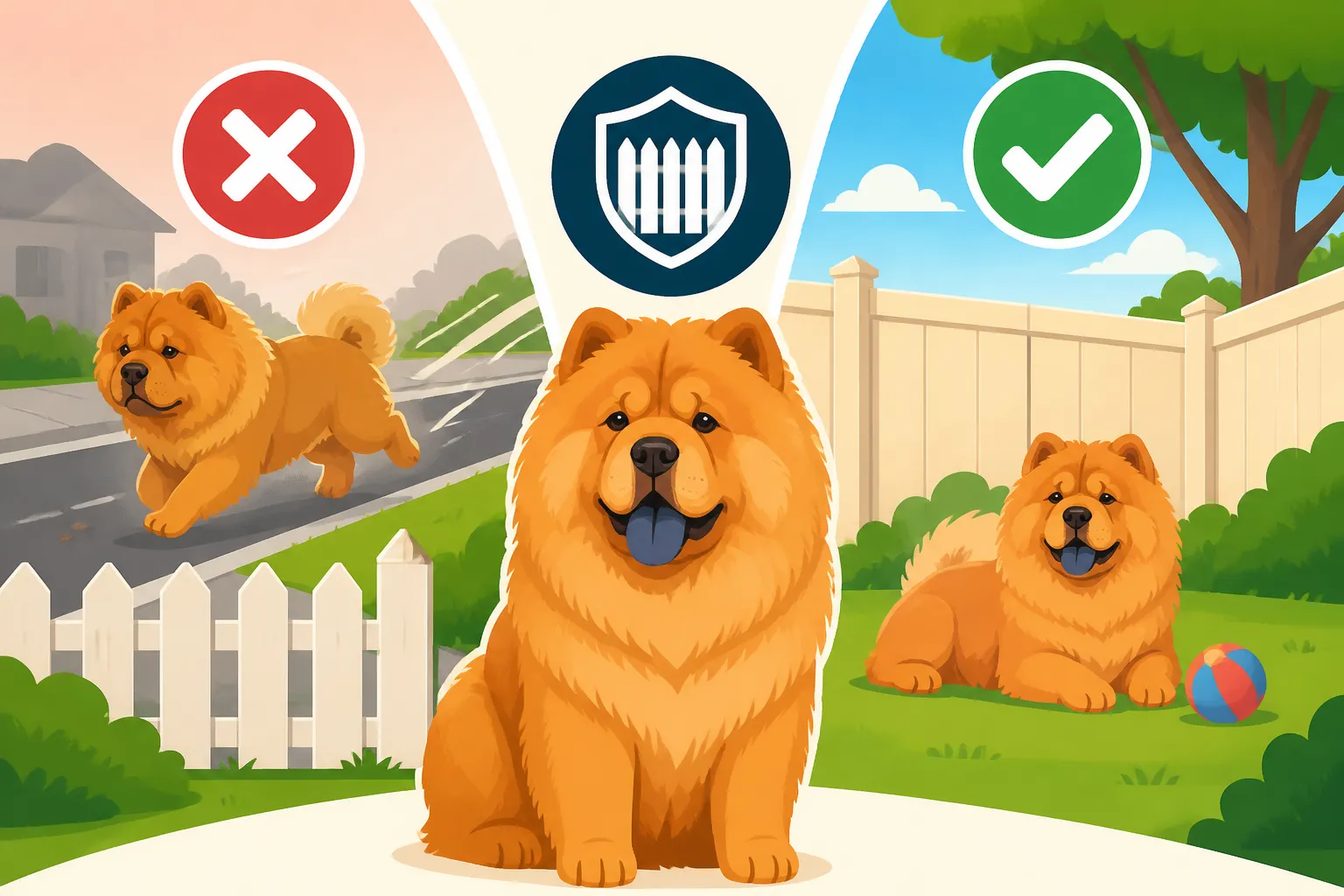
This is where a fenced yard becomes a non-negotiable for many. It acts as the primary safety net. While leash walking is essential for public outings, the backyard should be a place where they can move freely without the constant threat of vehicles. Even a small, quiet street can be deadly if a dog runs out unexpectedly. It also saves you the constant stress of having to be hyper-vigilant during every potty break or outdoor sniff session.
Interactions with Strangers and Other Animals
Chow Chows are known for their reserved nature. They aren't typically a breed that greets every stranger with effusive wags. While some may tolerate polite introductions, others prefer to keep their distance. An unfenced environment means your Chow Chow is more likely to encounter strangers – whether they are delivery drivers, curious children, or unsuspecting joggers – on their own terms, which might not always be positive.
If a stranger approaches an unfenced Chow Chow, the dog might feel threatened or defensive, especially if they are guarding their territory. This can lead to growling, barking, or even a snap if they feel cornered or encroached upon. This is not only unfair to the dog, who is simply acting on instinct, but it also puts the public at risk. Similarly, uninvited interactions with other dogs can escalate quickly. A loose Chow Chow might approach another dog inappropriately, or be approached by a less-than-friendly canine, leading to a fight. Why a Chow Chow Gives Little Warning about their discomfort makes these interactions even riskier.
A fence provides a clear physical boundary that helps manage these interactions. It allows your Chow Chow to observe the world from a safe distance, reducing the likelihood of them feeling overwhelmed or needing to resort to defensive behaviors. It also protects other people and animals from unwanted advances or misunderstandings. This controlled environment is crucial for fostering good community relations and ensuring the safety of everyone involved.
The Risk of Theft or Loss
Sadly, the beauty and distinctiveness of a Chow Chow can also make them a target for theft. A loose Chow Chow, or one left unsupervised in an unfenced yard, is more vulnerable. Dog theft is a real and heartbreaking problem, and breeds that are unique or perceived as valuable can be at higher risk.
Beyond intentional theft, a Chow Chow that wanders off can simply get lost. Despite microchips and tags, finding a lost dog can be a harrowing and often unsuccessful ordeal. Their independent nature might make them less likely to seek out human help if they are disoriented, and their reserved demeanor might make them wary of approaching strangers who could assist them. How a Chow Chow Grieves Its Person shows the deep bond they form, despite their aloof reputation, making their loss even more devastating.
A secure fence significantly reduces both of these risks. It keeps your Chow Chow safely within your property, away from opportunistic thieves, and prevents them from wandering off and getting lost. It's a simple, yet incredibly effective, preventative measure that offers peace of mind.
Alternatives and Management Strategies (If a Fenced Yard Isn't Possible)
While a fenced yard is highly recommended for Chow Chows, sometimes it's simply not an option. Perhaps you live in an apartment, or your rental property doesn't allow for fence installation. In such cases, diligent management and creative solutions become absolutely vital. It's important to understand that these alternatives require a much higher level of commitment and constant vigilance from the owner.
Secure Leash Walking and Long Lines
If you don't have a fenced yard, every single outdoor excursion for your Chow Chow must be on a leash. This means even quick potty breaks require you to be out there, fully attentive, with your dog securely leashed. There's no "just let them out for a minute" when an escape could mean a severe accident. This constant vigilance is a huge commitment and should not be underestimated.
When walking, always use a strong, well-fitting leash and harness. A collar alone might not be sufficient, as a Chow Chow's thick neck fur can sometimes mask an ill-fitting collar, allowing them to slip out. Look for harnesses that are escape-proof or that offer a secure fit around the chest and behind the front legs. You can find many options on platforms like Amazon. Regular walks are essential for their physical and mental well-being, but they must be managed with absolute safety in mind. How Far a Chow Chow Should Walk Daily discusses appropriate exercise levels.
For controlled outdoor time, such as playing fetch or simply sniffing around in a larger open space like a park (where leashes are permitted), a long line can be a valuable tool. A long line is essentially an extra-long leash, usually 15 to 30 feet, that allows your Chow Chow more freedom to explore while you maintain control. It gives them the sensation of being off-leash without the danger. Always ensure the area is safe and free of hazards before using a long line, and never leave your Chow Chow unsupervised with one, as it can easily get tangled or caught.
Training for Off-Leash Reliability (with caveats)
Training for off-leash reliability is a noble goal, but for a Chow Chow, it comes with significant caveats, especially in unfenced environments. Due to their independent nature and potential prey drive, achieving a truly reliable off-leash recall – one that holds up under extreme distraction – is incredibly challenging and often unrealistic for the average owner. It demands countless hours of consistent, positive reinforcement training in increasingly distracting environments.
Even if you achieve what feels like perfect recall in a controlled setting, the moment a squirrel darts across a busy road, or an unfamiliar dog appears, your Chow Chow's instincts may override their training. It's simply not worth the risk. While training is always beneficial, particularly programs that emphasize engagement and relationship building like those offered by BAXTER & Bella, relying on it entirely in an unfenced, uncontrolled environment is a gamble. Teaching a Chow Chow a Reliable Recall is a vital aspect of any training, but it's important to be realistic about its limitations for this breed.
Instead, focus on rock-solid leash manners, a strong "leave it" command, and a reliable "stay." These commands are practical and necessary for keeping your Chow Chow safe when you're out and about. Reserve true off-leash freedom for genuinely secure, fenced-in areas, such as a private dog park or a friend's yard, where you can be certain of their safety.
Supplemental Containment Solutions
If a traditional fence isn't possible, you might consider other physical containment solutions for specific situations. Portable exercise pens or secure dog runs can offer a temporary, supervised outdoor space. These are not substitutes for a full fence for unsupervised time but can be helpful for short bursts of fresh air or supervised play in a designated area.
| Containment Solution | Pros | Cons | Best Use Case |
|---|---|---|---|
| Traditional Fence | Permanent, secure, allows unsupervised time, clear boundary. | Costly, permits needed, not always allowed by HOA/landlord. | Primary, long-term containment for home. |
| Long Line | Gives freedom, maintains control, relatively inexpensive. | Requires constant owner supervision, can tangle, trip hazard. | Supervised play in safe, open spaces. |
| Portable Exercise Pen | Flexible, easy to move, can be used indoors/outdoors. | Not escape-proof for determined dogs, temporary, supervised use only. | Temporary outdoor potty breaks, indoor containment. |
| Secure Dog Run (Chain Link/Kennel) | More secure than ex-pen, designated space. | Less aesthetically pleasing, can still be dug under/climbed, often requires anchor. | Dedicated outdoor toilet/play area, still best supervised. |
| Invisible Fence | Aesthetically pleasing, less costly to install. | Relies on pain/fear, Chow Chow's thick fur can reduce effectiveness, highly dependent on dog's temperament, not recommended for Chow Chows. | Generally not suitable for Chow Chows due to temperament and safety risks. |
It's crucial to address the topic of invisible fences or electronic containment systems. For a Chow Chow, these are generally not recommended. Their thick fur can sometimes reduce the effectiveness of the static correction collar, meaning they might not feel the correction when they need it most. More importantly, an invisible fence relies on teaching the dog to fear crossing a boundary, often through an unpleasant shock. Given the Chow Chow's independent and sometimes stubborn nature, combined with their territorial instincts and reserved temperament, this type of training can backfire dramatically. A highly motivated Chow Chow might ignore the correction to chase something or protect territory, and once they've crossed it, they may be unwilling to re-enter due to the fear of the correction. This can leave them stranded outside the boundary, confused and vulnerable.
Fence Requirements and Considerations
If you've decided a fenced yard is the right choice for your Chow Chow – and I truly hope you have – then understanding what constitutes a truly secure fence is the next step. Not all fences are created equal, and a Chow Chow can be surprisingly resourceful when motivated.
Height and Material Matters
A Chow Chow might not be known for its Olympic jumping skills, but a determined dog can often clear or climb fences that seem adequate. A minimum height of 5 to 6 feet is generally recommended for most Chow Chows. If your dog is particularly athletic or has shown an inclination to climb, even higher might be necessary. Some Chow Chows can scale chain-link fences using the links as footholds, so solid fencing materials like wood, vinyl, or certain types of decorative metal can be a better choice. These materials also offer greater visual privacy, which can reduce barking at passersby, aligning with the Chow Chow's naturally watchful nature.
The material also needs to be robust enough to withstand a Chow Chow's bulk and any attempts to push through. Flimsy garden fencing or decorative barriers won't cut it. Think strong, durable construction that can stand up to all weather conditions and the occasional lean or pawing from your dog. Pay attention to gates as well; they should be just as sturdy as the fence itself, with secure latches that your Chow Chow cannot manipulate. Double-latching gates are an excellent safety feature, especially for gates that lead directly to a street or busy area.
Beyond the aesthetics, consider the practical benefits of a solid fence. It removes visual distractions, which can help calm a territorial Chow Chow. It also provides a sense of security for your dog, allowing them to relax and enjoy their outdoor space without feeling constantly challenged by the outside world.
Preventing Digging and Climbing
Chow Chows aren't typically extreme diggers, but if they are bored, curious, or trying to follow a scent, they can certainly create an escape tunnel. To prevent this, consider extending your fence barrier below ground level. This can be achieved by burying a portion of the fence material, installing a "L-footer" made of wire mesh laid horizontally on the ground inside the fence line, or even pouring a concrete footer. Just a few inches of underground protection can be enough to deter most casual digging attempts.
For determined climbers, inspect your fence for any horizontal supports or weak points that could serve as a ladder. Overhangs, sometimes called "coyote rollers," can be installed at the top of a fence to prevent climbing. These are typically PVC pipes or similar materials that roll if a dog tries to get a pawhold, making it impossible to get leverage. Ensure there are no large gaps between the fence and the ground, or between fence panels, that a Chow Chow could squeeze through. Even a small opening can be exploited by a persistent dog.
Also, think about anything inside the yard that could aid an escape. Dog houses, firewood piles, or even large landscape rocks placed too close to the fence line can give a Chow Chow a boost to get over. Keep these items away from the perimeter to eliminate potential launchpads. What Fencing a Chow Chow Requires touches on these practical considerations.
Regular Maintenance Checks
Even the most robust fence isn't maintenance-free. Regular inspections are critical to ensure its integrity and your Chow Chow's safety. Weather, wear and tear, and even your dog's own investigations can create weaknesses over time. Make it a habit to walk your fence line regularly, looking for potential escape routes.
Check for loose boards, damaged wire, or sagging sections. Inspect gate latches to ensure they are still secure and functioning properly. Look for any new holes or depressions along the base of the fence that might indicate digging attempts. Pay attention to any areas where vegetation might have grown too close to the fence, as dense bushes could provide cover for a digging project or even act as a boost for climbing.
Addressing small issues promptly can prevent them from becoming major escape hazards. A small loose board can quickly become a large gap, and a minor digging spot can turn into a full-blown tunnel. For a Chow Chow, who might see an opportunity rather than a barrier, keeping your fence in top condition is an ongoing responsibility that ensures their safety and your peace of mind.
Disclaimer
This article is for general informational purposes only and does not constitute professional advice. Laws, prices and regulations vary by location and change over time. Consult a qualified professional for guidance on your specific situation.